
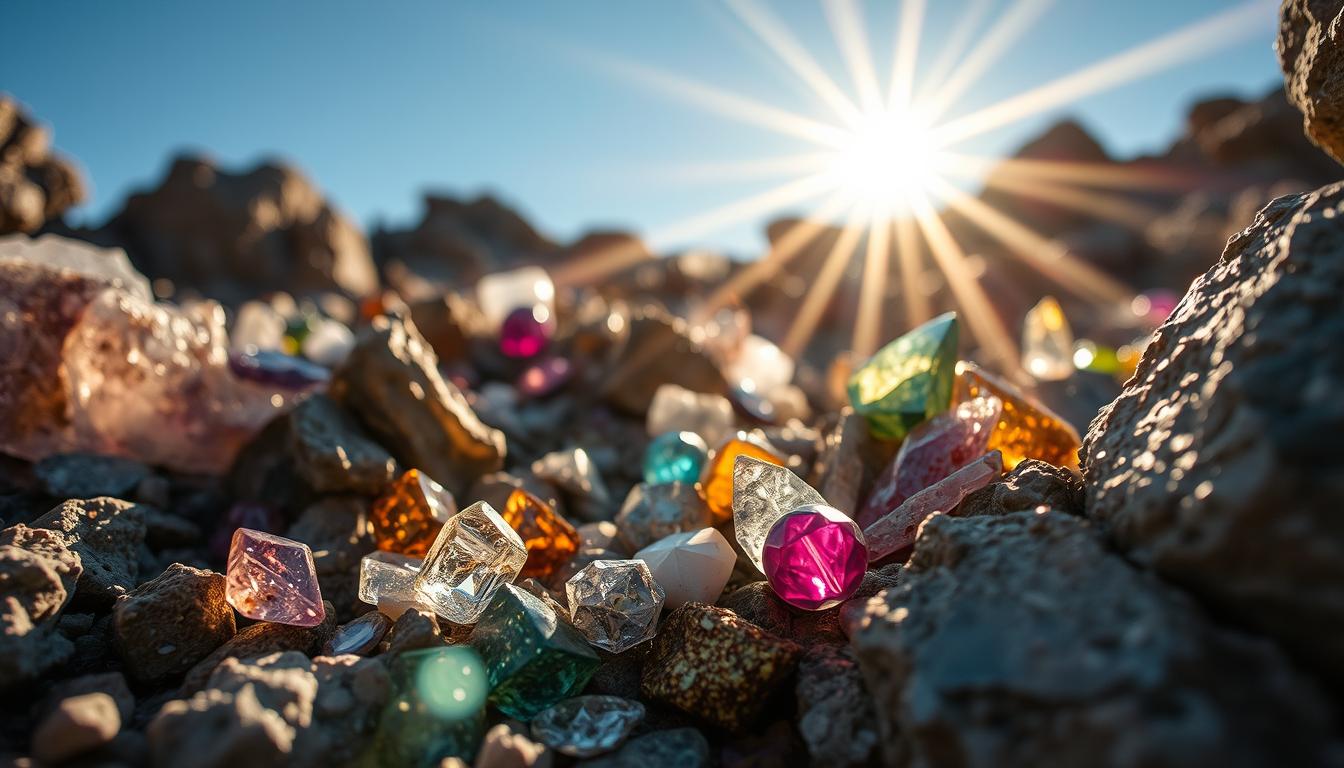
Shiny minerals have fascinated people for centuries. Their beauty is more than skin deep. These minerals are valuable for history, science, and the economy. They are truly captivating.
The world of shiny minerals is vast and varied. Elements like silver are known for their lustrous shine and rich history. This makes them worth exploring.
We will dive into the world of shiny minerals. We’ll see their role in geology and mineralogy. This article will show you why these minerals are so unique and important.
What Are Minerals and Why Are They Important?
Minerals are naturally occurring, inorganic substances with special properties. They are formed through geological processes. They have unique chemical compositions and crystal structures.
Geologists identify minerals by their physical traits. These include hardness, luster, and cleavage. These traits help distinguish one mineral from another.
The importance of minerals is seen in their wide use. They are used in construction, technology, and jewelry making. For example, quartz is used in electronics for its piezoelectric properties. Gypsum is used in construction for making plaster.
Minerals are also key in our daily lives. They contribute to the Earth’s ecosystems and human health. Iron is vital for oxygen transport in the blood. Calcium is essential for bone health.
In geology, minerals help us understand the Earth. Geologists study minerals to learn about the Earth’s history. This includes the formation of rocks and landscapes.
In conclusion, minerals are more than just substances. They are essential parts of our planet and daily lives. Their unique properties and wide applications make them vital in many sectors.
Types of Minerals Found in Nature
From agate to silver minerals like argentite, nature offers a wide range of minerals. These are naturally occurring, inorganic substances with unique chemical and structural properties. The classification of minerals is based on these properties.
The study of minerals, known as mineralogy, helps us understand their formation and properties. Minerals are grouped into types based on their chemical makeup and crystal structure. For example, silicate minerals make up about 90% of the Earth’s crust.
Minerals like agate, amazonite, and amethyst are valued for their beauty and rarity. Silver minerals, such as argentite and proustite, are important for their economic value. The variety of types of minerals shows the Earth’s complex geological history.
Mineral Classification
Minerals fall into categories like native elements, oxides, silicates, and sulfides. Each category has minerals with similar chemical compositions. For instance, native elements are minerals made of a single element, like gold or silver.
Knowing how to classify minerals is key for their identification and use. It helps us see their value, from industrial uses to making jewelry.
The study of mineralogy is both interesting and valuable. By learning about the types of minerals and their properties, we appreciate the natural world more. We also understand the resources it offers.
The Process of Mineral Formation
Mineral formation is closely tied to the Earth’s history. Minerals are naturally occurring, inorganic substances with specific chemical and structural properties. Their creation involves several geological processes, like magmatic crystallization, metamorphism, and weathering.
Mineral formation starts deep in the Earth’s crust. Here, magma cools and solidifies, allowing minerals to form. The chemical makeup of the elements present decides the mineral type. For example, silicon and oxygen create quartz, a common mineral.
Geological processes lead to different minerals. Magmatic crystallization happens when magma cools, forming crystals. Metamorphism transforms rocks under high pressure and temperature, creating new minerals. Weathering breaks rocks into smaller pieces, also forming minerals.
Mineralogy experts say, “Minerals are identified by their physical traits, tied to their chemical makeup and bonding.” Knowing this is key for identifying and classifying minerals. Minerals’ unique features, like hardness and luster, come from their formation.
In summary, mineral formation is a complex process essential for understanding the Earth’s history. By studying mineral formation, we learn about the Earth’s internal workings and the interactions that shape our planet.
The Science Behind Mineral Crystallization
Mineral crystallization is a complex process. It involves the formation of crystals from minerals. Factors like temperature, pressure, and other minerals play a big role.
Crystallization happens when a solution gets supersaturated. This means it has more dissolved minerals than it can hold. As it cools or evaporates, minerals start to form crystals. The crystallization process can take from days to millions of years.
Factors Influencing Crystallization
Several things affect how minerals crystallize. Temperature and pressure are key. For example, high temperatures can make crystals bigger, while fast cooling makes them smaller.
Other minerals or impurities also matter. Some minerals can help crystals form around them. The formation of silver minerals like acanthite and freibergite shows how impurities can change crystal structure.
“The crystallization of minerals is a complex process that is influenced by a multitude of factors, including temperature, pressure, and the presence of other minerals.”
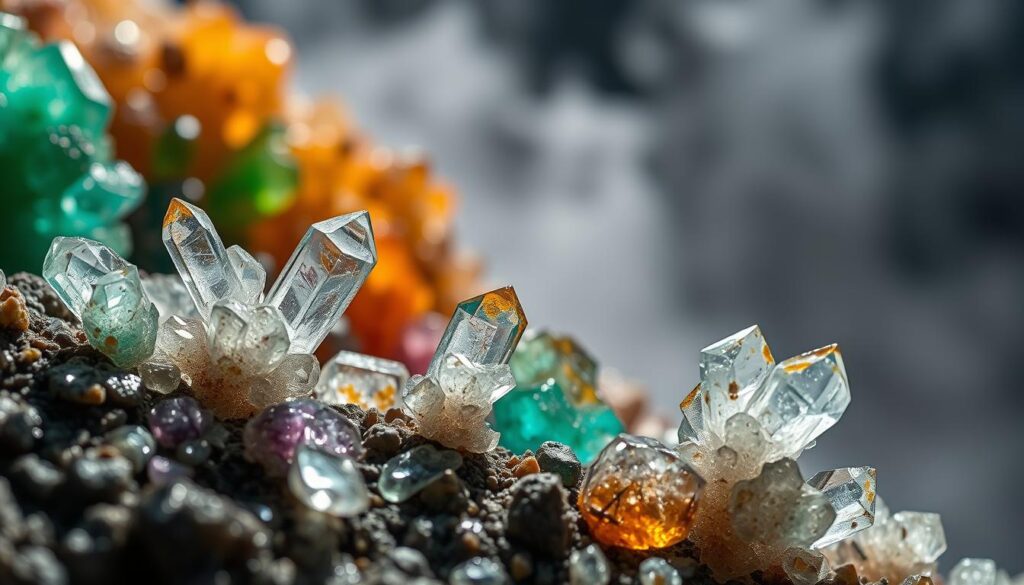
Knowing about crystal structure helps us understand minerals better. The way atoms are arranged in crystals affects their properties. Studying mineral crystallization helps scientists learn about the earth’s history and conditions.
How To Identify Shiny Minerals
Identifying shiny minerals is a fun hobby that needs a sharp eye and knowledge of mineral traits. First, learn the physical signs that set minerals apart from each other.
Spotting shiny minerals often starts with their color and luster. Color can trick you because of lighting or impurities. But luster, or how light bounces off, is key. Some minerals shine brightly, catching the eye.
Another important clue is the streak, the mineral’s powder color. You can find this by scratching it on a porcelain plate. The streak often tells you more than the mineral’s color.
Mineral experts say, “Identifying minerals means looking closely at their physical traits like hardness, cleavage, and density. Color, luster, and streak are also key.” Knowing these traits is essential for studying minerals and finding shiny ones.
“The beauty of minerals lies not just in their appearance but in the complex processes that form them.”
By studying these traits and using tools, anyone can spot shiny minerals. This hobby not only makes you appreciate their beauty. It also helps you understand how they’re made.
Popular Shiny Minerals and Their Uses
Shiny minerals are key in many parts of our lives. They are loved for their beauty and special properties. These minerals are used in many ways.
Agate, amazonite, and amethyst are among the most sought-after shiny minerals. Agate is known for its striking patterns and is used in jewelry and decorations. Amazonite is prized for its calming blue-green hue and is used in healing jewelry and decorations. Amethyst, a type of quartz, is famous for its rich purple color and is a favorite in jewelry.
Silver minerals have been highly valued for centuries. Silver is used in jewelry, coins, and many industrial products because of its excellent electrical conductivity.
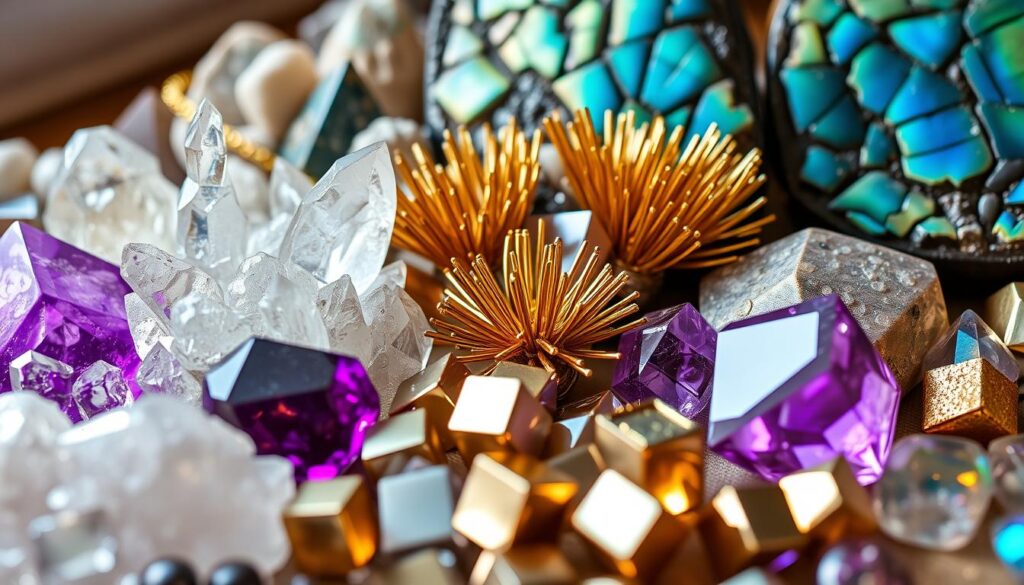
A famous geologist once said, “The variety of shiny minerals shows the amazing diversity of our planet’s geological processes.” This diversity makes mineralogy a captivating field. It’s always discovering new things about these valuable resources.
Shiny minerals have many uses, from beauty to technology. As scientists learn more about them, their value will likely increase.
Mining: Harvesting Shiny Minerals
Mining is key to finding earth’s treasures, like shiny minerals. It digs deep into the earth to get these minerals. This work uses advanced tools and methods.
Mining is very important. It gives us the materials needed for many things, like jewelry and electronics. Shiny minerals like silver, found in argentite and other minerals, are prized for their looks and uses.
There are different ways to mine, based on the mineral and where it is. Open-pit mining and underground mining are two main methods. Each has its own benefits and challenges for the environment.
Mining can harm the environment. It can mess with local ecosystems, water, and soil. So, mining today focuses on being green and fixing the damage done.
Mining Techniques and Environmental Considerations
Each mining way affects the environment differently. Open-pit mining can hurt forests and animals, while underground mining can pollute water and cause land to sink.
To lessen these problems, mining companies are getting greener. They’re fixing the land they’ve mined and following stricter rules to protect the environment.
The earth’s geology is key in choosing how to mine. Knowing the earth’s structure and where minerals are helps mine safely and efficiently.
In short, mining is a detailed task that needs careful planning and care for the environment. As we need more shiny minerals, the mining world must find a balance between making money and saving the planet.
Mineral Collecting as a Hobby
Starting a mineral collection is an exciting hobby. It mixes adventure, science, and art. It lets you explore the natural world and learn about geology.
To begin, learn about the different minerals and their features. Understand mineralogy, which is the study of minerals. Identifying minerals involves looking at their crystal structure, hardness, and streak.
For beginners, focus on a specific area or type of mineral. This makes your collection meaningful. Joining clubs or online forums can also help you learn and find new specimens.
It’s important to take good care of your minerals. Store them in a cool, dry place away from sunlight. Some minerals, like those with copper or silver, need extra care.
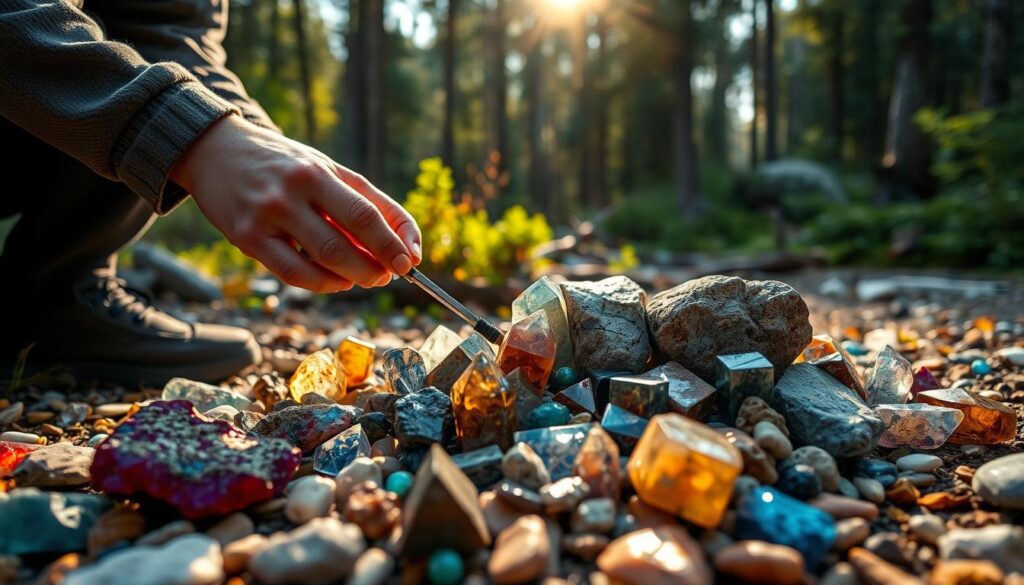
Looking for minerals is part of the fun. You can search in local streams or visit known mineral sites. The excitement of finding a new mineral is rewarding.
As you collect more minerals, you’ll appreciate geology more. This hobby enriches your knowledge and connects you to the earth’s beauty.
The Role of Minerals in Jewelry Making
Gemstones, a type of mineral, are highly prized in jewelry for their beauty and rarity. The use of gemstones in jewelry making dates back centuries. Various cultures valued different stones for their unique properties.
Minerals like amethyst, citrine, and topaz are often used in jewelry. They are chosen for their attractive colors and durability. Amethyst is popular for its deep purple hue. Citrine is valued for its vibrant orange and yellow colors.
The process of incorporating minerals into jewelry involves several steps. These include cutting, polishing, and setting the gemstones into metal settings. Jewelers choose minerals based on their hardness, brilliance, and color to create stunning pieces.
Jewelry making is an art that requires a deep understanding of minerals. The mineral’s hardness and cleavage determine how it can be cut and set. For example, diamonds are known for their exceptional hardness, making them ideal for everyday wear.
The importance of minerals in jewelry cannot be overstated. They add beauty, value, and uniqueness to each piece. As a result, the demand for high-quality gemstones drives the jewelry industry. Gemstones remain at the heart of jewelry making.
Educational Resources for Mineral Enthuisiasts
Exploring the world of minerals can be exciting with the right tools. There are many ways to learn, from online courses to detailed books. These resources help you grow your knowledge.
Online Resources: Websites focused on geology and minerals are full of useful info. They have articles, videos, and tutorials. You can also find databases of minerals to learn about different types.
Mineralogy Books: If you like books, there are many to choose from. They cover everything from basic to advanced topics. You’ll learn about identifying minerals, geological processes, and the history of mineralogy.
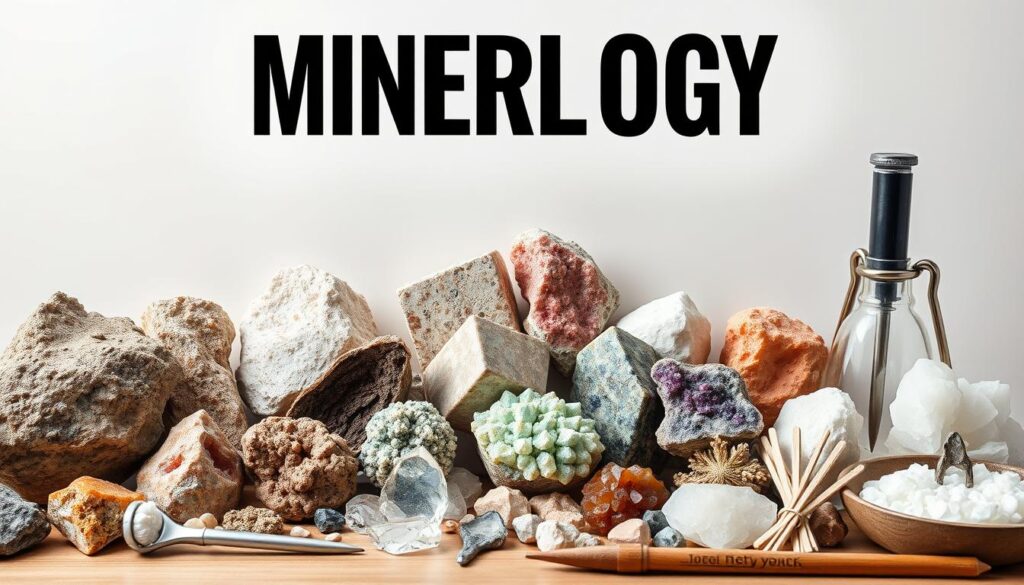
Academic Courses and Workshops: Schools and colleges offer classes and workshops on minerals and geology. These give you a chance to get hands-on experience and learn from experts.
Using these resources, you can learn more about minerals. It makes you appreciate the complex and interesting world of minerals even more.
Future Trends in the Mineral Industry
The mineral industry is on the verge of a big change. This is thanks to new technologies and shifting needs. As we move towards cleaner energy and sustainable practices, the demand for some minerals will rise.
Silver is a key player in this shift. It’s used in solar panels and electronics because of its special properties. This growing demand could change the industry’s future.
Technological progress, environmental worries, and changing consumer wants will shape the industry’s future. As it adapts, expect more investment in mining tech and recycling.
The mineral industry’s future looks bright. New technologies will bring new chances for growth. By keeping up with these trends, the industry can thrive and find new opportunities.