
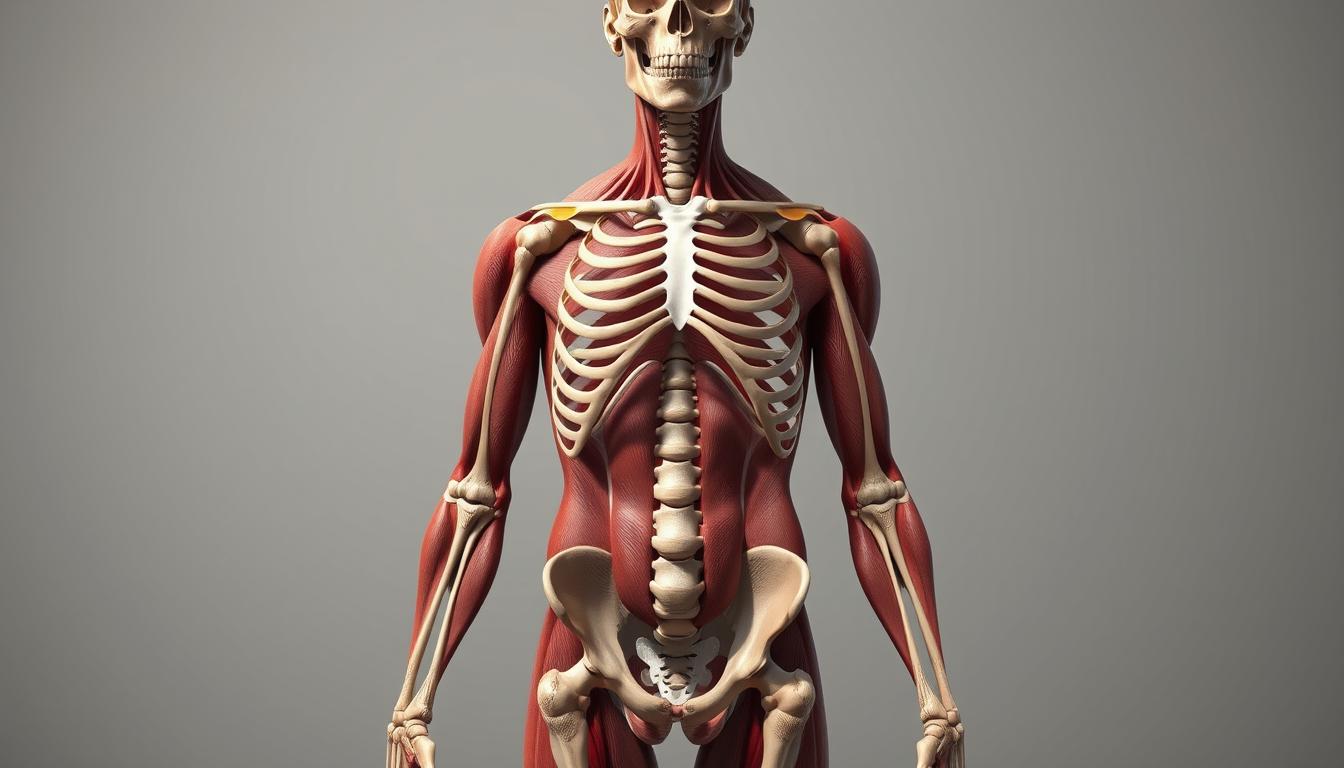
The human body can do many things, from simple gestures to complex actions. This is all thanks to the musculoskeletal system. With over 650 muscles in our body, moving is a team effort.
Muscles and bones work together for movement. This team effort lets us do daily tasks easily.
Learning how muscle function helps with movement shows why keeping our musculoskeletal system healthy is key.
The Basics of Muscle Anatomy
Muscle anatomy is a complex field that includes three main types of muscles: skeletal, smooth, and cardiac. Knowing the unique traits and roles of each is key to understanding how our bodies move and stay healthy.
Skeletal muscles are connected to bones and help us move on purpose, like walking or lifting. They also help us stand up straight and balance. For example, when you get up from sitting, your skeletal muscles work together to make it happen.
Smooth muscles are inside organs like the digestive tract and blood vessels. They move without us thinking about it. They’re important for digestion and keeping blood pressure steady.
Cardiac muscles are in the heart and also move without our control. They pump blood all over the body. The heart’s unique muscles keep our heartbeat steady, vital for delivering oxygen and nutrients.
Each muscle type is vital for our body’s function. Knowing about their anatomy helps us appreciate the complex ways our bodies work and stay healthy.
How Muscles Work Together to Facilitate Movement
Muscle coordination is a complex process. It involves the nervous system and muscles working together. This teamwork allows the body to move in many ways. It’s from simple actions like walking to complex tasks like playing a musical instrument.
The brain starts the process by sending signals. These signals go through the spinal cord and peripheral nerves to the muscles. The signals tell the muscles to contract or relax, based on the movement needed.
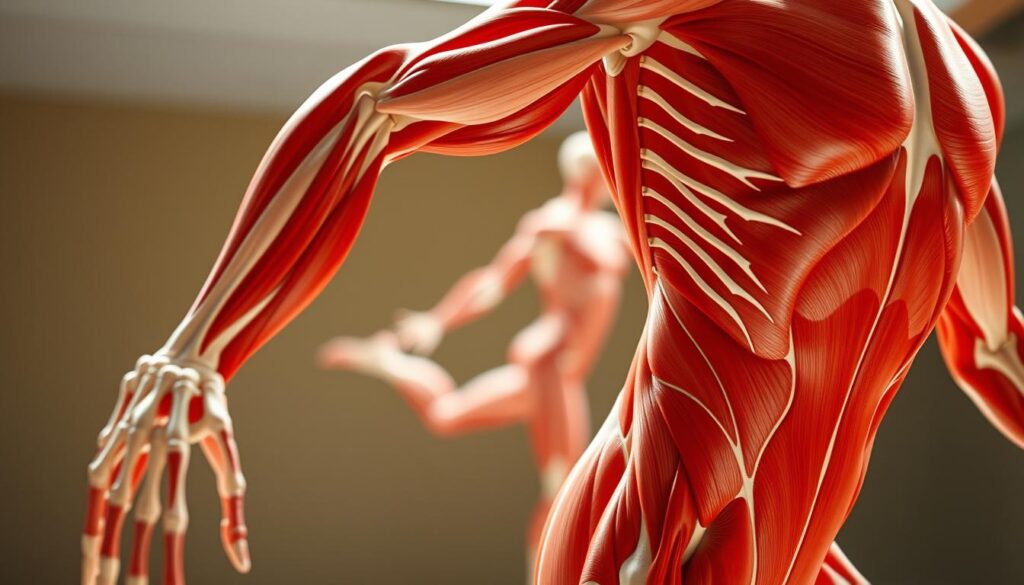
The nervous system is key in motor control. It makes sure muscles contract and relax smoothly. The motor cortex in the brain sends electrical signals to the muscles. It tells them when and how to move.
When you want to move, the motor cortex sends a signal. This signal goes through the spinal cord and nerves to the muscles. It makes them contract. This fast process is vital for actions like picking up a pen or running.
The nervous system also handles involuntary movements. This includes the heart beating and food moving through the digestive system. The autonomic nervous system does this work without us even thinking about it.
The Importance of Muscle Tone
Muscle tone is key to our health and how well we move. It means our muscles are always a bit tight and ready to work more. This readiness helps us stand up straight and move easily.
Having toned muscles is crucial for staying fit. It makes everyday tasks easier and helps us balance better. Toned muscles also protect our joints and keep us standing tall, which is good for our body.
Fitness experts say muscle tone is more than looks. It keeps our body working well. Doing exercises that make muscles stronger helps a lot.
Good muscle tone also boosts our health. It can help us lose weight and move better. As we get older, it helps keep our muscles strong.
“Exercise is a celebration of what your body can do, not a punishment for what you ate.” – Unknown
In short, keeping our muscles toned is essential for staying fit and healthy. By knowing its value and exercising right, we can live better and stay active longer.
The Role of Muscles in Daily Activities
Muscles are key for everyday movements and functions. They help us do simple things like blink and swallow. They also help us with more complex actions like walking and running.
Our muscles are vital for our daily lives. They help us move, sit, and keep our posture. They even let us move our eyes to see around us.
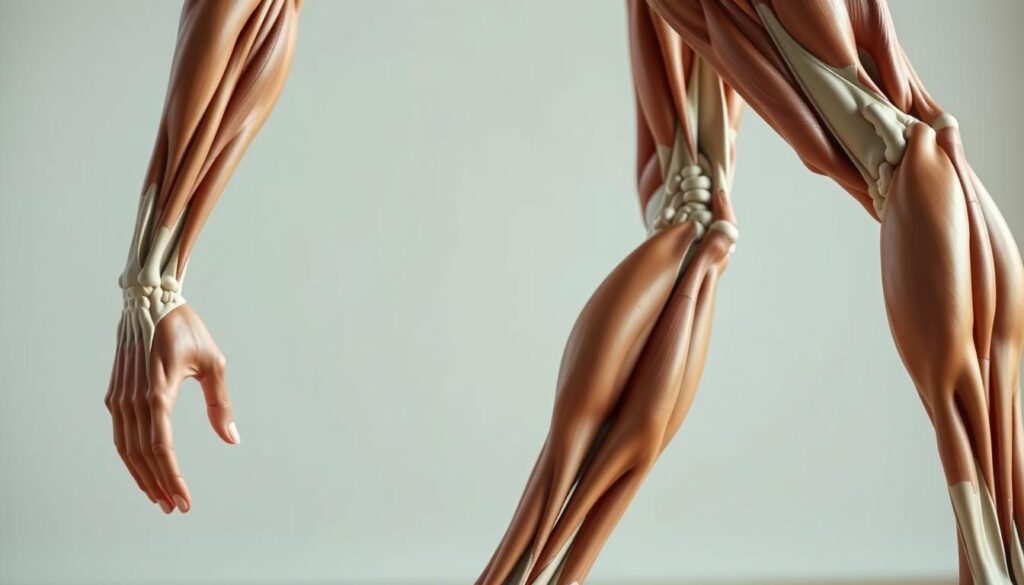
Muscles do more than just help us move. They also play a big role in our body’s functions. For example, smooth muscles help food move through our digestive system. Cardiac muscles pump blood through our heart and blood vessels.
Knowing how important muscles are can help us take care of them. We can do this by exercising regularly and eating well. This way, our muscles stay healthy and help us move easily.
Being aware of muscle’s role in our daily lives can also push us to make healthier choices. It shows how important muscles in daily activities and physical activity are.
Understanding Muscle Contraction
Muscle contraction is a complex process that involves the nervous system and muscle fibers. When muscles contract, the fibers shorten. This pulls the bones they’re connected to closer together. This process is key for movement and is controlled by electrical signals from the nervous system.
Muscle contraction is a complex physiological process that involves several key components. The muscle fibers, made up of myofibrils, are the building blocks of muscle contraction. When a muscle is stimulated to contract, the myofibrils shorten. This leads to muscle contraction.
As Dr. Sarah Jones, a renowned physiologist, notes, “Muscle contraction is not just a simple shortening of muscle fibers; it’s a highly regulated process that involves the coordinated effort of multiple cellular and physiological components.” This shows the complexity and importance of muscle contraction in movement.
The process of muscle contraction can be broken down into several stages. First, the nervous system sends an electrical signal to the muscle, stimulating it to contract. This signal triggers the release of calcium ions. These ions then bind to troponin and tropomyosin, causing a conformational change. This change allows the muscle fibers to contract.
“The intricacies of muscle contraction are a testament to the remarkable complexity of the human body,” says
.
In conclusion, understanding muscle contraction is key to appreciating how movement occurs. By understanding the physiological mechanisms behind muscle contraction, we can better appreciate the importance of healthy muscles. This knowledge helps prevent muscle-related injuries.
How Muscles Adapt to Exercise
Exercise is key for muscle adaptation, boosting your physical fitness. When you work out regularly, your muscles change a lot. They become more efficient and can handle more stress.
One main way muscles adapt is by getting stronger. As you exercise, your muscle fibers grow and get stronger. This makes it easier to do daily tasks and physical activities.
Muscle adaptation also means better muscle endurance. Regular exercise lets your muscles work longer without getting tired. This is important for staying healthy and fit.
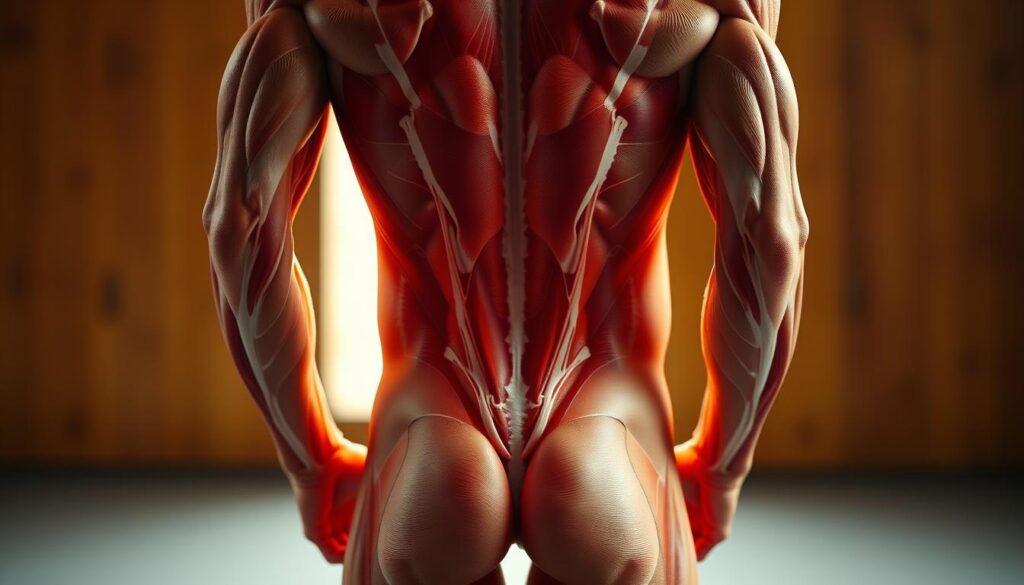
Also, exercise leads to muscle hypertrophy, or muscle growth. This is key for staying physically fit.
Plus, regular physical activity improves neuromuscular coordination. This means better communication between your nerves and muscles. It helps with better movement and lowers injury risk.
Nutrition and Muscle Health
Eating a balanced diet is vital for strong and healthy muscles. Foods like fruits, vegetables, whole grains, low-fat dairy, and lean proteins are key. They help keep your muscles in top shape.
Adequate nutrition is essential for muscle function and overall health. It gives muscles the needed building blocks for repair and growth. Without it, muscles can weaken and get injured easily.
The Role of Nutrition in Muscle Health is complex. Nutrition supports muscle function and helps muscles recover after exercise. A diet lacking in nutrients can cause muscle fatigue and lower performance.
“You are what you eat” is a saying that holds true for muscle health. A healthy diet is essential for keeping muscle mass and function strong.
For optimal muscle function, you need proteins, carbohydrates, and healthy fats. Proteins are key because they provide amino acids for muscle repair and growth.
Eating a variety of nutrient-rich foods supports muscle health. It’s also important to drink plenty of water and avoid processed and high-sugar foods.
By eating a balanced diet, you can support your muscle health and overall well-being. This, along with regular exercise, helps keep muscles strong and healthy for life.
Preventing Muscle Injuries
Knowing how to prevent muscle injuries is vital for a good fitness plan. Muscle injuries can slow down your progress and harm your health. A key way to avoid these injuries is by warming up before exercise. Warming up gets your muscles ready by boosting blood flow and temperature, making them more flexible and less likely to get strained.
A proper warm-up routine should include light cardio and dynamic stretching. This gets your muscles ready and boosts your performance. For example, before a tough workout, start with jogging in place or jumping jacks. Then, do dynamic stretches like leg swings and arm circles.
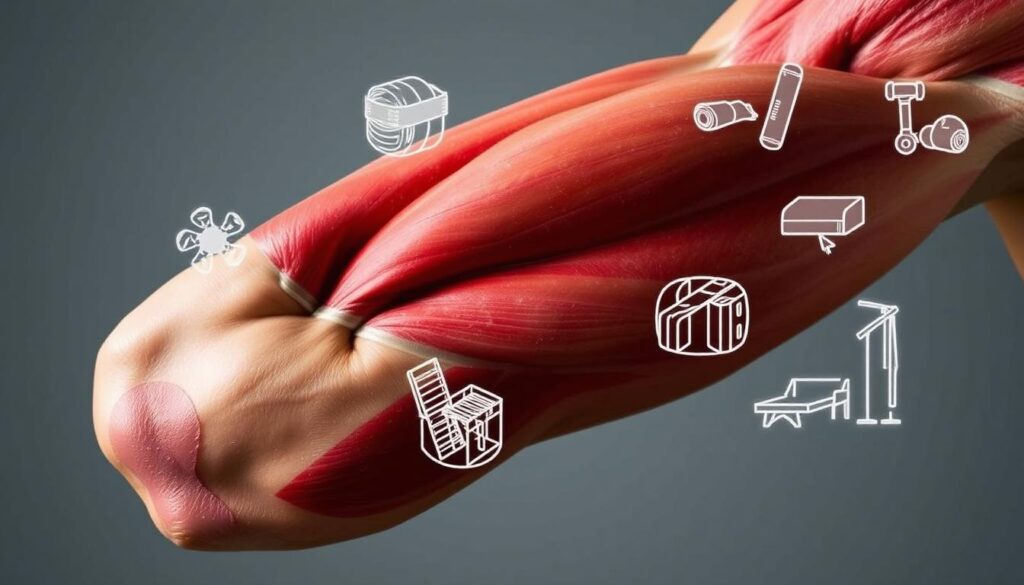
Wearing proper protective gear is also key to avoiding injuries. Depending on the activity, you might need knee pads, elbow pads, or supportive braces. This gear helps absorb shock and lowers the risk of muscle and joint injuries.
Avoiding overexertion is just as important. Always listen to your body and don’t overdo it, even when trying something new. Slowly increase the intensity and length of your workouts to prevent overuse injuries.
Also, regular exercise and a healthy diet are vital for muscle health. Eating a balanced diet full of proteins, vitamins, and minerals helps muscles repair and grow. Regular, correct exercise strengthens muscles and makes them more resistant to injuries.
In summary, preventing muscle injuries requires a few steps. These include proper warm-ups, using protective gear, avoiding too much effort, and keeping muscles healthy with regular exercise and a good diet. By following these tips, you can lower your risk of muscle injuries and have a more consistent and effective fitness journey.
Aging and Muscle Health
As we get older, our muscles change a lot. This can impact our health and how well we move. Losing muscle mass and strength is a big issue, known as sarcopenia.
Sarcopenia happens naturally with age. But it can lead to serious problems like falls and frailty. Exercise, like resistance training, helps keep muscles strong.
“Exercise is key for muscle health as we age,” says Dr. Jane Smith, a top researcher. “Older adults can boost their muscle strength and health by doing resistance training.”
Good nutrition is also important for muscle health. Older people need enough protein to help their muscles grow and repair. They might need to change their diet to get enough protein.
To keep muscles healthy as we age, we need to do several things. We should exercise regularly, eat well, and maybe take supplements. Taking these steps can help us avoid muscle problems and keep our independence and quality of life.
The Future of Muscle Research
Research into muscle physiology and pathology is making great strides. It’s helping us understand muscles better. This knowledge is key to improving health and treating diseases.
Technology and new discoveries are driving muscle research forward. We’re learning more about how muscles work and how they interact with the body. This could lead to new treatments for muscle disorders.
Investing in muscle research is vital. It could greatly improve the lives of many people. By studying muscle science, we can find better ways to treat muscle diseases and boost health.