
Learning to build a simple electric circuit is key in electronics. It’s a must for anyone into DIY electronics, robotics, or wanting to know how devices work.
At first, circuit building might look hard. But, it’s easy once you know the basics. You just need a few simple parts to make a path for electric current.
Building a simple electric circuit teaches you about electricity and electronics. It’s a great start for more challenging projects.
Understanding the Basics of Electric Circuits
At the heart of every electronic device is a simple yet fascinating concept called an electric circuit.Electric circuitsare the foundation of all electronic devices. They allow electricity to flow and perform various functions.
So, what makes up a basic electric circuit? Experts say it has a power source (like a battery), a path for electrons (wires, lights, and a switch), and a path back to the source. This explanation captures how circuits work. A circuit is a loop that lets electricity flow from a power source, through components, and back.
A simple circuit includes a power source, like a battery, conductors (wires), a load (like a light bulb), and a switch. When these parts are connected in a loop, they create an electrical circuit.
Understanding electric circuits is key for anyone into electronics, whether as a hobby or career. It lays the groundwork for more complex ideas and projects.
“The push from a power source, a path for the electrons to follow, and a final path back to the power source” is a simple yet thorough way to explain electric circuits.
Knowing these basics lets people dive into more advanced electronics and circuit building.
Tools and Materials You Will Need
The start of any electric circuit project depends on the tools and materials you choose. To make a simple electric circuit, you need a few basic parts and tools.
You’ll first need a power source. A battery is the top pick for simple circuits. You’ll also need a battery holder to keep it safe.
Next, you’ll need wiring. Copper wire is best for its high conductivity. You’ll also need LED lights or other parts to see the circuit work. A switch is key to control the electricity flow.
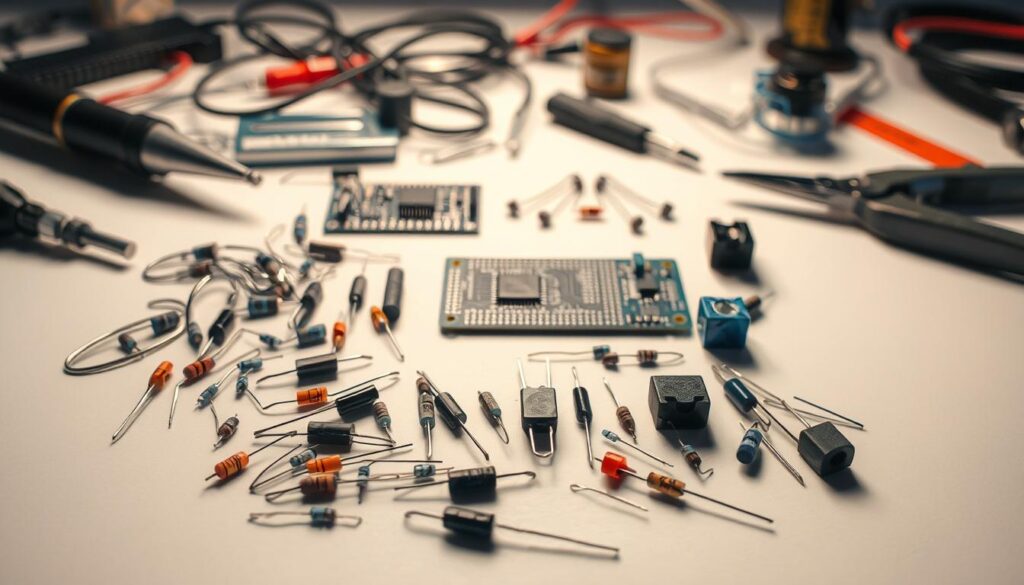
Along with these main parts, the right tools are important. You’ll need wire cutters and wire strippers for your wiring. A soldering iron is useful for lasting connections, but not needed for a basic circuit.
If you want to get better at circuit building, breadboards and jump wires are great. They help with more complex designs without soldering.
By using these key tools and materials, you’re ready to start making your own electric circuits. As you get better, you can try more advanced parts and methods to improve your circuit building skills.
Safety Precautions when Working with Circuits
Working with electrical circuits can be fun and educational. But, it’s important to know the safety rules to avoid dangers.
Safety Gear is key when working with electrical circuits. You should wear insulated gloves to avoid shock, safety glasses for eye protection, and avoid loose clothes that could get caught.
When working with circuits, you might face electrical shock, fires, or injuries. To avoid these, follow best practices. Make sure all tools are in good shape, keep your area clean, and never work on a live circuit.
It’s also important to know your limits. If you’re not sure about something, ask for help. Always follow the instructions for any electrical parts you use.
By focusing on safety and following these tips, you can work with electrical circuits safely. This way, you can have a productive and enjoyable experience.
Step-by-Step Guide to Building a Basic Circuit
Building a simple electric circuit is both fun and educational. It teaches you about the basic components and how they work together. This makes a functional circuit.
You’ll need a few basic materials to start. These include a battery, some wire, and a simple device like an LED light. Choosing the right components is key for a successful circuit. Make sure your wire is good for the task; a copper wire with insulation works well.
Plan the layout of your circuit first. Decide how you want your components arranged. For a simple circuit, connect the battery to the LED light using wire. Strip the wire ends to make good contact with the battery and the LED.
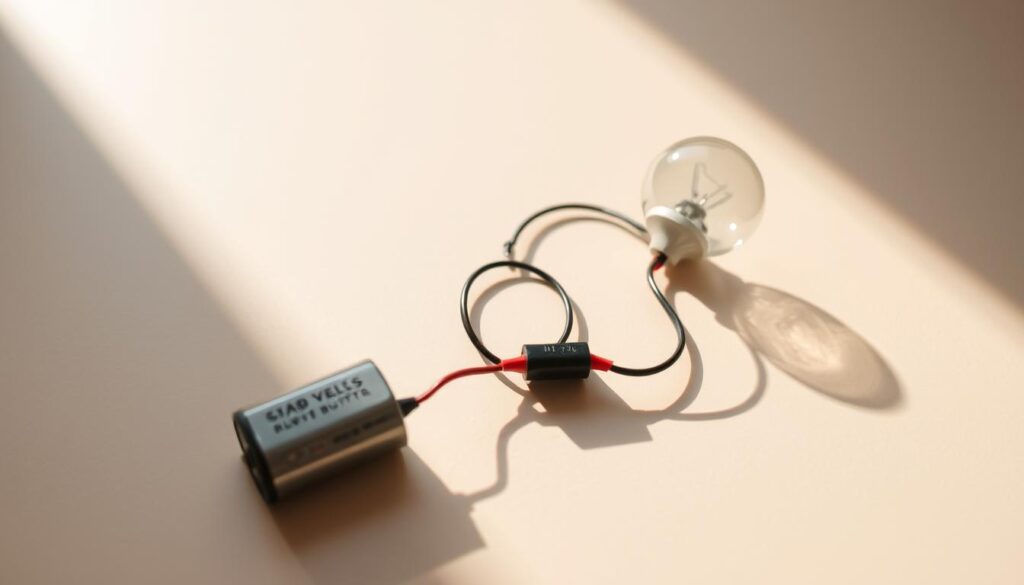
With your materials and plan ready, start assembling your circuit. Connect one wire end to the battery’s positive terminal and the other to the LED light. Then, connect another wire from the LED light’s other terminal back to the battery’s negative terminal. This completes the circuit, allowing electricity to flow.
“The secret to getting started is breaking down complex tasks into simpler ones.” – Robert Kiyosaki
After assembling your circuit, test it to see if it works. If the LED light doesn’t turn on, check your connections and the battery. Troubleshooting is a big part of circuit building.
Building simple circuits is a great way to learn about electricity and electronics. It’s a hands-on experience that’s both fun and educational. As you get more experience, you can try more complex projects.
Understanding Circuit Diagrams
Circuit diagrams are like blueprints for electrical circuits. They show how components are connected. This makes it easier to understand and fix the circuit.
These diagrams use special symbols for different parts like resistors and batteries. Knowing these symbols is key for reading and making circuit diagrams. For example, resistors look like zigzag lines, and batteries are shown as a stack of cells.
To understand a simple circuit diagram, look for the power source, which is usually a battery symbol. Then, follow the lines to see how current moves through the circuit. It’s important to know that circuit diagrams can make complex circuits easier to understand.
Circuit diagrams are not just for experts. They are also great for hobbyists and students learning about electrical circuits. By learning to read and make these diagrams, people can create their own circuits. This encourages innovation and experimentation.
In summary, circuit diagrams are essential in electrical engineering and circuit building. By learning the symbols and how to read these diagrams, you can better understand electrical circuits. This helps in designing and fixing circuits.
Series vs. Parallel Circuits
Understanding the difference between series and parallel circuits is key when building electric circuits. The choice you make can greatly impact your circuit’s performance and function.
Series Circuits have components connected one after the other. This forms a single path for electric current. If one part fails, the whole circuit stops working. They are simpler to make, making them great for beginners.
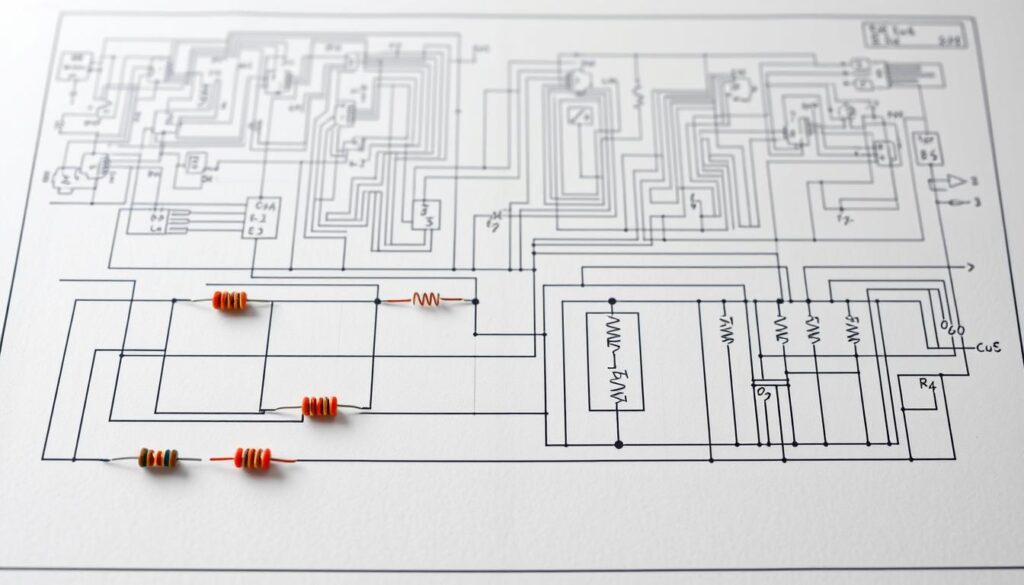
Parallel Circuits have components connected between the same two points. This allows electric current to flow through multiple paths. If one part fails, the others keep working. They are more complex but offer reliability and flexibility.
Key Differences
The main difference is in how they are set up and how they work. Series circuits have one path, while parallel circuits have many.
Series circuits are good for simple tasks where one part not working isn’t a big deal. Parallel circuits are better for complex tasks where reliability is key.
When picking between series and parallel, think about what your project needs. For simple, non-critical projects, series might be enough. But for projects needing reliability, parallel is better.
In summary, knowing the difference between series and parallel circuits is essential for building circuits well. By choosing the right type for your project, you can make sure your circuits work well, reliably, and safely.
Troubleshooting Common Circuit Issues
Troubleshooting is key for anyone working on circuits. It helps find and fix problems quickly. Issues can come from faulty parts, wrong wiring, or design mistakes.
A multimeter is a top tool for finding problems. It checks voltage, current, and resistance. With it, you can see where a circuit goes wrong. For example, if a circuit doesn’t work, checking voltages can show the problem.
Problems like short circuits, open circuits, and failed parts are common. A short circuit is when electricity finds an unwanted path, causing too much current. An open circuit stops electricity flow because of a break. Parts can fail due to bad manufacturing or too much stress.
To troubleshoot well, first look for obvious problems like loose wires or broken parts. Then, use a multimeter to check for continuity and measure voltages. If you can’t find the problem, getting professional help is wise to avoid safety risks and make sure the circuit works right.
Learning to troubleshoot makes you better at building circuits. You’ll make circuits that work better and last longer.
Expanding Your Circuit Knowledge
Now that you know the basics, it’s time to dive into advanced circuit design and circuit simulation. You’ll explore more complex electrical circuits as you go deeper.
Using circuit simulation software is a great way to learn more. Tools like SPICE let you design, test, and analyze circuits virtually. This saves time and reduces the need for physical prototypes.

Look into online tutorials and forums for electrical circuits and electronics. Talking with hobbyists and professionals can give you great tips and advice.
By mixing theory with practice and using circuit simulation tools, you’ll get better at designing and building complex electrical circuits.
Fun Circuit Projects for Beginners
Let’s dive into some fun and easy circuit projects for beginners. These projects are both educational and a great way to use your simple circuit knowledge.
One of the simplest and most rewarding projects is building a circuit with an LED light. This project teaches you about basic components like resistors, LEDs, and power sources. You can also play with different resistor values to see how they change the LED’s brightness.
Another exciting project is making a simple switch circuit. This project teaches you about controlling electricity flow. By adding a switch, you learn how to make circuits that can be turned on and off, a key feature in many devices.
As you get better at building circuits, you can try more complex projects. For example, you can make a circuit with multiple LEDs or even a simple alarm system. The world of possibilities is vast, and the key is to keep experimenting and learning.
“The best way to learn electronics is by doing it. Start with simple projects, and gradually move on to more complex ones. The journey is just as important as the destination.”
By doing these fun circuit projects, you’ll improve your understanding of simple circuits. You’ll also develop problem-solving skills and creativity. So, get your components ready, follow the steps, and enjoy making your ideas come to life through circuit projects.
Conclusion: Your Journey into Circuit Building
Circuit building is a fun and rewarding hobby. It helps you understand electric circuits. By following the steps in this article, you’ve started a journey into electronics.
As you keep building circuits, you’ll learn more about electric circuits. You’ll see how they power our devices. This knowledge can help you tackle more complex projects, encouraging innovation and creativity.
To improve your circuit design skills, look into advanced topics. This includes microcontrollers, circuit simulation software, and PCB design. With practice and patience, you’ll create complex circuits that bring your ideas to life.