

Organizing a treasure hunt is a fun activity that makes lasting memories. It’s a mix of adventure, teamwork, and solving puzzles. With good planning, it becomes an unforgettable experience.
Good event planning is key to a successful treasure hunt. You need to create tough clues, pick the right place, and keep everyone safe.
Whether it’s for a party or a corporate event, a treasure hunt is a great choice. This article will help you plan a treasure hunt. You’ll get useful tips and insights to make it a hit.
Understanding the Concept of a Treasure Hunt
A treasure hunt is more than a game; it’s an adventure. It can fit many purposes and themes. It’s important to know the purpose and what people think it is for it to succeed.
The goal of a treasure hunt can change a lot. It might be a fun game at a party theme event or a tough challenge that needs teamwork. Knowing this helps plan a great event.
Event planners say a good treasure hunt can make any event memorable. They make the treasure hunt concept match the event’s goals and what people like.
Organizers need to think about a few things. They should consider the age and interests of the people, how hard the clues are, and the event purpose. This way, the hunt is fun and a bit of a challenge for everyone.
“The art of a treasure hunt lies in its ability to balance challenge and fun, making it an engaging experience for all participants.”
Getting the treasure hunt concept right is key. It helps create an event that meets its goals and makes a big impact on those who take part.
Setting a Budget for Your Treasure Hunt
A good budget is key to a successful treasure hunt event. It helps with financial planning and keeps the event fun for everyone. This way, both the organizers and participants can enjoy the event without stress.
To create a realistic budget, list all event expenses first. These might include venue rental, clue creation, prizes, marketing, and extra activities. Think about what you need for the event.
It’s important to estimate costs well. Set aside money for:
- Clue design and production
- Venue or location fees
- Prizes for winners
- Marketing and promotional activities
- A fund for unexpected costs
Cost planning should also consider the number of participants. More people might mean more expenses for prizes, materials, and venues.

After listing all possible expenses and their estimated costs, you can make smart financial choices. It’s also good to check and adjust your budget as you plan the event. This keeps you on track financially.
With a well-thought-out treasure hunt budget, you can host an event that’s fun for everyone. And it won’t break the bank for the organizers.
Choosing a Suitable Location
Finding the right spot can make your treasure hunt stand out. The venue is key to a fun and challenging event. It sets the stage for a memorable experience.
Start by looking at parks, museums, or public areas. The best treasure hunt location depends on the event’s theme and age group. For example, a museum fits adult-themed hunts, while parks are great for family events.
When picking an event venue, think about accessibility and safety. The spot should be easy for everyone to get to, including those with disabilities. It should also be safe, avoiding any dangers during the hunt.
Location scouting means checking if the venue fits your hunt’s theme. Choose a place that makes the experience better, making it fun and immersive for all.
The success of your treasure hunt really depends on the location. By focusing on accessibility, safety, and atmosphere, you’ll create a fun and memorable event for everyone.
Selecting the Right Age Group
Knowing who will join your treasure hunt is vital for a great event. The age of participants shapes the hunt’s design and how hard it is.
When planning, think about how age affects the experience. Younger participants might need easier clues and more help. On the other hand, older participants might like tougher challenges.
The hunt’s theme should match the age group too. For example, kids might love a pirate-themed hunt. But adults might prefer something historical.
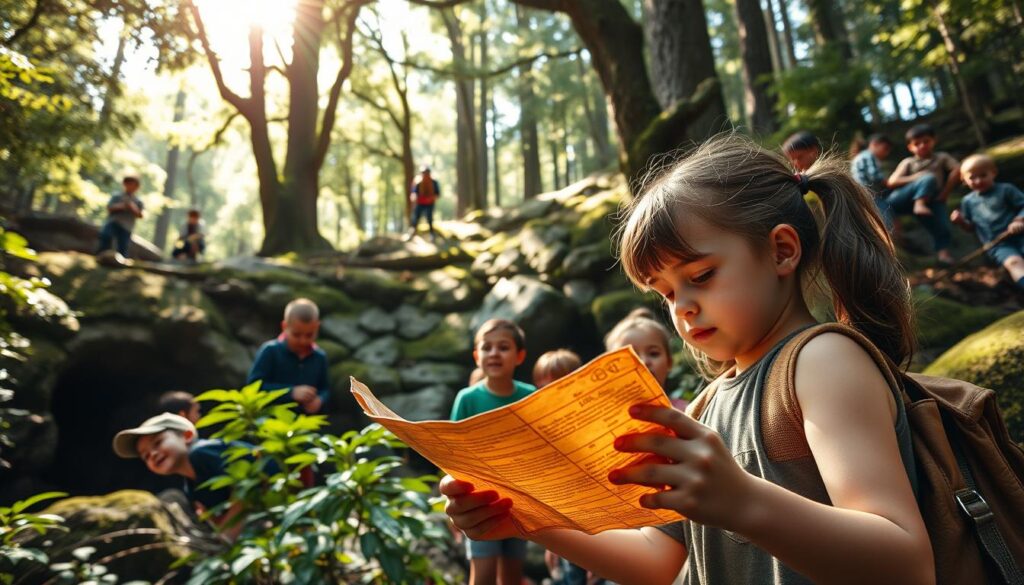
Also, think about the physical needs of the hunt. For older adults or young kids, the hunt might need to be easier. This ensures everyone can have fun without getting tired or uncomfortable.
By picking the right age group and adjusting the event, organizers can make it fun for everyone. It’s all about finding the right balance between difficulty, theme, and physical needs for the age group.
Crafting Intriguing Clues and Puzzles
Creating a treasure hunt is more than hiding items. It’s about making an exciting experience with clever clues. The key is to make the clues challenging yet solvable, keeping everyone engaged and eager to solve them.
Good puzzle design is essential for a great treasure hunt. You need to know who you’re making it for. Clues for kids might be simple riddles or pictures, while adult clues could be more complex, like ciphers or anagrams.
Using Wordplay and Ciphers
Wordplay is a fun way to make challenges. You can use anagrams, crosswords, or word scrambles to guide participants. Ciphers, like substitution or transposition, make it even more exciting.
For example, a simple cipher can replace each letter with another a set number of places down the alphabet. Solving it reveals the next clue. An anagram can hide important information or the next clue’s location.
Adding visual challenges is also smart. These can be simple puzzles or complex riddles that need careful thought. The goal is to keep the clues just right, not too easy or too hard.
Using technology can also make the hunt better. QR codes can lead to digital clues or challenges, adding a modern touch.
In summary, making great clues and puzzles is an art. It needs creativity, understanding of your audience, and a balance of challenge and reward. With techniques like wordplay, ciphers, and visual puzzles, you can make a memorable treasure hunt.
Assembling the Treasure Hunt Team
To make your treasure hunt a hit, you need a dedicated team. A good team helps in planning and plays a key role during the event.
Recruiting Volunteers: Start by finding volunteers. Ask friends, family, and coworkers if they want to help. You can also post on social media or use local volunteer sites to find more helpers.
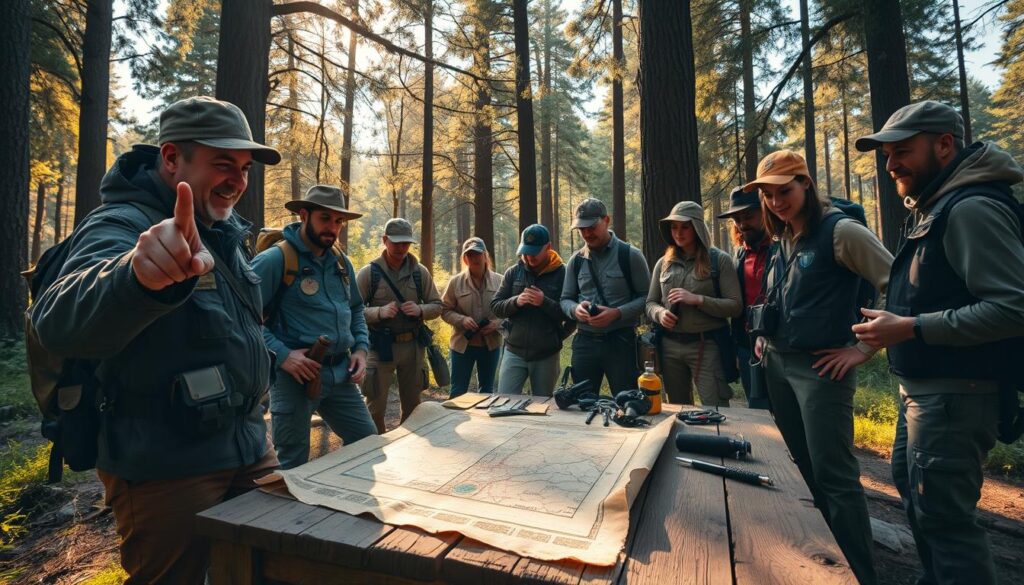
Assigning Tasks: After you have your team, give tasks based on each person’s skills. Some might be great at making clues, while others are better at event management or handling registrations.
Managing the Team: Good team management is key. Give clear instructions, have a way for updates and questions, and make sure everyone knows their job.
With a strong treasure hunt team and good volunteer management, your event will be a success. Everyone will have a great time.
Planning the Timeline
A good treasure hunt timeline is key to a successful event. It makes sure everything goes smoothly, from start to finish.
To make a treasure hunt timeline, start with a clear event schedule. Set a start and end time. Also, plan for registration, briefing, and other activities.
When planning the timeline, think about how long each activity will take. Make sure you have enough time for the hunt and breaks in between.
It’s also important to set deadlines for your team. This includes deadlines for clues, setting up, and finalizing the schedule. A good timeline helps manage these tasks well.
A well-made event schedule also keeps the event flowing smoothly. It makes sure the hunt moves at a good pace. This keeps everyone interested and not bored.
In short, a well-planned treasure hunt timeline is essential for a great event. It keeps everything on track and makes the experience better for everyone.
Promoting Your Treasure Hunt
To make your treasure hunt a hit, effective promotion is key. It’s not just about having fun. It’s also about getting people excited and informed about it.
Using social media promotion is a smart move. Sites like Facebook, Twitter, and Instagram are great for building excitement. Create an event page, share cool stuff, and use hashtags to get more eyes on it.
Event marketing is another strong strategy. Make flyers, posters, and press releases to spread the word. Put these out in places like community boards, schools, and libraries to reach more people.
Don’t forget to invite people directly. Look for local groups, schools, and organizations that might be interested. Send them personalized invites or emails to get them on board.
Working with local businesses is also a good idea. They can help by putting up your flyers or giving discounts to participants.
By mixing these tactics, you can craft a solid treasure hunt promotion plan. It will draw in a big, excited crowd. Just remember, start early and keep at it to succeed.
Preparing for Execution Day
The success of the treasure hunt depends on careful preparation for the execution day. Making sure every detail is covered will make the experience smooth for participants.
Finalizing the logistics is key in treasure hunt preparation. This means arranging equipment, managing registrations, and coordinating with the team. Good logistics management is essential for a smooth event.
It’s wise to confirm details a day before the event. Check the venue, make sure all clues and puzzles are ready, and verify the schedule. Having a backup plan for weather changes or other surprises is also important.
On the day of the event, having a dedicated team is vital. They should know their roles to keep the event running smoothly. This includes managing participants, solving any problems, and keeping to the schedule.
By focusing on detailed event execution and being ready for anything, your treasure hunt will be a hit. It will be fun for everyone involved.
Ensuring Safety and Enjoyment
The key to a memorable treasure hunt is finding the right balance. It’s all about mixing excitement with safety. Organizers must make sure everyone has a good time.
First, they need to check for any dangers. This means looking at the terrain, the weather, and any obstacles. Knowing these risks helps them plan a safe and fun event for everyone.
Creating a Positive Experience
A great event is more than just safe. It’s also about being fun and engaging. This means creating intriguing clues and puzzles that are challenging but not too hard.
Good risk management is key to a fun and safe hunt. By being ready and proactive, organizers can make sure everyone has a great time.
In the end, a treasure hunt that focuses on safety and fun will be unforgettable. It’s an experience that participants will always remember.
Debriefing After the Hunt
Debriefing after a treasure hunt is key to understanding its success and what can be improved. It’s a chance to evaluate the event fully and collect feedback from those who took part.
The process looks at what went right and what didn’t. It helps organizers make their future events better. Gathering feedback is essential, as it offers insights into what participants liked and what they suggest improving.
Gathering Feedback
Organizers can use surveys, interviews, or focus groups to get feedback. These methods help spot the event’s strengths and weaknesses. They cover everything from clue clarity to overall enjoyment.
By looking at the feedback, organizers can spot trends and areas to work on. This info is key for improving future treasure hunts. It makes them more fun and engaging for everyone.
In the end, a detailed debrief and feedback collection help make treasure hunt events better. They keep the excitement and satisfaction for all participants high.
Additional Resources for Treasure Hunts
To make your treasure hunt planning better, check out online resources. You’ll find tools and templates to help organize your event.
Tips and Ideas
Look for websites with templates for clues, puzzles, and scorecards. They can be very helpful. Also, event planning tools like registration and tracking software are great for managing participants and the hunt’s progress.
For new ideas, visit online forums and communities. Event planners there share their experiences and tips. Using these resources can make your treasure hunt more fun and memorable.