
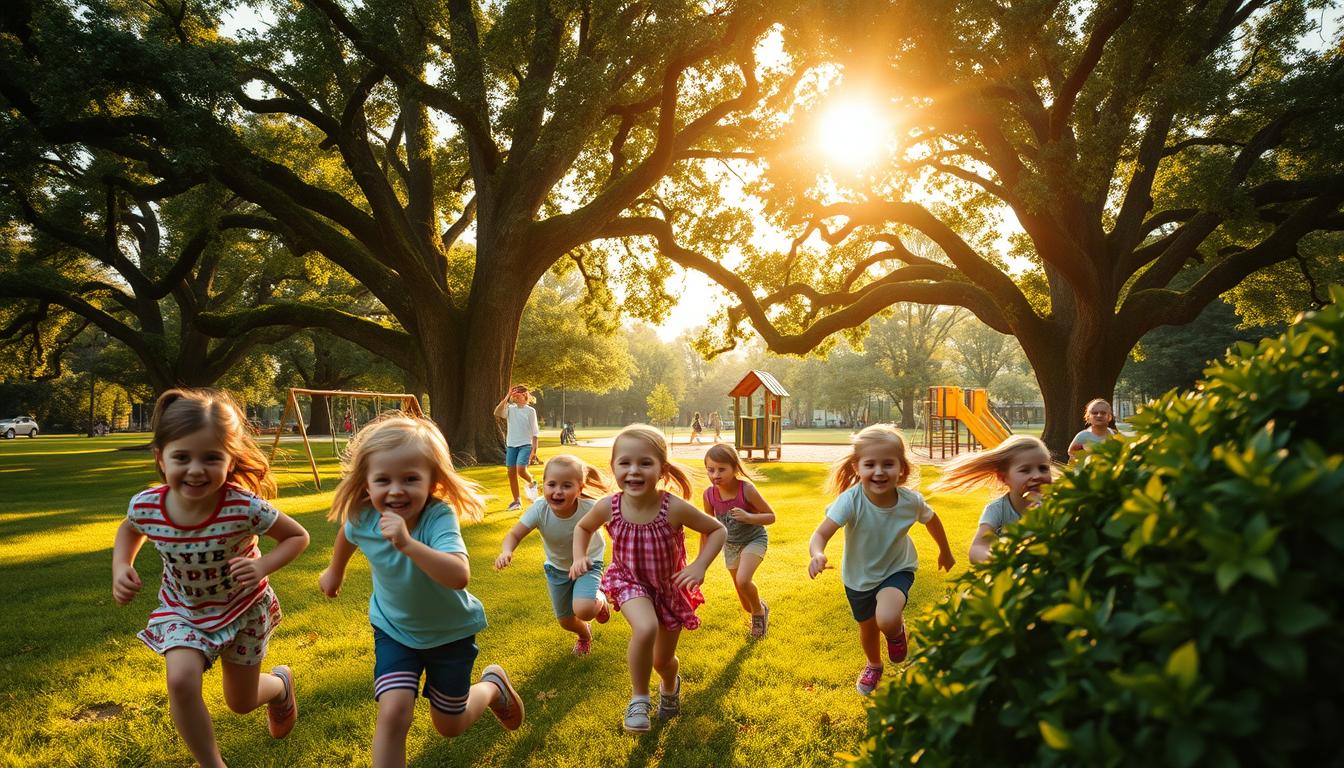
Hide and seek is a classic children’s game that boosts imagination and keeps kids active. It’s a great way for kids to have fun with friends. But, it’s important for parents and caregivers to teach safety tips to avoid accidents.
Creating a safe space for this game keeps kids safe and teaches them to be aware of their surroundings. Simple rules and guidelines help kids enjoy hide and seek without worrying about their safety.
By focusing on safety, we make hide and seek a fun and safe game for kids.
Introduction to Hide and Seek
Hide and seek is more than a simple game. It’s a cultural phenomenon that has been enjoyed by children for centuries. The game’s enduring popularity shows its ability to bring joy and excitement to kids worldwide.
The history of hide and seek is fascinating and complex. Variations of the game have been played in different cultures. From ancient civilizations to modern times, it has evolved, adapting to various environments and societies.
Historians say, “Games like hide and seek have been part of human culture for thousands of years. They serve as entertainment, socialization, and even education.”
“The simplicity and universality of hide and seek have made it a staple in children’s play, transcending geographical and cultural boundaries.”
The game’s significance goes beyond entertainment. It plays a key role in children’s development, improving their physical and cognitive abilities. Through hide and seek, children enhance their problem-solving skills, learn about spatial awareness, and develop social skills through interaction with peers.
In essence, hide and seek is not just a game. It’s a vital part of childhood, providing many benefits that contribute to children’s overall development. As we explore hide and seek, it’s clear why it remains a beloved activity among children and a significant part of our cultural heritage.
Setting Up a Safe Play Area
To have fun and stay safe, the right play area is key. It should be free from dangers that could hurt you. This is true for both indoor and outdoor play.
Indoor vs. Outdoor Play
Choosing between indoor and outdoor play depends on weather and space. Indoor games are great for rainy days or small spaces. But, you need to plan to avoid hitting furniture or other things.
Outdoor games have more room but face challenges like uneven ground or animals. Always check the outdoor area first to find and fix any dangers.
This quote shows how important a safe and fun place to play is. To keep the area safe, remove dangers, set clear rules, and teach everyone about the play area.
It’s important to talk to kids about safety and game rules in both indoor and outdoor settings. This makes their playtime better and teaches them about being responsible and safe.
Ground Rules for Playing
Setting clear ground rules for hide and seek is key to a great time. These rules help avoid confusion and keep the game fun and safe for all.
When setting ground rules, think about where players can hide. Clearly defining the play area is key to keep players safe. You might decide to exclude certain rooms or areas from the game.
Choosing the seeker is also important. Deciding how the seeker is chosen can be random, like counting or drawing lots. You might also want a signal for the seeker to start, like “Ready or not, here I come!”
Conflict resolution is also a big part of the rules.
“A good game is not just about winning or losing, but about having fun together.”
Having a rule for disputes, like a game moderator, keeps things positive.
By setting these ground rules, you make sure everyone has a fun and safe time.
Safety Tips for Players
To avoid injuries, it’s important to follow safety rules while playing hide and seek. Knowing your surroundings is key to staying safe.
Avoiding Injuries: Make sure you play in a safe place, away from dangers like sharp objects or slippery floors. Also, set clear boundaries before starting the game.
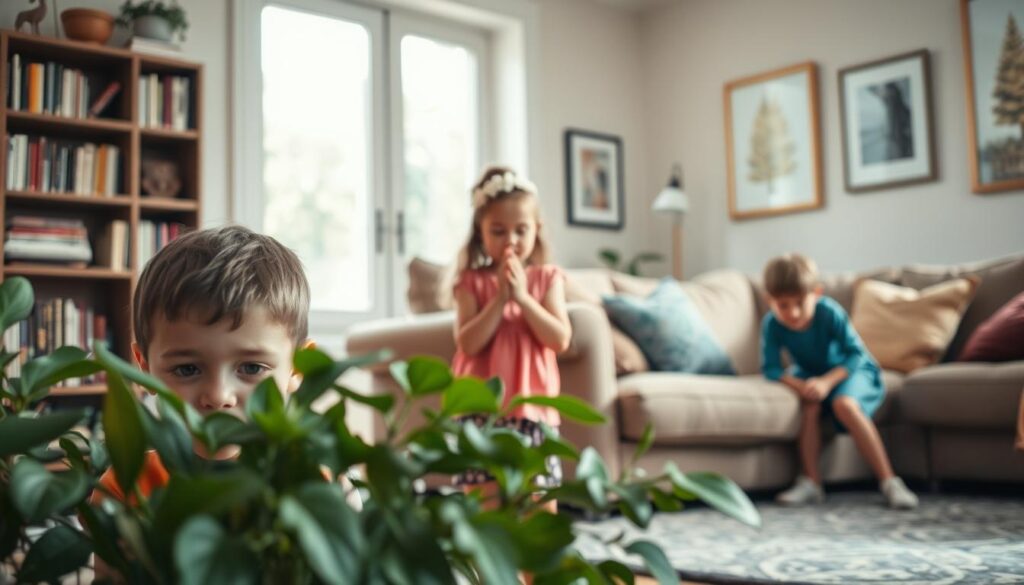
As Dr. Jane Smith, a pediatrician, once said, “Watching over kids is vital when they play hide and seek, even in places they don’t know well.” This shows how important it is to have adults around.
“The greatest glory in living lies not in never falling, but in rising every time we fall.” – Nelson Mandela. This quote reminds us to play safely and learn from our mistakes.
By sticking to these safety tips, players can lower the chance of getting hurt. This way, everyone can have a good time.
Creative Variations on Hide and Seek
Hide and seek is fun because it can be changed in many ways. This makes it great for all ages and places.
For little kids, making the game simpler helps. Use big hiding spots and fun themes like a treasure hunt. This makes it more fun and easy for them.
Older kids and adults can try harder versions. You can set a time limit, play in the dark with flashlights, or use GPS. This adds a cool twist to the classic game.
Changing the game setting can also add fun. Indoor games are different from outdoor ones. Indoor games might have smaller hiding spots. Outdoor games can use big areas like parks.
These game modifications keep the game exciting. They make sure everyone, no matter their age or skill, can enjoy it. This makes hide and seek a game that never gets old.
Engaging Kids of All Ages
To keep hide and seek exciting for kids of different ages, it’s essential to adapt the game to suit their abilities and interests. This timeless game is not just a form of entertainment but a tool for promoting physical activity, social interaction, and cognitive development.
Adapting for Different Age Groups is key to ensuring everyone has fun. For younger children, simplifying the rules and using larger, easier-to-hide areas can make the game more enjoyable. For older kids, introducing more complex rules or larger play areas can increase the challenge and excitement.
Including Older Kids in the game can be achieved by giving them more significant roles, such as being the “seeker” or helping to design the hiding spots. This not only makes the game more engaging for them but also teaches them leadership skills.
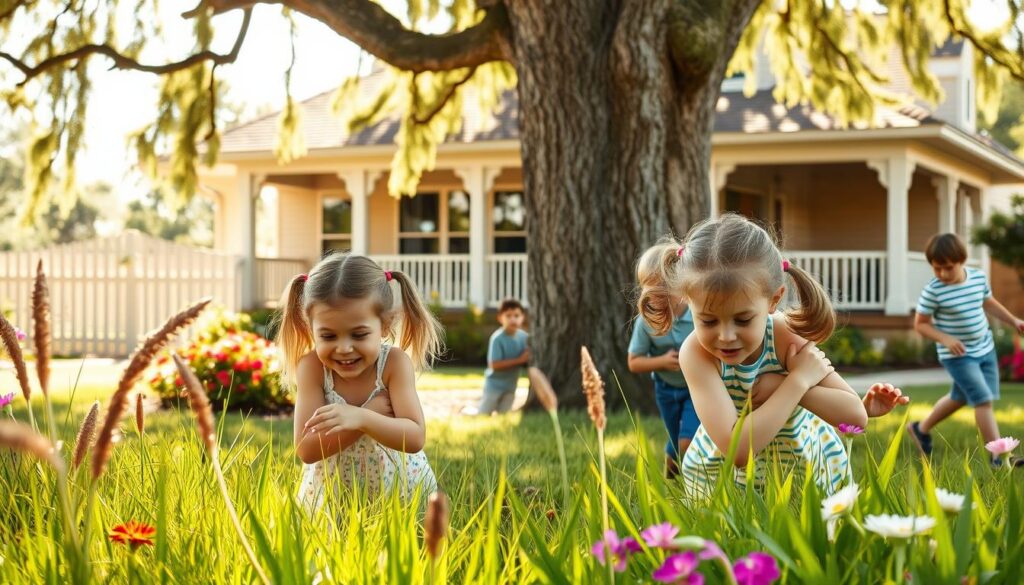
As stated by child development experts, “Play is the highest form of research” for children. Hide and seek embodies this, providing a fun way to explore surroundings, understand spatial relationships, and develop problem-solving skills.
“The way we play as children shapes who we become as adults, influencing our social skills, creativity, and ability to handle stress.”
By making hide and seek enjoyable for all ages, families can foster a love for play that transcends age, promoting family fun and togetherness. Encouraging creativity in how the game is played can also enhance game enjoyment for everyone involved.
Avoiding Conflicts During Play
Playing hide and seek is more than just finding great hiding spots. It’s also about being a good sport. Good sportsmanship makes sure everyone has fun.
Setting clear rules before the game starts is key. Decide on the playing area, game length, and how to handle disputes. Knowing the rules helps avoid arguments.
Teaching kids to be respectful is also important. Encourage them to be kind, even when competing. This helps create a positive game atmosphere.
If a problem comes up, having a plan for dispute resolution is essential. A neutral person can help solve issues fairly. This teaches kids valuable skills for life.
By focusing on game etiquette and how to solve problems, games can be more fun. This approach helps everyone get along better.
Playing Indoors vs. Outdoors
Choosing between playing hide and seek indoors or outdoors depends on safety, space, and fun. Both places offer unique experiences that fit different tastes and needs.
Playing hide and seek indoors is great when it’s bad outside or when there’s little room outside. It lets you play all year, no matter the weather. But, indoor games might be tricky because of small spaces and fragile things.
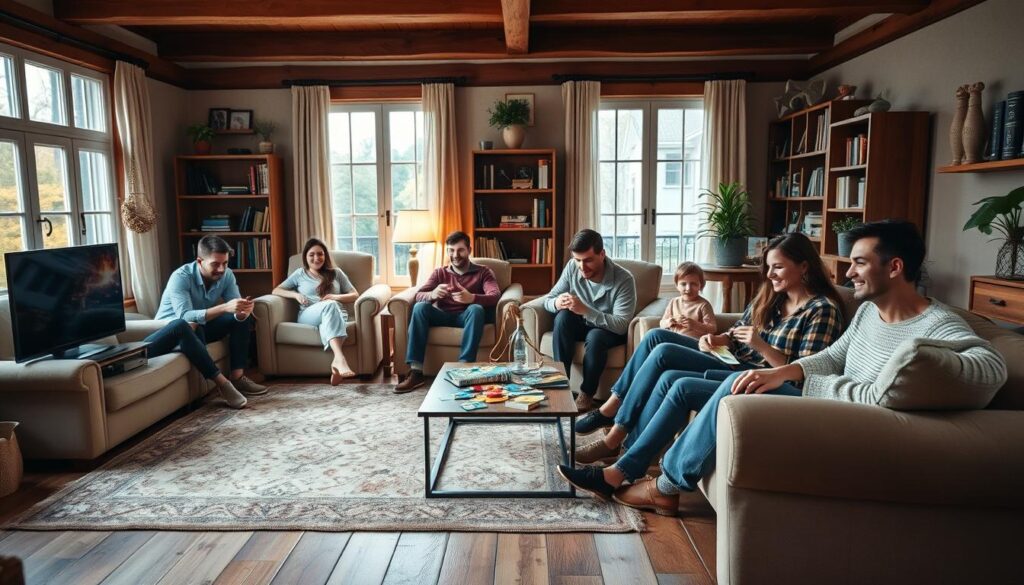
Outdoor games are bigger and more exciting. They have many places to hide, like trees and playgrounds. But, you have to watch out for dangers like cars, bad weather, and sharp things.
The choice between indoor and outdoor games also depends on who’s playing. Young kids might be safer indoors, while older ones might like the adventure outdoors.
In the end, the best place to play hide and seek is where it’s safe and fun. Knowing the good and bad of each spot helps make the game better for everyone.
Encouraging Teamwork and Cooperation
Hide and seek is often seen as a solo game. But, it can also teach teamwork and cooperation. By making the game more about working together, everyone can have a better time.
Forming teams is a great way to encourage teamwork. Players can work together to find hidden players or avoid being caught. This not only boosts cooperation but also improves how well team members communicate.
Players can also team up in pairs or small groups. They can hide together or seek together. This collaborative play adds a new strategy layer, as players must work together and support each other.
Setting goals that need teamwork to achieve can also help. For example, players might aim to find all hidden players within a time limit. Or, they could hide in ways that make it hard for seekers to find them.
Adding cooperation and teamwork to hide and seek makes it more than just a game. It becomes a way to teach valuable social skills. These skills can help players in many areas of life.
Teaching Important Life Skills
Hide and seek is more than just a game. It’s a chance for kids to learn vital social, emotional, and cognitive skills. It’s a fun way to learn and grow.
Hide and seek helps kids develop social skills. They learn to work together, take turns, and communicate. For example, hiding teaches patience and self-control. Sharing excitement at the end builds friendship and teamwork.
It also boosts emotional intelligence. Kids feel many emotions, like excitement and disappointment. They learn to handle these feelings, growing emotionally stronger.
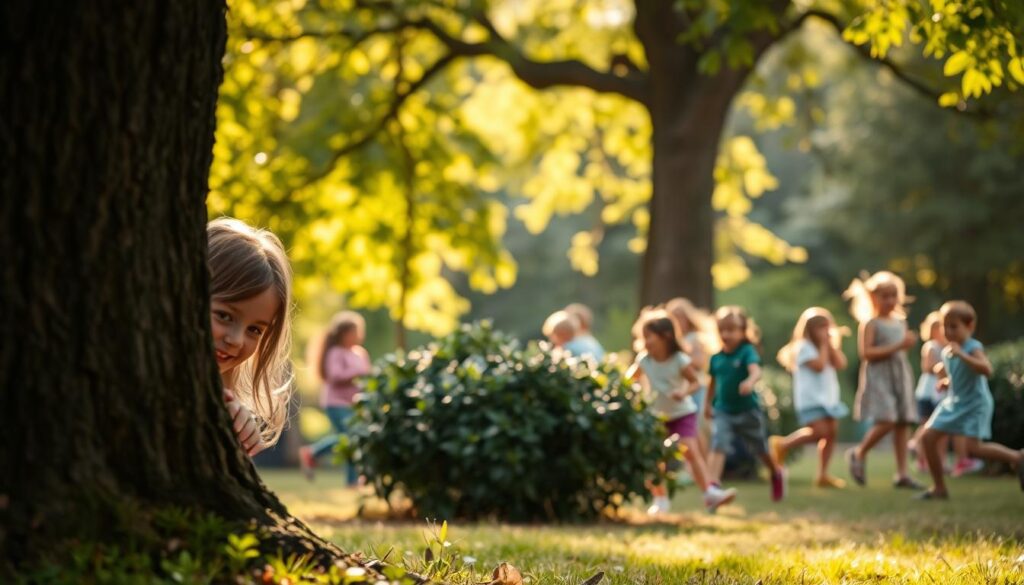
Hide and seek also sharpens cognitive skills. Players solve problems to find the best hiding spots. This improves their memory and spatial awareness.
Playing hide and seek is a fun way for kids to learn important life skills. Parents can make it even better by encouraging teamwork and good sportsmanship.
Fun After the Game
The fun doesn’t have to stop after the game. There are many activities to enjoy. Celebrating your success and having fun together is a great way to extend the hide and seek experience.
After the excitement of playing hide and seek, players can engage in various post-game activities. These activities foster family fun and strengthen bonds. One idea is to have a small celebration with snacks or a simple meal together, discussing the highlights of the game.
Another activity could be to create a story or drawing about the game. This encourages creativity and reminiscing about the fun moments. It not only extends the joy but also provides a keepsake of the fun time had together.
Engaging in post-game activities like these can enhance the overall experience. It makes hide and seek more than just a game. It’s about creating lasting memories and enjoying quality time together as a family or with friends.
Conclusion: The Joy of Playing Safely
Playing hide and seek is a timeless activity that brings immense joy to children. By prioritizing safe play, parents and caregivers can ensure that this classic game remains a positive and enjoyable experience for kids.
When played responsibly, hide and seek fosters joyful experiences, promotes physical activity, and creates lasting childhood memories. The game encourages children to explore their surroundings, develop problem-solving skills, and build strong relationships with their peers.
By following the guidelines outlined in this article, families can enjoy the many benefits of hide and seek while minimizing the risk of injury or conflict. This approach to safe play helps children develop essential life skills, such as cooperation, communication, and mutual respect.
Ultimately, the joy of playing hide and seek safely lies in its ability to bring people together, creating shared experiences that can be cherished for a lifetime.