
Playing with acids and bases can be really cool. It shows us the basics of chemistry.
Acids have more hydrogen ions (H+), while bases have hydroxide ions (OH-). When acids and bases mix, it’s a key part of chemistry. pH levels help us understand these mixtures.
Learning about acids and bases helps us understand chemical reactions. It also shows us why pH levels are important in chemistry.
Understanding pH Levels: The Basics
Learning about pH levels is key to knowing how things mix in different places. The pH scale is a basic tool in chemistry. It shows if a solution is acidic or basic.
The pH scale goes from 0 to 14. Acids have a pH below 7, and bases have a pH above 7. Neutral solutions, like distilled water, have a pH of 7. This means they have the same amount of H+ and OH- ions.
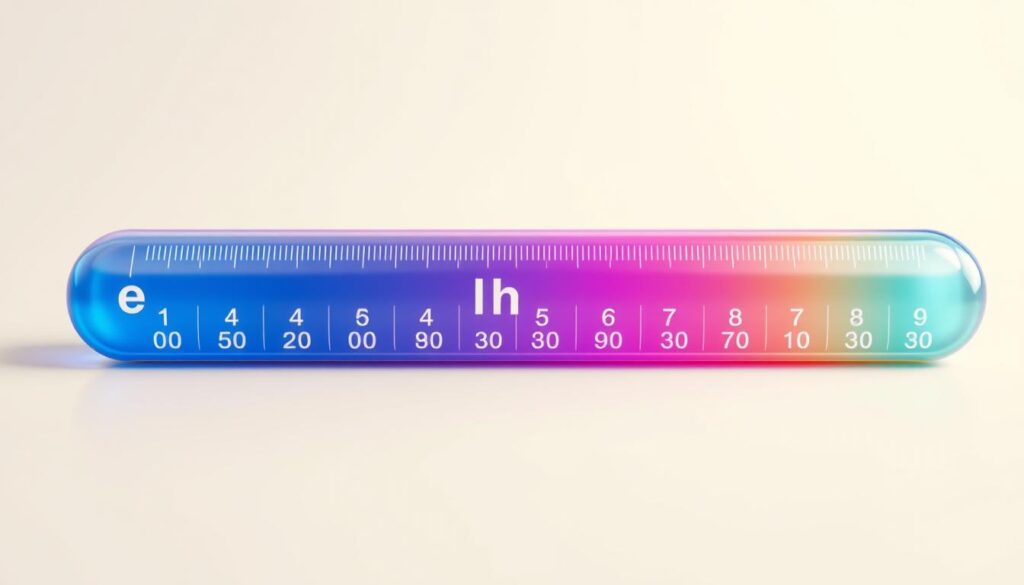
The pH scale is logarithmic. This means each step up or down is a tenfold change in H+ ions. It’s important for understanding chemical properties and reactions. For example, a solution with a pH of 6 is ten times more acidic than one with a pH of 7.
Dr. Jane Smith, a renowned chemist, said, “The pH level of a solution can greatly change its chemical behavior and interactions.” This shows how vital pH is in science and everyday life.
“The pH scale is a simple yet powerful tool for understanding the world around us, from the acidity of our rainwater to the alkalinity of our soil.”
Here are some examples: lemon juice has a pH around 2, making it acidic. Baking soda solution is basic with a pH of about 8. Knowing these levels is important in fields like agriculture and medicine.
By learning about pH levels, we can handle many things in our lives and the environment better.
The Science Behind Acids and Bases
The world of chemistry is full of fascinating interactions between acids and bases. These interactions are key to understanding many chemical reactions. Acids are corrosive and lose their acidity when mixed with bases. They also have a sour taste.
Bases, by contrast, feel soapy and are alkaline. When acids meet bases, they create neutral solutions. This is a basic concept in chemistry and is important for understanding many processes.
Acid-Base Reactions happen when hydrogen ions (H+) and hydroxide ions (OH-) come together. Acids give away H+ ions, while bases give away OH- ions. When H+ and OH- ions meet, they form water, which is neutral.
The chemical properties of acids and bases are critical to understanding their behavior. Acids can damage surfaces because they are corrosive. Bases, on the other hand, are often used in cleaning products. They can dissolve grease and grime.
Knowing the science behind acids and bases is essential for chemistry. It helps us understand how they affect our lives. By learning about acids and bases, we can see the importance of chemistry in many fields.
Measuring pH Levels: Tools and Techniques
Measuring pH levels is key in chemistry. Many tools and methods help figure out if something is acidic or basic. pH indicators are one of the simplest and most used ways.
Litmus paper is a well-known pH indicator. It comes from a type of lichen. Blue litmus turns red in acids, and red litmus turns blue in bases. It’s a quick way to check if a solution is acidic or basic.
Litmus Paper and Other Indicators
Other indicators like phenolphthalein and universal indicator are also used. Phenolphthalein is colorless in acids but pink in bases. The universal indicator shows a range of colors for different pH levels. It’s great for measuring pH.
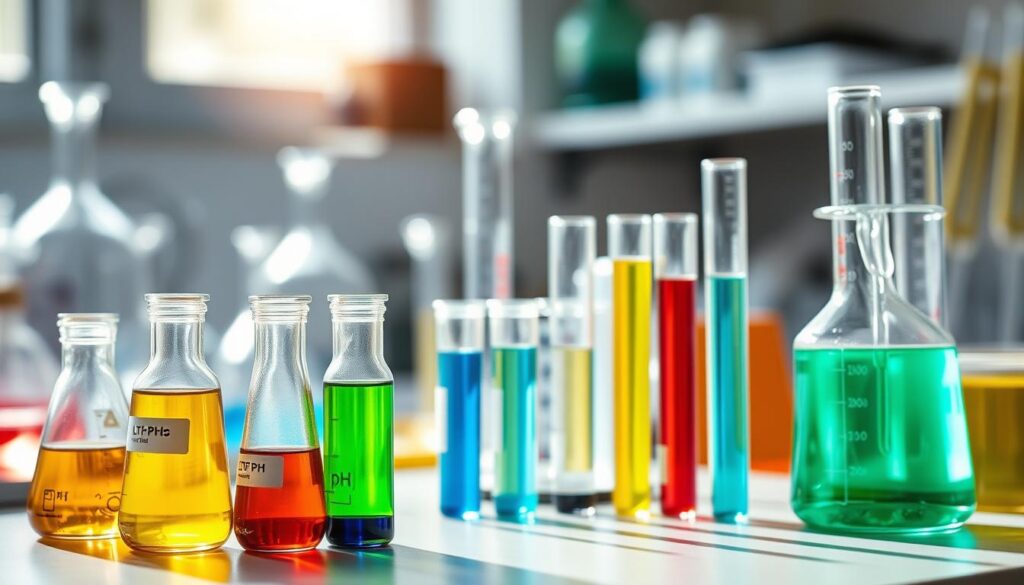
pH measurement tools are vital in science and industry. They help us easily find out if a solution is acidic or basic. Knowing how to use these tools lets us accurately measure pH levels in many situations.
How to Conduct a pH Test
Testing the pH of different liquids is a fun and educational experiment for all ages. It helps you understand the acidity or alkalinity of various substances you encounter daily.
One of the simplest methods to conduct a pH test is by using litmus paper. Litmus paper changes color based on whether the substance is acidic or basic. To use it, just dip the paper into the liquid you want to test. If it turns red, the substance is acidic. If it turns blue, it’s basic.
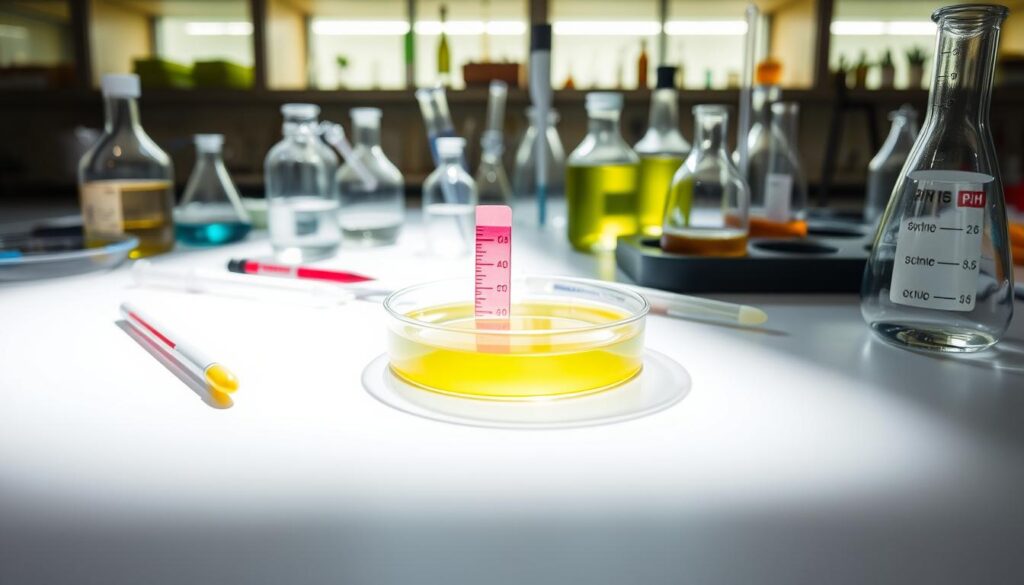
Another fun way to conduct pH tests is by making your own pH indicator using red cabbage juice. Red cabbage contains a pigment that changes color with different pH levels. To make the indicator, boil red cabbage in water, then strain the liquid. Use this liquid to test various household substances like window cleaner, toilet bowl cleaner, orange juice, and apple juice. The color change will show the pH of the substance.
Simple Experiments You Can Try at Home
Here are a few simple experiments you can try:
- Test the pH of different juices (like orange, apple, or grapefruit) to see which is more acidic.
- Compare the pH of various household cleaners to understand their chemical properties.
- Experiment with baking soda and vinegar to observe how they react and change pH.
These acid-base experiments are not only fun but also provide a hands-on learning experience about the chemistry of everyday substances.
By conducting these simple pH tests and experiments, you’ll gain a better understanding of the world around you. You’ll also develop a curiosity for science.
pH Levels in Soil: Why They Matter
The pH level of soil is very important for plant growth and how well plants get nutrients. Most plants do best in soil that’s slightly acidic to neutral, with a pH between 6.0 and 7.0.
Soil pH affects how plants can use nutrients. If the soil is too acidic or too basic, plants might not get the nutrients they need. This can hurt their health. For example, acidic soils can have too much aluminum and manganese, which are harmful to many plants.
Soil acidity and soil basicity are two extremes that gardeners and farmers must handle. Some plants, like blueberries and azaleas, do well in acidic soil. But others, such as lavender and succulents, prefer more alkaline soil.
Knowing and managing soil pH is key to helping plant growth. By testing and adjusting the soil pH, gardeners and farmers can make a better environment for their plants. This leads to healthier crops and more productive gardens.
pH and Human Health
Human health is closely tied to the body’s acid-base balance, shown by pH levels. The body works best in a narrow pH range, with blood ideally at 7.4. Even small changes can harm our bodies, showing how vital it is to keep this balance.
Keeping the body’s pH balance right is key for health. Our bodies have natural ways to keep pH stable. But, diet, environment, and some health issues can upset this balance.
A pH imbalance can cause many health problems. If the body’s pH gets too low, it can lead to acidosis. If it gets too high, it can cause alkalosis. Both can cause serious health issues, from mild symptoms to life-threatening ones.
The effects of pH imbalance are broad. They can harm many body systems, like the digestive, respiratory, and heart systems. For example, an imbalance can weaken bones by taking minerals from them to fight acidity.
It’s important to understand how pH balance affects health. Knowing what affects the body’s pH and how to keep it balanced can help avoid pH-related health problems.
Common Applications of pH Testing
pH testing is key in many fields like water treatment, environmental monitoring, and industrial manufacturing. It’s very important. It helps make sure products and services are of high quality in different industries.
In industrial settings, pH testing checks if things are too acidic or too alkaline. This is very important for making chemicals, textiles, and medicines. The right pH level is needed for the best product quality.
Environmental monitoring also uses pH testing a lot. It checks the health of our ecosystems by testing water, soil, and more. This helps find and fix environmental problems.
Water quality testing is another big use of pH testing. It’s about keeping our drinking water safe and protecting fish and other sea creatures. Regular pH tests help spot problems like pollution.
In summary, pH testing is used in many ways and affects our lives a lot. It helps in making things safer and healthier. By using pH testing well, we can protect our environment.
Environmental Impacts of pH Levels
Extreme pH levels can harm the environment a lot. They change habitats and affect how many different species live together. The pH effects on ecosystems are complex, affecting plants and animals in many places.
The impact on water life is big. For example, acid rain makes lakes and rivers more acidic. This can hurt many water creatures, as they are very sensitive to pH changes.
The environmental impacts of these changes are wide. Acidic areas can lead to fewer species because some can’t adapt. On the other hand, alkaline areas can favor some species over others.
Wildlife and pH are very connected. Many animals have evolved to live in certain pH levels. So, when pH changes, it affects not just those animals but the whole ecosystem.
It’s important to understand and lessen the environmental impacts of pH levels. We need to watch pH levels and fix the problems that cause extreme pH, like pollution and industrial activities that lead to acid rain.
Future of pH Testing Technologies
The future of pH testing looks bright with new sensor and measurement technologies. These advancements will make pH testing more accurate and accessible. We’ll see new uses in many industries.
New sensor technologies will allow for real-time pH monitoring. This will change how we monitor the environment, healthcare, and industrial processes. It’s a big step forward.
By combining pH measurement with other sensing technologies, we’ll get better monitoring systems. Ongoing research will lead to even more progress. This will help us manage pH levels more effectively in different areas.