
The water cycle is key to life on Earth. It turns liquid water into water vapor. This happens when water molecules get enough energy to change from liquid to gas.
Evaporation is vital in the water cycle. It helps move water from oceans, lakes, and rivers into the air. This water then forms clouds, which can lead to rain.
Knowing how water turns into vapor is important. It helps us understand the water cycle and its effects on our world. Evaporation affects weather and how we get water.
Understanding Evaporation and Its Importance
Evaporation is when water turns from liquid to vapor. It’s key to the Earth’s water cycle. It affects climate, weather, and water distribution worldwide.
When water molecules get enough energy, they turn into vapor. This energy usually comes from the sun’s heat. As evaporation process happens, it cools the area around it. This helps control Earth’s temperature.
The water cycle, or hydrological cycle, depends on evaporation. It moves water from the Earth to the air. This leads to cloud formation and rain.
Knowing the importance of evaporation helps us see its role in life on Earth. It’s not just a natural event. It affects climate, farming, and water use.
For example, evaporation from oceans, lakes, and rivers makes rain and snow. These are vital for fresh water. Evaporation also shapes weather and spreads heat, changing local climates.
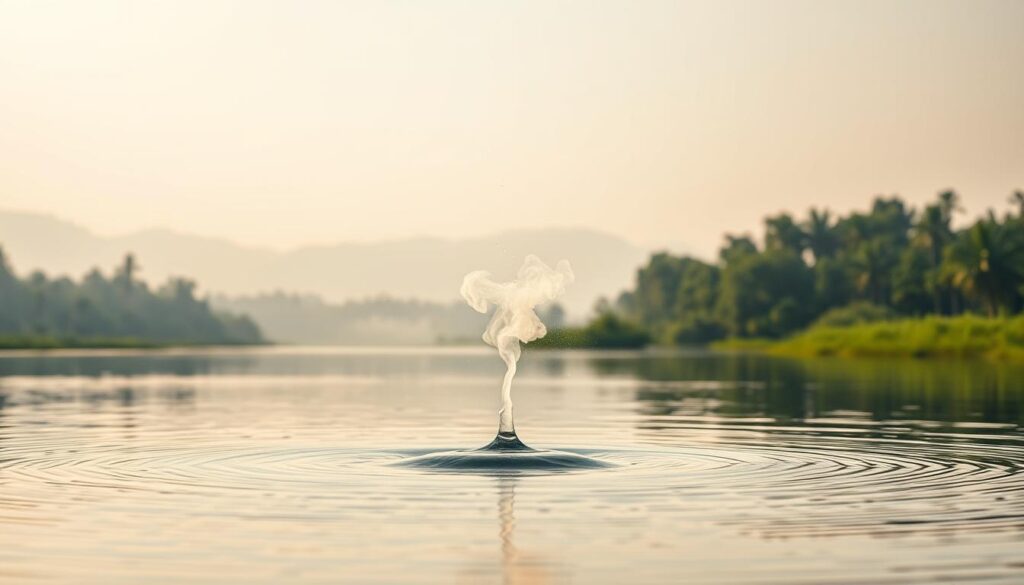
In summary, evaporation is essential in the Earth’s water cycle. It has big effects on our environment, climate, and daily life. By understanding evaporation, we can manage water better and protect our ecosystem.
The Science Behind Water Molecules
Water changes from liquid to vapor at the molecular level. Water molecules have two hydrogen atoms and one oxygen atom, forming a V-shape. This shape is key to understanding water’s behavior.
When temperature rises, water molecules get more energy. This energy helps them break free from each other. They then turn into vapor.
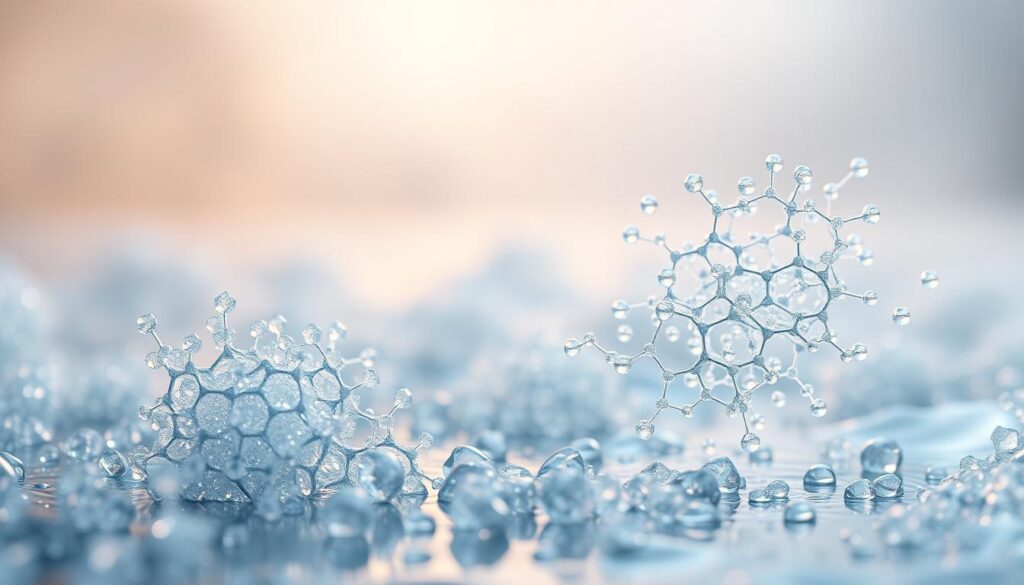
Changing from liquid to vapor involves several steps. First, heated water molecules move faster. Then, they break free from the water’s surface, turning into vapor. Water’s molecular structure helps it absorb and release energy well.
Water vapor comes from liquid water and ice too. This shows how complex water’s state changes are. It’s important to understand these processes.
“Water vapor is produced from the evaporation or boiling of liquid water or from the sublimation of ice.” This principle shows how water can change its state in many ways.
Learning about water molecules and their state changes helps us appreciate our environment’s complexity.
Factors Influencing Evaporation Rates
Many factors affect how fast water evaporates. Knowing these factors helps us understand evaporation better.
Temperature is key in evaporation. Hotter temperatures make molecules move faster, leading to quicker evaporation. This is why evaporation speeds up on warm days.
Humidity also plays a big role. High humidity means the air is full of water vapor, slowing evaporation. Dry air, on the other hand, can take in more moisture, speeding up evaporation. The data shows that “the amount of water vapor in the air determines how frequently molecules will return to the surface,” showing humidity’s importance.
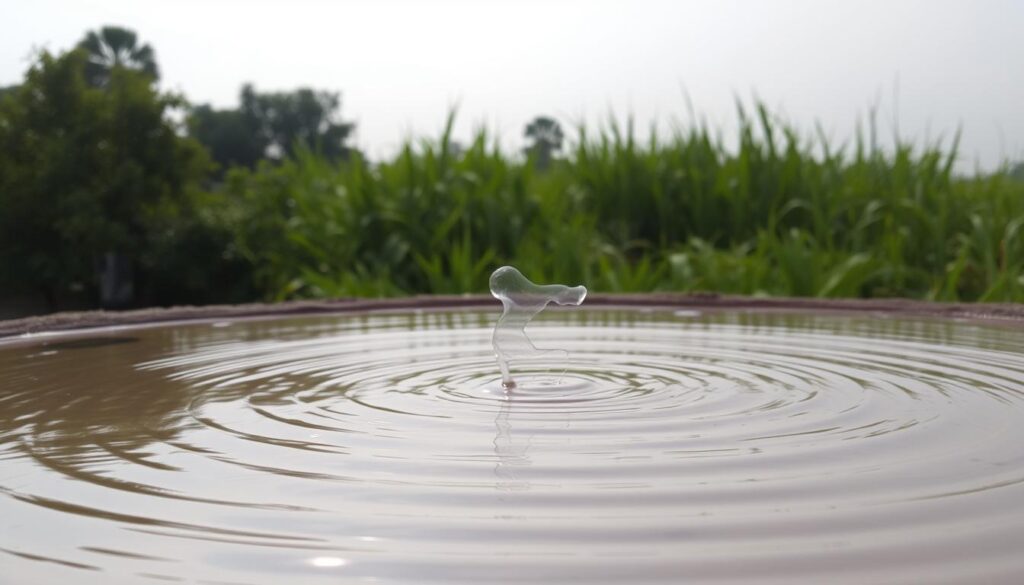
Wind is another important factor. Wind helps remove the saturated air near the surface. This lets drier air touch the water, speeding up evaporation. This is why water evaporates faster on windy days.
When water evaporates, it cools down. This cooling happens because the energy-rich molecules leave as vapor, leaving cooler molecules behind.
The combination of temperature, humidity, and wind determines evaporation rates. Knowing how these factors work together is vital for many fields, from environmental studies to industrial processes.
Evaporation in Nature
In nature, evaporation is a key part of the water cycle. It affects oceans, lakes, and rivers. These water bodies are vital for the global water balance. Evaporation from them shapes our climate and weather.
About 90 percent of the water in the air comes from evaporation from these bodies. The other 10 percent comes from plants. This shows how important natural evaporation is in the Earth’s water cycle.
“The oceans, lakes, and rivers are not just sources of water; they are integral to the Earth’s energy balance, influencing weather and climate through evaporation.”
Evaporation from oceans is very significant because of their huge size. It depends on temperature, humidity, and wind speed. For example, warmer temperatures and stronger winds make evaporation faster. But high humidity slows it down.
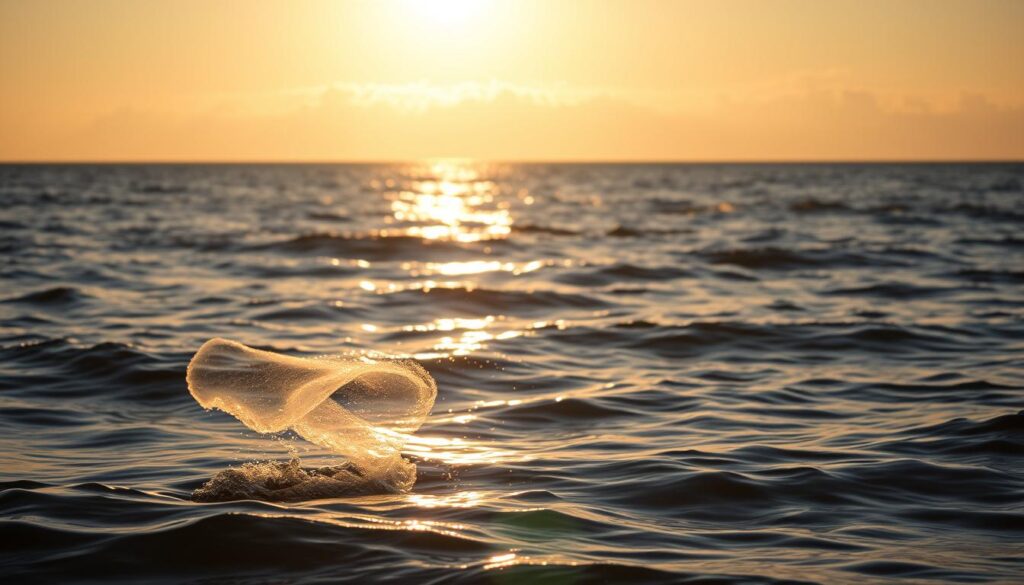
Lakes and rivers also evaporate, but less than oceans. Yet, their evaporation can greatly affect local climates and water availability.
Evaporation from these water bodies does more than just cycle water. It impacts local ecosystems, farming, and how we use water. Knowing about natural evaporation helps us manage water better.
Practical Applications of Evaporation
Evaporation is key in many industrial processes and agricultural processes. It’s used in energy production, where water vapor is a major part. Recent insights show its huge importance in these areas.
In industrial processes, evaporation helps make fresh water from seawater. This is vital in places where clean water is scarce. It’s a big help in solving water problems.
Also, evaporation is vital in agricultural processes, like in irrigation. Knowing how much water evaporates helps manage water better. This ensures crops get the right amount of water.
Evaporation’s role in these areas shows its big impact. It helps industries work better and farmers grow more. By using evaporation, we can use water more efficiently.
Measuring Evaporation
Measuring evaporation has come a long way, helping us understand the water cycle. It’s key for fields like agriculture, meteorology, and hydrology.
The National Weather Service uses a special “pan” to measure evaporation. This pan is open water, placed outside at many spots across the country. It’s a simple yet effective tool for figuring out how fast water evaporates.
Methods of Measuring Evaporation
There are a few ways to measure evaporation:
– Evaporation pans: These are the go-to method. They directly measure how much water evaporates from a surface.
– Lysimeters: These tools track the water balance in a certain area. They include evaporation in their measurements.
– Eddy covariance: This method uses micrometeorology to measure water vapor and gas flux. It’s between the atmosphere and the land.
Choosing the right tool depends on what you need to measure and how accurate you want it. Evaporation pans are simple and cheap. But, lysimeters and eddy covariance give more detailed info.
It’s important to know how these methods work. Things like temperature, humidity, wind, and sunlight affect evaporation. These factors must be considered when measuring.
The Benefits of Understanding Evaporation
Learning about evaporation helps a lot with climate modeling and water resource management. It’s key for the environment because it’s part of the water cycle. It also affects weather and how much water we have.
Having the right evaporation data is key for making good choices in climate and water management. It lets scientists predict weather and water issues like droughts or floods. This helps with effective water resource management.
The benefits of knowing about evaporation are many. It helps predict climate changes and manage water better. For example, knowing how much water evaporates helps plan irrigation systems. This saves water.
Also, evaporation is important for climate modeling. It shapes climate patterns. By accurately modeling evaporation, scientists can make better climate predictions. These predictions are key for planning and fighting climate change.
In short, knowing about evaporation is very helpful for climate modeling and water resource management. It leads to a more sustainable future by helping us make better choices and manage resources better.
Common Misconceptions About Evaporation
Evaporation is often misunderstood. Many think it only happens when it’s hot.
But, evaporation can happen at any temperature. It just needs enough energy for water molecules to break free. This shows how complex and influenced evaporation can be.
Some also think evaporation stops when it’s humid. But, while high humidity slows it down, it doesn’t stop it completely.
Knowing this helps us better understand weather and water use. It shows how evaporation affects our world.
Many also believe evaporation only happens at the surface. But, it starts at the surface and can change the temperature around it. This shows its wide impact.
Clearing up these myths helps us understand evaporation better. It’s key for managing water and predicting environmental changes.
Encouraging Sustainable Water Practices
Protecting water resources is key for human needs and nature’s health. Learning about evaporation and its role in the water cycle is vital. It helps us manage water better.
Using water wisely and conserving it can cut down on waste. People, communities, and groups must join forces. They need to use strategies that save water.
Supporting sustainable water practices helps our ecosystems stay healthy. It also protects this essential resource for the future. Good conservation and management are essential to reach this goal.