
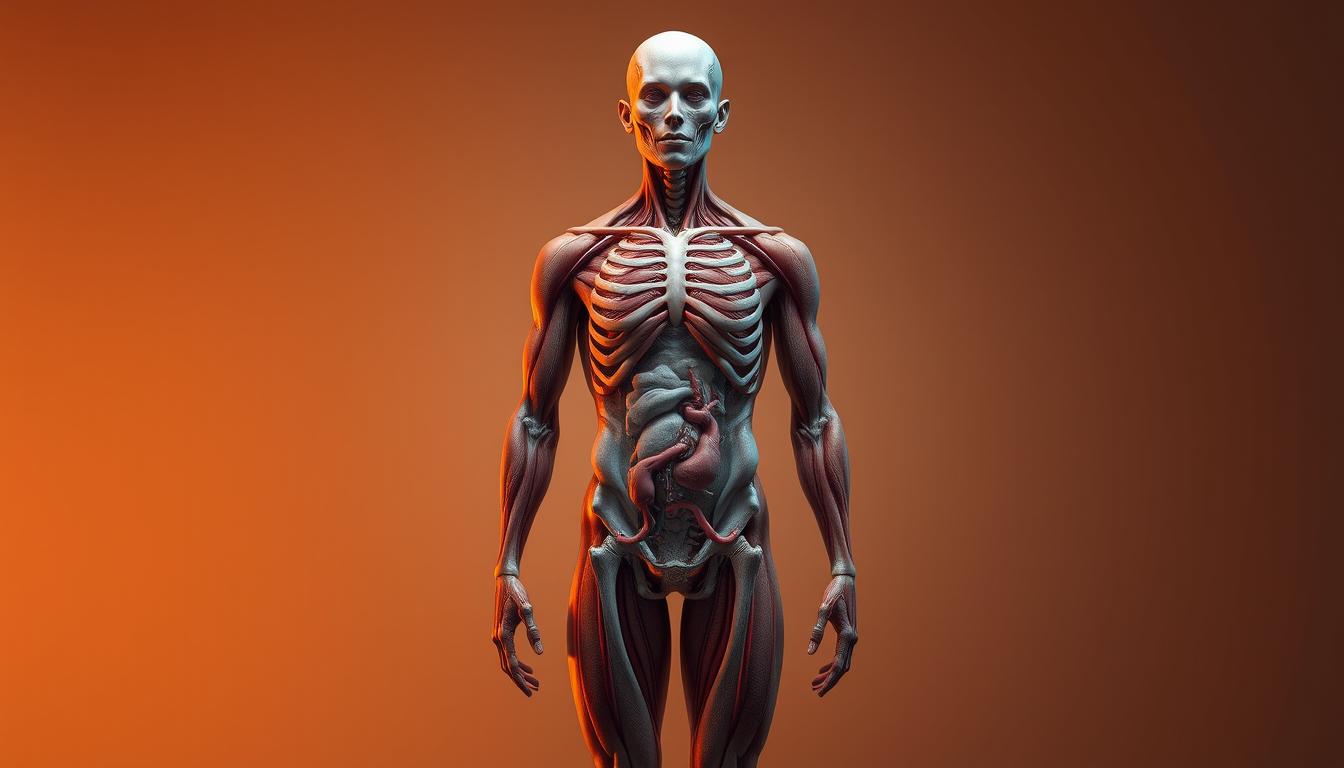
The body is a complex system that does many things we need to live. Learning about it is both interesting and useful.
Our body is made up of many systems that work together. These include the circulatory and nervous systems. Each one is important for staying healthy.
Body functions are key to keeping us alive. Studying these can help us understand how our body works.
Looking into the details of our anatomy helps us see how all parts fit together. This shows us just how complex the human body is.
Understanding the Structure of the Human Body
It’s key to know how the human body works to understand its functions and systems. The body has many systems that keep us healthy.
The human anatomy is a complex field that studies the body’s parts and their roles. It covers the skeletal, muscular, nervous systems, and more. These systems work together to keep us alive.
The body’s structure includes organs, tissues, and cells. Organs are made of different tissues that work together. Examples are the heart, lungs, and liver.
The body’s systems are connected and need each other to work right. For instance, the circulatory system, with the heart and blood vessels, helps the respiratory system. This ensures oxygen gets to the body’s tissues.
Knowing how the body’s systems work together is vital for health. By learning about the body’s parts and their roles, we can appreciate how it keeps us alive and healthy.
In conclusion, studying human anatomy and body structure is rewarding. It gives us insights into the amazing workings of the human body.
The Role of Muscles in Movement
Muscles are the unsung heroes of the human body. They enable movement, support posture, and help with various body functions. The muscular system is a complex network of muscles working together.
The muscular system is key for movement and keeping posture right. It has three main types of muscle tissue: skeletal, smooth, and cardiac. Each type has its own role and characteristics.
Types of Muscles
Skeletal muscles are attached to bones. They help with voluntary movements like walking and lifting. They also help keep the body’s posture and regulate body temperature.
Smooth muscles are in the walls of hollow organs like the digestive tract and blood vessels. They help with involuntary movements, like the digestive tract’s contraction and relaxation.
Cardiac muscle is found in the heart. It pumps blood throughout the body. This ensures oxygen and nutrients reach all tissues and organs.
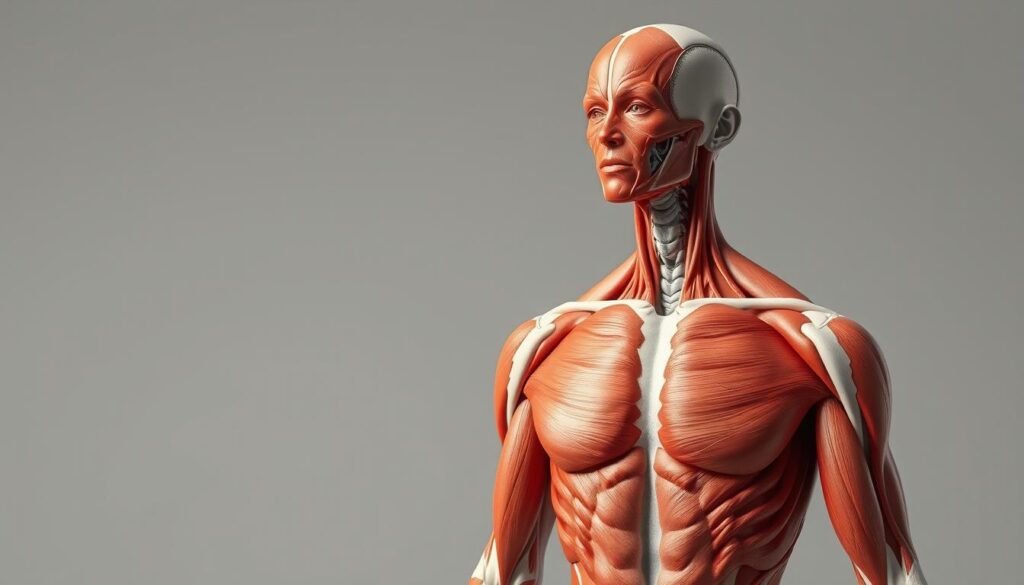
The teamwork of these muscle types allows the body to do many things. From movement and posture to circulation and digestion. Knowing about the muscular system helps us understand human physiology better.
In conclusion, the muscular system is vital for movement and body functions. By learning about the different muscles and their roles, we can see the beauty and complexity of the human body.
The Importance of the Circulatory System
The circulatory system is at the core of our body’s functions. It’s a complex network that’s vital for life. It carries oxygen and nutrients to cells and takes away waste, keeping us healthy.
This system includes the heart, blood vessels, and blood. The heart pumps blood all over the body. Blood vessels, like arteries and veins, are the paths for blood to flow.
Blood circulation is key for cells to get oxygen and nutrients. It also helps remove waste, preventing disease and keeping us healthy.
Key Functions of the Circulatory System
The circulatory system does more than just circulate blood. It helps regulate body temperature, carries hormones, and supports the immune system. Healthy blood flow meets our body’s needs.
In short, the circulatory system is vital for our health and well-being. Its role in blood circulation and body functions is essential, making it a critical part of our body’s machinery.
Exploring the Digestive System
The digestive process is complex, involving many organs working together. The digestive system breaks down food into nutrients our body can use.
It starts in the mouth, where food is chewed and mixed with saliva. This saliva has enzymes to start breaking down carbs. After swallowing, food goes down the esophagus and into the stomach. There, stomach acids and enzymes further break it down.
Organs Involved in Digestion
The digestive system includes the mouth, esophagus, stomach, small intestine, and large intestine. Each organ is critical to digestion.
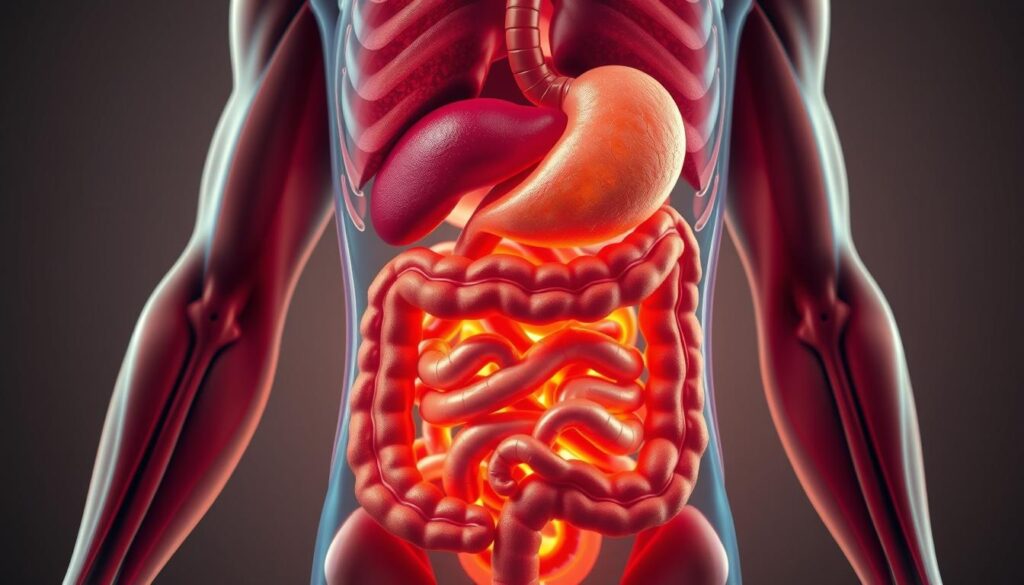
The small intestine is where most nutrient absorption happens. Special cells here absorb nutrients into the blood. The large intestine, or colon, absorbs water and packs waste for elimination.
In short, the digestive system is vital. It helps our body use the food we eat, getting essential nutrients and energy.
The Nervous System: Control Center of the Body
The nervous system is at the heart of our body’s functions. It controls everything from movement to heartbeat. It’s made up of the brain, spinal cord, and nerves.
The brain is our body’s control center. It processes information and sends signals to the rest of the body. It controls actions we can choose, like walking, and actions we can’t, like our heartbeat.
“The nervous system is the most complex system in the body, and it’s not fully understood,” said Dr. Eagleman. “It’s a dynamic system that is constantly adapting.”
The nervous system does more than control movements. It helps us feel and react to things around us. For example, when we touch something hot, our skin sends signals to the brain. The brain then tells us to pull our hand back.
The nervous system also keeps our body in balance. It controls heart rate, blood pressure, and body temperature. This keeps these functions healthy.
In short, the nervous system is key to our survival. It lets us interact with our world and keeps our body working right.
Respiratory System: Breathing Life
Our ability to breathe is thanks to the respiratory system. It’s a complex network of organs and tissues. The system includes the lungs, airways, and breathing muscles. It’s key for exchanging oxygen and carbon dioxide through breathing.
Breathing lets us take in oxygen-rich air and release carbon dioxide. This exchange is vital for the body’s tissues to work right.
The lungs are key in this process. They have millions of tiny air sacs called alveoli. This structure helps the body absorb oxygen efficiently. The airways, like the trachea and bronchi, help air move in and out of the lungs.
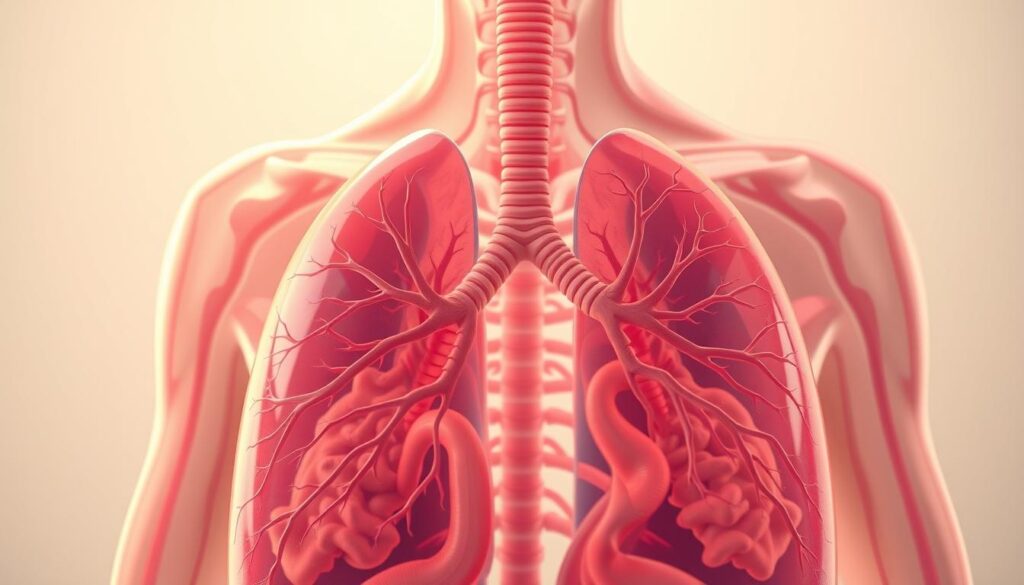
The diaphragm and other muscles control breathing. When the diaphragm contracts, it moves down, letting the lungs fill with air. When it relaxes, it moves up, pushing air out.
In short, the respiratory system is essential for our oxygen supply. Knowing how it works helps us appreciate the complex processes that keep us alive.
The Immune System: Our Defense Mechanism
The immune system is a complex network of cells, tissues, and organs. It keeps us safe from harm. It fights off pathogens like bacteria, viruses, and other harmful substances.
The immune system uses many layers to protect us. It starts with physical barriers like our skin. Then, it uses cells and proteins to attack invaders.
A key part of the immune system is knowing what’s us and what’s not. It learns to not attack our own cells. This helps prevent diseases where the body attacks itself.
Keeping our immune system strong is important. We can do this with a healthy diet, exercise, enough sleep, and managing stress. A strong immune system helps us fight off infections and diseases.
In short, the immune system is our main defense. Knowing how it works and taking care of it is key to staying healthy.
The Endocrine System: Hormonal Balance
The endocrine system is key to our health. It controls our body’s functions through hormones. It has glands like the pancreas, thyroid, and adrenal glands. These glands work together to make and control hormones we need to stay healthy.
This system helps with growth, metabolism, and reproduction. For example, the thyroid gland makes hormones that help our metabolism. The pancreas makes insulin, which keeps our blood sugar levels right. Keeping hormonal balance is very important. If it’s off, we can get sick.
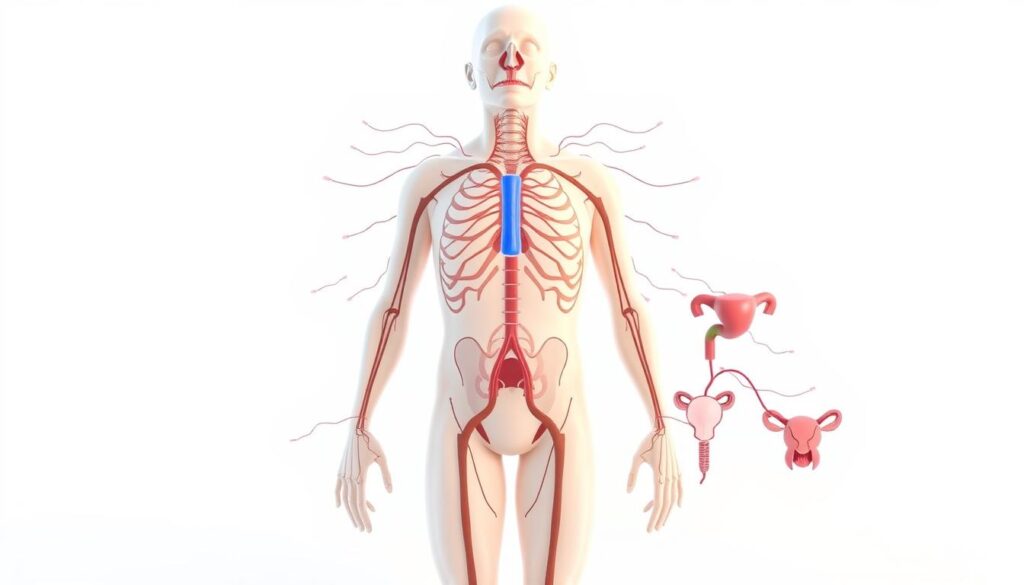
Many things can cause a hormonal imbalance. Stress, bad diet, and some diseases are examples. Knowing about the endocrine system and how it keeps hormonal balance is vital. When it works right, we avoid many health problems and stay healthy.
Skin: The Body’s Largest Organ
The skin is the body’s biggest organ, giving us protection and helping us in many ways. It’s a complex system that keeps us safe from harm and helps control our body temperature. It also helps make vitamin D.
The skin protects us in many ways. It keeps us safe from physical harm, germs, and harmful UV rays. This protective role is vital in preventing infections and diseases, making it an indispensable part of our immune defense.
The skin also helps us stay cool or warm by sweating and changing blood flow. This is key for keeping our body’s temperature right and for our health.
Also, the skin makes vitamin D when we get sunlight. This vitamin is essential for bone health and immune function, showing how important the skin is for our well-being.
“The skin is more than just a covering; it’s a dynamic organ that interacts with the environment and the body in complex ways.”
In short, the skin is vital for our health. It protects us, helps with temperature control, and makes vitamin D. Taking care of our skin is key to staying healthy.
Fun Facts About the Human Body
The human body is full of fascinating features. There are many interesting facts that show its complexity and intricacy. For example, the human nose can detect over 1 trillion different scents. The brain uses about 20% of the body’s total energy.
Other human body facts include the skeleton being made of 206 bones. The skin, the body’s largest organ, regenerates itself about every 2-4 weeks. The body also has trillions of microorganisms, with the gut microbiome being key to our health.
These interesting facts and more show the incredible complexity and beauty of the human body. By understanding and appreciating these facts, we can gain a deeper appreciation for the systems and processes that keep us alive.