Imagine stepping into a world that’s all your own. Here, reality stretches and possibilities are endless. This is what Virtual Reality promises, a technology that keeps evolving.
The term “virtual reality” was first linked to immersive visuals in the mid-1980s. Jaron Lanier, a key developer in VR Technology, coined it. Ever after, it has changed how we see digital worlds.
With a VR Headset, you can dive into 3D virtual spaces. You can explore new dimensions and touch virtual objects in a fun way.
What is a VR Headset?
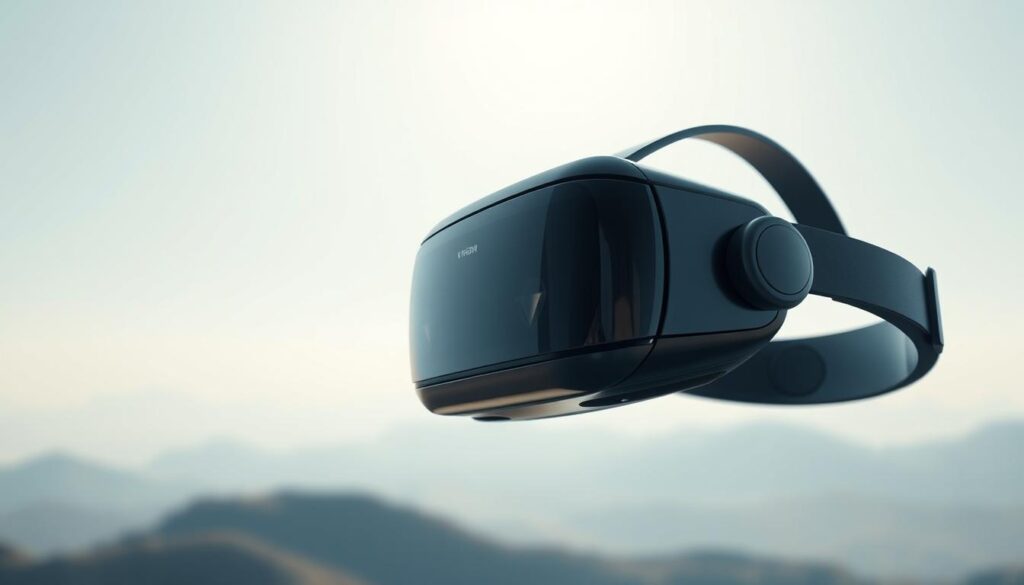
A VR headset tricks your brain into thinking you’re in a virtual world. It uses binocular vision to create depth. This is how our eyes see the world in 3D.
Our eyes see the world from different angles. The brain mixes these views to make depth. VR headsets do the same thing, making the virtual world feel real.
VR headsets have screens, lenses, and motion sensors. The screens show images that the lenses make bigger and clearer. The motion sensors track your head, changing the view as you move.
VR headsets also use spatial audio. This makes sounds seem like they’re coming from real places. It makes the virtual world feel even more real.
A VR expert says, “The best VR experiences come from how well they use our senses.”
“The future of VR is about mixing the real and virtual worlds. We want experiences that look amazing and feel real.”
Learning about VR headsets shows how complex and exciting virtual reality is. As VR gets better, we’ll see even more amazing experiences.
Types of VR Headsets Available
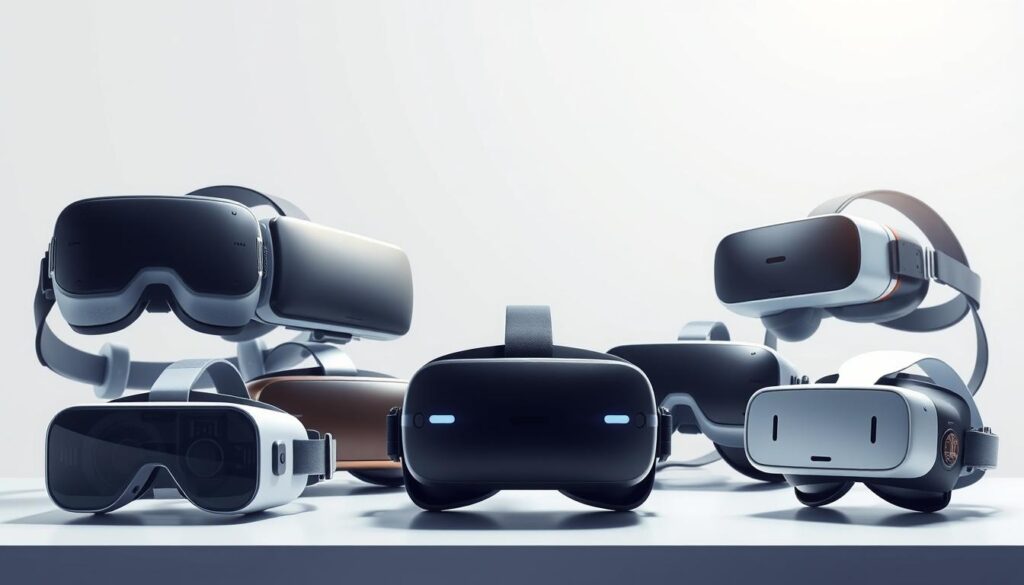
The VR industry offers a variety of headsets, including PC-based, mobile, and standalone models.
VR headsets can be broadly categorized into three types based on their operational requirements and functionalities: PC-Based VR Headsets, Mobile VR Headsets, and Standalone VR Headsets.
PC-Based VR Headsets
PC-Based VR headsets are high-end devices that require a powerful computer to operate. They offer superior graphics and immersive experiences, making them ideal for gaming and complex applications.
Advantages: High-resolution graphics, advanced tracking systems, and a wide range of compatible content.
Disadvantages: Requires a high-performance PC, which can be costly, and may have cable constraints.
Mobile VR Headsets, on the other hand, utilize smartphones to provide VR experiences. They are more affordable and accessible than PC-Based VR headsets.
Key Features: Portability, ease of use, and a lower cost entry point into VR.
Standalone VR Headsets are self-contained units that do not require a PC or smartphone to operate. They offer a convenient and user-friendly VR experience.
Popular VR Headset Brands
The VR market is led by Oculus, HTC Vive, and PlayStation VR. These brands are at the top of VR technology. They offer a variety of headsets for different needs and likes.
Oculus, now part of Meta, is famous for easy-to-use VR headsets. They are great for starting your VR journey. Their headsets are known for top-notch graphics and simplicity.
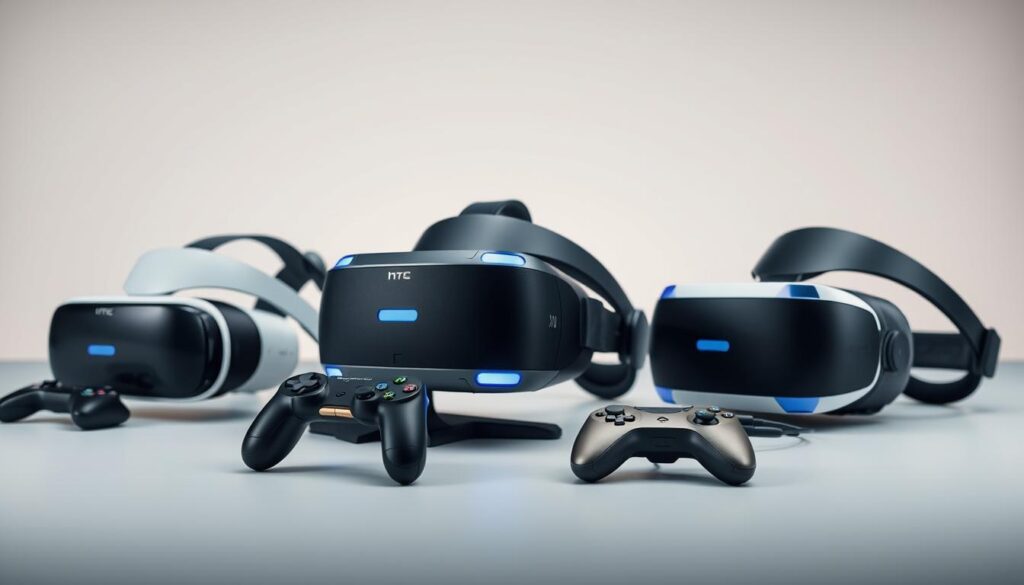
HTC Vive is known for its high-end VR solutions. It offers advanced features like room-scale VR. This lets users move around in virtual space, making the experience more real.
PlayStation VR is made for gamers. It has a wide range of VR games that work with PlayStation consoles. It’s affordable and has a big library of VR games.
Unique Features and Strengths
Each brand has its own special strengths. Oculus is great for beginners, making VR easy to start with. HTC Vive is known for its advanced VR features, like room-scale technology. PlayStation VR is all about gaming, with a huge library of VR games.
Knowing what each brand is good at helps you choose the right VR headset. It’s important to pick one that fits your needs and preferences.
Key Features to Look For
To get the most out of VR, knowing what to look for in a headset is key. The right features can make your virtual world experience better.
Resolution is a big deal. A higher resolution means clearer, more detailed visuals. Look for headsets with high-resolution displays for sharper images and brighter colors.
The Field of View (FOV) is also important. A wider FOV lets you see more without moving your head as much. Most VR headsets have a FOV between 100 to 110 degrees.
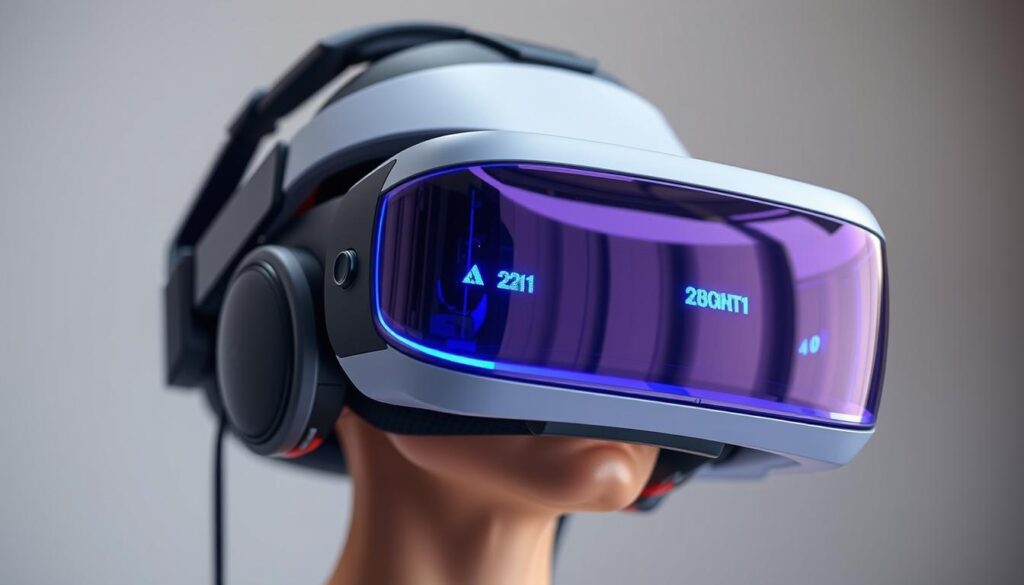
The Tracking System is essential too. Good tracking systems follow your movements well, making VR smoother. There are different types, like inside-out and outside-in, each with its own benefits.
Don’t forget about content availability. Make sure your headset has lots of games, educational stuff, and social apps. This way, you can enjoy your VR to the fullest.
By looking at resolution, field of view, tracking system, and content availability, you can pick the best VR headset. This will give you an amazing VR experience.
Benefits of Using a VR Headset
VR headsets open up new worlds, changing how we play, learn, and train. They offer immersive experiences, making digital content more interactive and memorable.
One big VR Benefit is in training. VR lets us practice in real-world settings, which is super helpful for professional training. This is true for fields like healthcare and aviation.
In Education, VR headsets are becoming more popular. They make learning fun and interactive. Students can dive into history or complex science, making it easier to understand and remember.
VR headsets also boost engagement in gaming and fun. The immersive quality of VR gives gamers a more real and exciting experience. This is raising the bar for the gaming world.
VR headsets are not just for fun and learning. They also help in therapy, architecture, and design. As VR tech gets better, its benefits will grow. It will change many parts of our lives, both personal and professional.
VR Headsets for Different Needs
VR headsets are not just for gaming. They also help in education and healthcare, bringing many benefits. VR for Gaming has changed the entertainment world. It offers deep, real-like experiences.
VR for Education makes learning fun and interactive. Students can explore places and things they can’t see in real life. This includes historical sites and distant planets, all from class.
VR for Healthcare is used for therapy, treatment, and training. It helps with pain, PTSD therapy, and surgical practice. VR’s immersive quality can greatly help patients and train doctors.
Many industries use VR for their needs. Schools use it for interactive lessons, while hospitals use it for therapy and training. This shows how VR can help in many ways.
VR headsets are made for different uses. They help in gaming, education, and healthcare. This makes VR a valuable tool in many fields.
Setting Up Your VR Headset
Setting up a VR headset is more than just plugging in cables. It’s about unlocking a world of virtual possibilities. To ensure a seamless experience, it’s important to understand the steps involved in setting up your device correctly.
The first step in the VR Headset Installation process is to check your hardware requirements. This means making sure your computer or gaming console meets the minimum specs required by the VR headset. You’ll need a powerful processor, enough RAM, and a high-end graphics card.
Once you’ve confirmed your hardware is compatible, the next step is the Configuration of your VR headset. This involves physically setting up the device. You’ll need to connect it to your computer, set up controllers, and install any necessary software or drivers.
After the initial setup, you’ll need to calibrate your VR headset. This process varies by brand and model but generally involves adjusting the IPD (Interpupillary Distance) and ensuring the headset fits properly on your head.
Software Installation and Updates
Most VR headsets require specific software to operate. This software often needs to be updated regularly to ensure compatibility with the latest games and applications. The Installation process typically involves downloading the software from the manufacturer’s website and following the on-screen instructions.
Configuring your VR environment is also key. This may involve setting up play areas, configuring controller settings, and adjusting graphics quality. This ensures a balance between performance and visual fidelity.
By following these steps and tips, you can ensure a smooth and enjoyable VR Headset Setup experience. Whether you’re gaming, exploring virtual worlds, or using VR for educational purposes, a properly configured VR headset is essential to unlock its full benefits.
Enhancing Your VR Experience
Make your VR experience better with a few tweaks and accessories. To get the most out of VR, optimize your setup and check out all the content available.
One easy way to improve your VR is by adjusting the settings on your headset. You can change the resolution, adjust the IPD, and make sure the software is up to date.
Adding accessories can also boost your VR experience. Controllers with haptic feedback make interactions feel more real. Also, external sensors improve tracking, reducing lag or drift.
Trying out different VR content is another great way to enhance your experience. There’s a wide range of VR experiences, from games to educational content. Experimenting with different genres can help you find new favorites and keep things interesting.
Practical Tips for a Better VR Experience
To enjoy your VR headset more, follow these tips:
– Make sure your play area is clear to avoid accidents.
– Take breaks to prevent eye strain and fatigue.
– Adjust the headset for comfort, as it greatly affects your experience.
By using these tips and tricks, you can make your VR experience more enjoyable and immersive.
The Future of VR Technology
The VR industry is on the verge of big growth. New trends and innovations will change how we see virtual worlds. We’ll see better resolution, tracking, and content creation.
These improvements will make VR even better. They’ll also open new doors in education, healthcare, and entertainment. Big names like Oculus and HTC are leading the way.
VR headsets will get smarter and easier to use. This will lead to more people using them in different fields. The future of VR is looking very promising.