
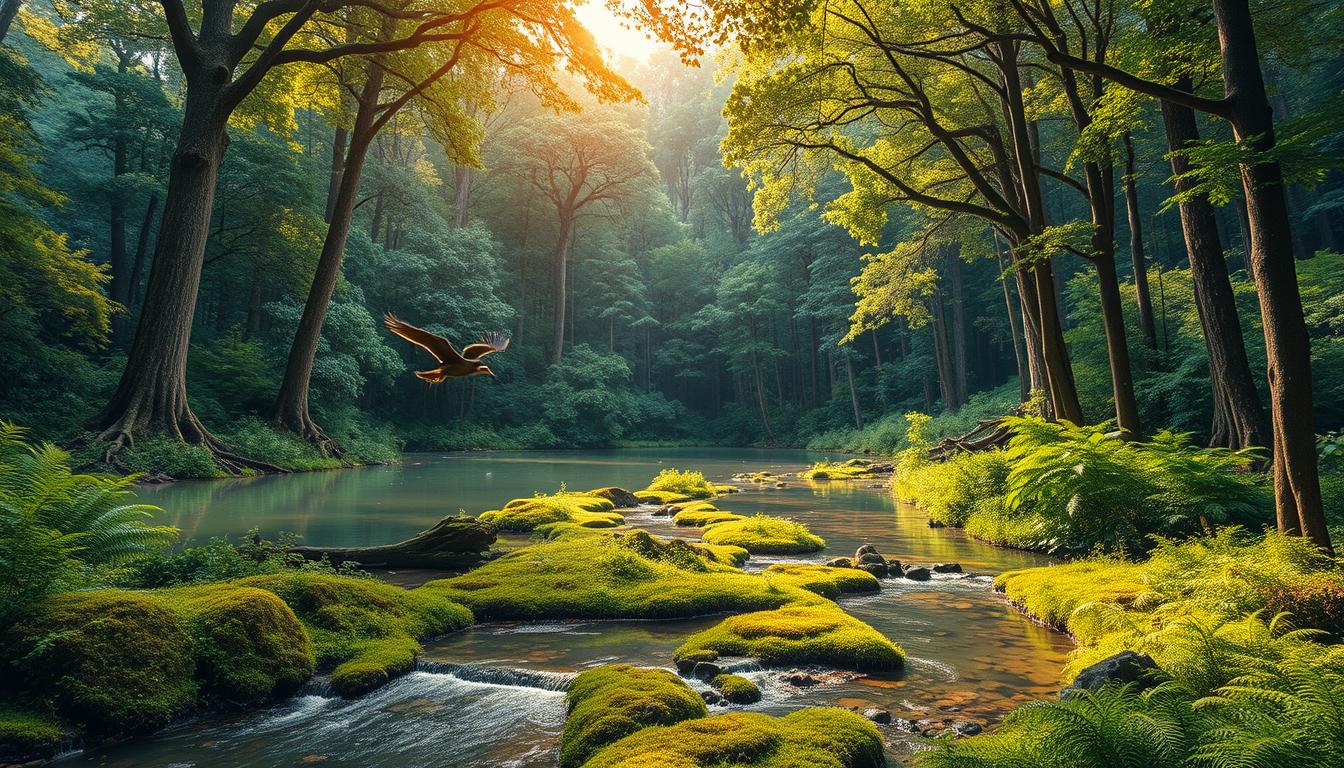
The need for a home is universal, crossing species and places. Laura Marney says, “No matter who you are or where you are, instinct tells you to go home.” This urge is as strong in animals as it is in humans.
For animals, their homes are key to survival. These wildlife habitats protect them from predators and harsh weather. They also offer a place to rest, care for young, and find food.
In short, Habitats are vital for animals. They support their health and help them live well in their surroundings.
Understanding Habitats: The Basics
A habitat gives an animal everything it needs to live and have babies. It’s the place where an animal lives, including the physical area and the living things around it.
To do well, an animal needs water, food, shelter, and space. These things help the animal grow, have babies, and stay safe from dangers and bad weather.
The type and quality of a habitat affect how many different species live there. A diverse habitat has lots of different plants and animals. This makes ecosystems rich and full of life. Efforts to save habitats help keep ecosystems healthy and protect many kinds of life.
Conservation is key because habitats are under attack. Threats include destruction, climate change, and pollution. Knowing how important habitats are helps us see why we need to save them and how they keep biodiversity alive.
In short, habitats are the base of ecosystems. They give animals what they need to survive. Saving these habitats is essential for keeping nature in balance and helping species live long lives.
Forest Habitats: Lush and Diverse
Forests are among the most diverse places on Earth. They are full of wildlife. These wildlife habitats have dense plants and complex systems. They support many different plants and animals.
Forests are more than just homes for animals like bears, tigers, and deer. They are complex natural habitats that need a fine balance to stay healthy. The canopy, understory, and forest floor each have their own role. They provide resources and shelter for the animals living there.
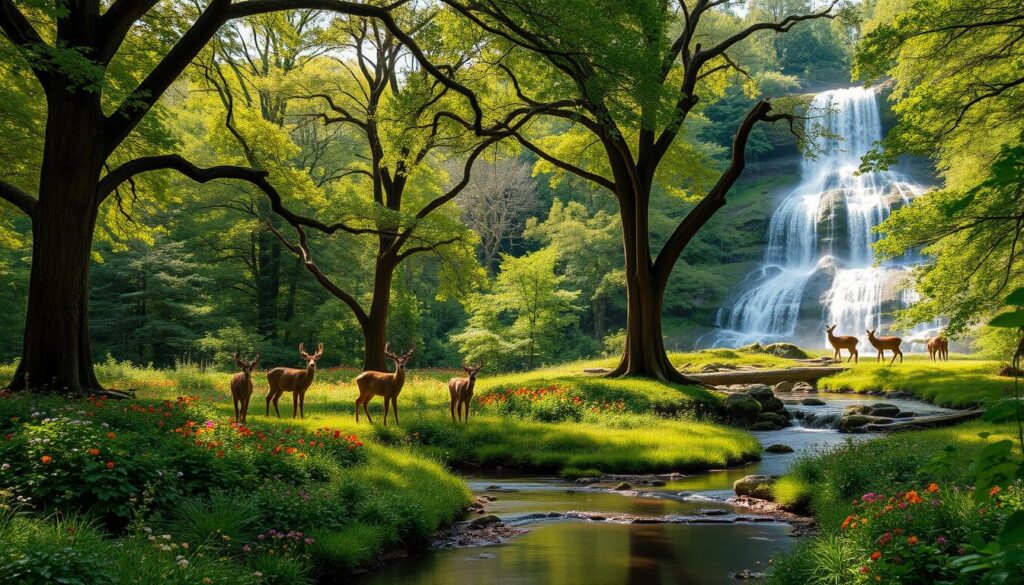
Keeping ecosystem balance in forests is key. This balance lets many different plants and animals live together. Things like climate, soil, and the presence of predators and prey all help keep this balance.
Forests change over time due to natural events like fires or storms. It’s important to understand and protect these natural habitats. This helps keep our planet healthy and full of life.
In short, forest habitats are not just lush and diverse. They are also essential for our planet’s health. Protecting them is vital for keeping ecosystem balance and supporting all the life on Earth.
Grassland Habitats: Open Spaces
Grasslands are key for many animals, like deer and elephants. They have rolling hills and wide views. This makes them a special place for many plants and animals.
Deer hide in tall grass when they see a predator. This shows how important grasslands are as animal homes. They give shelter and safety to many creatures.
Elephants also live in grasslands. They rest under big trees or in open areas. Their presence shows why we must protect grassland ecosystems. Saving these habitats is vital for the balance of nature.
Protecting grasslands is more than just saving animals. It’s also about keeping the ecosystem healthy. Grasslands help the soil, support biodiversity, and control the climate.
We need to understand and value grassland habitats. This helps us create better plans to save them. We must protect these areas from harm, like overgrazing and land use changes. These can hurt the ecosystem a lot.
Aquatic Habitats: Life in Water
The world’s aquatic ecosystems are full of marine life, vital for our planet’s biodiversity. They include everything from freshwater places like rivers and lakes to the huge oceans that cover most of our planet.
Aquatic habitats are more than just homes for fish and other sea creatures. They also have a wide variety of plants. For example, mangroves along tropical coasts and seaweeds in the ocean currents are key for aquatic ecosystems health.
People keep domesticated fish in aquariums or artificial ponds that try to copy their natural homes. This shows how important it is to understand and recreate the conditions of aquatic habitats. Animals like crocodiles, which live near rivers or in wetlands, dig burrows to rest and cool down. This shows how life adapts to these places in many ways.
Conservation efforts are key to protect these habitats from pollution, overfishing, and climate change impacts. By keeping aquatic ecosystems safe, we protect the biodiversity they hold and ensure our planet’s long-term health.
In summary, aquatic habitats are essential parts of our planet’s ecological landscape. Through conservation and sustainable management, we can help preserve the rich diversity of marine life and the ecosystems they live in.
Desert Habitats: Life in Extremes
Life thrives in deserts, where harsh conditions have led to the evolution of remarkable animal adaptations. Deserts are known for extreme temperatures, low rainfall, and high evaporation rates. These make them one of the most challenging places for life to exist.
Despite the harsh conditions, desert ecosystems are full of life. Animals like camels have unique ways to survive. For example, camels are often kept in enclosures to protect them from the harsh sun. This shows how important environmental protection is, even in natural habitats.
Survival Strategies
Desert animals have developed many ways to deal with extreme conditions. Some, like the kangaroo rat, can live without drinking water. They get moisture from the seeds they eat. Others, like reptiles, are active at night and rest during the hot day. This shows diverse adaptations to desert life.
Conserving desert ecosystems is key for maintaining biodiversity. Efforts in environmental protection help keep these unique habitats and their inhabitants safe. By understanding and protecting these ecosystems, we can help desert wildlife survive for a long time.
Tundra Habitats: Cold and Fragile
The Arctic tundra is a cold, icy place with little greenery. It’s home to famous animals like the polar bear. This area has long, cold winters and short, cool summers, making it very harsh.
Polar bears live in caves or ice dens to stay warm. They mostly hunt on the sea ice for seals, their main food. Dr. Jane Smith, a renowned Arctic researcher, says, “Polar bears are perfectly adapted to their Arctic environment, but they are highly vulnerable to changes in their habitat.”
“The tundra is a biome characterized by low temperatures, short growing seasons, and limited vegetation. Despite these harsh conditions, it supports a diverse range of flora and fauna that have adapted to survive in this extreme environment.”
The tundra is not just for polar bears. It also has arctic foxes, reindeer, and many bird species. These animals have special ways to survive the tundra’s cold. For example, arctic foxes have thick fur, and reindeer can eat the tundra’s limited plants.
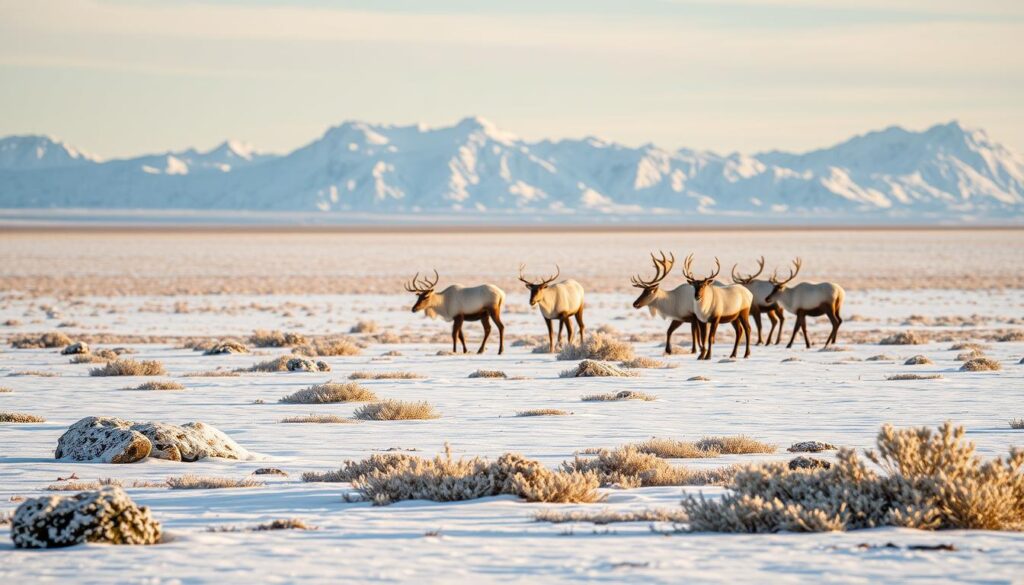
It’s very important to keep the tundra safe. The tundra helps control the Earth’s climate, and changes can affect us all. So, habitat preservation is key to protect these cold places and the life they support.
In summary, the tundra is a delicate place with unique animals. We need to care for these ecosystems to help the polar bear and our planet.
Urban Habitats: Cities and Wildlife
Urban areas are home to a wide range of urban wildlife. They are not just made of concrete; they are living ecosystems. Here, humans and animals live together.
Dogs, for example, are domestic animals that live with people. They are part of the city’s ecosystem. But, urban wildlife also includes wild animals like pigeons, rats, and squirrels. These animals have learned to thrive in the city.
The human impact on urban wildlife is big. Cities destroy habitats, pollute, and split up natural areas. This makes it hard for animals to survive. Yet, there’s a chance for conservation in cities too. Parks and gardens can be homes for urban animals.
To save urban wildlife, we need a plan. We should make cities better for animals, clean up pollution, and teach people how to live with wildlife. These actions can help reduce the human impact and keep urban areas diverse.
In summary, urban wildlife is a key part of city life. By understanding the challenges and chances in urban areas, we can improve conservation. This way, cities can stay lively and full of life.
Mountain Habitats: High Altitudes
Mountain habitats at high altitudes have special conditions. Animals living there need to adapt to low oxygen, cold, and less vegetation.
For example, mountain goats have thick coats for warmth. Their agile limbs help them climb steep, rocky paths.
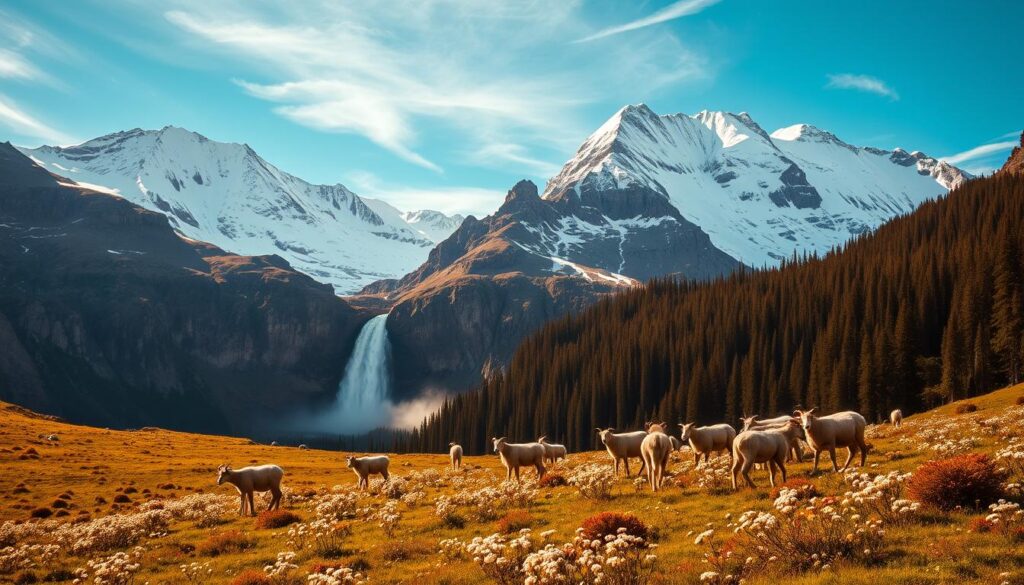
Environmental protection is key in these areas. Human actions like mining and tourism can harm mountain ecosystems. It’s vital to protect these high-altitude habitats through conservation.
Protecting these unique places helps the plants and animals that live there. It keeps the beauty of nature alive and supports global biodiversity.
Coastal Habitats: Where Land Meets Sea
Where land meets sea, a world of life thrives. Coastal ecosystems are full of life, with many different plants and animals.
Places like mangroves, coral reefs, salt marshes, and sandy shores are found here. Each one is special, supporting a wide range of life. For example, mangroves are nurseries for many sea creatures. Coral reefs are home to countless fish and invertebrates.
Coastal areas are key for many species, like birds, turtles, and crabs. They offer places to breed, feed, and hide from danger. Saving coastal ecosystems is critical for our oceans’ health and the life they support.
Importance of Conservation
Protecting coastal habitats is vital against climate change’s effects, like rising sea levels and stronger storms. Conservation efforts also keep these areas beautiful and fun for people to enjoy.
Understanding coastal ecosystems and their role in marine biodiversity is key. With dedicated conservation, we can keep these habitats healthy for the future.
Wetland Habitats: Nature’s Filters
Wetlands are called nature’s filters because they keep our environment balanced. They are full of different plants and animals. Their importance is huge.
Wetlands help in many ways. They clean water, control floods, and protect many species. For example, frogs need wetlands to live and have babies. These places are key for keeping our world healthy.
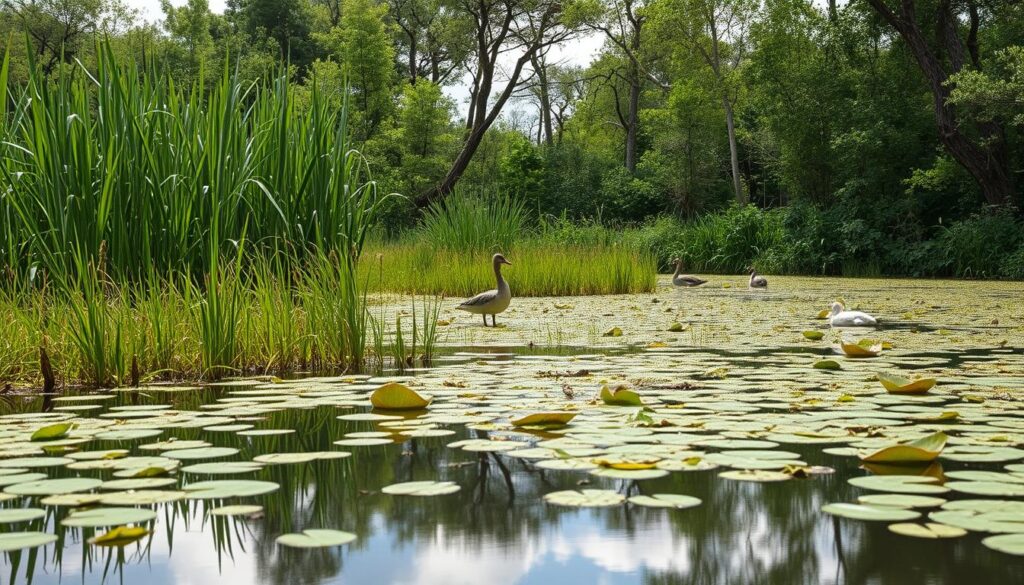
Wetlands do a lot for habitat preservation. They protect areas from bad weather and erosion. They also help feed many animals through complex food webs.
Wetlands are also beautiful and fun to explore. People enjoy birdwatching, fishing, and hiking there. It helps us connect with nature.
To keep wetland ecosystems healthy, we need to protect them. We must stop pollution and destruction. By doing this, we help our environment and all living things.
In short, wetland habitats are very important. They help keep our world healthy and full of life. We must work to save these special places.
Human Impact on Habitats: The Big Picture
Human activities are harming the environment more and more. Things like deforestation, pollution, and building cities have changed many ecosystems.
Habitat destruction is a big problem caused by humans. Forests are cut down for farms and cities. This leaves many animals without homes. It also hurts the balance of entire ecosystems.
Pollution is another big issue. Industrial waste, plastic, and chemicals pollute water and harm fish and plants. This problem affects not just animals but also people who rely on clean water and air.
To fight these problems, conservation efforts are underway. There are programs to plant trees, create protected areas, and clean up pollution. These steps help protect our planet.
We all need to work together to lessen the human impact on habitats. By using green practices and supporting conservation efforts, we can save the natural world for the next generations.
The survival of many species and ecosystems is in our hands. We must understand how our actions harm habitats and take steps to stop it. This is key to living in harmony with nature.
The Future of Habitats: Conservation and Preservation
Laura Ingalls Wilder once said, “Home is the nicest word there is.” For the diverse range of species on our planet, their home is their habitat. Understanding the various habitats, from lush forests to extreme deserts, is key for their survival.
The impact of human activity on these habitats has been huge, leading to the need for strong conservation efforts. Habitat preservation and environmental protection are key to keeping ecosystems balanced. By protecting habitats, we help countless species survive and keep our planet beautiful.
Conservation efforts, like protecting natural reserves and restoring damaged habitats, are vital. It’s our duty to protect these ecosystems for future generations. This way, they can marvel at the diversity of life on Earth.