

Vaccines are key to keeping us healthy by helping our bodies fight off diseases. Immunization is a powerful tool that helps us avoid the dangers of full-blown illnesses.
Vaccines mimic an infection to trigger our body’s defenses. This way, our body learns to fight off the disease without facing the real infection’s dangers. This makes vaccine safety much better, giving us a safe and effective way to protect ourselves and others.
Learning about how vaccines work and their role in keeping us safe shows their huge impact on public health.
Understanding Vaccines and Their Purpose
Vaccines mimic an infection to trigger the body’s defenses, giving immunity. They introduce a harmless part of a pathogen, like a virus or bacteria, to the body. This makes the immune system create antibodies and cells to fight the pathogen.
Vaccine effectiveness comes from preparing the immune system for future infections. There are mainly two types of vaccines. Live-attenuated vaccines have a weakened pathogen, causing a mild infection and an immune response. Non-live vaccines have inactivated pathogens or parts of them, like proteins or sugars.
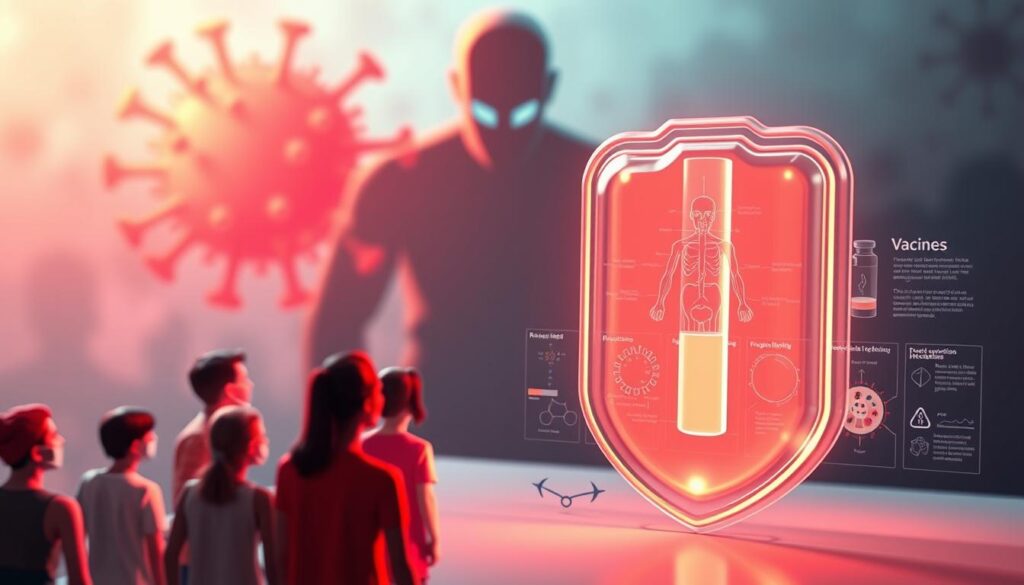
Vaccines work by making the immune system ready to fight off infections. When a vaccine is given, the immune system sees it as foreign and reacts. This reaction activates immune cells like T cells and B cells to fight off the threat.
This process also helps the body remember the threat. So, if it meets the real pathogen later, it can fight it off quickly and well.
Immunization through vaccines protects not just the person but also helps prevent diseases from spreading. By understanding how vaccines work, we see their importance in keeping us healthy.
The History of Vaccination
Vaccines have a long history, from ancient times to today’s medicine. They have changed a lot over the years. Now, they are key to keeping people healthy.
In ancient China and India, people tried to get sick in a small way to fight off bigger sicknesses. But, it wasn’t until the late 1700s that Edward Jenner created the smallpox vaccine. Jenner used cowpox to protect against smallpox, a disease that had plagued people for ages.

After Jenner, many more vaccines were made. These included ones for rabies, diphtheria, and tetanus. The 1900s brought vaccines for polio, measles, mumps, and rubella. These vaccines have helped control or wipe out many diseases.
Vaccines have greatly improved public health. In the UK, for example, diseases like smallpox, polio, and tetanus are almost gone. This shows how vaccines have cut down on sickness and death.
Learning about vaccination history shows us how far we’ve come in keeping people safe. It also reminds us of the need to keep working on new vaccines for future health threats.
Types of Vaccines Available Today
Vaccines come in many forms to fight different health threats. Each type is made for specific diseases and age groups. This means there’s a vaccine for almost everyone.
Live-attenuated vaccines are a key category. They have a weakened virus that triggers an immune response. This way, the body fights off the disease without getting sick itself. These vaccines offer long-lasting protection, sometimes for life.
Examples of Live-Attenuated Vaccines
For example, the chickenpox vaccine and the MMR vaccine are live-attenuated. They are vital for preventing serious diseases in children.
Live-attenuated vaccines have big benefits. They protect not just the person who gets the vaccine but also others. This is because they help stop diseases from spreading. But, it’s important to know they can cause mild side effects or a mild version of the disease in people with weak immune systems.
It’s important to understand the different vaccine types and their benefits. Knowing this helps people make better choices about getting vaccinated. It’s all about making informed decisions with your healthcare provider.
In short, live-attenuated vaccines are a key part of keeping us safe from diseases. As vaccine technology grows, staying updated on vaccine examples and their benefits is essential.
The Importance of Herd Immunity
When many in a community get vaccinated, they create a shield called herd immunity. This shield is key to seeing how vaccines protect not just one person but the whole community.
Herd immunity stops diseases from spreading by reducing who can get sick. Vaccines are vital in building this shield. They protect against certain diseases without causing them.
Herd immunity is important because it keeps vulnerable people safe. This includes those with weak immune systems or who can’t get vaccinated yet. A high vaccination rate helps keep outbreaks low and protects the most at-risk.
Getting vaccinated doesn’t just help you. It also helps the whole community stay healthy. Wide vaccination is essential to stop diseases and keep everyone well.

In short, herd immunity is a team effort to keep everyone healthy. By understanding its value and supporting vaccines, we can stop diseases and keep our communities safe.
Vaccine Safety and Monitoring
Ensuring vaccine safety is a detailed process. It includes thorough testing and constant watch. Health experts say vaccines go through the same safety checks as medicines. They are also watched closely to make sure they are safe and work well.
Vaccines are tested a lot before they are available to the public. They go through several clinical trials. These trials check if the vaccines work and if they have any side effects. Regulatory agencies, like the FDA in the United States, review this data. They make sure vaccines meet high safety standards.
Once vaccines are out, their safety is kept an eye on. Systems track any bad reactions to vaccines. This helps find and deal with any safety issues fast. This ongoing watch is key to keeping people trusting in vaccines.
“All vaccines undergo rigorous safety testing before being introduced – they’re also constantly monitored for side effects after being introduced.” This statement highlights the thorough safety checks vaccines go through.
Regulatory agencies do more than just approve vaccines. They keep an eye on them even after they are approved. They make changes if new information comes up. This might mean updating the vaccine or how it is given.
In short, making sure vaccines are safe is a big job. It involves careful testing and constant checking. By understanding this, we can tackle worries about vaccine safety and help keep everyone healthy.
Vaccination Schedules: What You Need to Know
Following the recommended vaccination schedule is key to preventing outbreaks of vaccine-preventable diseases. Vaccines are a vital tool in keeping us healthy. They are given at specific times to work best.
Many vaccines need more than one dose to work fully. The number of doses depends on the vaccine type. For example, live vaccines like the MMR vaccine need fewer doses than inactivated vaccines. Inactivated vaccines might need booster shots to keep immunity strong.
Recommended Vaccination Schedules for Different Age Groups
Vaccination schedules change with age. Healthcare providers follow specific guidelines to ensure the right vaccines are given at the right time. For kids, vaccines start at birth. The CDC suggests a series of hepatitis B vaccinations for newborns, followed by DTaP, Hib, and other vaccines in early childhood.
Adults also need to follow vaccination schedules. For example, the flu vaccine is updated every year to fight the latest strains. Some adults might need booster shots or specific vaccines based on their health, travel plans, or job risks.
“Vaccination is a critical component of preventive healthcare, and following the recommended schedule is essential for individual and community protection.”
Sticking to the recommended vaccination schedule is key for herd immunity. This protects those who can’t get vaccinated due to health reasons. When a large part of the population is vaccinated, disease spread drops a lot.
In conclusion, knowing and following the recommended vaccination schedule is vital for public health. It protects not just the individual but also helps prevent disease outbreaks.
Addressing Vaccine Myths and Misconceptions
Many vaccine myths and misconceptions are out there, despite the evidence showing vaccines are safe and work well.
These false ideas spread online and in person, causing confusion and fear. It’s important to tackle these myths head-on with accurate, evidence-based info.
One vaccine misconception is that vaccines can cause the diseases they aim to prevent. But vaccines have either dead viruses or virus parts, so they can’t cause the disease. For example, the flu vaccine has inactivated flu viruses, so it can’t give you the flu.
Another myth is that vaccines aren’t tested for safety. But vaccines go through strict testing and monitoring before and after they’re approved. The vaccine development process includes many clinical trials to check their safety and effectiveness.
Some people believe vaccines, like the MMR vaccine, cause autism. But many studies have shown no link. For instance, a big study in a respected medical journal found no connection between the MMR vaccine and autism.
“Always get your vaccine and health information from trusted sources.”
It’s key to get info from reliable sources to fight vaccine myths. Good sources include the Centers for Disease Control and Prevention (CDC), the World Health Organization (WHO), and scientific journals. These places offer solid, evidence-based info to help you make smart health choices.
In short, knowing about vaccine misconceptions and how to debunk them is vital. By looking to credible sources and understanding vaccine development and testing, we can make informed choices. This helps us all have a better understanding of vaccines.
The Role of Vaccines in Controlling Outbreaks
Vaccines help control and prevent outbreaks by protecting people from diseases. They work with the body’s defenses to build immunity safely. This reduces the risk of getting sick.
Vaccines have been key in fighting infectious diseases for a long time. For instance, they have almost wiped out polio and cut down measles and mumps cases a lot.
The smart use of vaccines protects not just individuals but also the community. It helps create a shield against diseases. This shield keeps those who can’t get vaccinated safe, like people with weak immune systems.
Good vaccination efforts need high coverage, smart distribution, and educating the public. Knowing how vaccines fight outbreaks helps health officials get ready for and handle disease outbreaks.
Future work on vaccines is vital for controlling outbreaks. New vaccine technologies, like mRNA vaccines, help us fight diseases faster.
Future of Vaccination
The future of vaccines looks bright, with new tech and vaccine types on the horizon. The quick creation of updated COVID-19 vaccines shows how fast we can respond to new threats. This is a big step forward in fighting viruses.
These new developments will greatly help public health. They will help control outbreaks and protect us from new diseases. As research goes on, vaccines will get better at what they do, safer, and easier to get.
There’s a lot to look forward to in vaccine technology. We might see vaccines made just for you and ways to make them faster. Vaccines will keep getting more important in keeping us all healthy and safe from diseases.