
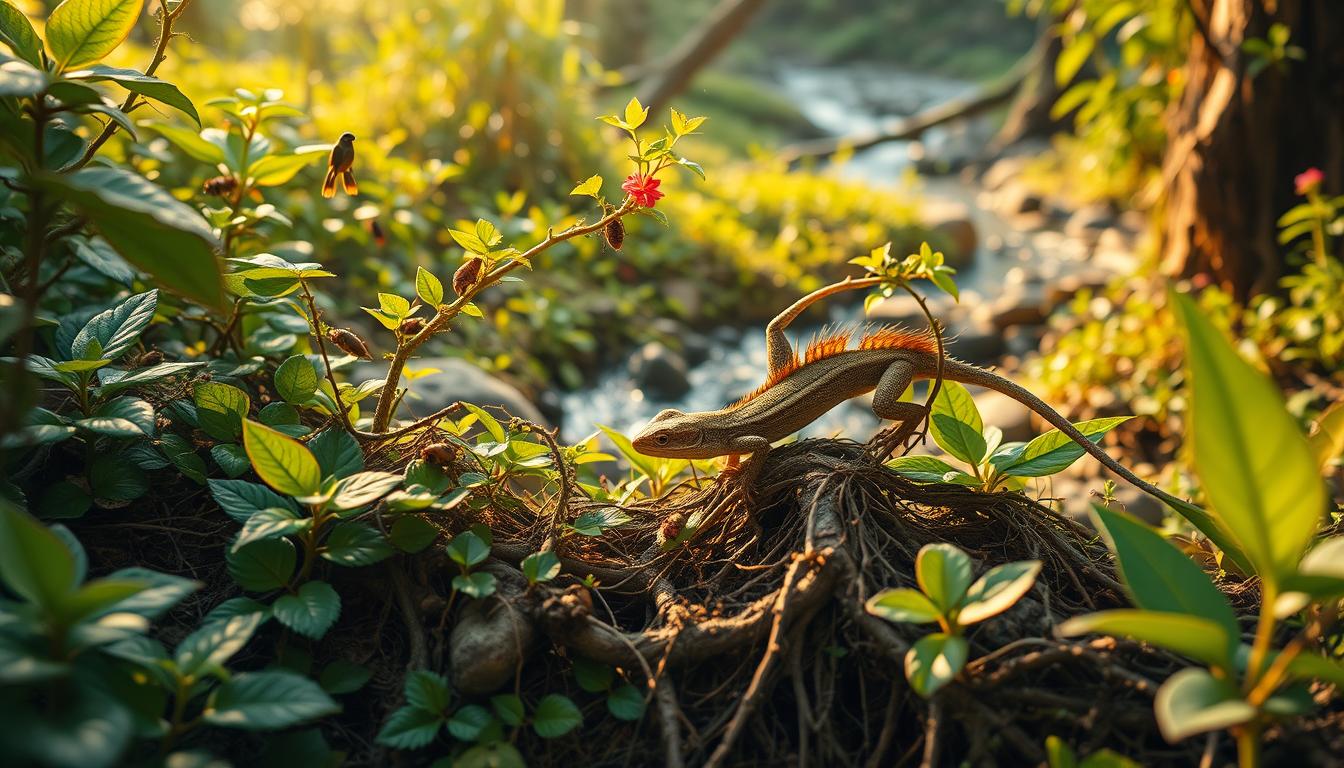
The natural world is full of complex relationships between plants and animals. Each plays a key role in the balance of ecosystems. Around the world, these organisms live together, shaping their ecological landscapes.
The interdependence of plants and animals is key to biodiversity. It keeps ecosystems healthy and strong. By understanding these relationships, we can protect our planet better.
This connection is vital for keeping ecosystems in balance. Its importance is huge. Learning how plants and animals live together helps us see the web of life that keeps our planet alive.
Understanding Ecosystems
An ecosystem is a dynamic system. It includes the interactions between biotic factors, like plants and animals, and abiotic factors, such as water and climate.
Ecosystems have many parts that work together to support life. The biotic factors are plants, animals, and microorganisms. The abiotic factors are light, temperature, water, and soil.
The way these biotic and abiotic components interact shapes the structure and function of ecosystems. For example, plants can change the local climate by providing shade. This affects the temperature and humidity.
Ecological balance happens when biotic and abiotic factors work well together. This balance is key for healthy ecosystems. Forests, for instance, help keep water cycles balanced, prevent soil erosion, and support many species.
In short, knowing about ecosystems means understanding the complex links between living things and their environment. By grasping these relationships, we can better protect and preserve ecosystems. This ensures they keep supporting life on Earth.
The Role of Plants in Ecosystems
In ecosystems, plants play a key role as primary producers. They turn sunlight into energy through photosynthesis. This energy is essential for the survival of almost all other living things in the ecosystem.
Photosynthesis is not just for energy. It also creates organic compounds that are the start of the food chain. Plants are the base of the complex relationships between different species.
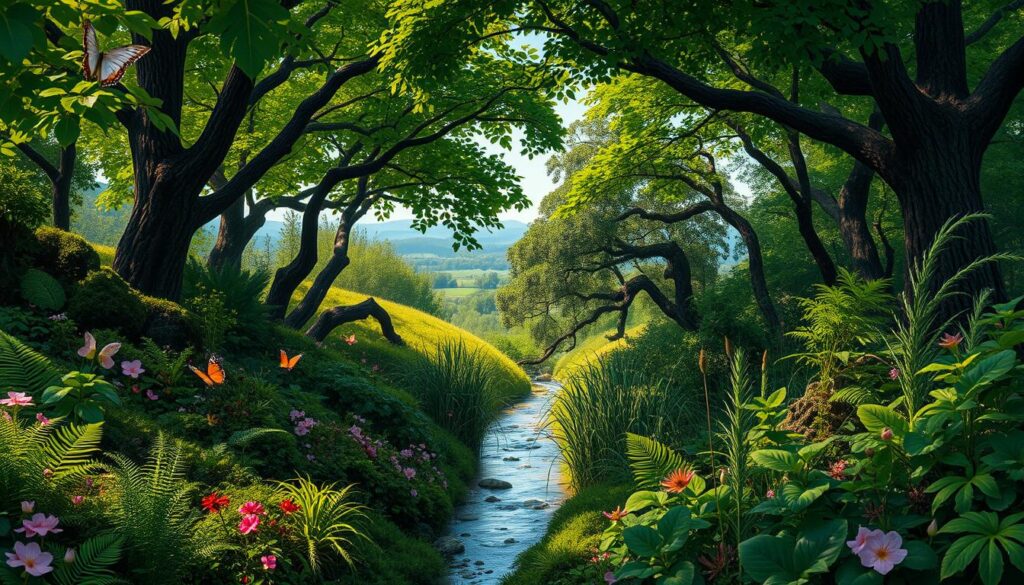
Plants have developed many adaptations to survive in different places. For example, cacti in dry areas have thick cuticles to prevent water loss. Trees in dense forests have deep roots to find water deep down.
These survival strategies help ecosystems stay strong. By adapting, plants can live in places hard for others. This adaptability helps ecosystems have a wide variety of life.
In summary, plants are essential to ecosystems. They provide energy and organic compounds through photosynthesis and adapt to their environments in amazing ways. Their role as primary producers is key to the complex interactions in ecosystems, making them vital for life on Earth.
The Significance of Animals in Ecosystems
The role of animals in ecosystems is huge. They do many important jobs. Animals keep ecosystems healthy and balanced.
Animals act as consumers. They eat plants and other animals. This stops any one species from taking over. It helps keep ecosystems diverse and strong.
Animals also help as decomposers. They break down dead plants and animals. This makes nutrients available for new life to grow.
Nutrient cycling is another key service animals offer. They move nutrients around ecosystems. This makes ecosystems fertile and productive.
In short, animals are key to ecosystems. They are consumers, decomposers, and help with nutrient cycling. We need to understand and value their roles to protect ecosystems.
Interdependence of Species
Ecosystems thrive because of the relationships between different species. These relationships are key to keeping ecosystem balance. Mutualism, where both species gain, is a big part of this.
Bees and flowers have a mutualistic relationship. Bees get nectar from flowers, helping plants to reproduce. This symbiotic relationship is vital for both bees and plants.
Clownfish and sea anemones also depend on each other. Clownfish live among the anemone’s tentacles, safe from its sting. They also help keep the anemone clean, showing a strong symbiotic relationship.
Species interdependence goes beyond mutualism. It includes commensalism and parasitism too. But mutualism shows how cooperation keeps ecosystem balance.
Knowing how species depend on each other helps us manage ecosystems. It shows us the beauty and complexity of nature. This knowledge helps us protect and preserve ecosystem balance.
Food Chains and Food Webs
Food chains and food webs are key to understanding ecosystems. They show how different species interact and how energy moves from one to another. This helps us see how ecosystems work together.
Energy Transfer: Energy flows from plants (producers) to animals (consumers) in a food chain. This energy flow is vital for ecosystems to thrive. It supports the complex life web.
A food web is more detailed, showing many food chains and their connections. It shows how species depend on each other and how energy and nutrients move around.
Many things affect food chains and webs, like environmental changes and human actions. Knowing about these dynamics helps us manage ecosystems better.
Studying food chains and webs teaches us about ecosystem dynamics. It shows the important role each species has in nature. This knowledge is key for conservation and keeping nature balanced.
Ecosystem Services Provided by Nature
Nature gives us many ecosystem services that are key for our health and the planet’s well-being. These services help keep a balance between what we need and protecting the environment.
Ecosystems provide many benefits, like air and water purification, climate regulation, and soil formation. These are essential for our survival and are often overlooked until they’re gone.
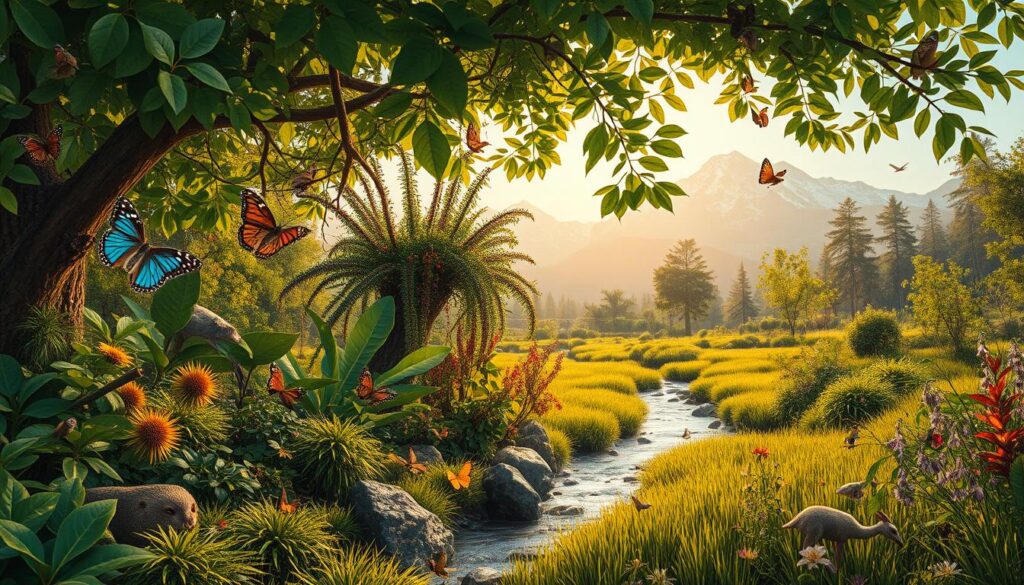
The benefits to humans from nature are vast. Clean air and water are linked to our health, and climate regulation prevents extreme weather. Ecosystems also help with agriculture, ensuring we have food.
The environmental benefits of nature are huge. Healthy ecosystems support biodiversity, keep water cycles going, and fight climate change. Saving these services is vital, as losing them can have lasting harm.
Conservation is essential for keeping ecosystems healthy. Protecting natural habitats and fixing damaged ones helps us keep getting these services. This benefits us and keeps the planet healthy.
Human Impact on Ecosystems
Human activities are harming ecosystems badly. Climate change is making things worse by changing ecosystems fast. It’s affecting how species live and their chances of survival.
Ecosystem balance is key for keeping life on Earth healthy. But, things like deforestation, pollution, and overfishing are messing with it. For example, losing habitats means fewer species and problems with water and nutrients.
The threats to ecosystem balance come from many places. Pollution from factories and farms is making water and soil dirty. It hurts animals and people. Also, climate change is making weather patterns weird, leading to more disasters.
Fixing these problems needs a big effort. We must cut down on greenhouse gases, save habitats, and use resources wisely. Everyone, from governments to individuals, must join forces to lessen human impact on nature.
By facing conservation challenges head-on, we can protect vital ecosystem services. This means not just saving but also fixing damaged areas and boosting biodiversity.
Conservation Efforts for Ecosystems
Protecting biodiversity and ecosystem services needs a mix of approaches. Conservation is key to keeping ecosystems healthy and strong. It includes setting up protected areas and using land wisely.
Creating protected areas like national parks and wildlife reserves is a major conservation strategy. These places offer a safe home for many plants and animals. For example, Yellowstone and Yosemite in the U.S. are famous for their diverse wildlife and ecosystems.
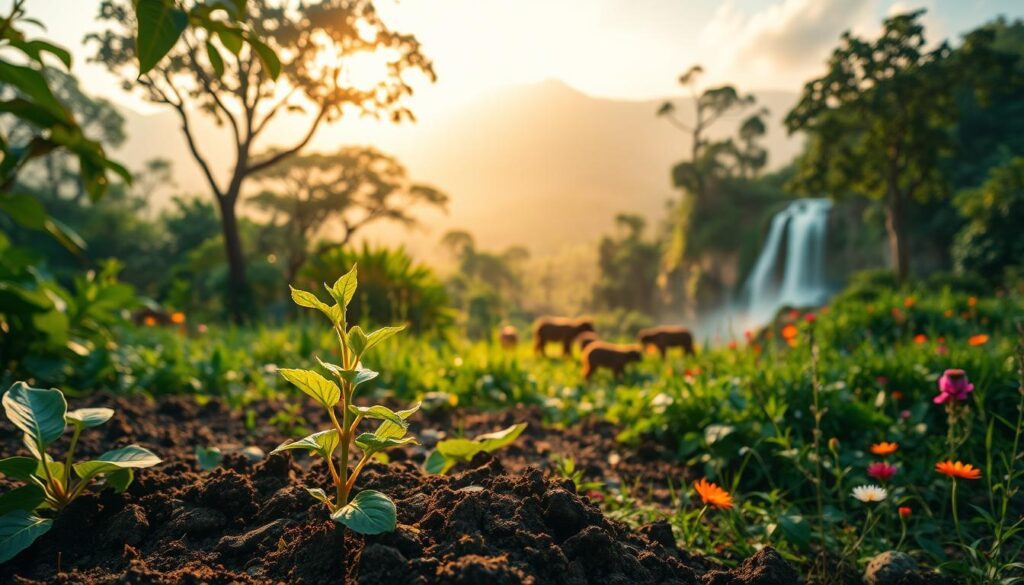
Sustainable land-use practices are also vital. This means using forestry and agriculture in ways that don’t harm the environment. By doing this, we can lessen the strain on nature and keep ecosystem services intact.
Restoring damaged ecosystems is another important part of conservation. This work involves fixing ecosystems harmed by humans. It includes bringing back native species and removing harmful ones. This effort boosts biodiversity and makes ecosystems more resilient.
Getting communities involved and educating them is also key. When we work with local people, we can teach them why ecosystems matter. This teamwork leads to better conservation results.
In summary, saving ecosystems and their services is essential. By using protected areas, sustainable practices, restoration, and community work, we can protect biodiversity. This way, we ensure healthy ecosystems for generations to come.
Restoring Ecosystems
Ecosystem restoration aims to make degraded ecosystems healthy again. This is key for life on Earth. “The restoration of ecosystems is not just about reviving nature; it’s also about reviving our connection with it,” say conservationists.
The process starts with checking the ecosystem’s health. Then, we find out why it’s degraded. Next, we use the right ways to fix it. Ecosystem restoration can mean fixing it ourselves or letting it heal on its own.
Conservation is key in fixing ecosystems. This includes planting trees, fixing wetlands, and bringing back native species. These actions help ecosystems balance and increase biodiversity.
As Dr. Jane Smith, a renowned ecologist, points out, “Restoration ecology is a fast-growing field. It needs teamwork from scientists, policymakers, and local communities.” Working together is essential for success.
“The health of our ecosystems is directly linked to our own well-being. Restoring ecosystems is not just an environmental issue; it’s a matter of human well-being.”
Good ecosystem restoration brings many benefits. It improves air and water quality, boosts biodiversity, and helps fight climate change. By focusing on ecosystem restoration, we aim for a greener future.
The Future of Ecosystems
The future of ecosystems is tied to how we handle human activities. We must tackle challenges and seize chances for conservation and sustainability. It’s vital to keep protecting ecosystems and their services.
Ecosystems face big hurdles like climate change, habitat loss, and pollution. But, we can fight these by using sustainable ways and supporting conservation. This way, ecosystems can flourish.
Working together, we can make ecosystems’ future brighter. This means more than just conservation. It’s about changing our daily habits to lessen our environmental footprint.