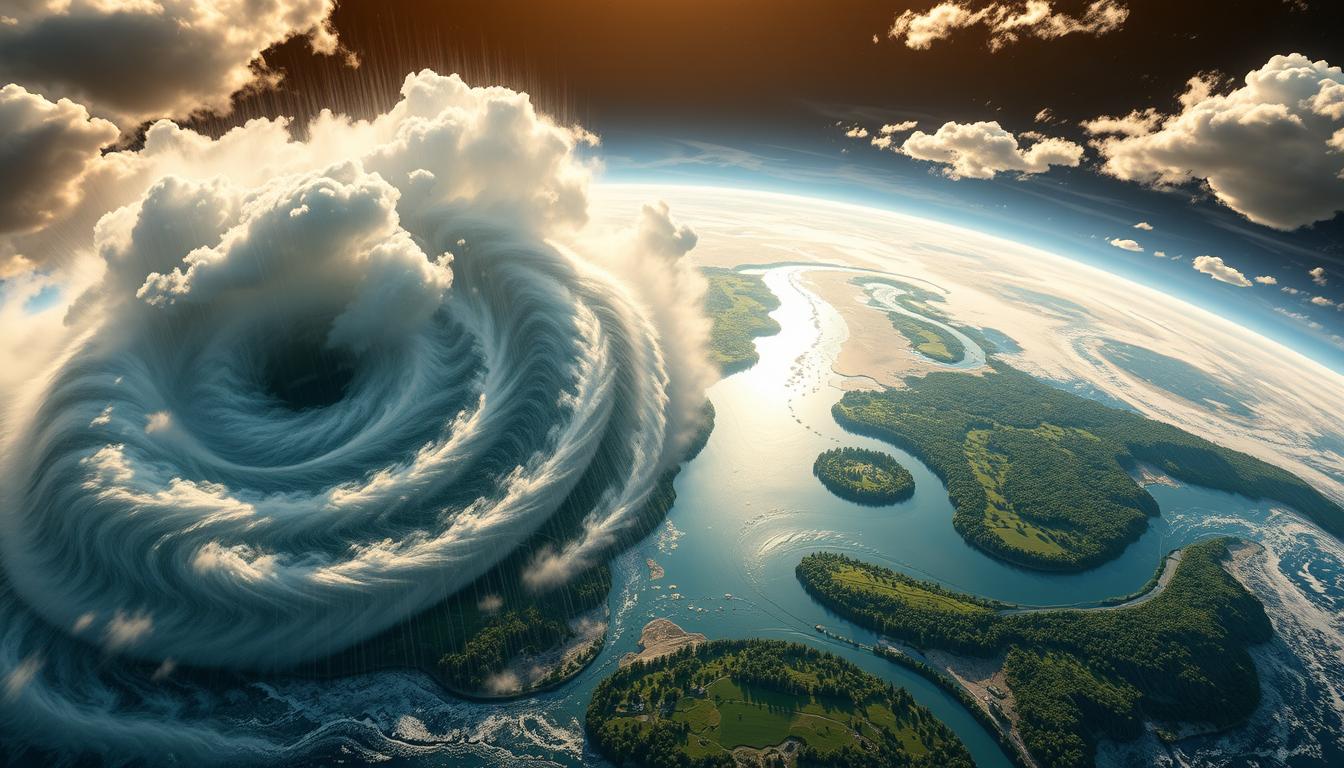
The Earth’s climate system is connected by the constant movement of a vital element. This process is key to life on Earth and is very important.
This element exists in three phases and links the Earth’s climate system’s main parts. These include air, clouds, the ocean, lakes, vegetation, snowpack, and glaciers. The Earth’s climate system depends on the flow of this element to support life and control the planet’s temperature.
Understanding this process is key to seeing its effect on our lives and the environment. By learning how it works, we can value its role in shaping our world.
Introduction to the Water Cycle
The water cycle is how water moves around the Earth and sky. It’s a complex system with many steps. This cycle is key for life on our planet.
It moves Earth’s water in three main ways: liquid, solid (ice), and gas (water vapor). The sun’s energy powers the water cycle. It’s a big part of our climate system.
The water cycle process has several important steps. These steps help spread water all over the world. They work together to keep water balanced on Earth.
Knowing about the water cycle is important for using Earth’s water wisely. It helps us predict the weather and understand climate change’s effects on our climate system.
By learning about the water cycle, we can see how our actions impact it. We can also find ways to protect it for the future.
The Stages of the Water Cycle
The water cycle stages are key to knowing how water moves around our planet. This ongoing process is vital for life and keeping Earth’s climate balanced.
Evaporation: The Initial Stage
Evaporation starts the water cycle, turning liquid water from oceans, rivers, and lakes into water vapor. The sun’s heat gives water molecules the energy to change from liquid to gas.
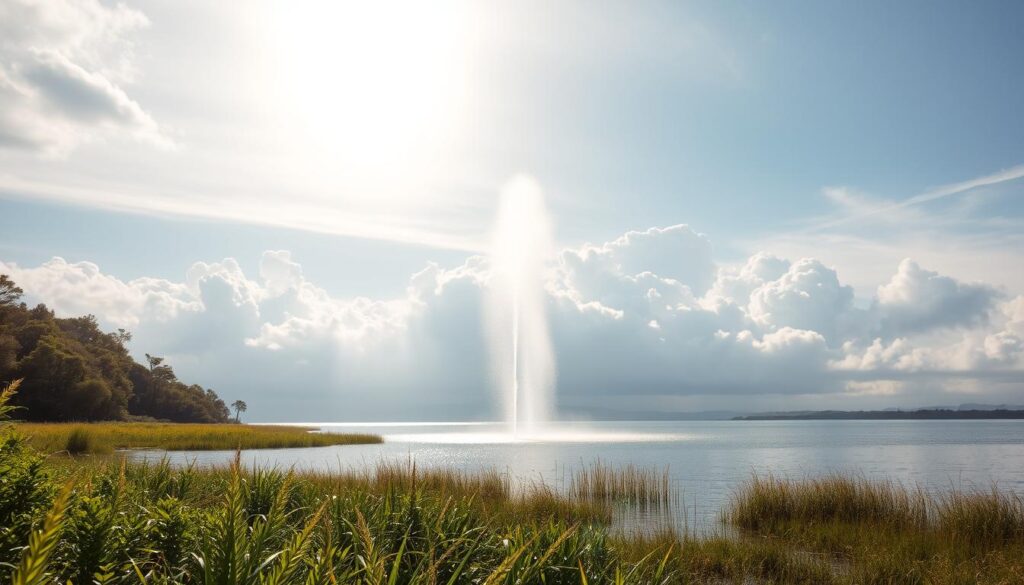
As water vapor rises, it cools down. This leads to condensation, where water vapor turns back into liquid water, forming clouds. This stage is important for the next part of the water cycle.
Precipitation: Water Returns to Earth
Precipitation happens when water droplets in clouds get too heavy to stay in the air. They fall back to Earth as rain, snow, sleet, or hail. This stage is key for refilling Earth’s water sources and supporting ecosystems.
The cycle of evaporation, condensation, and precipitation keeps water balanced on our planet. Knowing these stages helps us understand the complex processes that support life on Earth.
Evaporation Explained
When the sun heats the Earth’s surface, evaporation happens. It turns water into vapor. This is key to the water cycle, letting water move from liquid to gas and up into the air.
The evaporation process changes liquid water into water vapor. This happens when water molecules get enough heat energy to leave the water’s surface. This can be in oceans, lakes, or rivers.
Heat energy is very important in this process. The sun’s rays warm the water’s surface. They give energy to the water molecules, making them move faster. When they have enough energy, they turn into water vapor and go into the air.
Knowing about evaporation helps us understand the water cycle better. It’s a main way water moves between the Earth and the sky. It affects weather and helps control the climate.
In short, evaporation is a vital part of the Earth’s water cycle. It’s driven by heat energy from the sun. It turns water into water vapor, which goes up into the air. This helps form clouds and leads to rain.
Condensation in Detail
Water vapor rises into the air and goes through condensation. This is key for cloud formation. Condensation happens when the air is full of water vapor and can’t hold more.
This fullness makes the water vapor turn back into liquid water. It forms tiny droplets around dust and other particles in the air. The condensation process depends on temperature and humidity.
Warm air rising cools down, losing its ability to hold water vapor. This causes the water vapor to condense into droplets. These droplets form clouds.
Condensation is vital for the Earth’s climate. It helps control temperature and how much rain we get. Knowing about the condensation process helps us understand the Earth’s water cycle better.
Precipitation Types
Precipitation comes in many forms, like rain, snow, and hail. Each one is shaped by different weather conditions. Knowing about these types helps us understand the water cycle better.
Rain is the most common type of precipitation. It happens when water vapor in clouds turns into droplets that are too heavy to stay in the air. Rainfall is key for keeping our freshwater sources full and helping crops grow.
Snow forms when it’s cold enough outside. Water vapor turns into ice crystals in the air. Snowpack acts as a water storage, releasing water when it gets warmer.
Hail is made in thunderstorms when water droplets freeze into ice balls. Hail can damage crops, vehicles, and buildings a lot.
Every type of precipitation is important for our planet’s water cycle. They affect our climate, weather, and how much water we have.
The Role of Collection
When rain hits the ground, it either flows away or soaks into the soil. This is the start of the collection phase. It’s key because it decides where the water goes next.
Water collection has a few main steps. Runoff happens when water flows over the land into streams and lakes. This can occur if the soil is too wet or if it rains too hard. Runoff is important because it helps fill up water bodies.
Infiltration is when water soaks into the soil and becomes groundwater. How fast this happens depends on the soil, its moisture, and what’s on top. Groundwater is vital for many uses, like drinking and farming.
Water collects in rivers, lakes, soil, and rock layers. This isn’t just a simple gathering; it’s a complex process. Knowing how water moves helps us manage it better.
Collecting water on and under the Earth’s surface is complex. It’s affected by the land’s shape, soil, and plants. By understanding these, we can improve how we use water and deal with droughts and floods.
The Water Cycle and Climate
It’s key to understand how the water cycle and climate work together. This is important for managing water resources well. The water cycle, a key part of Earth’s climate, is greatly changed by climate change.
Climate change is changing where, when, and how much water we have. Warmer temperatures are changing precipitation patterns. This leads to more extreme weather like droughts and floods. It makes it hard to keep water resources in good shape.
The effects of climate change on the water cycle are many. It changes not just precipitation but also evaporation rates and water storage in different places. Knowing these changes is key to fighting the bad effects of climate change on water resources.
By looking at how the water cycle and climate interact, we can get ready for climate change’s challenges. We can also work on better managing water resources.
Human Impact on the Water Cycle
Human actions have a big impact on the water cycle. We use water for many things like drinking, farming, and power generation. We also use it for waste and fun activities.
These uses change the water cycle in big ways. For example, pollution from factories and farms can make water dirty. This affects both the water we can drink and the underground water.
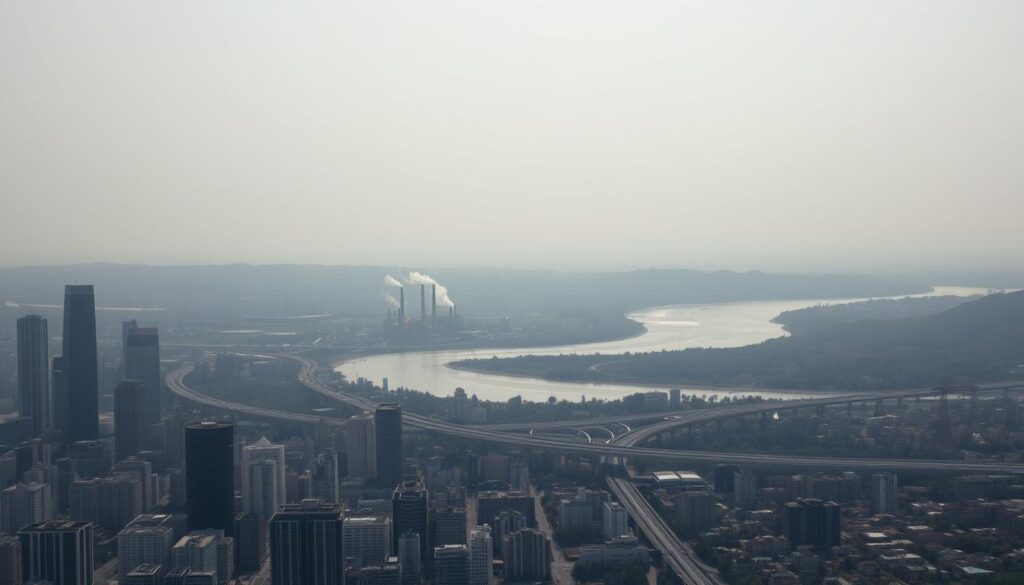
Also, human activities like climate change change the water cycle. They make weather patterns different and cause more extreme weather. This can lead to more droughts and floods, making it hard to manage water.
It’s important to understand how we affect the water cycle. This knowledge helps us find ways to use water better. By working together, we can protect this important process for the future.
Water Cycle and Agriculture
The water cycle is key for agriculture by giving crops the water they need. It includes precipitation, evaporation, and condensation. These steps help crops grow and support irrigation systems.
Irrigation is a big part of farming. Farmers use rain and stored water to water their crops when it’s dry. How well irrigation works can really affect how much crops grow and save water.
The water cycle impacts farming in many ways. Rainwater is the main water source for crops. Evaporation and transpiration also play a role in water balance. Knowing these helps farmers decide when to plant, harvest, and manage water.
Importance of Water in Crop Production
Crops need enough water to grow well. The water cycle makes sure crops get the moisture they need from rain and irrigation. Without enough water, crops can suffer from drought or too much rain.
Managing water well is key for farming to last. By understanding the water cycle, farmers can use water better, cut down on waste, and make crops more resilient to weather changes.
In short, the water cycle is essential for agriculture. It helps with crop production and irrigation. Knowing how important the water cycle is can lead to better farming methods.
The Water Cycle in Ecosystems
The water cycle is key to keeping ecosystems in balance worldwide. It affects how climate changes and is vital for both people and nature.
Ecosystems need the water cycle to thrive and support life. Where water is found shapes the habitats in different places.
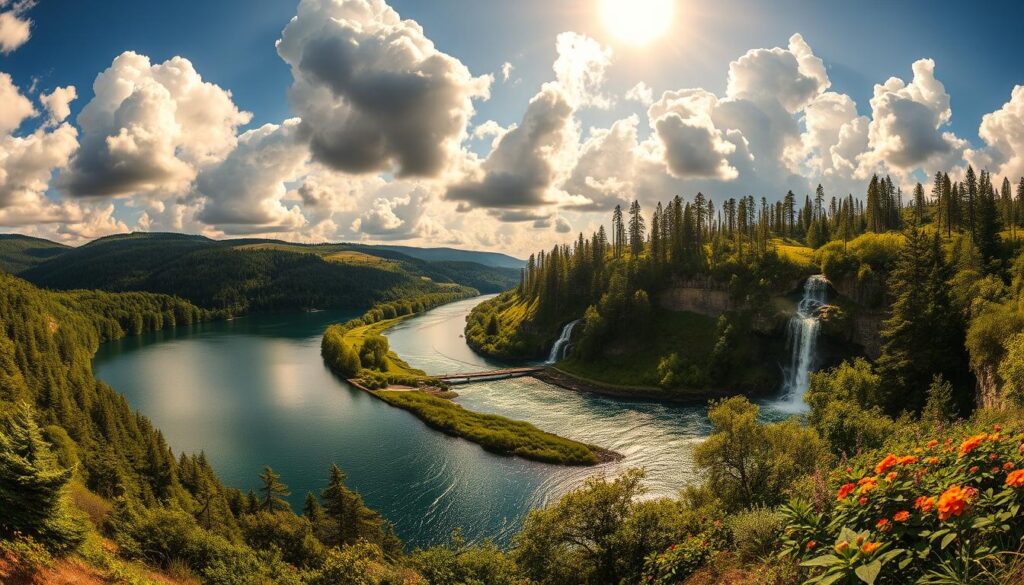
The water cycle’s impact on ecosystems is multifaceted. It gives plants and animals the water they need. It also changes landscapes through erosion and sedimentation.
As Dr. Jane Smith, a renowned ecologist, notes, “The health of our ecosystems is closely tied to the water cycle. Changes in precipitation patterns or water availability can have significant effects on ecosystem balance.”
“Water is the driving force of all nature.”
The water cycle is vital for healthy ecosystems. It helps keep natural habitats alive and supports biodiversity.
Learning Through the Water Cycle
The water cycle is a great way to learn about science and nature. It shows us how Earth’s water moves and is used. By studying it, we can see how our planet’s systems are connected.
Educational Resources on the water cycle are many and varied. They include interactive models, data, and examples from real life. These tools make learning fun and effective.
Learning about the water cycle helps us apply science in real life. For example, it teaches us about evaporation, condensation, and precipitation. It also shows us why saving water is important.
The water cycle is also a great way to teach about our environment. It helps us see how our actions affect the water cycle. This way, we learn about the need for green practices.
In short, the water cycle is key to learning about our environment. It teaches us science and shows us why we must care for water.
Conclusion: The Importance of Understanding the Water Cycle
Knowing about the water cycle is key to managing water well. It includes stages like evaporation, condensation, and precipitation. These are important for life on Earth.
The water cycle’s role is huge for saving water and fighting climate change. Learning how water moves helps us tackle water shortages and global warming.
Good conservation and sustainability plans need a clear understanding of the water cycle. This knowledge helps us use water wisely, cut down on waste, and keep ecosystems healthy.
In short, realizing the water cycle’s value is vital for a greener future. By studying and valuing the water cycle, we can help our planet stay healthy for years to come.