
Navigating through unfamiliar places needs a reliable tool. For centuries, the compass has been key for travelers, explorers, and adventurers. It helps them find their way.
A compass shows directions like north, south, east, and west. Knowing how to use it is essential. It’s vital for hiking or sailing.
Good navigation is more than knowing directions. It’s about knowing where you are in relation to your surroundings. This skill helps you make smart choices and stay safe.
The History of the Compass
The compass is a key tool for finding our way. Its story is long and full of twists. It has changed a lot over thousands of years.
In China during the Han Dynasty (206 BCE – 220 CE), the first compasses were made. They used lodestones, naturally magnetized iron, to point the way.
As time went on, the compass traveled to other parts of Asia and then to Europe. By the 11th century, it was helping with navigation in China. By the 12th century, it had reached Europe.
The magnetic compass was a big step forward. It made finding directions more accurate and reliable. This changed how people sailed and explored.
Today, compasses are better and more useful. They are made with new materials and technologies. Now, they are essential for many activities, like hiking, orienteering, and flying.
The compass’s history shows our drive to navigate better. From its start to now, it’s a key tool for understanding where we are.
How a Compass Works
A compass works by interacting with the Earth’s magnetic fields. It has a magnetized needle that points towards the Earth’s magnetic field. This shows the direction.
The compass needle is magnetized, with the red end pointing towards magnetic north. This happens because of the Earth’s magnetic field. The needle rotates until it’s parallel to the magnetic field lines.
Knowing about magnetic declination is key for good navigation. Magnetic declination is the angle between magnetic north and true north. It changes based on where you are on Earth.
“The difference between magnetic and true north is critical for precise navigation, over long distances.”
To navigate well, you need to adjust for magnetic declination. You add or subtract the declination value from the magnetic bearing. This gives you the true bearing. Also, knowing about variation is important. Variation is the change in declination over time, which affects navigation accuracy.
In short, a compass aligns its magnetized needle with the Earth’s magnetic fields. Knowing about magnetic declination is vital for finding directions accurately.
Types of Compasses
There are many types of compasses, from simple magnetic ones to advanced digital ones. The right compass depends on what you need it for. This includes where you’ll use it and how precise you need it to be.
Magnetic Compasses are the oldest type. They use the Earth’s magnetic field to show direction. They’re easy to use, don’t need batteries, and are great for outdoor activities like hiking and camping.
Digital Compasses use electronic sensors for accurate readings. They also have features like altimeters, thermometers, and GPS. This makes them useful for many navigation tasks.
Gyrocompasses are used in boats and planes. They keep direction even with magnetic interference. Military Compasses are tough and have extra features like declination adjustment. They’re perfect for precise navigation.
“The right compass can make all the difference in navigation, whether you’re hiking through the wilderness or charting a course at sea.”
With so many compass types, you can find one that meets your needs. Whether for fun, work, or emergencies, there’s a compass for you.
Choosing the Right Compass
Finding the right compass is key to navigating well. You need to think about features, brand, and how much you want to spend.
A quality compass is more than just precise. It’s also durable and easy to use. For example, a compass with a clear baseplate and direction-of-travel arrow makes navigating better.
Here are some important features to look for in a compass:
- Adjustable declination
- Rotating bezel
- Magnifying lens
- Clinometer
Brands like Suunto and Silva make top-notch compasses. They suit everyone, from beginners to experts.
Don’t just pick the cheapest compass. Spending a bit more on a quality compass means better durability and performance.

The best compass for you depends on your needs and what you like. Think about features, brand, and budget to make a smart choice. This way, you’ll find a compass that helps you navigate well.
Practical Uses of a Compass
A compass is very useful in many activities. It’s key for wilderness navigation and orienteering sports. It helps find direction in different places.
In wilderness navigation, hikers and adventurers use it to stay on track. It’s very helpful when there’s no clear path or when it’s hard to see. It works with a map to find exact spots.
Orienteering is a sport that uses a compass and map. It’s all about navigating through different places. You need to know how to use your compass well to move fast and right.
Compasses are also important in marine navigation and aviation. Sailors use them to keep their course when other tools fail. Pilots use them as a backup to find direction.
Compasses are used in many areas, showing how useful they are. They help in both fun activities like hiking and serious work in aviation. A compass is always a key tool for navigation.
Using a Compass: The Basics
To navigate with confidence, knowing how to use a compass is key. First, hold it right. Keep it level and away from metal to avoid errors.
Then, align it with your map. Turn the dial until the magnetic needle matches the magnetic north on the compass. This is a basic step in navigation basics.
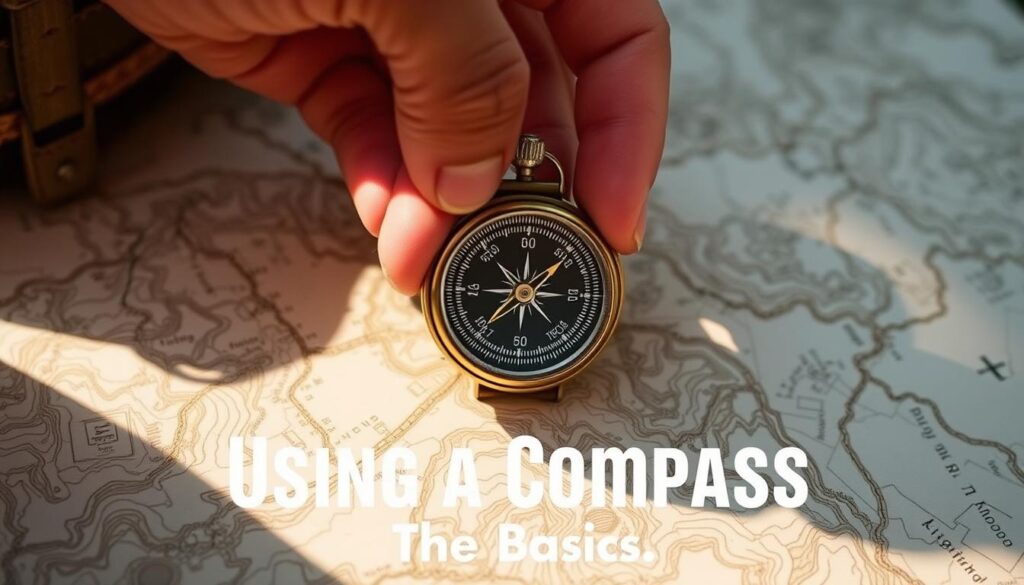
Getting accurate bearings is also important. Point the direction-of-travel arrow at your map destination. Rotate the dial until the orienting lines match the map’s grid lines. The bearing is the number on the dial.
Mastering these compass usage skills helps you navigate better. This is true for hiking, backpacking, or other outdoor activities that need precise navigation.
Advanced Compass Techniques
Advanced compass techniques like triangulation and declination adjustment boost your navigation skills. They go beyond the basics.
Triangulation is a powerful method for finding your exact location. It involves taking bearings from known landmarks and plotting them on a map. The point where these lines meet is likely where you are. It’s key to pick landmarks that are far apart and easy to spot on your map.
Magnetic declination is also vital. It’s the difference between magnetic north and true north. Adjusting your compass for declination keeps your navigation accurate over long distances. Knowing your area’s declination and adjusting your compass is essential.
Navigating challenging terrain like dense forests or mountains needs skill and the right techniques. Use a compass with a map and watch your surroundings. Regularly check your bearings and adjust to stay on track.
Mastering these advanced compass techniques lets you navigate complex routes confidently. Whether exploring the wilderness or improving your skills, these methods are key.
Common Mistakes When Using a Compass
Using a compass for navigation is more than just knowing how it works. It’s also about knowing the common mistakes. One big mistake is not understanding magnetic declination. This is the difference between magnetic north and true north, and it changes by location. If you don’t adjust for this, you can get lost over time.
Another mistake is not using the compass with the terrain. A compass is just one tool for finding your way. You need to check your compass against the land and your map to stay on track.

Another error is relying only on the compass. While it’s a great tool, it should be used with GPS and maps too. Using different tools together helps avoid getting lost.
To avoid these navigation mistakes, learn how to use your compass right. Practice using it often. Also, remember to adjust for magnetic declination and use the terrain to your advantage. This will make you better at navigating.
Knowing these mistakes and how to avoid them can make you a better navigator. Whether you’re hiking or doing something else that needs navigation, a compass is very useful. Use it well, and you’ll find your way more easily.
Compass Safety and Maintenance
Keeping your compass in good shape is key to its long life and accuracy. A compass is a sensitive tool that can be harmed by many things. This includes magnetic interference and physical damage.
Protecting Your Compass from Magnetic Interference is very important. Things like electrical devices, metal objects, and some rocks can cause magnetic interference. To avoid this, keep your compass away from these sources when you’re using it.
As experienced navigators say, “A compass is only as good as its maintenance.” It’s important to check your compass often for damage or wear. Make sure the compass needle is balanced and the bezel moves smoothly.
Proper Storage of your compass is also key. Store your compass in a protective case when you’re not using it. This helps prevent damage. Don’t store it near magnets or in very hot or cold places.
“The care you give your compass reflects the care you give your navigation. A well-maintained compass is a navigator’s best friend.”
By following these simple tips for maintenance and storage, your compass will stay reliable. Regular care not only makes your compass last longer. It also keeps it giving accurate readings.
The Role of the Compass in Modern Technology
Compasses have been key for navigation for centuries. They are now a big part of smartphones. This change has made navigation easier and more precise.
Compass Technology and Smartphone Integration
Today’s smartphones have many sensors, including digital compasses. This lets users navigate easily with apps that use compass data. GPS and compass tech together make navigation better and more reliable.
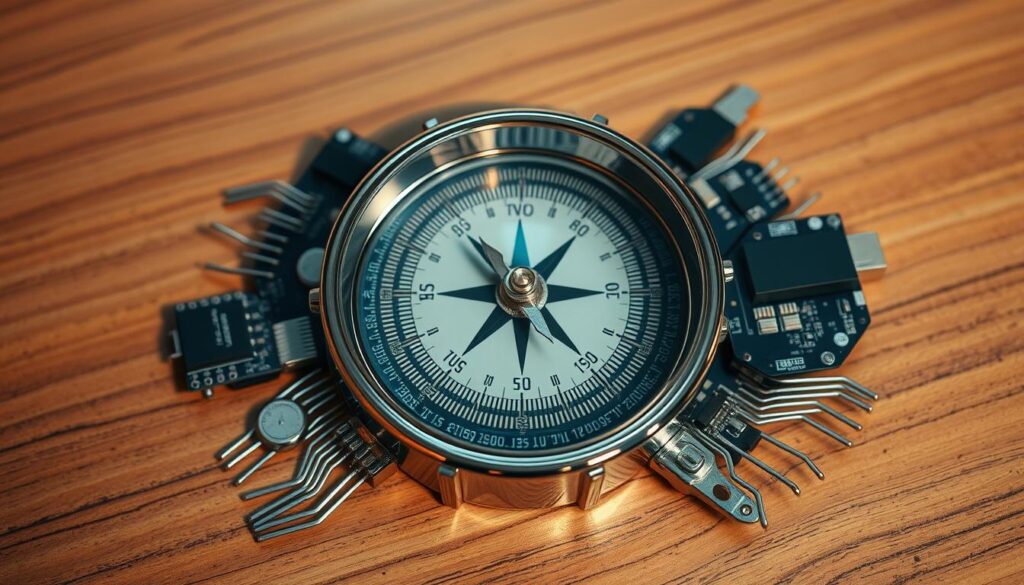
GPS gives location info, while compasses provide direction. They work together for better navigation. GPS can lose signal, but a compass keeps working. This makes navigation more reliable.
Future Innovations
Compass tech is getting better, with new sensor tech and more integration. As tech advances, compasses will be even more important. They will help in outdoor activities and in fields like aviation and maritime.
The Future of Compass Technology
New trends and green practices are changing compass technology. The old compass is getting a makeover to fit today’s needs.
GPS has changed how we use compasses, but they’re not going away. Advancements in technology are making compasses better and longer-lasting.
Now, making compasses is all about being kind to the planet. Companies are making compasses that are good for the environment and work well.
Navigation trends are moving towards combining old and new tech. This mix makes navigation tools better and more useful.
The compass is getting a bright future with new ideas and green goals. As navigation trends keep changing, the compass will stay a key part of finding your way outside.
Learning Resources for Compass Navigation
To improve your compass navigation skills, it’s key to check out available resources. Online courses give a detailed learning experience. They cover both simple and complex techniques.
Many trusted sites offer navigation courses, including wilderness survival and orienteering. These courses include video lessons, quizzes, and hands-on activities. They help solidify your learning.
Navigation books are also a great resource for deep learning. Famous authors and experts share their knowledge in these books. They teach you how to use a compass in different places.
Being part of community groups or local orienteering clubs can also boost your skills. These groups often have workshops, events, and practice sessions. You can learn from pros and share your own skills.