
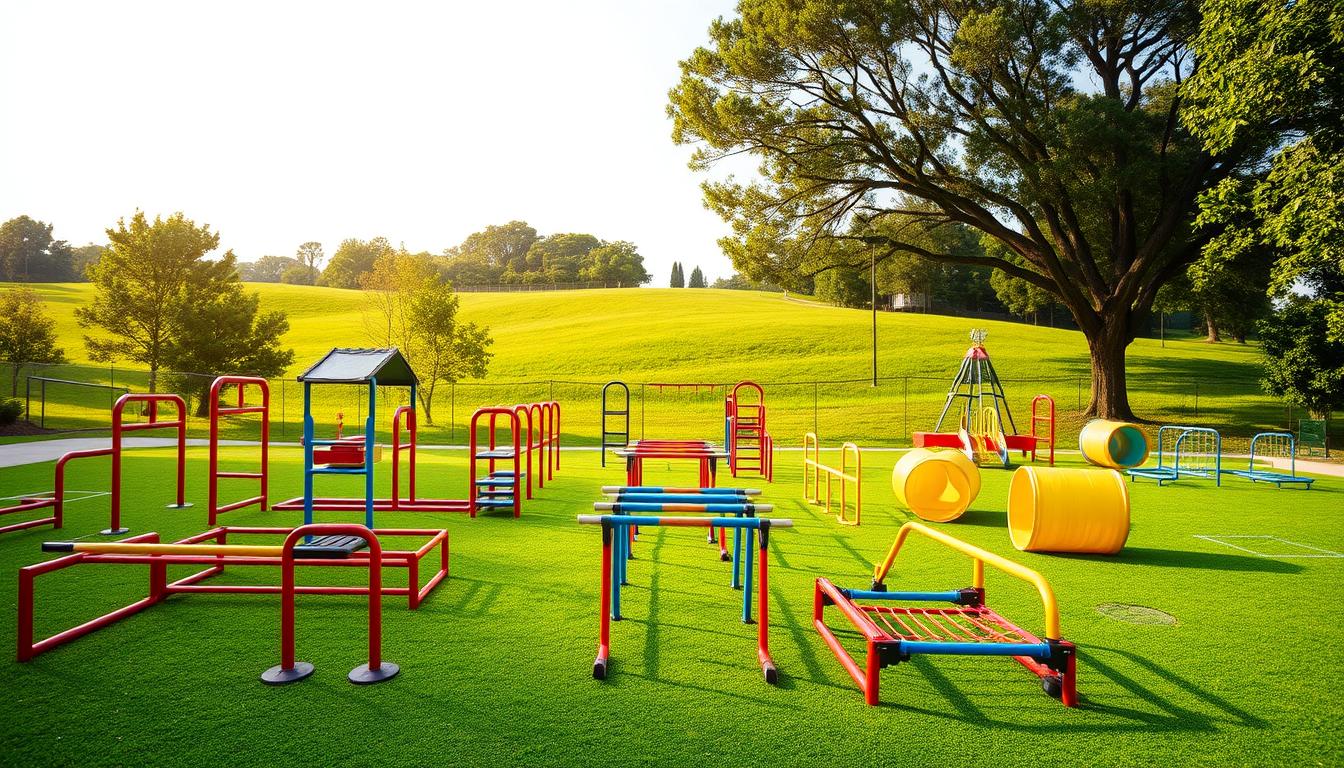
Creating an obstacle course for kids is a fun way to boost their physical skills. Skills like balance, coordination, and motor planning get a workout. You can tailor the challenges to play to your child’s strengths and help improve areas that need work.
This activity is not only fun but also helps young children develop important physical skills. It’s all done in a playful way. This article will show you how to set up a fun and effective obstacle course for kids.
By following the steps in this article, you can make a safe and fun environment. It will help your children develop physically and have a blast doing it.
What is an Obstacle Course?
Obstacle courses are a fun way for kids to get better at moving their bodies. An obstacle course is a series of challenges that need physical effort and coordination to finish.
These courses can be set up in many places. An outdoor obstacle course might have hills, mud, and trees. An indoor obstacle course could use things found at home or special equipment.
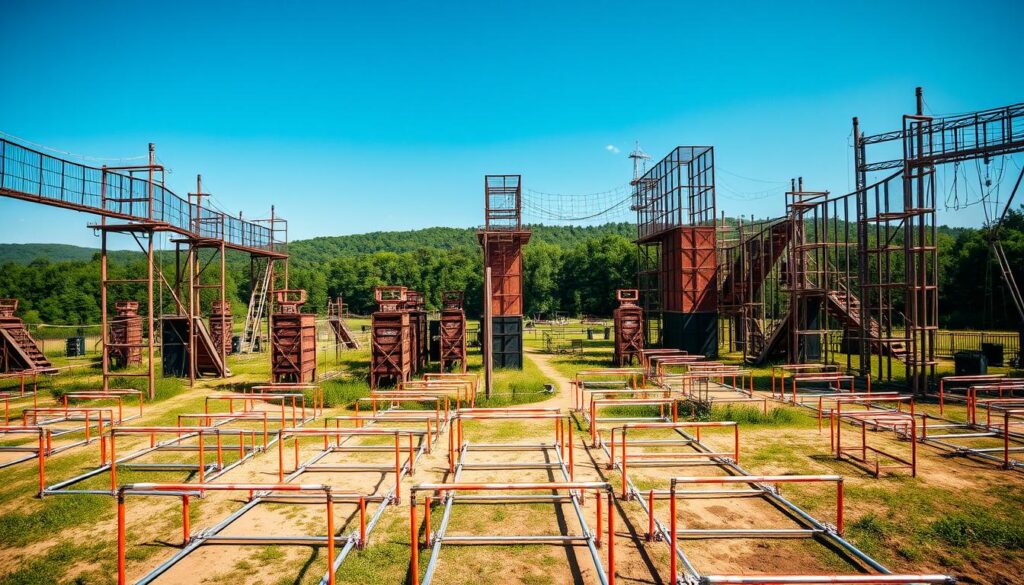
Obstacle courses are great for kids. They help with moving better and learning to plan and follow steps. They also help kids remember things and follow directions better.
Going through an obstacle course also helps kids learn to control their feelings and actions. It’s a fun way to get better at physical activities and thinking skills. Whether it’s inside on a rainy day or outside on a sunny day, it’s good for kids.
Planning Your Obstacle Course
Planning an obstacle course for kids means looking at their skills and making it fit their needs. This first step is key to making a kids obstacle course that’s both fun and challenging.
Assessing Skills and Abilities
Start by figuring out what your child is good at and what they need to work on. This helps you create an obstacle course design that’s fun and balanced.
If your child is great at agility but needs to improve endurance, design the course to challenge their stamina. Use their agility to your advantage. This way, the course stays fun and keeps them motivated.
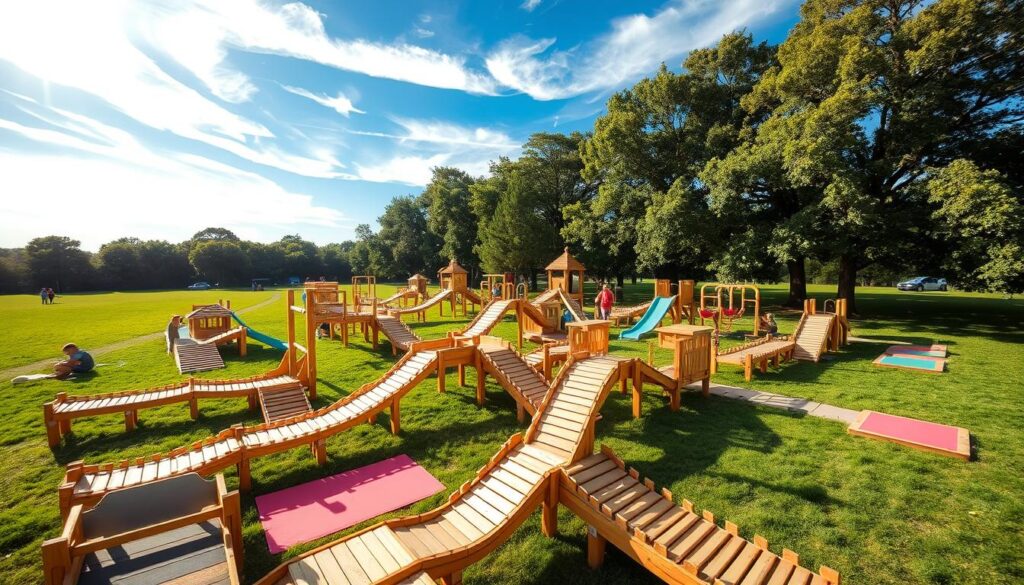
When planning an obstacle course, think about the age and skill level of the kids who will use it. This helps pick the right obstacles and design a safe, fun layout for everyone.
By carefully looking at your child’s skills and making the course fit their needs, you create a fun, challenging experience. It encourages physical activity and helps them grow.
Essential Equipment and Materials
Obstacle courses can be made with both special gear and everyday items. This makes it easy to set up a fun and tough course, no matter your budget or what you have on hand.
For obstacle course equipment, there are many choices. Tools like Spot Markers and Balance Stepping Stones help mark paths and improve skills. They’re great for making a course that guides people through different challenges.
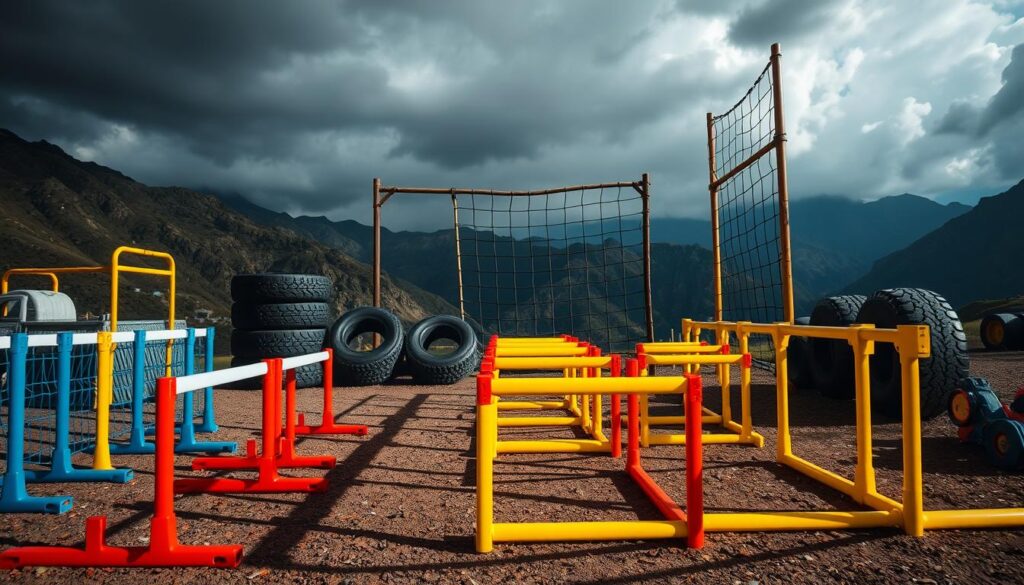
Household items can also be used to make fun obstacles. You can use cones, tires, and pool noodles for hurdles, weave-throughs, and balance beams. The trick is to be creative and think differently about what you can use.
For instance, cones can make a zig-zag path, and tires can form a tire-run obstacle. Pool noodles can be a balance beam or hurdles to jump. With so many household items, you can always change up your course to keep it exciting.
When picking obstacle course equipment and materials, think about who will be using them. Younger kids might need softer stuff and easier obstacles. Older kids or those more experienced can handle harder challenges.
Designing Your Course Layout
Designing an obstacle course layout is a fun task that needs creativity and detail. A good layout makes the course fun and challenging for kids.
To make an engaging course, include different elements for various skills and tastes. Give kids something to jump to, over, and into; something to crawl through or under; something to walk on carefully; something to climb over; and something to wind their way around.
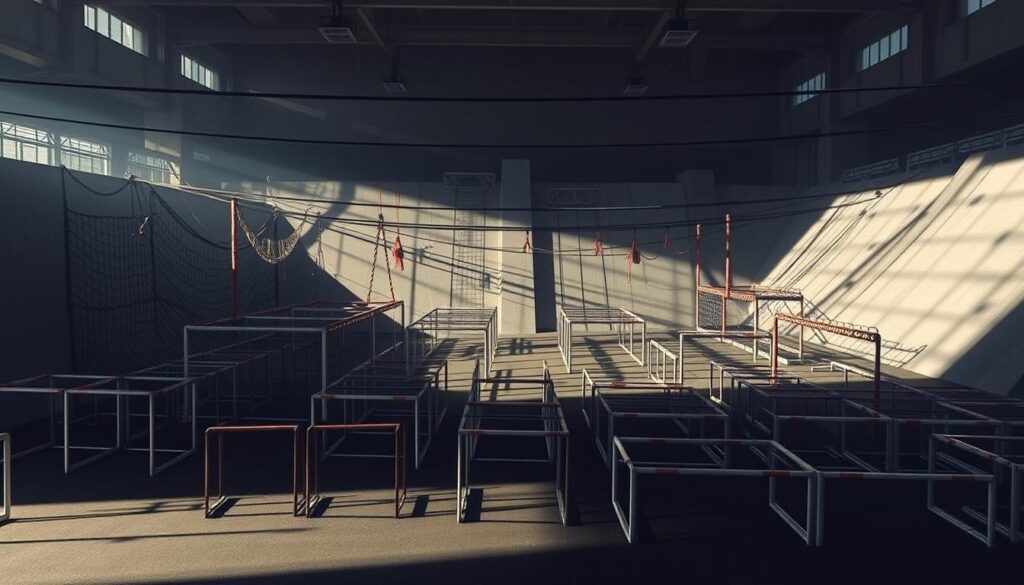
A great course design should flow well, with each challenge building on the last. This keeps kids excited and engaged as they go through the course.
When planning the course layout, think about the space and the kids’ ages. Younger kids need a simple and safe layout. Older kids can handle more complex designs.
Good obstacle course design balances fun and challenge. Mix physical and mental obstacles for a fun and engaging experience for kids.
Safety Considerations
Safety is a top priority in obstacle courses. It’s vital to make sure the area is safe and watched over, more so for young kids or newbies.
To keep things safe, start small. Begin with a few obstacles and gradually add more. Safety experts say, “A safe obstacle course is one that is carefully planned and monitored at all times.”
“A safe obstacle course is one that is carefully planned and monitored at all times.”
The course must be free from dangers and watched closely, even more so for little ones. Keeping an eye on obstacle course safety means checking the gear and surroundings often.
By focusing on safety in obstacle course design, you make it fun yet safe for everyone. Keeping it up to date and watching over it is essential for safety.
Customizing the Course
To make an obstacle course fun for all, it’s key to adjust it for each age and skill level.
Customizing the course means changing its difficulty and obstacles for different ages. For little kids, the course should be fun and simple. It should have obstacles that are not too hard or risky. For older kids and adults, you can add harder obstacles or make the course longer.
Making it fun for younger participants is essential. You can do this with simple, fun obstacles like tunnels, small hurdles, and balance beams. It’s also important to keep the course safe and watch it closely.
For older participants, you can increase the challenge with harder obstacles like rope climbs, mud pits, or longer runs. You can also make the course longer or have participants do it in different ways, like backwards or blindfolded.
By adjusting the course for different ages and skills, everyone can have a great time. This makes participants happy and encourages them to come back. It also helps them stay active and healthy.
Setting Up for Success
Getting your child ready for the obstacle course is key. Start by walking through the course together. This helps them understand the order and how to do each activity.
Explain the different stations and show them how to do each one. Numbering the stations can also help. It makes it easier for your child to follow along.
Tips for a Smooth Experience
Encourage your child to ask questions and share any worries. This makes them feel more at ease and confident. It’s important for their first time on the course.
Also, practice the course a few times together. This makes them more familiar with the layout and challenges. It prepares them for when they do it alone.
By properly preparing your child, you ensure a fun and successful time on the obstacle course.
Maintaining Your Obstacle Course
Keeping your obstacle course fresh and exciting is key. It makes sure the course is safe and keeps users coming back for more.
Inspecting the equipment and structures regularly is essential. Fix or replace any damaged parts quickly to avoid accidents and keep the course safe.
To keep things interesting, change the course layout or add new obstacles. This makes the course fun for everyone and caters to different skill levels.
For kids, you can adjust obstacles to work on multiple skills at once. This makes the course inclusive and fun for kids of all abilities.
Regular maintenance and updates help your obstacle course last longer. It’s not just about fixing things. It’s about making a fun and engaging place for everyone to enjoy.
Hosting an Obstacle Course Event
Turning your obstacle course into a fun event is a great way to keep kids active. Run through the course with your child for a fun bonding time. You can even time how fast they finish to make it more exciting.
Invite siblings and friends to join in on the fun. This makes the activity enjoyable for everyone. Hosting an obstacle course event promotes physical activity and teamwork.
Follow these steps to host a memorable event. Your child and their friends will love it. So, get ready to host an obstacle course event that everyone will enjoy.