The human body has a complex system that gives it shape and lets us move. At the center of this system is the skeletal system. It’s made up of bones that work together to support our bodies.
The Cleveland Clinic says our skeletal system does more than just support us. It also makes blood cells, stores minerals, and protects our organs. In short, our bones are what keep us standing and moving.
Learning about our skeletal system helps us see how it keeps us healthy and active.
The Importance of Our Skeleton
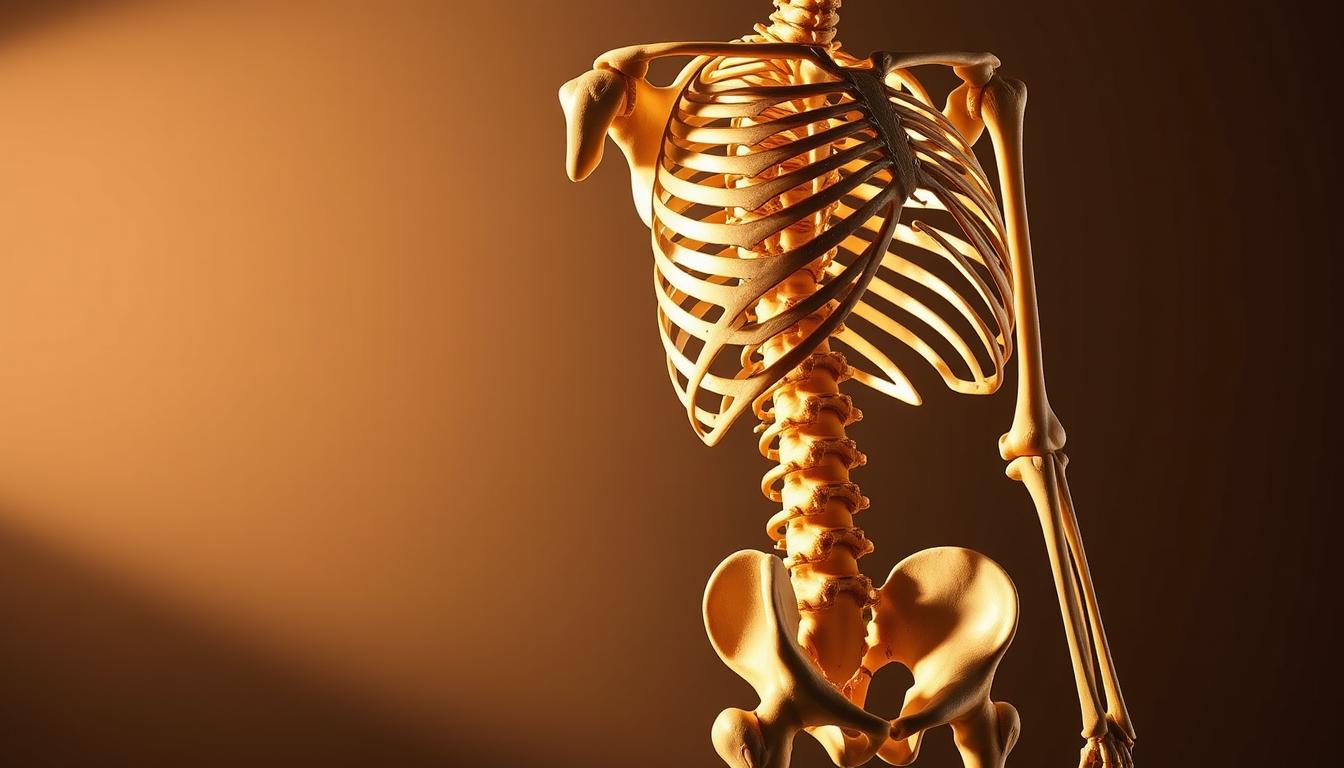
The human skeleton is a complex framework that provides support and structure to our bodies. It is made up of 206 bones that work together. They help us maintain our posture and facilitate movement.
Our skeleton plays a key role in body support. It allows us to stand upright and engage in various physical activities. Without a strong skeletal system, we can’t perform even the simplest tasks.
The skeletal importance is huge. It provides the framework for our entire body. It supports our muscles, skin, and other tissues. It also protects vital organs like the brain, heart, and lungs.
Our skeleton does more than just support our body. It also produces blood cells and stores minerals. The bones in our skeleton are dynamic. They are constantly being remodeled and adapted to meet our body’s changing needs.
Understanding the bone structure and its functions is key. It helps us see why a healthy skeleton is important. By taking care of our bones through a balanced diet and regular exercise, we can keep our skeletal system strong. This ensures our overall health and well-being.
The Composition of Bones
Understanding bones is key to knowing their health role. Bones are not just static; they are dynamic, living tissues that change constantly.
Bones have a protein framework called collagen and a mineral called calcium phosphate. This mix makes bones strong and flexible.
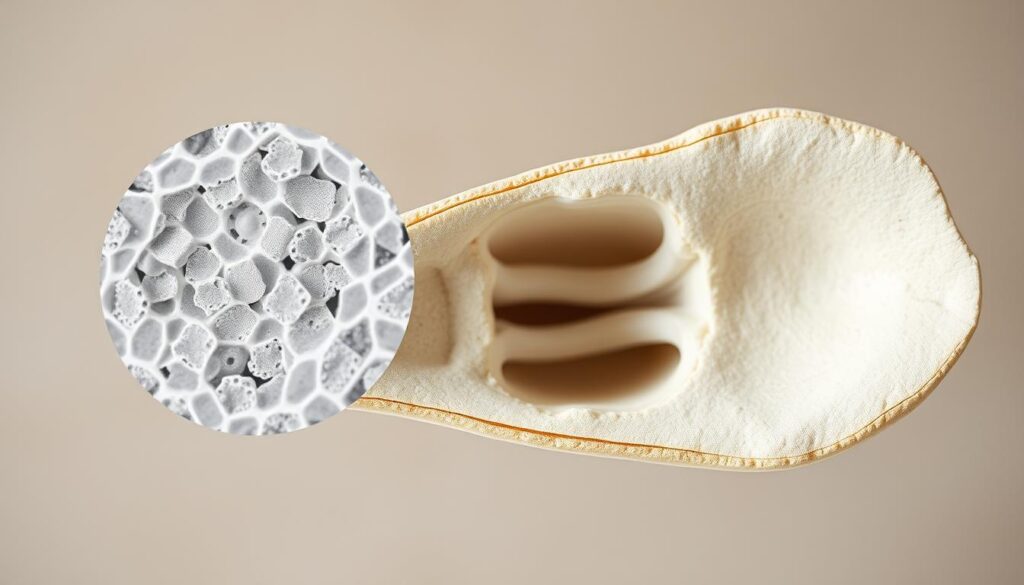
Compact bone is the dense outer layer of bones. It’s made of osteons, which are like cylindrical structures with a central canal and bone rings.
This layer gives bones the strength needed for activities and protects the inner bone tissue.
Cancellous Bone
Cancellous bone is the spongy layer inside compact bone. It has a network of trabeculae, thin bones that support and help with nutrient exchange.
This bone is lighter and more flexible than compact bone. It helps keep the skeleton strong without adding too much weight.
The mix of compact and cancellous bone is vital for bone health. Knowing about them helps us see why eating right and exercising are important.
How Bones Provide Structure
The human skeleton is the framework of our body. It supports our weight and shapes our body. This affects how we look and move.
The skeletal structure has 206 bones working together. They support muscles, organs, and tissues. For example, the skull protects the brain and shapes the face. The backbone safeguards the spinal cord.
KidsHealth says, “The skull protects the brain and forms the shape of the face. The spinal cord is protected by the backbone, or spinal column.” Bones protect and structure our body. They shield internal organs from harm.
Bones also help us move by attaching to muscles. With bones, muscles, and joints, we can do many things. This includes simple gestures and complex actions.
In short, the skeletal system is key to our life. It gives us the structure to live, move, and function. Knowing how our skeletal structure works helps us see the amazing design of our bodies.
The Skeleton and Movement
The skeleton is more than just a framework. It’s a dynamic system that lets us move. Without it, we couldn’t do simple things like walk or pick up objects.
The joints are key to this mobility. Joints are where bones meet, making our skeleton flexible. As KidsHealth says, “Joints are where two bones meet. They make the skeleton flexible — without them, movement would be impossible.”
Types of Joints
There are many types of joints in our bodies. Each type allows for different movements. The main types include:
Hinge Joints: These allow movement in one plane, like the elbow or knee. They work like a door hinge, letting us bend and straighten.
Pivot Joints: These permit rotational movement, such as the joint between the first and second vertebrae in the neck. This lets us turn our head.
Ball-and-Socket Joints: These are the most mobile type, found in the shoulders and hips. They allow for movement in multiple axes, giving us a wide range of motion.
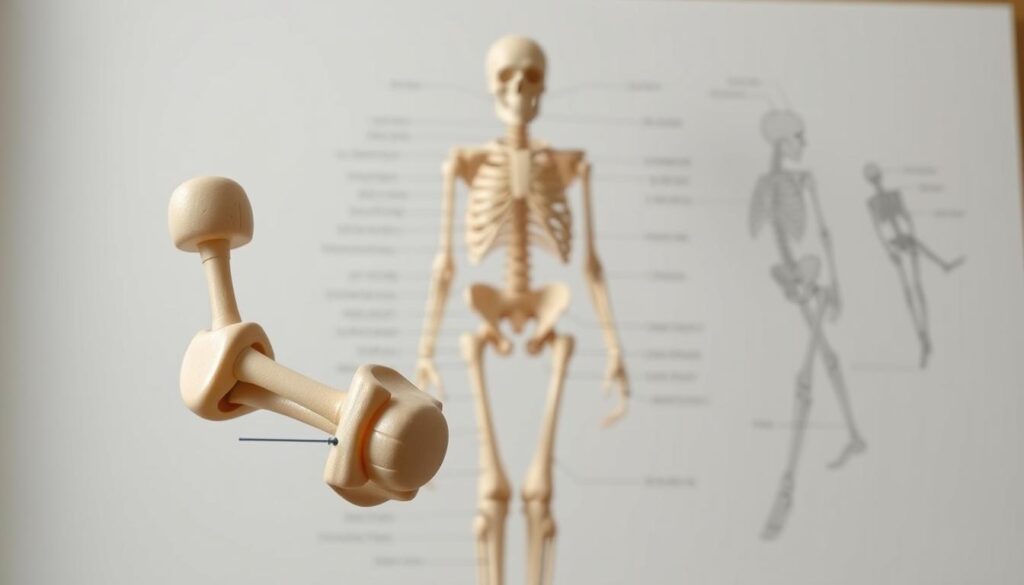
Understanding the different types of joints is key to appreciating the human skeleton’s complexity and flexibility. Bones, joints, and muscles work together for smooth and coordinated movement.
In conclusion, the skeleton plays a vital role in movement. It supports flexibility and a wide range of motions through various joints. This makes it essential for our ability to move and interact with the world.
The Lifespan of Our Bones
The human skeleton is always changing. It grows and adapts as we age. This shows how amazing our bones are at changing and adapting.
Bones keep growing and changing throughout our lives. The body constantly makes new bone tissue. This is key for keeping bones healthy. It involves different cells working together, like builders and demolition teams.
Bone Growth and Development
Bones start growing in the womb and keep growing into adulthood. In kids and teens, bones get longer and stronger. This happens at growth plates, where new bone is made.
As we get older, bone remodeling becomes more important. It breaks down old bone and makes new one. This helps keep bones strong and prevents diseases like osteoporosis.
Bone remodeling is a careful balance between breaking down and building bone. Things like what we eat, how much we exercise, and hormones affect this balance. These factors play a big role in our bone health.
Knowing how our bones change and how to keep them healthy is vital. It helps us have a strong skeleton all our lives.
Common Bone Conditions
It’s important to know about common bone conditions to stay healthy. Our bones can get sick and affect our life quality.
Osteoporosis and fractures are common in many people. Osteoporosis makes bones weak, leading to fractures. The Cleveland Clinic says seeing a doctor for new pain or stiffness is key for early help.
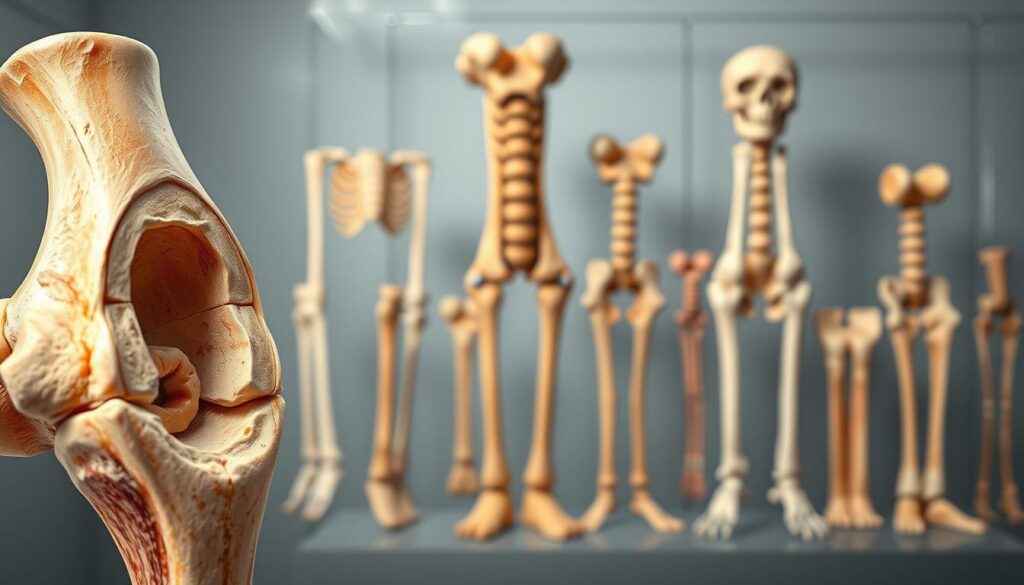
Other diseases like osteopenia and Paget’s disease also affect bones. Knowing the signs can help get medical help fast.
“Early detection and treatment of bone conditions can significantly improve the quality of life.”
Knowing about bone conditions and their signs helps us take care of our bones. Regular doctor visits and a healthy lifestyle are important to prevent and manage bone diseases.
Nutrition’s Role in Bone Health
Nutrition is key to keeping our bones strong. A diet without the right nutrients can weaken our bones. This can lead to conditions like osteoporosis.
The vitamins and minerals we eat affect how much calcium is in our bones. Calcium is vital for bone health, being a main part of bone tissue. Vitamin D helps our body absorb calcium, making sure our bones use the calcium we eat.
Eating foods rich in calcium and vitamin D is important. Dairy, leafy greens, and fortified foods are great sources. Getting enough of these nutrients helps keep our bones strong and prevents bone problems.
Other nutrients like magnesium and vitamin K also help our bones. Magnesium helps manage calcium levels. Vitamin K is needed for proteins that help bones grow.
Knowing how nutrition affects bone health helps us make better food choices. By eating a balanced diet full of essential nutrients, we can keep our bones healthy for life.
Exercise and Bone Strength
Exercise is vital for strong bones. It helps bones grow and get denser. This is key for good skeletal health.
Muscles help us move by pulling on joints. This stress makes bones stronger. Walking, running, and dancing are great for bones.
Types of Exercises Beneficial for Bone Health
Several exercises are good for bones. These include:
- Weight-bearing exercises like walking and running
- Resistance training with weights or resistance bands
- High-impact exercises such as jumping and skipping
Resistance training is very effective. It strengthens muscles and bones. Mixing different exercises keeps bones dense and lowers osteoporosis risk.
Keeping up with exercise is important for bone health. Always talk to a doctor before starting new exercises, even if you’re healthy.
Understanding Bone Healing
When a bone fractures, the body starts a remarkable healing process. This process involves different cell types and stages. They work together to fix the damaged bone.
Bone healing is a complex and highly regulated process. It starts with an inflammatory phase. In this phase, the body’s first response to injury clears away damaged tissue and debris.
After the inflammatory phase, the repair phase begins. During this stage, osteoblasts are key. They produce new bone matrix, which mineralizes to form new bone. As KidsHealth notes, “Osteoblasts make new bone and help repair damage.”
The fracture healing process also involves osteoclasts. They are responsible for bone resorption. The balance between bone formation by osteoblasts and bone resorption by osteoclasts is critical. It helps in proper healing and restoring the bone’s original strength.
Understanding bone healing is key to appreciating the body’s repair ability. Knowing how bones heal helps us see the importance of proper nutrition and care during recovery.
Myths and Misconceptions about Bones
Bones are often misunderstood, leading to various myths and misconceptions. One common myth is that bones are static, unchanging structures. But, bones are dynamic, constantly being remodeled through a process that involves the breakdown and formation of bone tissue.
Another misconception is that calcium is the only nutrient important for bone health. While calcium is critical, other nutrients like vitamin D, magnesium, and phosphorus also play significant roles in maintaining bone health. As Dr. John Smith, a renowned orthopedic specialist, once said,
“A balanced diet that includes a variety of nutrients is essential for maintaining strong bones.”

Some people believe that once bones are fully grown, they stop changing. But, bone remodeling continues throughout life, influenced by diet, exercise, and hormonal changes. This process is vital for maintaining bone strength and density.
Common Bone Myths Debunked
There’s a widespread belief that cracking one’s knuckles will lead to arthritis. Research has shown that this is not necessarily true, though it can lead to other issues like joint instability.
Another myth is that people with osteoporosis should avoid exercise. On the contrary, appropriate exercise, like weight-bearing and resistance exercises, can help strengthen bones and reduce the risk of fractures.
Understanding the truth behind these and other bone myths can help individuals take better care of their skeletal health. By dispelling misconceptions about bones, we can promote healthier habits and improve overall well-being.
Conclusion: Caring for Our Skeleton
Caring for our skeleton is key to our health. It gives our body shape and structure, as the Cleveland Clinic explains. A balanced diet, regular exercise, and a healthy lifestyle are vital.
Eating foods rich in calcium and vitamin D helps our bones. Activities like walking or running strengthen them too. Making smart choices helps us care for our skeleton.
Knowing how important our bones are, we can avoid bone problems. Healthy habits keep our bones strong. Taking care of our bones is essential for our overall health.