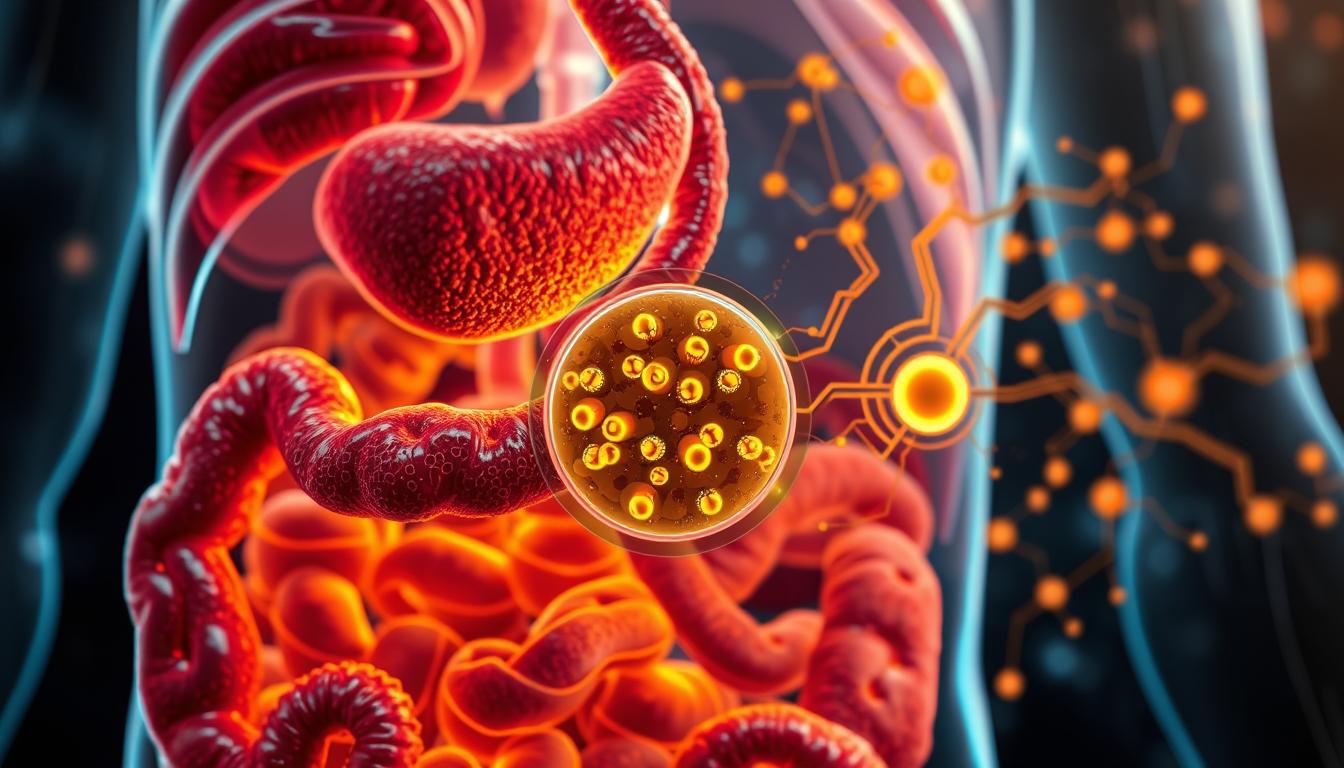
It’s important to know how food turns into energy in our bodies. This process is complex and happens every day. It starts when we eat and ends when our bodies use the energy.
When we eat, our bodies break down food into simpler parts like carbs, proteins, and fats. This is called digestion. Then, these parts are turned into energy, which our bodies need to work.
Turning food into energy is more than just eating. It’s also about how our bodies use the nutrients from food. This process, called nutrient absorption, is key for growing, repairing, and keeping our bodies healthy. It also helps control important body functions.
Understanding Digestion: The Basics
To grasp how our bodies get nutrients from food, we need to know the digestion process. Digestion is the first step in turning food into energy. It breaks down complex substances into simpler nutrients that our bodies can absorb.
The digestion process starts in the mouth. Here, food is chewed and mixed with saliva. The saliva has enzymes that start breaking down carbohydrates.
In the stomach, carbohydrates turn into glucose, proteins into amino acids, and fats into fatty acids. This breakdown is key for our bodies to absorb these nutrients. They are then used for energy, growth, and repair.
Knowing the basics of nutrient breakdown shows us how complex and vital the human digestive system is. It’s a process that’s both detailed and essential for our survival.
The Digestive System: An Overview
The digestive system is a complex network of organs. They work together to break down food into essential nutrients.
The digestive system includes several key organs: the mouth, esophagus, stomach, small intestine, and large intestine. Each of these organs of digestion plays a unique role in the process of converting food into energy.
Starting from the mouth, where food is chewed and mixed with saliva that contains enzymes to break down carbohydrates, the digestive process is initiated. The food then travels down the esophagus into the stomach, where it is further broken down by stomach acids and enzymes.
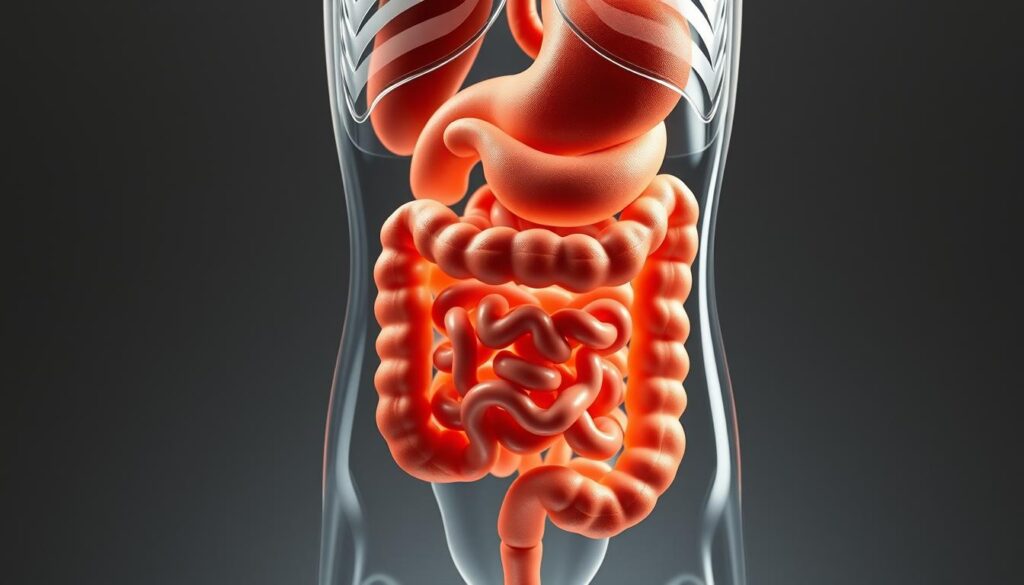
The partially digested food then moves into the small intestine, where most of our nutrient absorption takes place. The walls of the small intestine are lined with finger-like projections called villi, which increase the surface area for absorption.
Lastly, the remaining waste products move into the large intestine, also known as the colon. Here, water is absorbed, and the waste is prepared for elimination.
Understanding the different parts of the digestive system and their functions is vital. It helps us appreciate how our bodies process the food we eat. It also shows us how to maintain a healthy digestive system.
The Role of Enzymes in Digestion
Digestive enzymes are key in breaking down complex food into simpler forms. They help the body absorb and use nutrients well.
Enzyme Function is very specific. For example, amylase turns carbs into sugars. Proteases break down proteins into amino acids. This makes digestion both efficient and precise.
Experts say, “Enzymes are the workhorses of digestion, making complex nutrients absorbable.” This shows how vital enzymes are for getting nutrients.
“The presence of digestive enzymes is critical for proper digestion and nutrient absorption.”
Digestive enzymes are very important. Without them, the body can’t break down food into nutrients. This could lead to nutritional deficiencies and health problems.
Knowing how digestive enzymes work in digestion shows the complex process of human nutrition. Enzymes help break down complex molecules. This lets the body get the energy and nutrients it needs to function well.
The Journey of Food: Mouth to Stomach
When food goes into our mouth, the energy-making process starts. Here, we chew food into tiny pieces. This makes it easier for enzymes to work on it. At the same time, saliva with enzymes like amylase breaks down carbs into simple sugars.
As we chew, the food and saliva mix into a bolus. Then, we swallow it. Swallowing pushes the bolus into the esophagus. There, muscles move it towards the stomach. This move is key for more digestion.
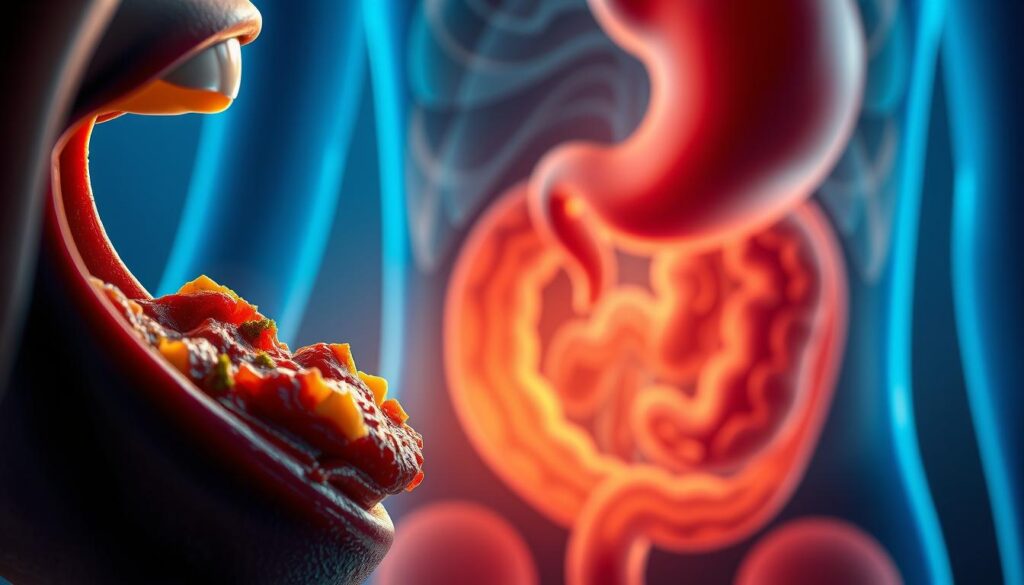
In the stomach, the bolus meets stomach acids and enzymes like pepsin. These break down proteins into smaller parts. The stomach mixes the food with these juices, turning it into a semi-liquid called chyme. This step is important for nutrient absorption in the intestines.
The trip from mouth to stomach is the first step in digestion. It changes food into a form ready for the intestines. Knowing this journey shows how complex and efficient our digestive system is.
Breaking Down Food: The Stomach’s Role
The stomach turns food into a semi-liquid mix called chyme. This is key for digestion and absorbing nutrients in the intestines.
When food gets to the stomach, it mixes with acids and enzymes. These break down food’s complex parts. The stomach makes acids like hydrochloric acid and enzymes like pepsin. They work together to break proteins into smaller pieces.
The stomach’s acidic environment is important for enzyme activation. For example, pepsin works best in the stomach’s acidic conditions. This shows why a healthy stomach lining is vital to avoid ulcers.
A healthy stomach lining protects the stomach walls from acids. Knowing the stomach’s role in digestion stresses the importance of a balanced diet and lifestyle for stomach health.
Nutrient Absorption: Small Intestine Insights
The small intestine is key for nutrient absorption. It uses its unique shape to absorb nutrients better. The walls of the small intestine have finger-like projections called villi. These increase the surface area for absorption.
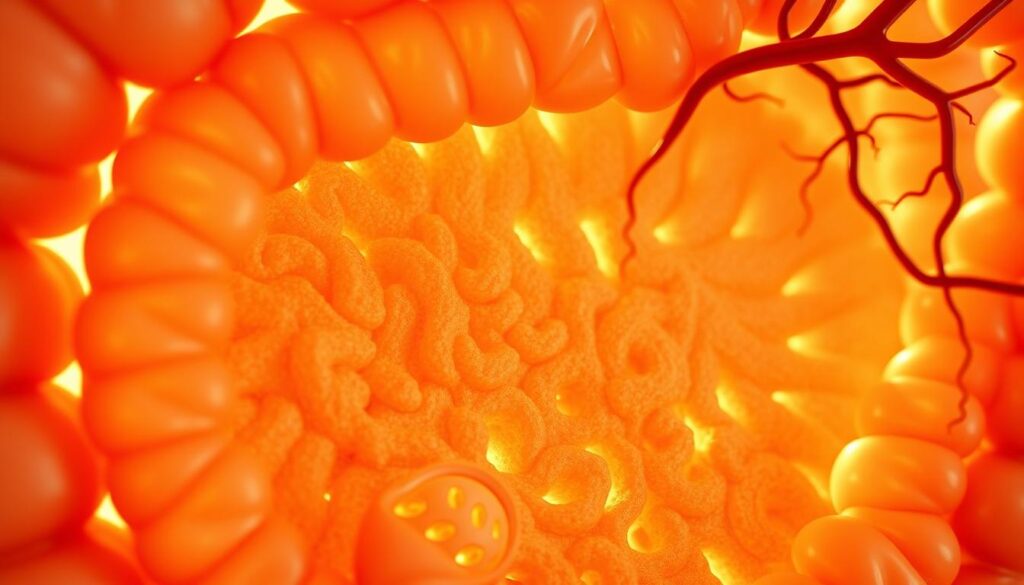
When food reaches the small intestine, enzymes from the pancreas and bile from the liver break it down. This makes the nutrients smaller and easier to absorb. The villi are full of blood vessels. This helps the absorbed nutrients get into the bloodstream quickly.
“The small intestine’s role in nutrient absorption is vital for our health,” it’s said. “It makes sure our body gets the nutrients it needs for energy, growth, and repair.”
Nutrient absorption in the small intestine is very efficient. Most of the absorption happens here. The absorbed nutrients then go to the liver for processing and to the rest of the body.
Keeping the small intestine healthy is important for good nutrient absorption. Eating a balanced diet, staying hydrated, and managing stress are key.
The Role of the Large Intestine
The large intestine is key for water absorption and more. It’s the last part of digestion, playing a big role in our health. It absorbs water and electrolytes from what the small intestine can’t digest.
The large intestine, or colon, has a huge community of microbes called the gut microbiome. This group is vital for our immune system and health. The microbes help break down nutrients and make vitamins like K and biotin, which our bodies need.
The large intestine also stores and gets rid of waste. Its muscles push waste towards the rectum, making it easier to go to the bathroom. Keeping the large intestine healthy is key to avoiding digestive problems and keeping our body balanced.
A diet full of fiber helps keep the gut microbiome healthy. Fiber feeds the good bacteria, helping them grow. Knowing how important the large intestine is shows its big role in our health and well-being.
The Importance of Fiber in Digestion
Dietary fiber is key for good digestive health. It’s a type of carb that our bodies can’t easily break down. But this is what makes it great for our digestive system.
Fiber helps food move through our digestive system smoothly. It prevents constipation and keeps bowel movements regular. Eating foods high in fiber can also help control blood sugar and make us feel full, which helps with weight management.
Health experts say a high-fiber diet can lower cholesterol and improve gut health. Adding foods like fruits, veggies, and whole grains to your diet can be very beneficial.
To get the most from fiber, eat a variety of fiber-rich foods. This supports your digestive health and boosts your overall well-being.
Common Digestive Issues
Digestive health is very important. Issues like irritable bowel syndrome (IBS) and bloating are common. They can affect how we live our daily lives. Many people face digestive issues, from mild discomfort to severe pain.
Common digestive issues include bloating, constipation, diarrhea, and IBS. These problems can come from many things, like diet, stress, and health conditions. Knowing the causes and symptoms helps find the right treatments and ways to prevent them.
The symptoms of these issues vary. For example, bloating makes you feel full or swollen in your belly. IBS can cause stomach pain, diarrhea, or constipation. Spotting these symptoms is the first step to managing digestive issues well.
Knowing the causes and taking action can lessen the impact of these issues. This means eating well, managing stress, and getting medical help when needed.
Enhancing Digestion for More Energy
Improving digestion is key to keeping your energy up. Eating a balanced diet full of fiber helps a lot. Also, drinking enough water is important for breaking down and absorbing nutrients.
Stress management is another big help. Activities like meditation or yoga can reduce stress. High stress can hurt your digestion, making you feel tired and uncomfortable.
It’s also smart to steer clear of foods that upset your stomach. Choosing the right foods and living a healthy lifestyle can boost your energy. This can make you feel better overall.