
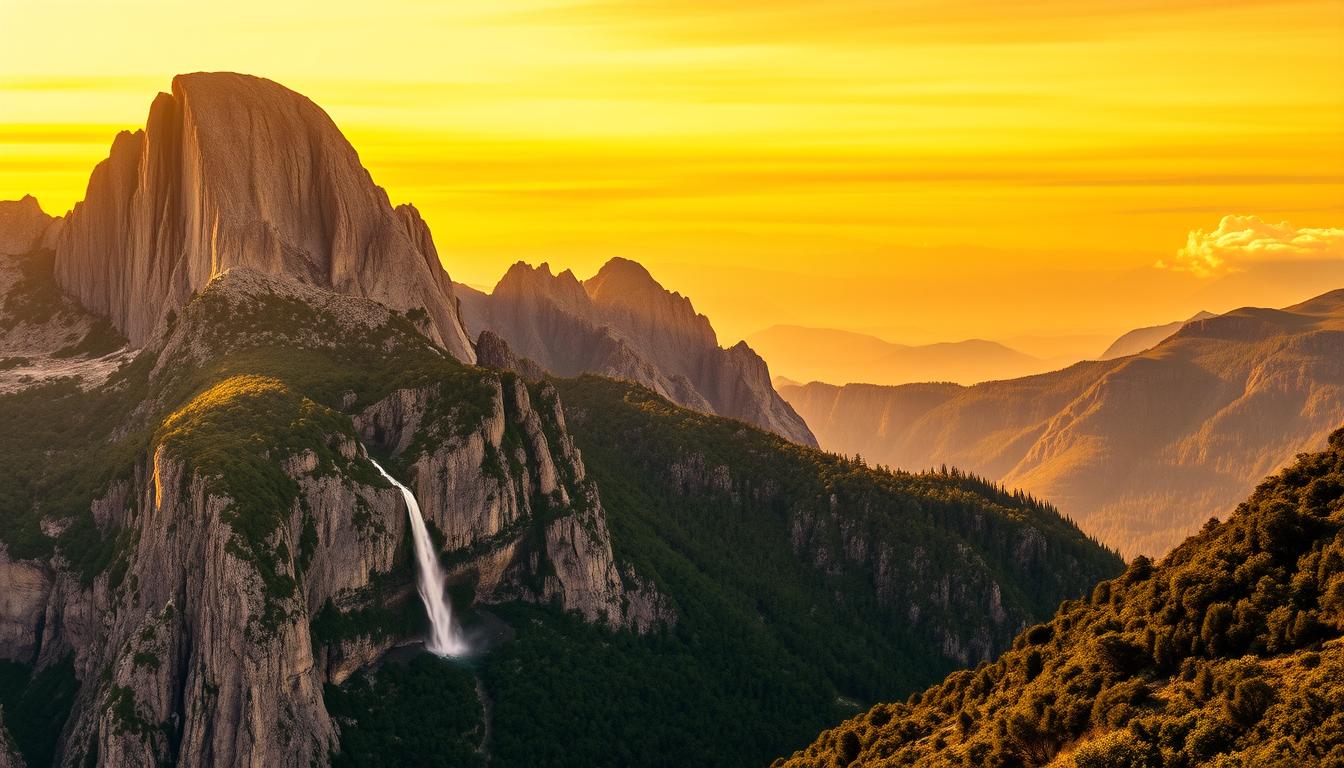
The Earth’s landscape is shaped by various geological processes, leading to the creation of majestic mountains. The movement of tectonic plates is key in this process.
The formation of mountains is complex. It involves the interaction of many geological forces. These forces can make the Earth’s crust buckle, fold, and rise. This creates mountain ranges over millions of years.
Learning about mountain formation gives us insights into the Earth’s history. It also shows us the dynamic processes that continue to shape our planet.
Introduction to Mountains
Mountains are natural wonders that rise above their surroundings. They form distinct landforms. These are not just beautiful sights but also key to the Earth’s ecosystem.
Characteristics of Mountains: Mountains stand out because of their height, slope, and direction. They can be rough and rocky or smooth and rounded. Their shape depends on their geological past. Mountains form mainly through tectonic forces, volcanic activity, or erosion.
As John Muir, a famous naturalist, said, “In every walk with nature, one receives far more than he seeks.” Mountains capture this essence, with their rich biodiversity. From dense forests to alpine meadows, they support a wide variety of life. The different climates and ecosystems host a vast array of plants and animals.
“The mountains are calling, and I must go.” –
Mountain ranges are long series of mountains. They form through tectonic plate movement, volcanic activity, or erosion. The geological features of mountains, like peaks, valleys, and ridges, are shaped by these forces over millions of years.
In short, mountains are more than just impressive sights. They are essential parts of our planet’s geography. They affect climate, culture, and biodiversity. Knowing about mountains and how they form helps us appreciate their importance in the natural world.
The Geological Processes Behind Mountain Formation
Tectonic plate movement is the main reason for mountain formation. The Earth’s surface is made up of large and small tectonic plates. These plates float on the semi-fluid asthenosphere beneath them.
These plates move slowly, about a few centimeters each year. Their movement leads to three main types of interactions: divergence, convergence, and transformation.
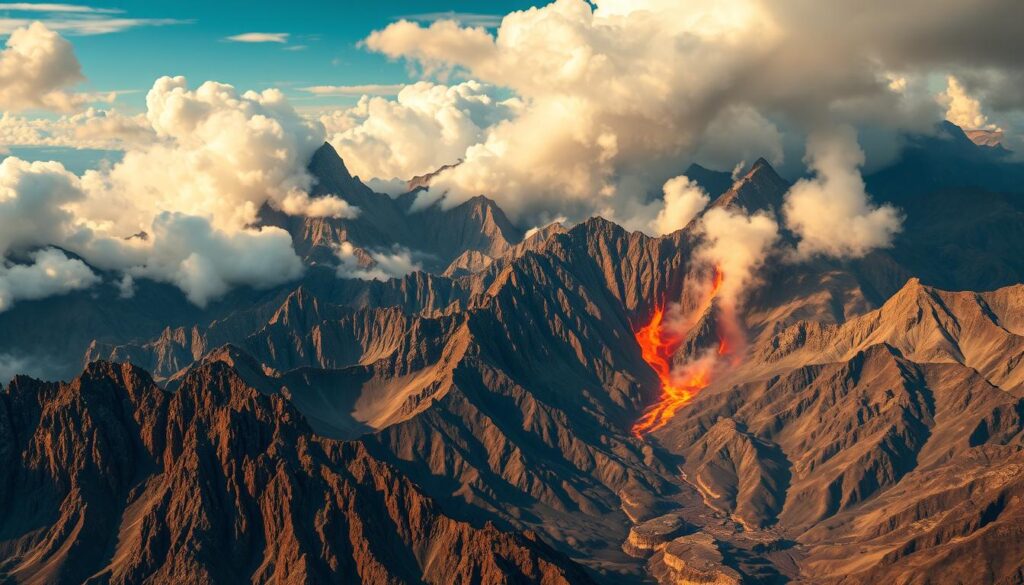
When two plates converge, they can collide and crumple, forming mountains. Or, one plate can be pushed under the other in subduction. For example, the Indian and Eurasian plates’ collision created the Himalayas.
Geological processes like weathering and erosion also shape mountains. Weathering breaks down rocks, while erosion moves these fragments away. This changes the landscape over time.
The mix of tectonic plate movement and weathering and erosion reshapes the Earth’s surface. It creates and changes mountain ranges over millions of years.
A Closer Look at Tectonic Mountains
Tectonic activity has shaped some of the most spectacular landscapes on Earth, including towering mountain ranges. Tectonic mountains are formed through the movement and interaction of the Earth’s lithosphere, the outermost solid layer of the planet.
One of the most significant processes in the formation of tectonic mountains is the collision of tectonic plates. When two plates collide, the edges of the plates are compressed and deformed. This leads to the formation of fold mountains. This process can result in the creation of vast mountain ranges.
Formation of Fold Mountains
Fold mountains are a type of tectonic mountain formed through the folding of the Earth’s crust. The Himalayan mountain range, for example, was formed as a result of the collision between the Indian and Eurasian tectonic plates. This ongoing process continues to shape the region’s landscape.
The formation of fold mountains involves several stages. These include the initial collision of tectonic plates, the compression and deformation of the Earth’s crust, and the subsequent uplift of the terrain. The resulting mountain ranges can be incredibly rugged and are often characterized by extreme elevations.
Examples of notable fold mountain ranges include the Himalayas, the Rocky Mountains, and the Andes. Each of these ranges has its unique geological features. They have been shaped by the complex interactions of tectonic forces over millions of years.
Volcanic Mountains: Nature’s Pressure Release
Nature’s pressure release is shown in volcanic mountains. Volcanic activity is key in their creation. Magma from inside the Earth comes out, forming lava, ash, and more around the vent.
The making of mountain formation through volcanoes is complex. It involves tectonic plates moving. When these plates move apart or crash, they create weak spots in the Earth’s crust. This lets magma rise to the surface, forming volcanic cones or mountains.
Mount Fuji in Japan, Mount St. Helens in the U.S., and Mount Vesuvius in Italy are famous volcanic mountains. They are not just geological wonders. They also hold cultural and spiritual value.
Volcanic mountains differ a lot. Their shapes depend on the volcanic activity and what comes out. Some are steep and conical, while others are more rounded. Knowing these differences helps us understand how volcanoes shape our planet.
Erosional Mountains: Shaped by Wind and Water
Wind and water are two powerful forces in nature. They play a key role in shaping erosional mountains. These forces wear away the Earth’s surface, creating unique landscapes.
The process of erosion is key to forming erosional mountains. Water, like rivers and glaciers, and wind, which carries sand and dust, work together. Over time, they sculpt the mountainous terrain, forming peaks and valleys.
Erosion reveals the underlying geological structure of an area. As the surface layers are worn away, deeper layers of rock are exposed. This provides insights into the region’s geological history. It also leads to the formation of unique landforms, like arches and canyons.
The role of mountain formation through erosion is not just about creating new landscapes. It also shapes existing mountains. As erosion continues, these landscapes evolve, showing the dynamic balance between erosion and rock resistance.
In conclusion, erosional mountains are a fascinating example of how natural forces shape our planet. Understanding how these mountains form enhances our appreciation of the natural world. It also gives us valuable insights into our planet’s geological history.
The Role of Weathering in Mountain Formation
Weathering breaks down rocks into smaller pieces, playing a big role in mountain formation. It shapes and reshapes mountains over millions of years. This happens through tectonic or volcanic activities.
There are three main types of weathering: mechanical, chemical, and biological. Mechanical weathering breaks rocks into smaller pieces without changing their chemical makeup. Freeze-thaw cycles are a key example, where water freezes in rock cracks, expanding and causing the rock to split.
Chemical weathering changes the chemical makeup of rocks, often through reactions with water and gases in the air. For example, rainwater can dissolve or change minerals in the rock.
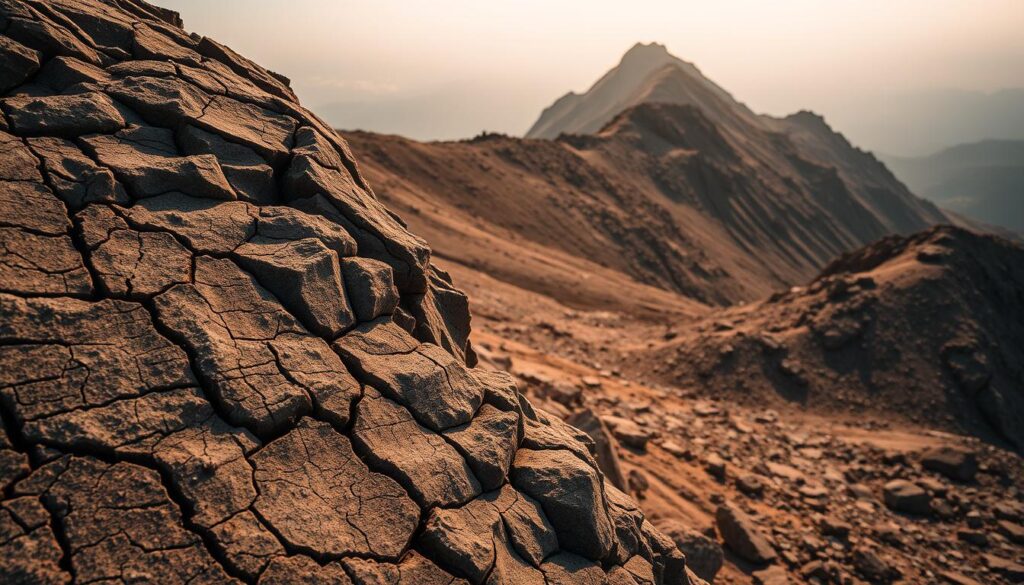
Biological weathering breaks down rocks with the help of living things. Plant roots can grow into rock cracks, exerting pressure that causes the rock to fracture. Microorganisms also play a part by releasing chemicals that react with the rock.
The mix of these weathering processes is key in shaping mountain landscapes. As rocks break down, they become easier for wind and water to carry away. This further changes the mountain’s shape.
In conclusion, weathering is vital in shaping our mountains. Knowing about these processes helps us see how dynamic the Earth’s surface is.
Mountains and Climate Change
The link between mountains and climate change is complex. It involves changes to ecosystems, weather, and geological processes. As climate change advances, its effects on mountains are clear.
Climate change impacts mountains in many ways. Rising temperatures change where plants and animals live, pushing some to higher places. This can lead to a loss of biodiversity as some species struggle to adapt or move fast enough.
“The warming of the climate system is clear, and it’s very likely that human actions have caused most of this warming.” The Intergovernmental Panel on Climate Change (IPCC) says humans play a big role in climate change. This affects mountains.
Changes in Ecosystems
Mountain ecosystems are very sensitive to climate change. Changes in temperature and rain can upset the balance of these ecosystems. For example, warmer temperatures can melt glaciers and change snow cover, harming local wildlife and people who rely on these resources.
Also, climate change can make natural hazards like landslides and floods worse. As temperatures rise, these events can happen more often and be more severe. This poses big risks to the environment and people living in and around mountains.
Impact on Geological Processes
Climate change also affects geological processes in mountains. Changes in temperature and rain can change how mountains weather and erode. For instance, more rain can cause faster erosion, and temperature changes can affect how rocks break down.
“Climate change is not just an environmental issue; it’s a human rights issue, an economic issue, and a security issue. For mountains, it means a transformation of their very foundations.”
In summary, climate change has a big impact on mountains. It affects ecosystems, weather, and geological processes. Understanding these changes is key to reducing their effects and protecting mountain environments.
Famous Mountain Ranges Around the World
Mountain ranges around the world are breathtaking natural wonders. They are also culturally and geologically important. These ranges have formed over millions of years through geological processes. They create unique landscapes that support many ecosystems.
The Himalayan mountain range is one of the most famous. It was formed by the collision of the Indian and Eurasian tectonic plates. This process continues to shape its peaks, including Mount Everest, the highest peak on Earth.
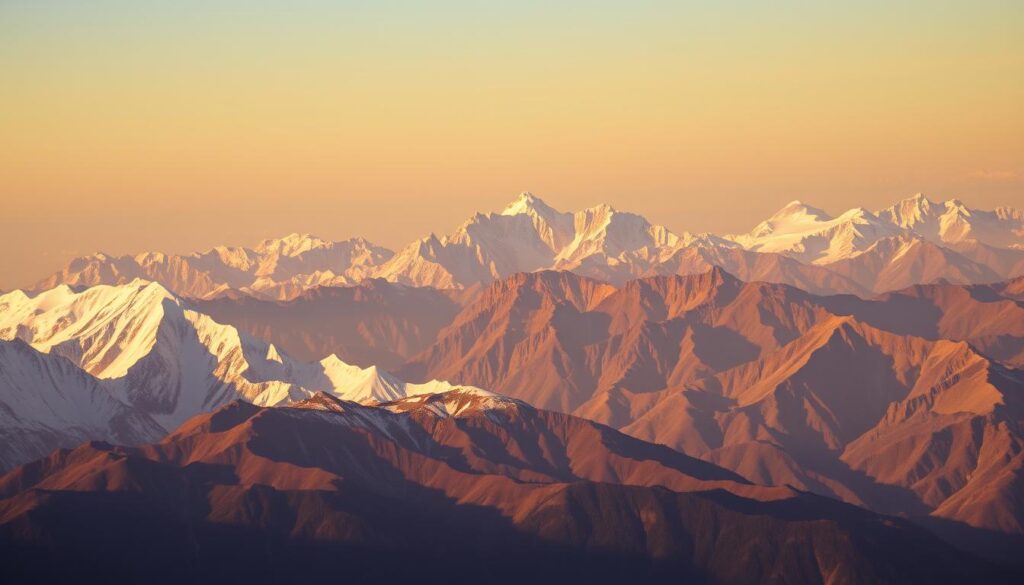
The Rocky Mountains in North America are known for their stunning scenery and diverse wildlife. They were formed by tectonic forces and volcanic activity. This resulted in a complex geological landscape.
Geological Features of Famous Mountain Ranges
The geological features of these mountain ranges are fascinating. For example, the Appalachian Mountains in Eastern North America are very old. They have a history of over 480 million years. Their age and erosion have created a landscape of rolling hills and rounded peaks.
“The mountains are calling, and I must go.” – John Muir
Younger mountain ranges like the Andes in South America have sharper peaks. They were formed more recently. The Andes are a prime example of a mountain range formed by subduction.
Cultural Significance of Mountain Ranges
Mountain ranges have played a key role in human history and culture. Many cultures see mountains as sacred sites. For example, Mount Fuji in Japan is a famous mountain and a cultural icon. It symbolizes Japan’s natural beauty and spiritual heritage.
In conclusion, famous mountain ranges are remarkable for their geological features and cultural significance. Understanding these ranges gives us insights into Earth’s history and the forces that shape our planet. It also shows how humans interact with and perceive their natural environment.
Human Interaction with Mountains
Mountains play a big role in our lives, with many economic and fun activities. They give us resources, jobs, and places to enjoy.
Mountains help with mining, agriculture, and tourism. Mining gets us important minerals and metals. Agriculture feeds local people and more. Tourism, like skiing and hiking, boosts the local economy.
Mountains also offer fun activities. Hiking, skiing, and mountaineering draw people from all over. These activities keep us healthy and connect us with nature.
As
“Mountains are the beginning and the end of all natural scenery” – John Ruskin
, mountains are key to our lives and views. We must protect them for the future.
It’s important to care for mountains. We need sustainable agriculture practices and smart tourism. Mining should also be done carefully.
In summary, mountains are vital for us, with many uses. We must look after them to keep their beauty and resources for everyone.
The Biodiversity of Mountains
Mountain regions are full of life, with ecosystems that are both varied and delicate. The unique conditions in these areas support a wide range of plants and animals. This includes different climates, soil types, and landscapes.
The mountains have diverse ecosystems, like lush forests and alpine meadows. Each one is home to many different life forms. For example, alpine meadows are known for their colorful wildflowers, while forests have many tree species and animals.
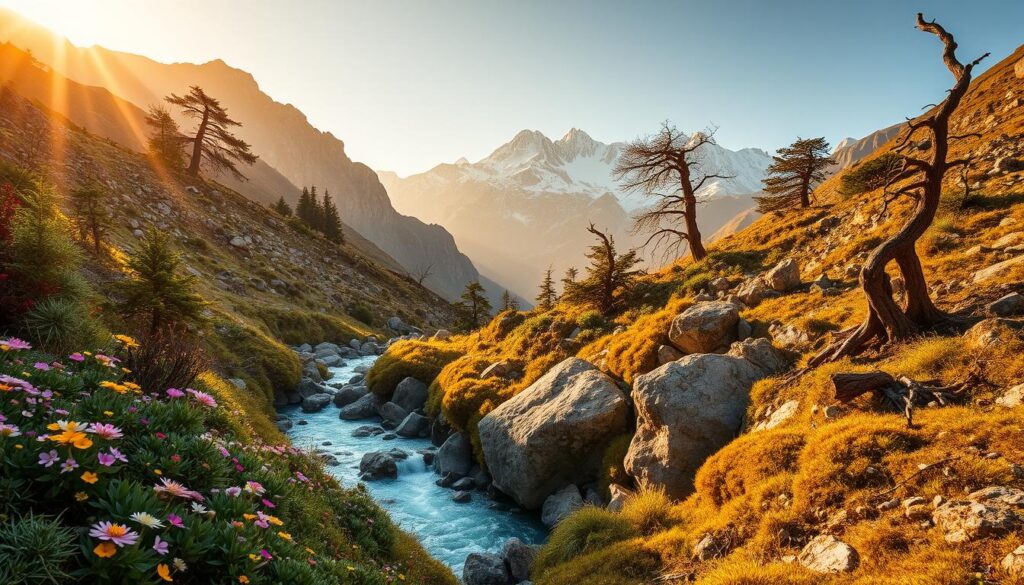
The biodiversity in mountains comes from the variety of ecosystems and species’ adaptations. Many species have special traits to survive the harsh mountain conditions. This includes extreme temperatures and low oxygen levels.
It’s important to protect the biodiversity of mountains. Human activities like deforestation and climate change threaten these ecosystems. We need to use sustainable practices and conservation to keep these areas healthy.
In summary, the biodiversity of mountains is a key part of our planet’s ecological heritage. It’s vital to understand and protect the diverse ecosystems in these regions. This helps keep our planet healthy.
The Spiritual and Cultural Significance of Mountains
Mountains have always amazed people, creating strong spiritual and cultural bonds. They are known for their beauty, mystery, and the awe they bring.
In many cultures, mountains are seen as sacred. For example, Mount Kailash in Tibet is important to four religions: Hinduism, Buddhism, Jainism, and Bon. People from all over the world visit it, believing it’s the universe’s center. Mount Fuji in Japan is also sacred, showing the spiritual link between heaven and earth.
Mountains are key to many cultures’ heritage. They’re filled with myths, legends, and stories passed down through generations. The Appalachian Mountains in North America, for instance, have stories of Cherokee Indians and early settlers.
Mountains also have many pilgrimages and rituals. Many mountains have monasteries, temples, and shrines. The Himalayas, for example, have Buddhist monasteries and Hindu temples, acting as spiritual centers.
Mountains are also important culturally, shaping local traditions, art, and literature. Their stunning views and challenges have inspired many artistic works. These celebrate the human spirit and its bond with nature.
In summary, mountains have a deep significance that touches both the spiritual and cultural sides of human life. Their grandeur continues to inspire awe, artistic expression, and a strong connection to nature.
Conclusion: The Ongoing Journey of Mountains
Mountains are not just static; they change over time. Forces like tectonic movements and weathering keep shaping them. This means mountains are always evolving.
The story of mountains shows how dynamic our Earth is. We’ve seen how different mountains form through various geological actions. Knowing these processes helps us appreciate mountains’ beauty and complexity.
Mountains’ constant changes highlight the need for ongoing research. By studying mountains and the forces that mold them, we learn more about Earth’s history. This knowledge helps us understand our planet’s ongoing evolution.