
Inspired by Rebecca Bielawski’s children’s book “Meet Bacteria!,” we’re about to embark on a fascinating journey into the world of microbes. These tiny microorganisms are all around us, playing a key role in our ecosystem.
Microbes are not just simple organisms; they are the backbone of life on Earth. They contribute to our health, environment, and even our food. From the gut to the ocean, microorganisms are everywhere, working tirelessly behind the scenes.
Understanding the importance of microbial life can open new avenues for innovation and discovery. Let’s dive into the world of these tiny friends and explore their significance in our lives.
What Are Bacteria and Why Are They Important?
Bacteria are tiny living things found everywhere. They affect our health and environment a lot. People often think they’re bad because they can cause diseases. But, it’s important to know they can also be good.
Beneficial bacteria, or “good” bacteria, are key in our stomachs. They help us digest food and get nutrients. They also make vitamins. On the other hand, harmful bacteria can make us sick, from mild to serious diseases.
The Role of Bacteria in Ecosystems
Bacteria are vital for ecosystems to work. They break down organic matter, recycling nutrients. This makes soil better and helps plants grow, supporting food chains.
In water, bacteria clean it by breaking down waste. They also help plants by changing nitrogen into a form they can use. This keeps the ecosystem healthy.
The balance between beneficial and harmful bacteria is very delicate. Good bacteria help us and the environment, but bad bacteria can upset this balance. This can lead to sickness and harm the ecosystem.
It’s important to understand how bacteria work. Knowing their good and bad sides helps us manage their impact on our health and the environment.
The Diverse World of Bacteria
Bacteria are everywhere in our ecosystem. They are incredibly resilient and live in many places. This includes both very cold and very hot environments.
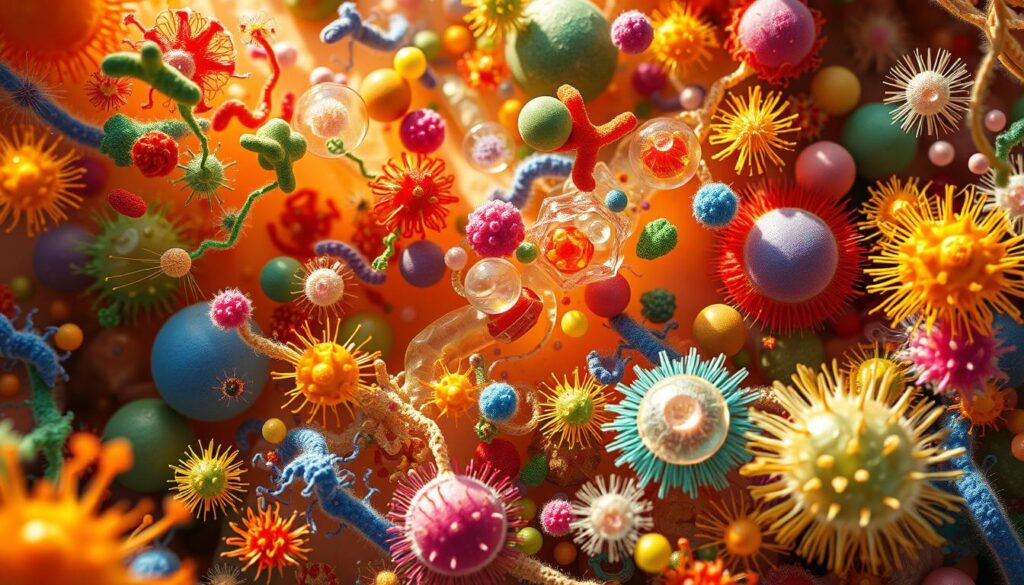
Bacteria can adapt to many conditions. Soil bacteria help break down organic matter and cycle nutrients. Those in water help break down organic matter and keep water ecosystems healthy.
Bacterial Diversity in Different Environments
Bacteria live in many places, like hot springs and salt lakes. They form special communities there. In humans, gut bacteria are key for digestion and immune system function.
Studying bacteria in different places helps us understand them better. It shows how important they are for our planet. The microbiome keeps our ecosystems balanced and supports life.
In summary, bacteria are fascinating and play a big role in our world. By learning about them, we can see how they connect with their environments.
How Bacteria Reproduce and Grow
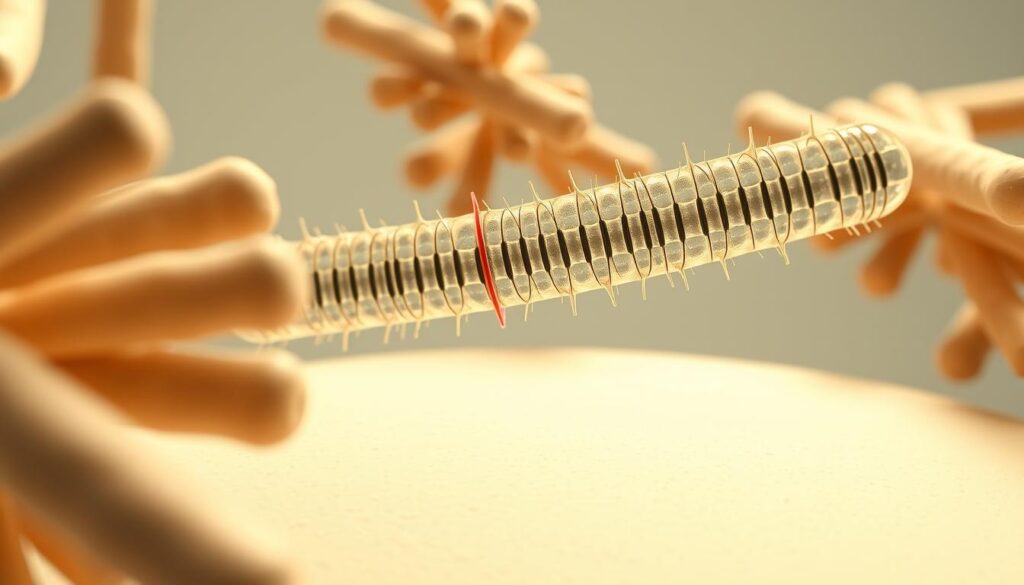
Bacteria are among the oldest living things. They have developed ways to reproduce and grow. One main way is through binary fission. This is when one bacterial cell splits into two identical cells.
The process of binary fission is simple. First, the bacterial cell makes a copy of its DNA. Then, it elongates and a division septum forms. This splits the cell into two. This quick reproduction helps bacteria grow fast when conditions are right.
Many things affect how bacteria grow and reproduce. Nutrients are key because they help build cells and provide energy. Different bacteria need different nutrients, some can make their own, while others need more.
Temperature is also important. Bacteria grow best at certain temperatures. Some like it cold, others warm, and some very hot. The pH level of their environment also matters, with each species having its own best pH.
The amount of oxygen affects bacterial growth too. Some need oxygen to grow, while others don’t. Also, moisture is vital for bacterial growth. Water is needed for their metabolic processes.
Knowing these factors helps us control bacterial growth. This is important in medicine and environmental conservation. By changing these factors, we can either help or stop bacteria from growing, depending on what we want.
Bacteria in Everyday Life
Beneficial bacteria are key to our health and are used in many ways. They are a big part of our microbiome. This affects our gut health and overall health.
We often find beneficial bacteria in our food. Yogurt and cheese are made with special bacteria. For instance, Lactobacillus is used in yogurt. It makes the yogurt nutritious and tasty.
Bacterial Applications in Industry
Bacteria are also used in big industries. They help make biofuels, which are better for the environment. Bacteria are also used to make enzymes. These enzymes are important in making detergents and medicines.
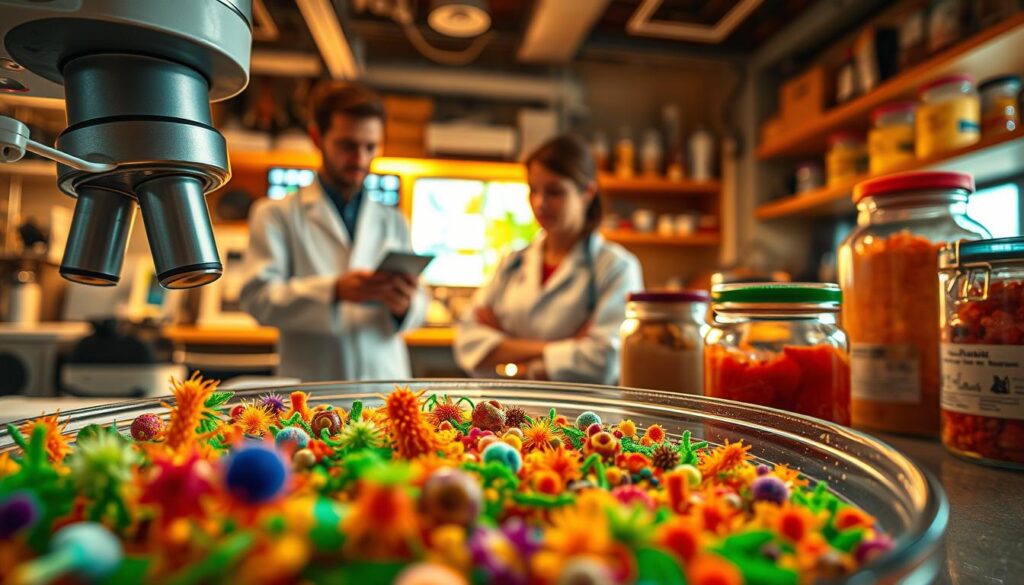
Using bacteria in industry helps make products and helps the environment. By using beneficial bacteria, we can make things that are better for our health and the planet.
In short, beneficial bacteria are very important in our lives. They help us stay healthy and are used in many industrial processes. Learning about these tiny helpers can lead to new discoveries that help us and the planet.
The Importance of Bacteria in Medicine
In medicine, bacteria play a big role. They cause many diseases but also lead to important discoveries.
Harmful bacteria have a big impact on health. Diseases like tuberculosis and pneumonia come from them. Knowing about these pathogens helps us find treatments.
But bacteria also help medicine a lot. The discovery of antibiotics changed how we treat infections. Alexander Fleming found that Penicillium notatum stops bacteria, leading to penicillin and saving many lives.
Bacterial Contributions to Medical Science
Bacteria have greatly helped medical science. They’ve led to vaccines and antibiotics. Studying the microbiome has also shown us a lot about health and disease.
“The human microbiome is a complex ecosystem that plays a critical role in our overall health, influencing everything from digestion to immune function.”
Studying bacteria is key in fighting diseases and finding new medical breakthroughs. As we learn more about microbes, we find ways to improve human health.
Bacteria and Environmental Impact
Bacteria are not just tiny creatures; they are vital for environmental sustainability. They play many roles in ecosystems, helping with decomposition and fixing nitrogen.
Decomposition is key. Bacteria break down organic matter, recycling nutrients for plants. This keeps soil healthy. Nitrogen-fixing bacteria also help by turning atmospheric nitrogen into a form plants can use. This cuts down on the need for synthetic fertilizers.
Bacteria help control pollution too, mainly through bioremediation. Bioremediation uses microbes to clean pollutants like oil spills and contaminated soil. Some bacteria can break down harmful substances into safer ones, reducing pollution’s effects.
Using bacteria to fight pollution is an exciting area of research. It could help clean up industrial waste and fix damaged ecosystems. By using microbial life, we can find greener ways to solve pollution problems.
In summary, bacteria are essential for keeping our environment balanced. They can help solve big environmental issues. By understanding microbes’ role, we can find new ways to make our future more sustainable.
Fun Facts About Bacteria
The world of microbes is full of mysteries. Bacteria are among the most fascinating microorganisms on Earth. They can survive in extreme conditions and play key roles in ecosystems.
Bacteria can thrive in places with extreme temperatures, high salt, or high acidity. They have unique ways to survive these harsh conditions.
Bacterial Survival Strategies
Bacteria use different ways to survive and grow. Some create spores that are very resistant to stress. Others make antimicrobial peptides to fight off other microbes.
The variety of microorganisms is seen in their metabolic processes. Some bacteria fix nitrogen, while others break down complex pollutants. This shows their vital role in microbial life and ecosystems.
In conclusion, bacteria are incredibly resilient and diverse. Their fascinating traits continue to amaze scientists and the public.
Misconceptions About Bacteria
Many people think all bacteria are bad for us. But this is not true.
Not all bacteria are pathogens; many are harmless or even good for us. For example, gut flora is vital for digestion and health. These good microbes help digest food, absorb nutrients, and keep our gut healthy.
Clarifying the Truth About Bacteria
Some think bacteria are simple organisms. But they are actually very adaptable and complex. They can live in harmony with plants and animals, helping ecosystems thrive.
Bacteria can also survive in harsh conditions. They can handle extreme temperatures, high salt levels, and even lack of food. This shows how adaptable and diverse they are.
Learning about bacteria helps us see their importance in our lives and the world. It’s key to educate ourselves about the beneficial aspects of microbes. We should not just see them as harmful germs.
How to Coexist with Bacteria
Living with bacteria is key to our health. We need to know how to support beneficial bacteria and avoid harmful bacteria. This helps keep our microbiome in balance.
Minimizing Harm from Harmful Bacteria
Eating a diet full of fiber is good for our gut. Foods like fruits, veggies, and whole grains are full of fiber. Also, washing your hands often can lower the chance of getting sick from harmful bacteria.
Keeping our microbiome balanced is vital for our health. By choosing healthy habits, we can lower risks from harmful bacteria. This helps us stay healthy and balanced.