
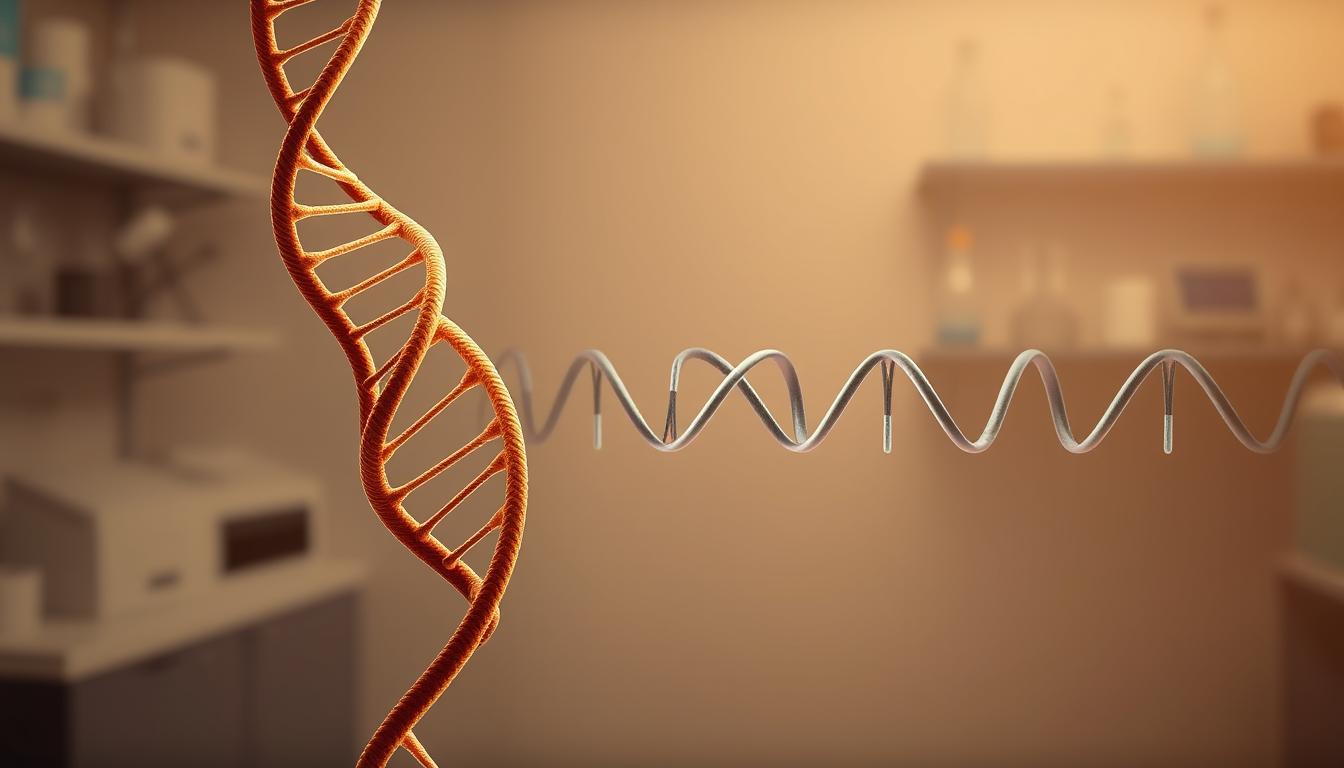
The process of passing traits from parents to offspring is complex and fascinating. It starts with genetic inheritance. This is how traits are passed from one generation to the next through genetic information.
When an egg cell meets a sperm cell during fertilization, a new cell forms. This cell has the genetic blueprint for a new individual. The DNA in this cell determines the new being’s characteristics, like physical traits and other attributes.
Studying genetic inheritance helps us understand how traits are inherited. By looking at the genetic information passed on from parents, we learn about the complex mechanisms that shape who we are.
Understanding Genes and Their Role in Inheritance
Genes are the basic units of heredity, essential for passing traits from one generation to the next. They are parts of DNA that tell living organisms how to develop and function. Genes vary significantly in length, from a few hundred to over 100,000 bases.
Before each gene, DNA has sections that act as switches. These switches control when and how the gene is used. This complex process is key for cells and the whole organism to work right. Knowing about genes and genetic inheritance helps us understand how traits are passed down.
The structure of genes is complex, with different parts working together. They ensure the gene functions correctly. The information in genes makes proteins, which are essential for our bodies. The study of genes and their functions has led to big advances in understanding genetic traits and their inheritance.
By learning how genes work and are passed down, we get insights into inheritance. This knowledge is important for medicine, genetics, and biotechnology. As research digs deeper into genes and their role in inheritance, we learn more about life. We also find new ways to treat genetic disorders.
The Basics of Genetic Inheritance
Understanding genetic inheritance is key to knowing how traits are passed down. It’s about the transfer of genetic info from parents to kids through genes. These are the basic units of heredity.
Human genetic info is spread across many DNA strands called chromosomes. A cell’s nucleus has these chromosomes, which carry genetic info. Chromosomes play a huge role in passing on genetic material.
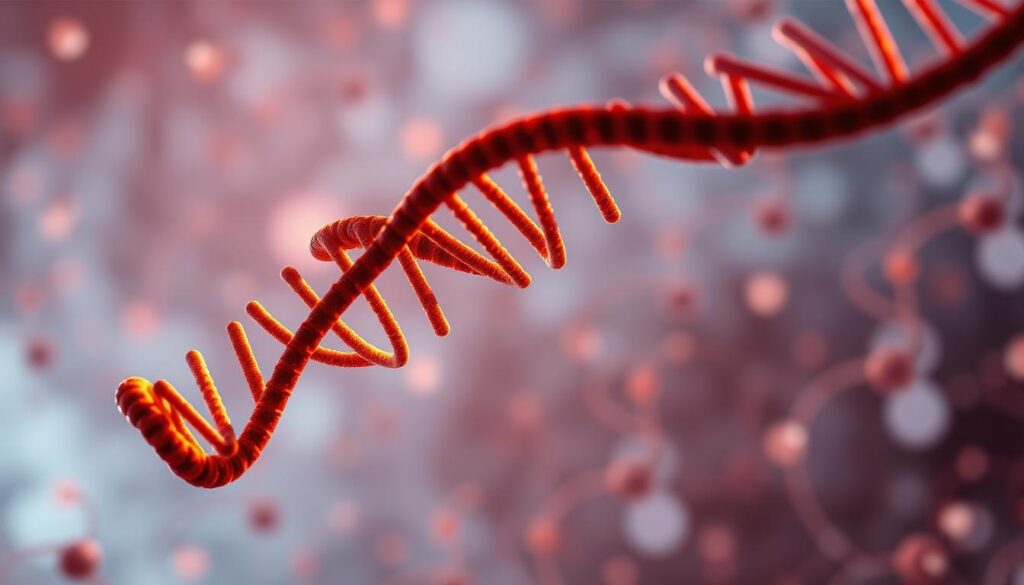
The process of genetic inheritance is complex. It involves many genes and environmental factors working together. Yet, the main idea is that DNA, organized into chromosomes, determines traits. This info is passed down, affecting everything from looks to disease risks.
Genetic inheritance is more than just passing traits. It’s also about the unique mix of genetic material from each parent. This mix makes each person different, except for identical twins who share the same DNA.
Key Aspects of Genetic Inheritance
Studying genetic inheritance has uncovered important facts. We’ve learned about chromosomes’ structure and function. We also know how genes encode proteins and pass info from one generation to the next.
By grasping these basics, we can understand how genetic inheritance affects us and our kids. It’s a complex and fascinating field that keeps growing with new research.
Mendelian Inheritance: The Foundation of Genetics
Gregor Mendel’s work with pea plants uncovered key principles of genetic traits transmission. His discoveries, made before genes were known, are the basis of modern genetics. Mendelian inheritance is built on three main principles that explain trait inheritance through generations.
The Law of Segregation is a key principle of Mendelian inheritance. It says that each pair of alleles separates during gamete formation. This means each offspring gets one allele from each parent. This principle is vital for understanding how genetic traits are passed down.
The Law of Segregation
The Law of Segregation is essential for grasping genetic inheritance basics. It shows that each individual has two alleles, one from each parent. These alleles can be dominant or recessive, and their mix decides the trait shown in offspring.
For example, in pea plants, one allele makes flowers purple (dominant), and another makes them white (recessive). The Law of Segregation explains that when two pea plants are crossed, their alleles for flower color separate. This leads to offspring with a mix of alleles that decide their flower color.
Learning about Mendelian inheritance and the Law of Segregation is key. It shows how alleles influence genetic traits and how these traits are passed down predictably through generations.
The Role of Alleles in Genetics
In genetics, alleles are different versions of a gene. They add to the variety of traits we see. Each allele carries unique genetic information, leading to different physical traits.
The way alleles work together shapes an organism’s appearance. Dominant alleles show up if you have one or two copies. But recessive alleles only show if you have two copies.
Alleles can make traits that are either dominant or recessive. Dominant traits hide recessive ones, thanks to dominance.
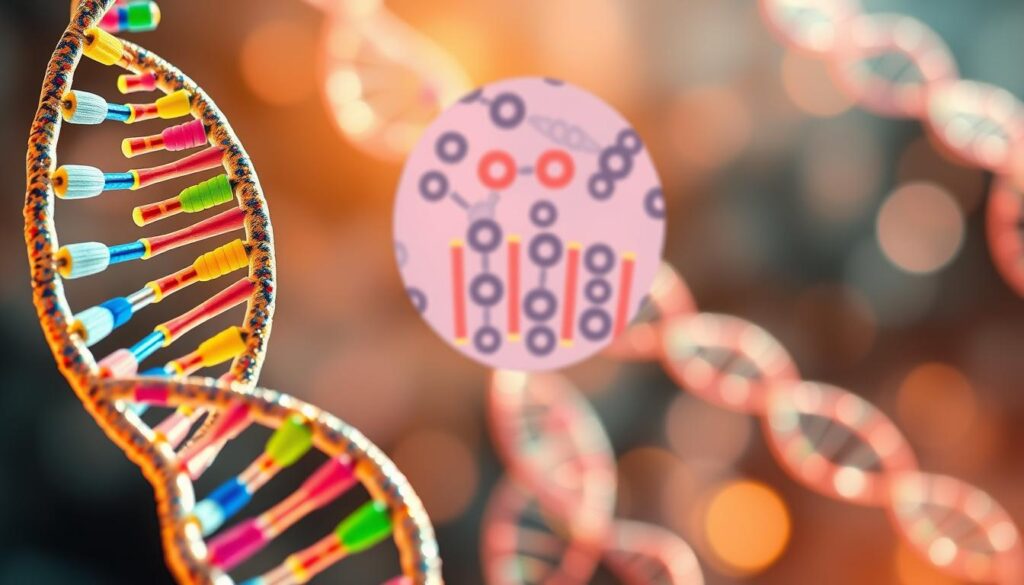
Studying these gene variations is key to understanding genetic variation. It helps scientists learn how traits are passed down. By looking at different genes and their effects, they uncover how genetics work.
In short, alleles shape the traits we inherit. Knowing about dominant and recessive alleles is vital. It helps us understand how genetics pass on traits.
Mutations: The Key to Variation
Mutations are key to understanding life’s diversity. They can change a single nucleotide or affect chromosome structure. This variety is vital for life’s complexity.
Genetic mutations happen due to DNA errors or exposure to harmful substances. For example, a mutation can cause trisomy, leading to genetic disorders. This is when someone has an extra chromosome.
The effects of genetic mutations on traits are significant. Some mutations have little impact, while others change traits greatly. This variation is essential for evolution, helping populations adapt.
Also, genetic mutations drive evolution. They introduce new alleles, increasing genetic variation. This is key for species survival and adaptation over time.
In summary, genetic mutations are vital for life’s diversity. They influence traits and genetic variation. Knowing about these mutations helps us understand genetics and evolution.
The Impact of Environmental Factors on Genes
Environmental factors greatly shape how our genes are expressed, affecting our traits. Many external factors, like diet, stress, and toxins, influence gene expression.
Diet and Nutrition: What we eat significantly impacts gene expression. Nutrients can turn genes on or off, affecting our health. Eating fruits, vegetables, and whole grains promotes healthy gene expression. On the other hand, a diet full of processed foods can have negative effects.
Stress and Gene Expression: Chronic stress changes gene expression, potentially altering traits and increasing disease risk. Stress activates genes, affecting our long-term health.
Exposure to Toxins: Environmental toxins, like pollutants, can also alter gene expression. These toxins are linked to health issues, changing gene expression and increasing disease risk.
The relationship between genes, lifestyle, and environment is complex. Knowing how environment affects gene expression helps us promote healthy traits and reduce disease risk. By making smart lifestyle choices, we can positively influence our gene expression.
Genetic Testing: Understanding Your Heritage
Genetic testing has changed how we look at our genetic background. Genetic testing lets people see their genetic inheritance and learn about their heritage.
Genetic testing looks at your genes to find possible genetic disorders. It also tells you about your ancestry. This is very helpful for those with a family history of certain genetic conditions.
It’s key in understanding genetic inheritance. It shows how genetic traits are passed down through generations.
Genetic testing has many benefits but also some limits. It can give a deeper look into your genetic heritage and help with health decisions. But, it can also raise ethical questions and reveal unexpected genetic information.
As genetic testing gets better, it will become even more important. It will help us understand our genetic inheritance and heritage more.
The Future of Genetic Research
Genetic research is on the verge of a new era. New technologies and discoveries will change the field. We’re learning more about how genes affect our health and diseases.
The future looks bright for genetics. Breakthroughs in genetic engineering, personalized medicine, and gene therapy are coming. These will change how we prevent and treat diseases.

New technologies are making genetic analysis faster and more accurate. For example, CRISPR-Cas9 gene editing lets us fix genetic problems with precision.
Genetic research is becoming a big part of regular medicine. It helps find disease risks and create treatments based on your genes.
Looking ahead, genetic research will keep helping us understand health and disease. It will help in many areas, like improving crops and finding new disease treatments.
But, there are challenges ahead. We must think about the ethics of genetic engineering and using genetic info. We need to make sure these advances are done right.
Genetic Disorders: When Genes Go Awry
The dance of genetic inheritance can sometimes go wrong, leading to genetic disorders. These disorders happen when the genetic code gets changed, messing up how genes work. It’s important to understand them to find treatments and help those affected.
Genetic disorders come from changes in the DNA sequence. These changes can be passed down from parents or happen on their own. They can affect health in many ways, from mild to severe.
Genetic mutations cause genetic disorders. These mutations can mess up one or more genes, leading to bad proteins or broken cells. Some mutations don’t hurt, but others can really affect health.
Examples of genetic disorders include sickle cell anemia, cystic fibrosis, and Huntington’s disease. These show how genetic changes can impact health in different ways. Knowing the genetic cause is key to finding good treatments.
The Influence of Genetics on Behavior
Research shows that genetics play a big role in our behavior. But, scientists are trying to figure out how exactly. The link between genes and actions is complex, involving many genes and how they work with our surroundings.
Genetics can shape our behavior in different ways. For example, some genetic changes can affect how our brain chemicals work. This can change our mood and actions. Also, our genetic makeup can make us more or less likely to react to stress, which affects our behavior too.

Scientists are studying how genes and environment interact to shape our behavior. They want to know how different genes work together and with our surroundings. This knowledge is key to creating better ways to help people change their behavior and improve their mental health.
Key aspects of genetic influence on behavior include: the role of multiple genes, the interaction between genetics and environment, and the genetic predispositions to certain behaviors.
Knowing how genetics affect our behavior is important for many fields. It helps psychologists, psychiatrists, and teachers create better plans to help people. By understanding the genetic side of behavior, they can make their interventions more effective.
Genes and Evolution: The Bigger Picture
Genetic variation is key to evolution, helping species adapt and change over time. Genes control the traits passed down from one generation to the next. This is how evolution works.
Genes are vital in shaping traits and influencing behavior. They also add to the diversity of life on Earth. This diversity lets populations evolve and adapt to new environments.
Studying genes and evolution helps us understand life’s history. It shows how genetic variation drives evolution. This gives us a deeper respect for the natural world’s complexity.
The study of genes and evolution shows how all living things are connected. It stresses the need to keep genetic diversity. This is important for the health and resilience of ecosystems.