
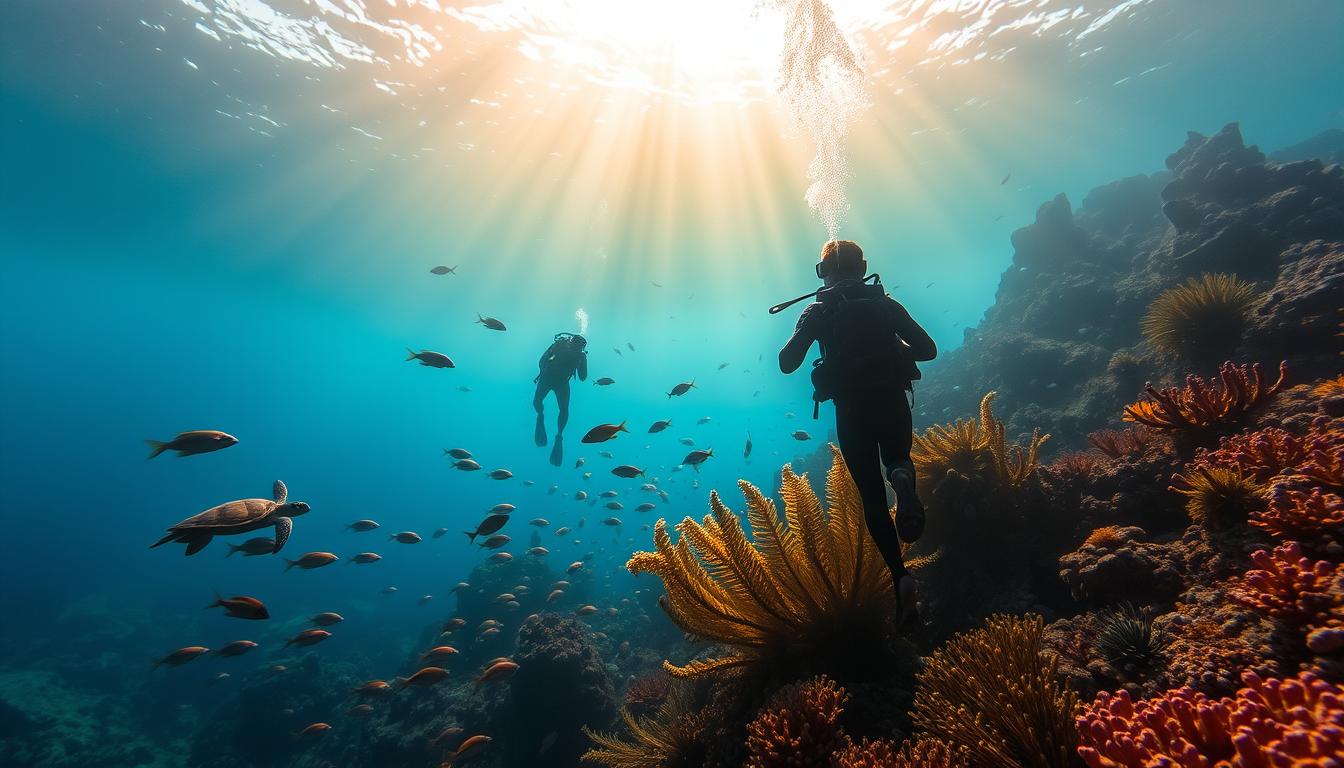
Ocean exploration is key to understanding the vast, mysterious world under our waves. By exploring the unknown, we can better protect and conserve marine life. This is vital for our planet’s ecosystem and economy.
The importance of marine life is huge. It helps regulate the climate and supports fisheries that feed millions. As we explore the ocean, we find new species and ecosystems. This shows why we need to keep working on conservation.
By pushing forward with ocean exploration, we gain more knowledge. We also help keep our oceans healthy for the future. This is critical for the well-being of our planet and all its living things.
The Importance of Oceans to Our Planet
The ocean covers over 70% of our Earth and is vital for life. It affects our daily lives in many ways. It helps control the weather and is a big source of food.
The health of our oceans is closely tied to our planet’s well-being. An oceanographer once said, “The ocean is the lifeblood of our planet, and its health is directly tied to our own well-being.” This shows how important it is to keep the ocean ecosystems healthy.
The ocean is key for food, with many people making a living from fishing and farming seafood. It also helps fight climate change by soaking up carbon dioxide. But, this process makes the ocean more acidic, harming marine life.
“The ocean’s capacity to support life on Earth is unparalleled, and it’s our responsibility to protect it.”
It’s vital to understand the importance of ocean health to tackle its problems. These include pollution, overfishing, and climate change. By recognizing the ocean’s value and working to save it, we can ensure a better future.
Ocean Zones and Their Characteristics
Exploring the ocean shows us different zones, from the bright surface to the dark depths. Here, various marine life thrives. Each zone has its own features and creatures.
The ocean’s zones are divided by depth, sunlight, and the life that lives there. We have the epipelagic zone, where it’s bright, and the hadalpelagic zone, the darkest and deepest.
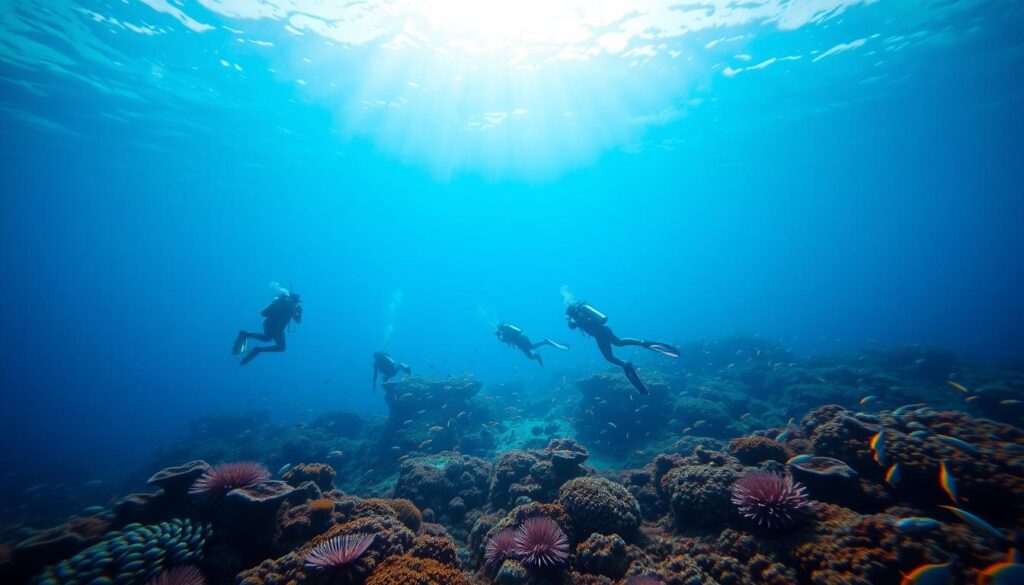
The deep waters, like the abyssopelagic and hadalpelagic zones, are fascinating for ocean exploration. They have extreme cold and pressure. Yet, they are home to a wide range of marine life.
A recent NOAA Ocean Exploration expedition lasted 28 days. It used ROVs and mapping to explore deep waters around Papahānaumokuākea. This shows our ongoing quest to learn about the ocean’s depths and their ecosystems.
Exploring deep waters uncovers new species and ecosystems. It also tells us about Earth’s history and how humans affect the ocean. As we explore, we see the ocean’s vastness and why we must protect its life.
Marine Life: From Tiny Creatures to Giants
The variety of marine life is truly amazing. Creatures of all sizes are key to ocean ecosystems. From the smallest fish to the biggest mammals, each species has special ways to survive.
One of the most interesting things about marine life is the wide range of creatures in our oceans. Octopuses and squids, for example, are smart and can change color. They are not just fascinating but also important in the food chain.
Penguins are another example of the diverse marine life. These birds are well-suited to life in the water. Some can dive very deep to find food. Their social behavior and unique mating rituals make them popular among marine fans.
Coral Reefs: Ecosystems of Richness
Corals and coral reefs are some of the most diverse places on Earth. These underwater structures are home to many species, like fish and mollusks. The health of coral reefs is key for the balance of ocean ecosystems. They help protect coastlines and support fisheries.
Jellyfish and comb jellies might look simple, but they are complex and important. Some can light up the dark with their glow. Despite their scary looks, they are vital to marine life.
The Importance of Apex Predators
Sharks are often seen as scary, but they are essential to healthy ocean ecosystems. As top predators, they keep other marine species in check. We need to protect sharks, as they face many dangers.
In summary, marine life is incredibly diverse and vital to our oceans. By understanding and valuing this diversity, we can help protect ocean ecosystems for the future.
Threats Facing Our Oceans Today
Our oceans face big threats from human actions and environmental changes. Pollution, like plastic and chemicals, harms marine life and destroys homes. Overfishing also hurts, by reducing fish numbers and upsetting the ocean’s balance.
Climate change is another big problem, making ocean temperatures rise and causing acidification. This hurts marine life and affects the global climate. Climate change also leads to more severe storms, putting coastal areas and ecosystems at risk.
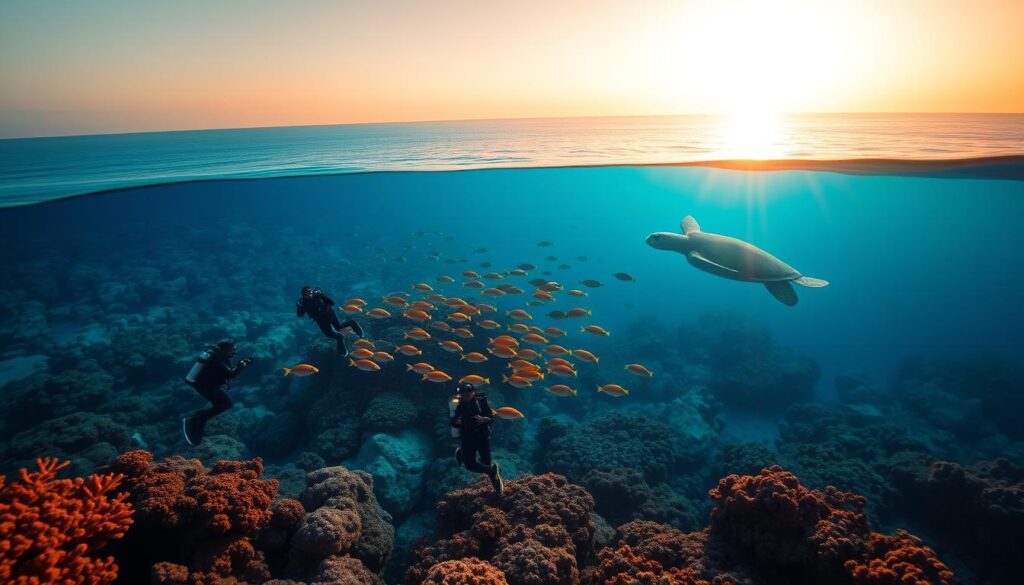
Ocean exploration helps us understand and protect our oceans. Knowing the threats helps us find ways to fix them. By tackling pollution, overfishing, and climate change, we can keep our oceans healthy.
Protecting marine life and ecosystems is key. Supporting ocean conservation efforts is vital. This means using less plastic, promoting sustainable fishing, and pushing for climate action.
Conservation Efforts Around the World
People all over the world are joining forces to protect our oceans. Organizations are teaming up to save marine life and keep our ecosystems balanced.
NOAA Ocean Exploration is working with many groups. They aim to protect our oceans and manage marine resources wisely. This teamwork is key to tackling the big challenges our oceans face.
Setting up marine protected areas (MPAs) is a big part of ocean conservation. MPAs are safe spaces for marine life to grow without human harm. Effective management of MPAs needs everyone to work together.
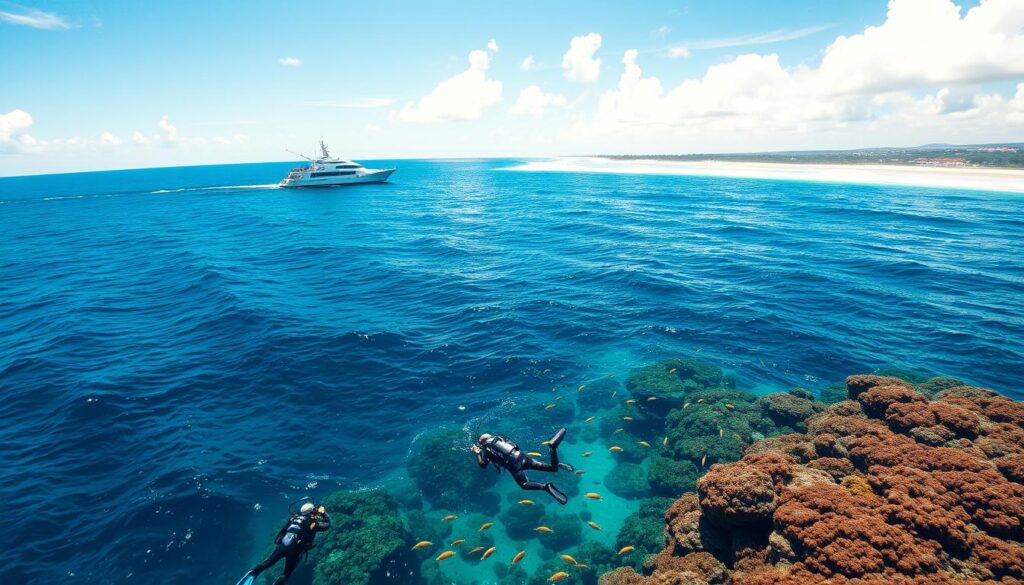
There are many other ways to help our oceans too. We’re working to cut down plastic waste, protect important habitats, and support sustainable fishing. Together, we can keep our oceans healthy for the future.
The role of marine life conservation is huge. Our oceans give us food, protect our coasts, and help control the climate. It’s up to us to safeguard these gifts for the next generations.
The Role of Technology in Ocean Exploration
Technology has changed how we study the ocean. Technological advancements have made it easier to explore and understand the ocean’s depths.
Today, technology is key in ocean research. It lets scientists dive deep into the ocean’s mysteries. Remote Operated Vehicles (ROVs) and other tools lead this effort.
Remote Operated Vehicles (ROVs) in Ocean Exploration
ROVs are like underwater robots that can go very deep. They collect data and samples from the ocean floor. Scientists control them from the surface, exploring the ocean in real-time.
ROVs and other tech have changed ocean exploration. They give us new insights into the ocean and its role in our planet’s ecosystem. As tech keeps improving, so will our knowledge of the ocean.
How You Can Help Protect Our Oceans
We all have the power to help protect our oceans. Our daily choices can either harm or help the ocean. It’s up to us.
One easy way to start is by making eco-friendly choices. Try using less plastic, pick products with less packaging, and avoid polluting products. It’s a small step that can make a big difference.
Supporting groups that care about the ocean is also key. When we choose sustainable products, we tell businesses that ocean health is important. This sends a strong message.
Sharing what we know about ocean conservation is also powerful. Teaching others about simple actions they can take helps us all make a bigger impact. It’s a way to spread the word and inspire change.
Getting involved in local beach cleanups and supporting marine protected areas is great too. We can also push for policies that protect our oceans. Every little bit helps in keeping our oceans safe.
By taking these steps, we help our oceans and encourage others to do the same. This creates a chain reaction that can lead to big changes. Together, we can make a real difference.
Fun Facts About Oceans
Oceans are full of life and secrets. They cover over 70% of our planet. Their depths are home to a wide range of marine life, from tiny plankton to the massive blue whale.
One fascinating ocean fact is bioluminescence. This is when living things produce light, creating a stunning display of sparks in the dark. “The sea, once it casts its spell, holds one in its net of wonder forever.” This quote shows how magical bioluminescence is.
Bioluminescence is just one of the many wonders of marine life. The ocean also has coral reefs, which are incredibly diverse. These underwater structures support many species, giving them shelter, food, and places to breed.
“The ocean stirs the heart, inspires the imagination, and brings eternal joy to the soul.”
Another cool ocean fact is underwater lakes and rivers. These are real bodies of water within the ocean. They have their own unique features and support their own ecosystems.
Exploring the oceans and learning about them is an ongoing journey. Thanks to new technology, we’re finding out more about the marine life and ecosystems in the oceans. Each new discovery helps us appreciate these vast, mysterious waters even more.
Future of Our Oceans: What’s Next?
We’re learning more about ocean ecosystems every day. This knowledge opens doors to medical breakthroughs, sustainable food, and new energy solutions. To keep our oceans healthy, we must balance human needs with conservation.
New technologies and research are key to ocean conservation. By studying marine biology and oceanography, we can protect our oceans better. This helps us understand and safeguard ocean ecosystems.
The possibilities for ocean conservation are endless. We must focus on ocean health and support sustainable use of ocean resources. This will ensure a better future for our planet.