

Have you ever wondered what makes the weather change from day to day?
The answer lies in understanding weather patterns and the various factors that influence them.
Weather is made up of six main parts: temperature, atmospheric pressure, cloud formation, wind, humidity, and rain.
A small change in any of these can lead to a different weather pattern. This can greatly affect our daily lives and the climate of a place.
Learning about weather patterns helps us understand our atmosphere better. It also helps us make smarter choices in our daily lives.
What is Weather?
The state of the atmosphere at a particular place and time is called weather. It includes several key elements.
Weather involves factors like temperature, humidity, cloudiness, wind, and precipitation. Knowing these is key for studying meteorology. Meteorology is the science of the Earth’s atmosphere, focusing on weather and climate.
Studying weather is a big part of atmospheric science. It looks at the Earth’s atmosphere and its processes. By studying weather patterns, scientists can predict the future. This helps communities get ready for weather events.
In short, weather is a complex system that affects our daily lives and the environment. Studying it is important for understanding the Earth’s atmosphere. It also helps improve weather forecasting.
Components of Weather
Weather is made up of several key components that interact in complex ways. Understanding these elements is essential for grasping how weather patterns develop and change.
The primary components of weather include temperature, atmospheric pressure, and humidity. Each of these factors plays a significant role in determining weather conditions.
Role of Temperature in Weather
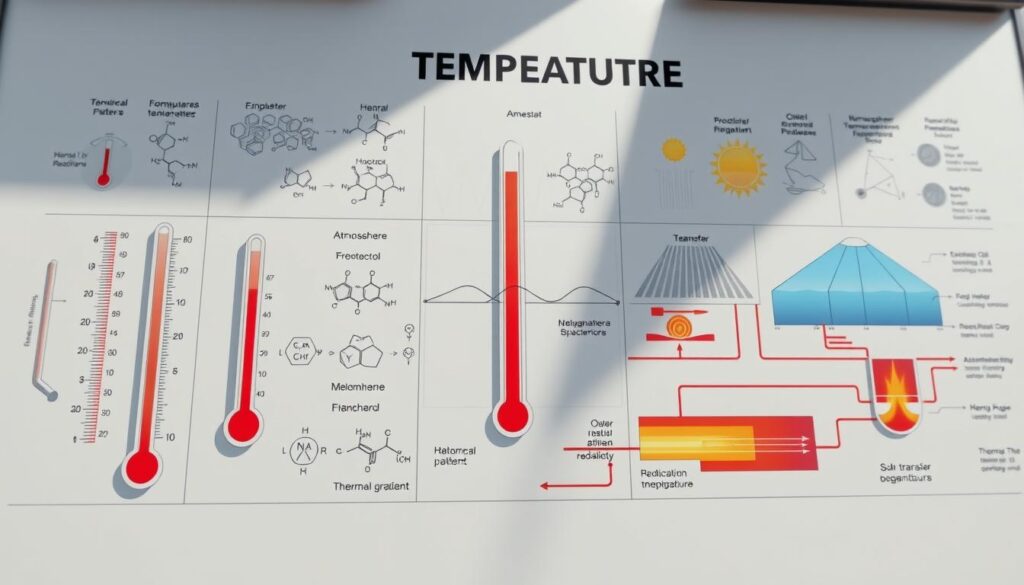
Temperature describes how hot or cold the atmosphere is. It is a fundamental aspect of weather, as it influences other components and overall weather patterns. Temperature variations can lead to different weather phenomena, such as heatwaves or cold snaps.
The temperature of a region is affected by several factors, including the amount of solar radiation it receives, its altitude, and its proximity to large bodies of water. Understanding temperature fluctuations is key for predicting weather.
Atmospheric pressure, another critical component, is the result of the weight and density of the air. Changes in atmospheric pressure can indicate shifts in weather, such as the approach of a low-pressure system that may bring rain.
Humidity, which describes the amount of water vapor in the air, also significantly impacts weather. High humidity can lead to precipitation, while low humidity is often associated with clear skies.
The interaction between these components is complex. For instance, temperature affects humidity by influencing the air’s capacity to hold water vapor. Changes in atmospheric pressure can also impact temperature and humidity levels.
Different Types of Weather
Weather comes in many forms, each with its own special traits. Knowing these types helps us predict and prepare for different conditions.
Sunny weather means clear skies and lots of sunshine. It’s often warm and happens in the summer. Sunny days make us feel good and encourage us to go outside for fun activities.
Rainy weather is all about rain and cooler temps. It’s vital for life, helping to refill water and grow crops. Rainy days are cozy, perfect for staying indoors and relaxing.
Snowy weather makes everything look calm and is common in cold places in winter. It changes our daily life, needing us to get ready with winter gear. Snow days are great for skiing and snowboarding.
Every weather type has its own importance and affects our lives and routines. By knowing and valuing these differences, we can handle various weather better.
Weather Tools and Technology
Technology has changed weather forecasting a lot. New tools and tech have made predicting the weather more accurate.
Weather forecasting uses many tools, like radar and satellite imagery. These tools gather data on the atmosphere. This data helps predict weather patterns.
Radar and Satellite Imagery
Radar technology uses radio waves to find rain and other weather. It shows where, how strong, and moving weather systems are. Satellite imagery uses satellites to take pictures of clouds, storms, and weather events.
Together, radar and satellite imagery help meteorologists track weather better. This mix makes weather forecasts more accurate by showing the whole picture of the atmosphere.
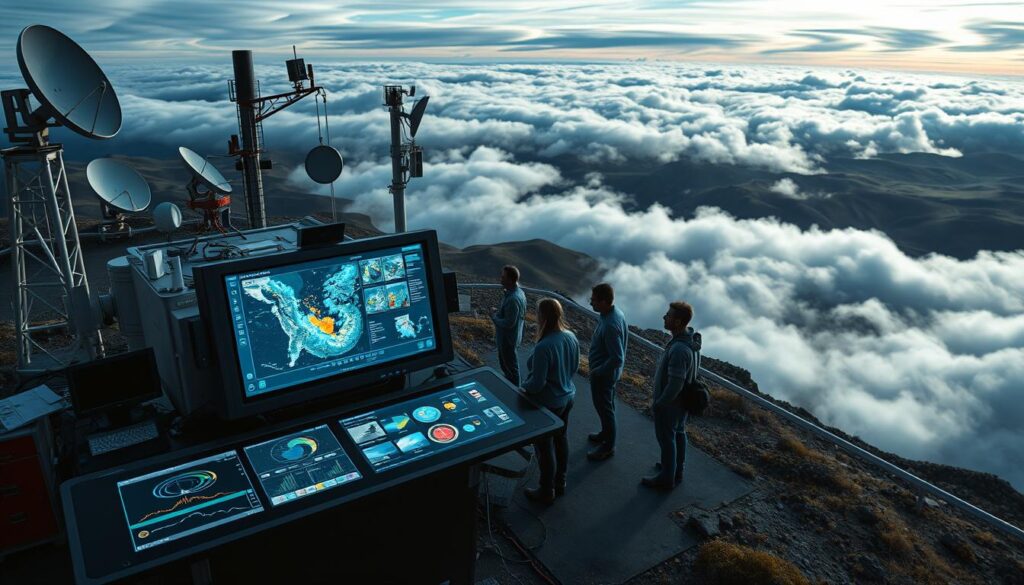
Weather stations are also key in forecasting. They give live data on temperature, humidity, wind speed, and more. These tools, with radar and satellite imagery, are the core of today’s weather forecasting.
Thanks to these advanced technologies, meteorologists can warn us about severe weather. This helps keep us safe. Keeping weather tools and tech up to date is vital for better weather forecasts.
How Weather Is Forecasted
Numerical weather prediction is a key part of modern forecasting. It uses complex algorithms and data. This method uses computer models to simulate the atmosphere’s behavior and predict future weather.
Weather forecasting methods have changed a lot. They now use data from satellites, radar, and weather stations. These tools give the data needed for computer models to make accurate forecasts.
The process starts with gathering data from different tools. This data is then used in computer models like the Global Forecast System (GFS) and the European Centre for Medium-Range Weather Forecasts (ECMWF). These models analyze the data to predict the weather.
Numerical weather prediction is great at forecasting weather over a wide area. It can predict local weather events and global climate trends. But, it faces challenges like the complexity of the atmosphere and the uncertainty in modeling it.
Despite these challenges, weather forecasting methods are getting better. By combining model outputs with expert analysis, meteorologists can give more accurate forecasts. This helps communities prepare for different weather events.
New technologies and ongoing improvements in numerical weather prediction will make forecasts even better. This will make weather forecasts more reliable in the future.
The Role of Climate in Weather
Weather is about short-term conditions in the air. Climate is about the long-term average state of the atmosphere in a place. Knowing this helps us see how climate shapes weather.
Climate change means big, lasting changes in weather patterns. It changes global temperatures and where rain falls, causing more extreme weather in some places.
The climate of a place depends on its latitude, height, and if it’s near water. These factors change the average temperature and rain, affecting the weather. For example, coastal areas are usually milder than inland ones because of the ocean’s effect.
Climate Change Impact: Climate change is changing weather all over the world. It’s making heatwaves, droughts, and heavy rains more intense and common. This is because a warmer atmosphere can hold more moisture, leading to bigger rains when it does rain.
The link between climate and weather is complex. Climate sets the stage for weather, but weather can also change climate. For example, big volcanic eruptions can cool the planet by reflecting sunlight.
Understanding this connection is key to predicting weather and dealing with extreme events. By studying climate and weather, scientists can tell us what the future might bring. They help us get ready for it.
Seasonal Weather Patterns
The Earth’s tilt and orbit around the Sun cause the changing seasons. This tilt affects how much solar energy different parts of the Earth get. So, we have four seasons: spring, summer, autumn (or fall), and winter.
The four seasons vary around the world because of the Earth’s shape and tilt. Places near the equator get more consistent sunlight. This means they have less extreme seasonal changes than places at higher latitudes.
Regional weather patterns are shaped by many factors. Latitude, altitude, and geography all play a part. For example, places near the equator have steadier temperatures all year. But areas at higher latitudes see bigger seasonal swings.
Altitude also affects weather. Mountains have different weather than low-lying areas, even at the same latitude. This is because temperature drops as you go higher up.
Coastal areas have milder seasonal changes than inland places. This is because the ocean helps moderate the weather. Knowing these regional differences helps us prepare for different seasons.
In summary, the Earth’s tilt, orbit, and geography lead to varied seasonal weather patterns worldwide. Understanding these patterns is key for many activities, like farming and city planning.
Weather Phenomena Explained
Weather phenomena like fronts, low-pressure systems, and jet streams shape our weather. Knowing about them helps us forecast the weather better.
Fronts are where different air masses meet, leading to weather changes. A cold front brings cold air into warmer areas, causing rain or thunderstorms. On the other hand, a warm front brings warm air into cold areas, leading to clouds and rain.
Low-pressure systems, or cyclones, have lower air pressure than around them. They can cause rain, snow, and strong winds. These systems are key for predicting severe weather.
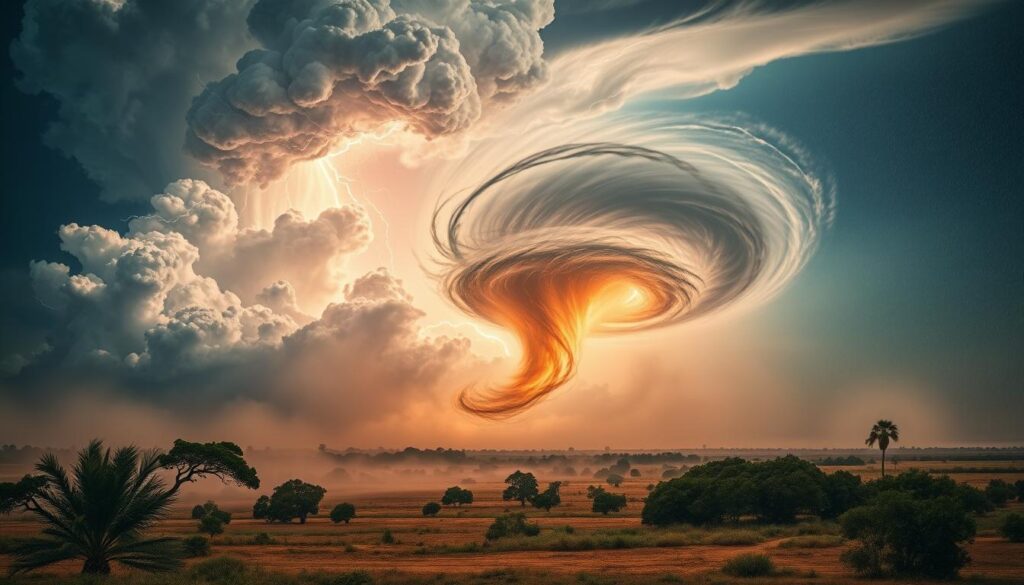
Jet streams are fast air currents in the upper atmosphere. They help move high and low-pressure systems. Jet streams can also lead to severe weather by adding energy and dynamics.
Meteorologists need to understand these phenomena to predict the weather well. By studying fronts, low-pressure systems, and jet streams, they can give better forecasts. This helps communities get ready for different weather conditions.
The Impact of Weather on Agriculture
Weather affects agriculture in many ways, impacting crop yields and farming methods. Factors like temperature, rainfall, and sunlight are key to a successful harvest.
Crop Weather Sensitivity: Each crop reacts differently to weather. For example, wheat and corn struggle in dry conditions, while rice needs lots of water. Knowing these needs helps farmers grow more crops.
Farming Weather Strategies: Farmers use many tactics to deal with bad weather. They might use irrigation in dry times, reduce soil erosion with special tillage, or get crop insurance for weather losses.
Weather Forecasting in Agriculture: Good weather forecasts help farmers plan better. With new tools, they can predict weather more accurately. This lowers the risks from unpredictable weather.
Using weather forecasts with farming improves productivity and supports green farming. By adjusting to weather, farmers can grow more, lose less, and help the environment.
Conclusion: Weather and farming are closely linked, with weather greatly affecting how much food we grow. By using weather forecasts and farming wisely, we can make farming more stable. This ensures we have enough food and protect our planet.
Weather and Human Health
It’s important to know how weather affects our health. Weather can cause many health problems, from heatstroke to diseases spread by weather.
Weather-related health issues vary widely. Extreme temperatures can cause heatstroke or hypothermia. Weather also affects the spread of allergens and disease vectors like mosquitoes.

Weather patterns play a big role in diseases spread by vectors, like malaria and dengue fever. Rainfall and temperature help mosquitoes breed, raising disease risk.
Weather extremes like hurricanes, floods, and droughts can harm health right away. They cause injuries, displacement, and increase waterborne disease risk.
Knowing and predicting weather helps health officials and people stay safe. They can warn about extreme weather, fight vector-borne diseases, and teach about weather health risks.
Environmental Impact of Weather
Weather greatly affects the environment, causing weathering and erosion. These processes shape our landscape. They are influenced by many weather factors.
Weathering breaks down rocks, soil, and minerals. It also affects wood and man-made materials. Temperature changes, freeze-thaw cycles, and rain play big roles in weathering.
Erosion moves weathered rock materials away. Rain, wind, and melting snow cause erosion. Knowing about these processes helps us manage our environment better.
Impact on Landscapes
Weathering and erosion change landscapes over time. For example, valleys form from river erosion. Cliffs are shaped by waves.
It’s key to understand the environmental impact of weather. This knowledge helps protect our natural resources. It also helps us prepare for natural disasters.
Preparing for Weather Events
Knowing about weather patterns is key for staying safe. By keeping up with weather forecasts, people can protect themselves and their homes from bad weather.
Having an emergency plan is very important. It should list evacuation routes, emergency numbers, and a safe meeting spot. Practicing this plan helps everyone know what to do in an emergency.
It’s also important to stay updated on weather forecasts and warnings. The National Weather Service sends out vital updates and alerts. These help people make safe choices.
By understanding weather and taking action, we can reduce the harm from severe weather. Good weather preparedness and disaster planning help keep our communities safe and reduce damage.