
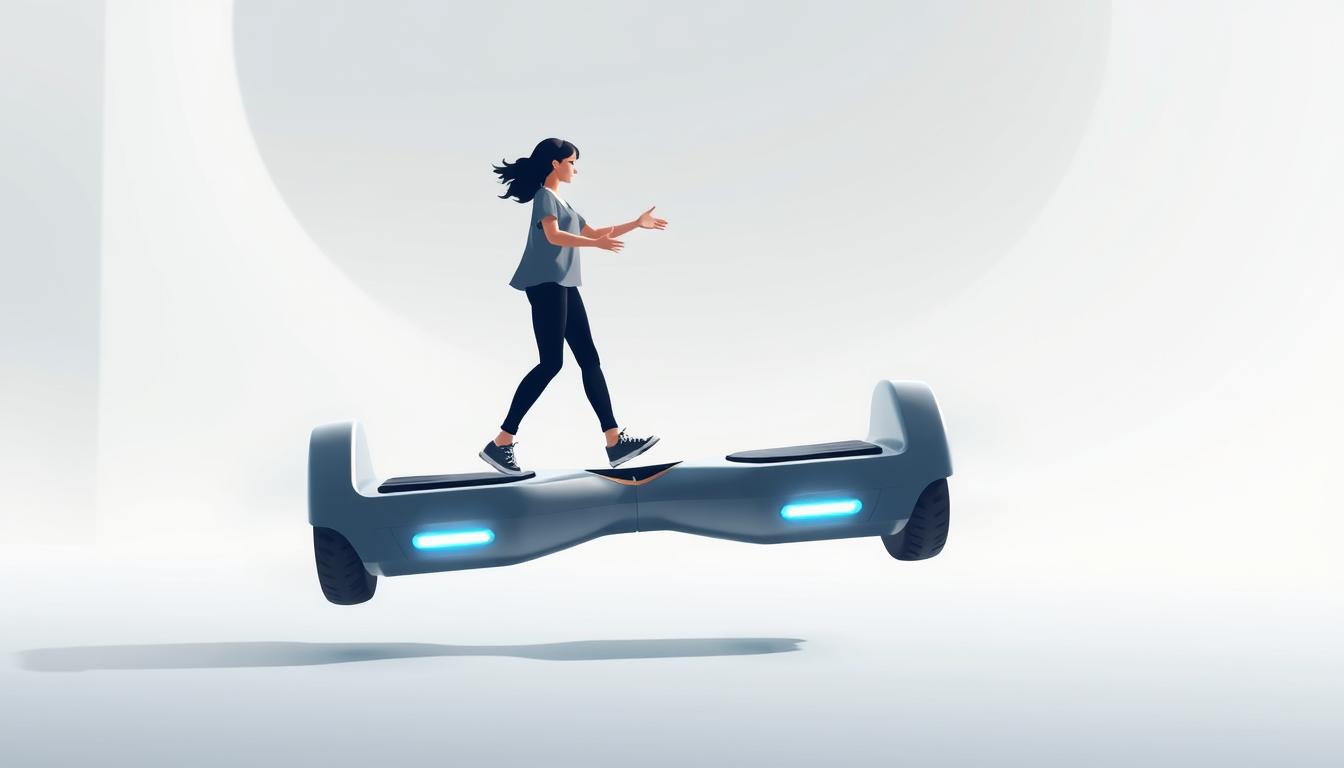
Learning to balance on a hoverboard is exciting and requires patience and practice. Hoverboards are a fun, modern way to get around. But, safety is key for new riders.
To ride safely, you need to understand how the hoverboard works. It’s not just about getting on and off. You must learn to balance and control it. With practice, anyone can master riding a hoverboard.
This article will show you how to learn hoverboard safety and balance. You’ll have a fun and safe ride.
Understanding How a Hoverboard Works
To ride a hoverboard easily, knowing how it works is key. It’s not just a cool gadget; it’s advanced tech. It needs several parts to function well together.
The main parts of a hoverboard are the battery, motors, gyroscope, and sensors. The battery gives it power. The motors make it move. The gyroscope and sensors help it stay balanced and on course.
The gyroscope is vital for balance. It checks the board’s tilt and makes it stay upright. The sensors, like accelerometers and tilt sensors, work with the gyroscope. They sense the rider’s actions and adjust the board’s speed and direction.
When you lean, the sensors notice and tell the motors to change speed. This lets the hoverboard move smoothly. It makes balancing and steering easier.
Knowing how these parts work together can improve your ride. Understanding the tech behind your hoverboard helps you control it better. This way, you can enjoy a more stable and fun ride.
Safety First: Gear Up Before Riding
Safety gear is not just an accessory; it’s a must-have for hoverboard riding. The excitement of riding a hoverboard can quickly become dangerous without the right gear.
Wearing protective gear is key to avoiding injuries from falls. You’ll need a helmet, knee pads, elbow pads, and wrist guards. A helmet is vital to protect your head from serious injuries if you lose balance and fall.
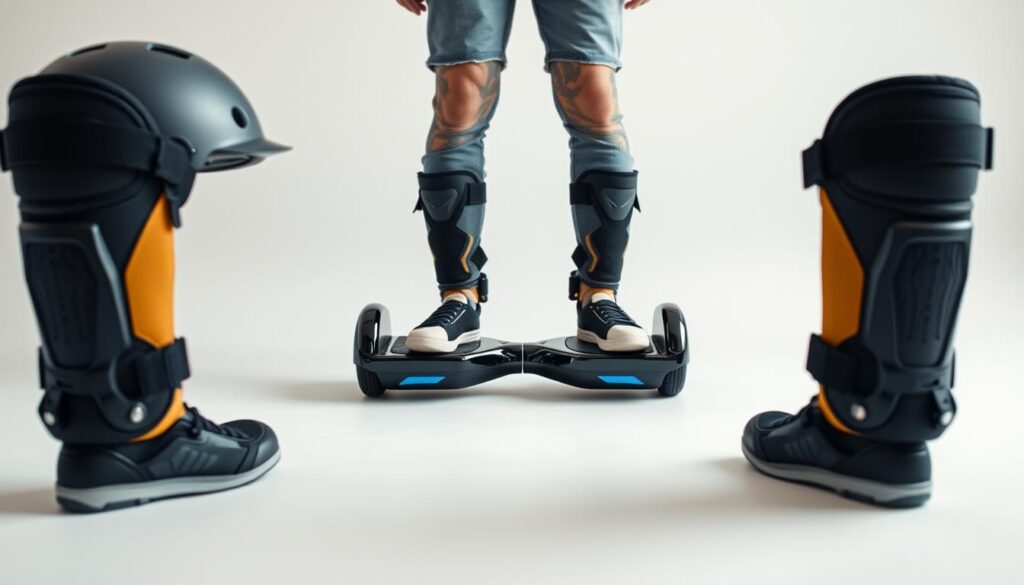
Knee pads and elbow pads offer cushioning and protection against scrapes and bruises. Wrist guards prevent wrist injuries, which often happen when trying to break a fall with your hands.
Buying top-notch hoverboard safety gear boosts your safety and confidence. It makes the ride fun and safe.
Before you ride, check that your safety gear is in good shape. Look for any damage or wear and tear. Replace any damaged gear to keep you protected.
Finding the Perfect Space to Practice
Learning to ride a hoverboard needs a safe and good place. You’ll need a flat surface big enough to move around. Stay away from places with bumps, rocks, or things that could make you fall.
The best hoverboard practice area is smooth, open, and safe. Empty parking lots, skate parks, or big halls are perfect. You need enough room to move without hitting anything.
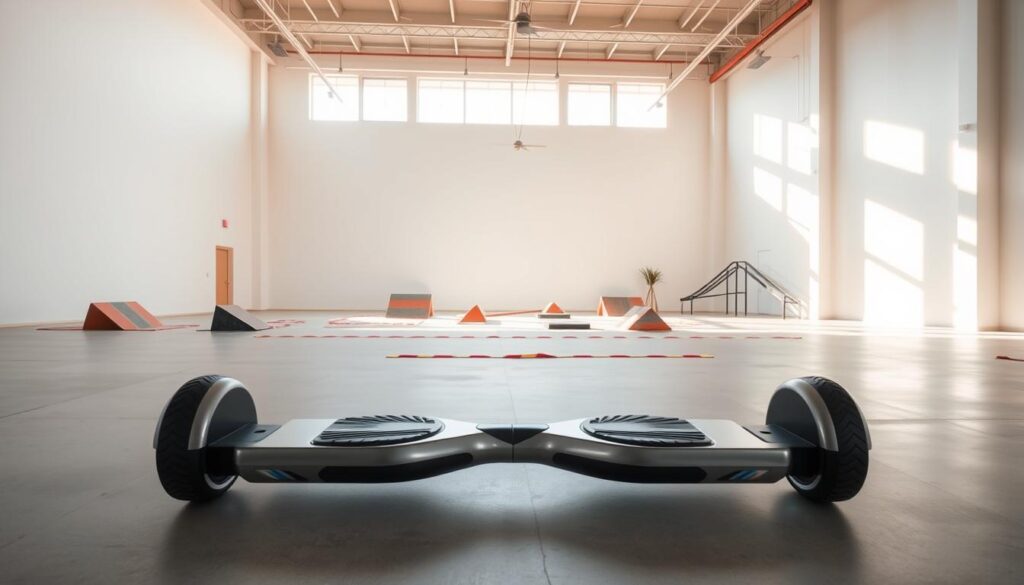
When picking a safe riding environment, look at the surface and obstacles. A flat, smooth area helps keep your balance. As you get better, you can try harder places.
Practice in a place that’s safe and lets you focus on getting better. The right spot will help you master your hoverboard skills.
Getting Started: Mounting Your Hoverboard
Before you can glide on a hoverboard, you must learn to mount it safely. Mounting a hoverboard is the first step for a smooth ride. It’s more than just stepping on the device.
Start by standing beside the hoverboard with your dominant foot on the footpad. Make sure the hoverboard is on a flat, stable surface to avoid accidents. Hold onto something stable if needed, for better balance.
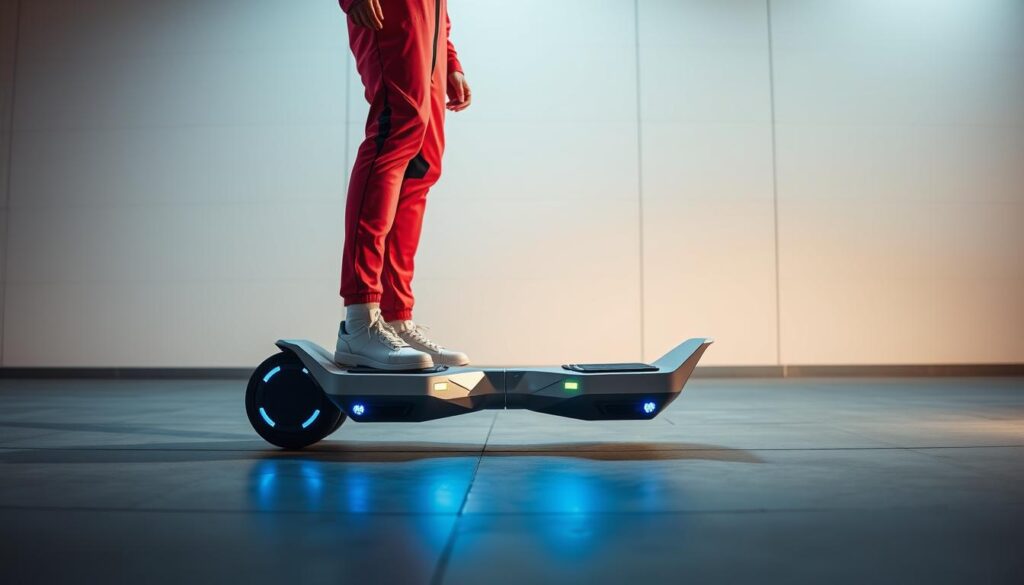
Once in position, slowly put your dominant foot on the hoverboard, keeping it centered. Keep your knees slightly bent to lower your center of gravity. This improves stability. Then, bring your other foot onto the hoverboard, trying to keep your balance.
Balancing is key when mounting a hoverboard. Adjust as needed to keep your center of gravity over the hoverboard. Practice until you feel comfortable mounting the hoverboard.
By following these steps and practicing, you’ll master the first steps on a hoverboard. Remember, balance and control are the keys to successful hoverboard riding.
Mastering the Basics of Balance
Learning to balance on a hoverboard is key for a fun ride. It’s important to keep your center of gravity over the board.
Start by standing straight with your feet apart. This stance helps you balance better. It makes it easier to move with the hoverboard.
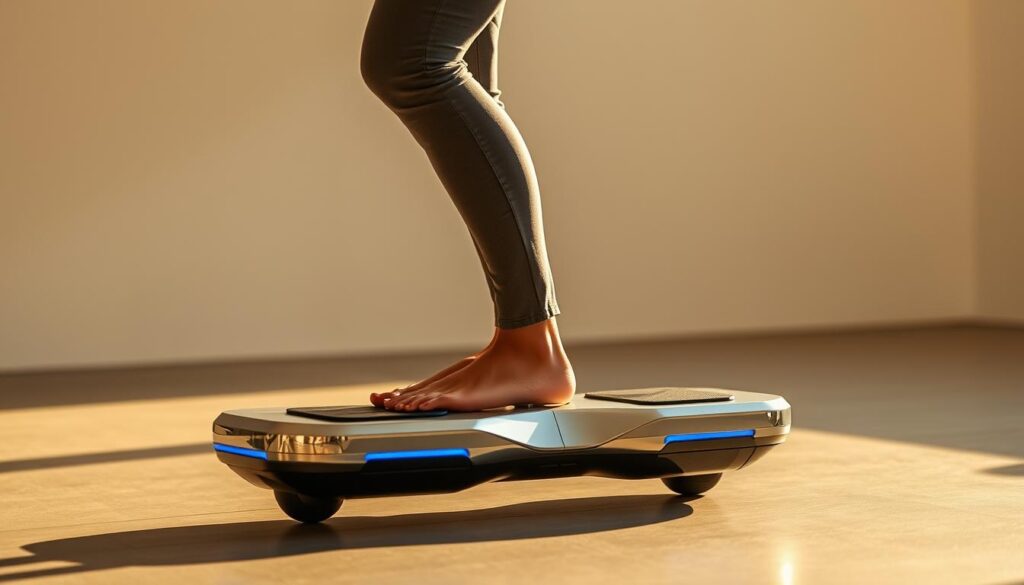
Changing your weight is a small but big part of balancing. Moving your weight helps control the hoverboard’s direction and speed.
To adjust your weight effectively: Bend your knees a bit to lower your center of gravity. This makes you more stable. Lean forward to go faster, and lean back to slow down. Make small moves to avoid sudden jerks.
Practice is key to get better at adjusting your weight. Find a flat, open area to practice moving without hitting anything.
Good posture, even weight, and small weight changes help you balance well. This makes your ride better and boosts your confidence.
Learning to Steer and Control Speed
Once you’re comfortable standing on a hoverboard, it’s time to learn how to steer and control your speed. Steering a hoverboard involves leaning in the direction you want to go. By shifting your weight, you can navigate through different paths smoothly.
To turn, simply lean your body in the desired direction. For instance, to turn left, lean your body slightly to the left. The hoverboard will respond to your movement, allowing you to make smooth turns. Practice turning in both directions to build your confidence and control.
Controlling your speed is just as important as steering. To accelerate, lean forward slightly. The more you lean, the faster you’ll go. To slow down or stop, lean backward. This intuitive control mechanism allows you to adjust your speed according to your comfort level.
It’s essential to practice controlling your speed in a safe, open area until you feel comfortable with the hoverboard’s response to your movements. Start with slow speeds and gradually increase as you become more confident in your ability to control the hoverboard.
By mastering steering and speed control, you’ll be able to ride your hoverboard with ease and confidence. Remember, practice makes perfect, so take your time to hone these skills.
Overcoming Common Challenges
Hoverboard challenges are a normal part of the learning process. Understanding how to overcome them is key to enjoying your ride.
One of the most common issues riders face is difficulty balancing. To overcome this, it’s essential to keep your knees slightly bent and your weight centered over the hoverboard. Practice standing on the hoverboard while it’s stationary to get comfortable with its balance point.
Another challenge is learning to turn. To turn, you need to shift your weight in the direction you want to go. Lean slightly to the left or right, and the hoverboard will respond. It’s important to make smooth, gradual movements to maintain control.
Maintaining a consistent speed can also be tricky. To achieve a steady pace, focus on keeping your posture upright and your movements smooth. Avoid jerky movements, as they can cause the hoverboard to accelerate or brake suddenly.
Troubleshooting common issues often involves adjusting your riding technique. For instance, if you’re having trouble moving forward, check that your weight is slightly forward and that you’re not leaning back. If you’re moving too fast, lean back slightly to slow down.
Practicing Regularly
Regular practice is key to overcoming hoverboard challenges. The more you ride, the more comfortable you’ll become with the hoverboard’s movements and responses. Find a safe, open space to practice regularly, and you’ll see improvement over time.
By understanding and addressing these common challenges, you can enhance your hoverboard experience. Enjoy a smoother, more confident ride.
Maintenance Tips for Your Hoverboard
Keeping your hoverboard in top shape is key for safety and a smooth ride. Regular care includes cleaning, checking for damage, and looking after the battery.
Cleaning Your Hoverboard is essential for its function and look. Use a soft cloth to clean the surface. Stay away from harsh chemicals that could harm the finish or electronics. For stuck dirt, a small, dry brush works well.
The battery is a vital part of your hoverboard. Proper charging habits help it last longer. Don’t overcharge; charge when it’s 20% to 80% full. Also, keep it away from extreme temperatures to protect the battery.
It’s important to inspect your hoverboard for damage regularly. Look at the wheels, motherboard, and other parts for wear or damage. Fixing issues early can stop bigger problems later.
By sticking to these maintenance tips, your hoverboard will stay in great condition. This means a safe and fun ride for you.
Joining the Hoverboard Community
As you get better on your hoverboard, you might want to meet other riders. Sharing tips and learning new tricks is fun. Joining a hoverboard community can make your experience even better.
Look for online forums and social media groups for hoverboard fans. These places talk about new things, safety, and events. Talking to other riders keeps you informed and motivated.
Cities often have hoverboard events like group rides and competitions. Going to these is a great way to meet others, learn, and show off your skills. Being part of the hoverboard community helps you improve and join a lively group of fans.