
Understanding the basic parts of life is key to grasping the biology of it. These parts are the building blocks of living things. They form the foundation of life.
Studying these parts, known as the building blocks of life, helps us understand life’s processes. By looking into the world of cells, we learn about life’s complexities.
This article will explore how these basic units help us understand life. It will show why biology is important in our everyday lives.
Understanding What Cells Are
To grasp life, we must first learn about cells. These tiny structures make up all living things. They are like tiny cities, with different areas doing different jobs to keep the cell alive.
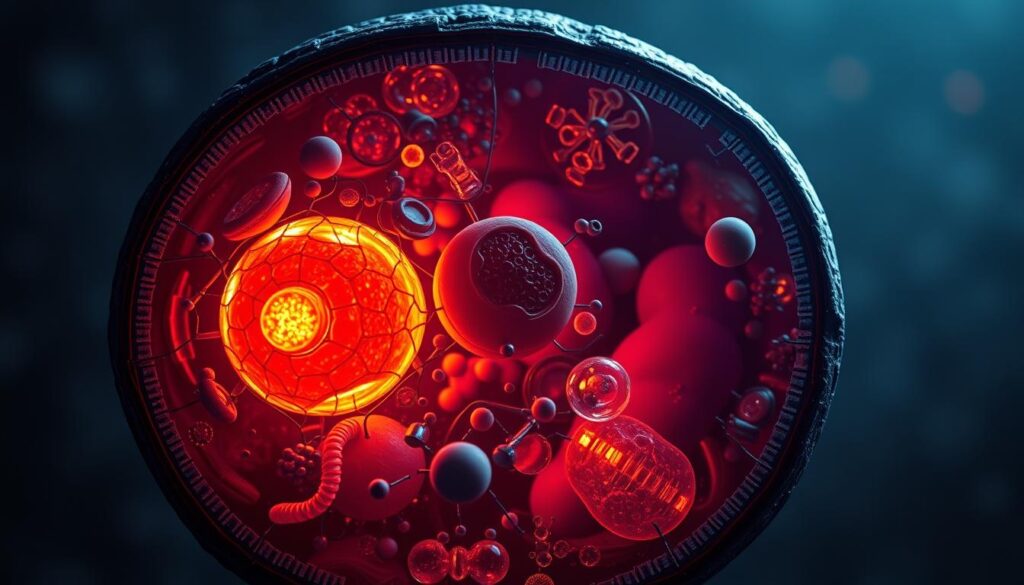
A cell has several key parts, like the cell membrane, cytoplasm, and genetic material. The cell membrane, or plasma membrane, is a thin layer. It keeps the cell’s inside and outside separate. It controls what goes in and out, helping the cell stay balanced.
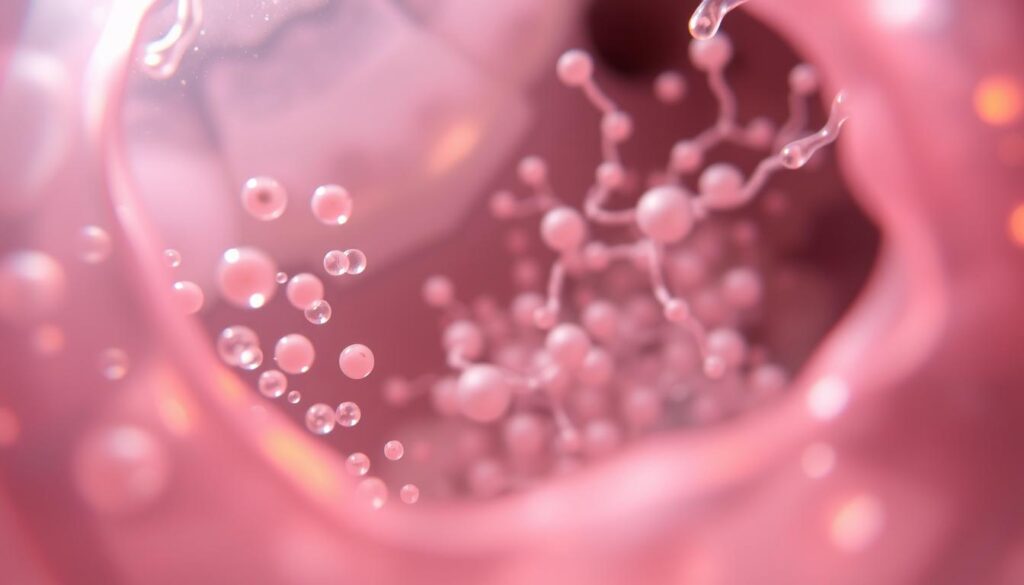
The cytoplasm is the jelly-like stuff inside the cell membrane. It has organelles and structures that do various jobs. This is where many important processes, like making proteins and producing energy, happen. The genetic material, usually DNA, is in the nucleus of eukaryotic cells. It tells the cell how to grow, develop, and work.
Important organelles include mitochondria, which make energy; ribosomes, which make proteins; and lysosomes, which break down waste and cellular debris. Each part is essential for the cell’s survival and function.
Knowing about cell structure and its parts is key to cell biology. Understanding how cells work helps us see the complexity of life and how different parts of the cell interact.
The Structure of a Cell
At the heart of every cell lies a sophisticated system of cellular organelles that enable it to function. Cells are the basic units of life, and their complex structure is fundamental to their operation.
Cells contain various organelles, each with distinct functions that contribute to the cell’s overall health and performance. The nucleus is one of the most critical organelles, serving as the cell’s control center.
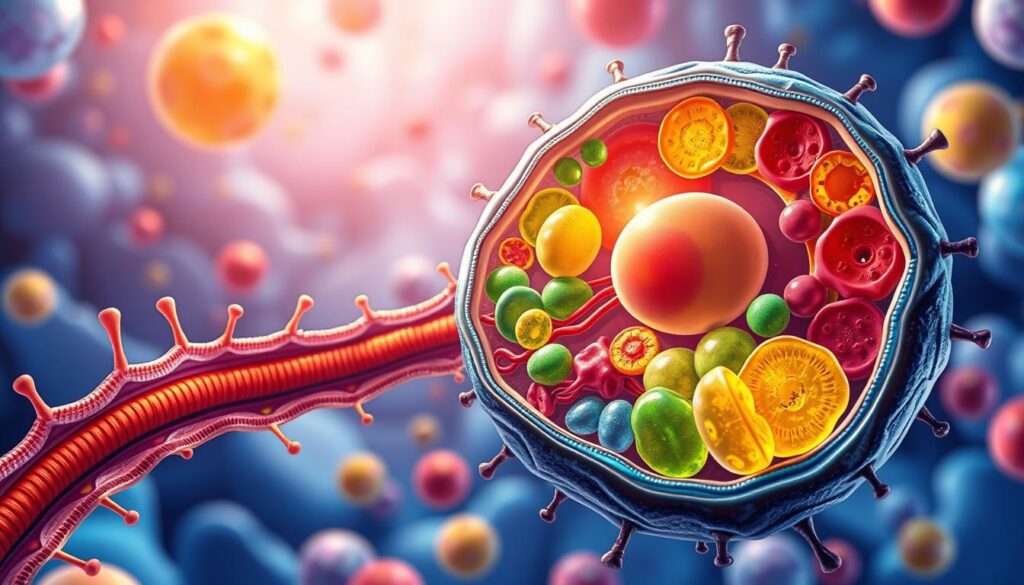
The nucleus plays a key role in cellular processes, including DNA replication and gene expression. It houses the cell’s genetic material, or DNA, which contains the instructions for the cell’s growth, development, and function.
During DNA replication, the nucleus ensures that the genetic material is duplicated accurately, allowing the cell to divide and reproduce. It also regulates gene expression, controlling which genes are turned on or off, and to what extent. This regulation is vital for the cell’s response to its environment and for coordinating cellular activities.
The nucleus is surrounded by a double membrane called the nuclear envelope, which separates it from the cytoplasm. This envelope is punctuated with nuclear pores that allow for the transport of materials in and out of the nucleus. This facilitates communication between the nucleus and the rest of the cell.
In summary, the structure of a cell is a complex and highly organized system, with the nucleus playing a central role in controlling cellular processes. Understanding the intricacies of cellular structure and function is essential for appreciating the biology of life at its most fundamental level.
Different Types of Cells
It’s important to know about the different types of cells. Cells are the basic units of life. They come in two main types: prokaryotic cells and eukaryotic cells.
Prokaryotic cells are simple and small. They don’t have a nucleus or other organelles. You can find them in single-celled organisms like bacteria. Despite their simplicity, they are very adaptable.
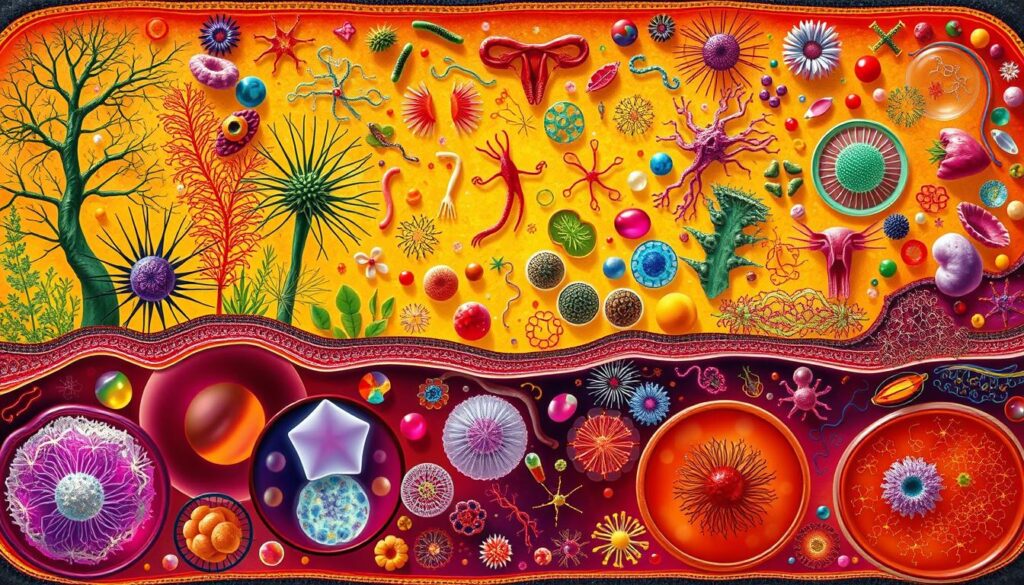
Eukaryotic cells are more complex and larger. They have a nucleus and various organelles. These cells are found in plants, animals, fungi, and protists. Their complexity allows for specialization and organization, leading to multicellular life.
The difference between prokaryotic and eukaryotic cells is key to understanding life. Prokaryotic cells are simple but efficient. Eukaryotic cells, with their complexity, have led to the variety of life we see today.
Studying different cell types is vital in biology, medicine, and biotechnology. It helps scientists understand how cells work and interact. This knowledge can lead to new treatments for diseases.
In summary, the variety of cell types, mainly prokaryotic and eukaryotic cells, shows the complexity of life. Understanding these differences is essential for advancing in biology and improving medicine and technology.
The Function of Cells
Cells are at the core of life, carrying out vital functions. They are incredibly versatile, performing cellular processes that are key for life. These processes are essential for the survival and functioning of living beings.
One main function of cells is metabolism. This involves breaking down and building organic molecules to keep life going. It’s important for energy, growth, and repair. Cells also play a big role in DNA replication. This ensures genetic material is copied accurately before cell division, keeping genetic information intact.
Another key function is protein synthesis. Cells translate genetic information into proteins. These proteins are vital for structure, metabolic reactions, and DNA replication, among other functions.
The cellular processes we’ve talked about are vital for living organisms. They help cells respond to their environment, communicate, and keep homeostasis. Understanding these biological processes helps us see the complexity and beauty of life.
In short, cells are the basic units of life, and their functions are essential for life to exist. The detailed processes they perform highlight the importance of cellular biology in understanding life itself.
The Life Cycle of a Cell
Understanding how cells grow, repair, and reproduce is key. The cell cycle, or cell-division cycle, is the series of events that lead to cell division and duplication.
The cell cycle has three main stages: interphase, mitosis, and cytokinesis. Interphase is the longest stage. Here, the cell grows, replicates its DNA, and prepares for division. It’s split into Gap 1 (G1), Synthesis (S), and Gap 2 (G2) phases. Mitosis follows, where the DNA is divided equally between two daughter cells.
Regulating the cell cycle is vital for tissue health. Cell division replaces damaged or dying cells, helping with tissue repair. It’s also key for growth and development, allowing organisms to grow from a single cell into complex beings.
As
“The cell cycle is a highly regulated process that ensures the faithful replication and distribution of genetic material to daughter cells.”
This regulation is critical to prevent uncontrolled cell division, which can cause cancer.
Many cellular processes are involved in the cell cycle. Checkpoints verify DNA integrity and chromosome alignment. These steps ensure accurate cell division and genetic material preservation.
Significance of Cell Division
Cell division is essential for growth, repair, and reproduction. In multicellular organisms, it creates gametes (sperm and eggs) through meiosis.
By understanding the cell life cycle, we learn about life’s fundamental processes.
How Cells Interact
Cells in our bodies work together in a complex dance. They talk to each other through cell signaling and cell communication. This helps them work as a team, respond to their surroundings, and keep the body healthy.
Cell signaling is key for cells to share information. They can do this by touching each other or sending signals through molecules. For example, hormones released by endocrine cells travel through the blood to reach other cells.
Cells also interact through cellular interactions like touching or exchanging molecules. These interactions are essential for the immune system to fight off infections. They help different cells work together to heal or protect the body.
The role of cellular interactions is huge. They help grow and fix tissues, and keep the body in balance. Problems with cell communication can cause diseases, showing how important it is to understand how cells talk to each other.
By studying cell signaling and cell communication, scientists can learn a lot. This knowledge can help create new treatments for diseases caused by cell communication problems.
The Role of Cells in Diseases
Understanding cellular dysfunction is key to grasping how diseases occur and progress. Cells are the fundamental units of life. Their proper functioning is essential for maintaining health.
When cells become dysfunctional, it can lead to various diseases, including cancer, diabetes, and neurodegenerative disorders. Cellular processes such as metabolism, division, and signaling are tightly regulated under normal conditions. But when these processes go awry, disease can ensue.
The role of cells in disease is multifaceted. For instance, cancer arises from genetic mutations that disrupt normal cellular regulation, leading to uncontrolled cell growth. Diabetes is characterized by the dysfunction of pancreatic beta cells, which are responsible for insulin production.
Understanding the cellular processes underlying these diseases is critical. It helps in developing effective diagnostic and therapeutic strategies. By elucidating the mechanisms of cellular dysfunction, researchers can identify targets for intervention. This paves the way for new treatments.
Advancements in Cell Research
The study of cells has seen big changes with new discoveries in cellular biology. In recent years, research has grown, helping us understand cells better. This is important for many areas of biology.
Advances in cellular biology come from new tech and ways of doing research. Tools like single-cell RNA sequencing let us see how different cells work together. This shows us the complex world of cells.
These new findings are changing how we see cells and their use in medicine and biotechnology. For example, they help us make treatments that target specific diseases.
Recent cell research shows how important it is to study how cells interact. These interactions are key to keeping us healthy or fighting disease. Knowing this helps us find better ways to treat illnesses.
In summary, cell research has grown a lot, helping us understand cells better. It also opens doors for new medical and biotech discoveries. As research keeps moving forward, we’re likely to see even more big discoveries.
The Future of Cellular Studies
Cellular studies are on the verge of a big change. New trends and directions are coming that will change how we see cells. New technologies will help us study cells more closely, revealing their secrets.
The future looks bright for cellular studies. It could lead to new ways to diagnose and treat diseases. As scientists dive deeper into cell biology, we’ll see big steps forward in areas like regenerative medicine and synthetic biology.
Scientists are excited about the new paths they can explore. By following these trends, they’ll unlock the full power of cellular studies. This will lead to new discoveries and innovations in the years ahead.