
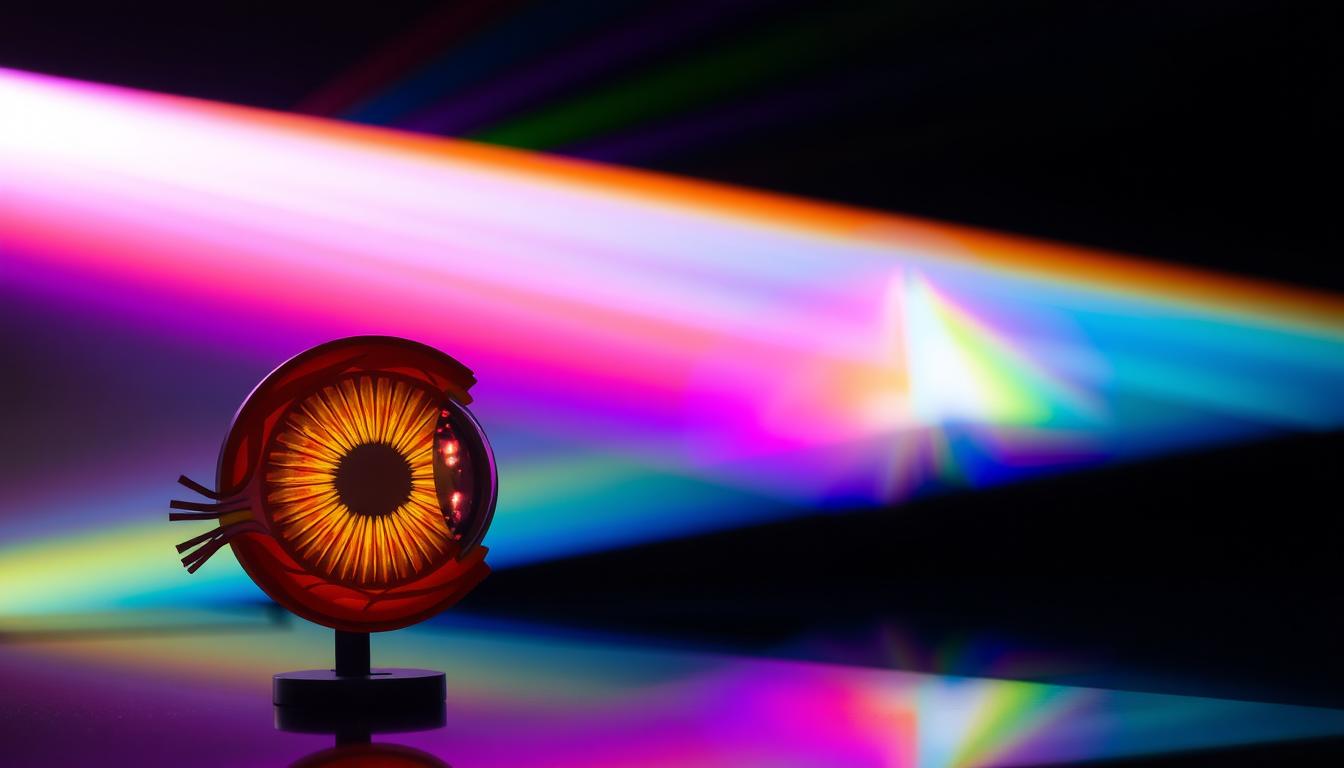
The way we see different colors is complex. It involves the human eye and the brain’s role in understanding visual signals. The physics of color perception deals with energy wavelengths and reflections. Our eyes catch these, and our brains make sense of them.
To grasp color vision, we must understand how these signals are decoded. This lets us see a vast array of colors. This complex process is key to our experience of the world.
Understanding the Science of Color
Colors are a result of light, energy wavelengths, and how we see them. Color theory shows how light’s different wavelengths interact with objects. This affects what we see.
When sunlight hits an object, some wavelengths are absorbed, while others are reflected. This is key to understanding color. The wavelengths that are reflected back tell our eyes about the object’s color.
Seeing colors involves light, objects, and our brain working together. The color we see depends on the object’s material and the light it reflects.
The eye catches the reflected wavelengths and sends signals to the brain. The brain then interprets these signals as colors. This shows how light is essential for color perception.
Learning about color science helps us appreciate the visual world more. It also helps in art, design, and technology. Knowing how energy wavelengths and light interact with objects and our perception reveals the beauty of color.
The Role of Light in Color Perception
Color perception is more than just the object itself. It’s also about the light it reflects. The color we see can change a lot based on the light. For example, something that looks bright red in daylight might seem different under fluorescent lights.
The effect of lighting conditions on color is huge. Different lights send out light at different wavelengths. This changes how colors look on surfaces. As Johannes Itten, a famous color theorist, said, “The colors we see come from light, the object, and how we see it.”
“The colors we see are the result of the interaction between light, the object, and our perception.”

The idea of reflection is key to understanding color. When light hits an object, some is absorbed, some goes through (if it’s transparent), and some is reflected. The color we see is from the wavelengths that are reflected. For instance, a leaf looks green because it reflects green light and absorbs others.
Variability in Lighting Conditions
We’re exposed to many lighting conditions, from the warm tones of sunrise and sunset to the cool tones of shade or artificial lights. Each condition changes how we see colors. Knowing this helps us understand the complex relationship between light and color.
In conclusion, light is very important in color perception. It affects how we see and understand the world. By understanding the impact of different lights and reflection, we can appreciate the complex dance between light, objects, and our perception.
The Human Eye: Our Color Detectives
The human eyes act as our personal color detectives. They use special cells to detect a wide range of colors. The eye’s ability to see colors is thanks to its complex anatomy.
The eye has two main types of photoreceptors: rods and cones. These cells turn light into signals that our brain sees as color.
Rods and Cones
Rods are very sensitive to light. They help us see in dark places. But, they don’t help much with color vision.
Cones are key for seeing colors. There are three types of cones, each for red, green, and blue light. The brain mixes these signals to let us see many colors.
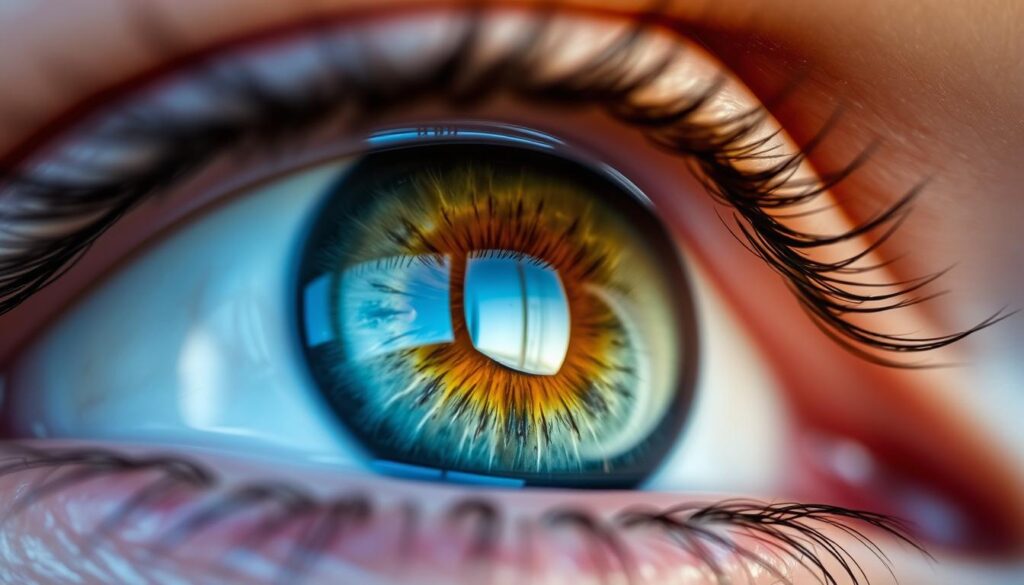
The mix of rods and cones lets us see the world in all its colors. Understanding how they work together shows the amazing complexity of human color vision.
In short, seeing colors is a complex process. It involves many cells and the brain’s power to process information.
Cultural Significance of Colors
Different cultures around the world see colors in unique ways. This shows their distinct histories and values. Color perception is not just about looks; it’s tied to culture, society, and language.
The Himba people in Namibia have special words for “bluish-green” and “dark blue.” These colors are not split in many other languages. This shows how language and color perception are closely linked.
In Western cultures, white means purity and innocence, like a bride’s wedding dress. But in some Asian cultures, white is for mourning, worn at funerals. This shows how cultural significance of colors can vary greatly.
“Colors are the silent language of culture, conveying messages that are understood by those who share the same cultural context.”
Cultures influenced by their natural environment and practices have unique color vocabularies. For example, cultures known for dyeing and textiles have detailed color words. This shows how cultural significance and color perception are intertwined.

Knowing the cultural meaning of colors helps us appreciate art, design, and cultural practices worldwide. It also shows the importance of cultural context in global communication and marketing. Color choices can greatly affect how messages are received.
Language and Color Categories
The link between language and color categories is interesting. Studies show that color terms can change how we see and remember colors. This is important for design and branding, where color perception matters a lot.
In conclusion, the cultural importance of colors is complex and diverse. By looking at how cultures see and categorize colors, we learn more about culture, language, and perception.
The Art of Color in Design
Color theory is the backbone of design, helping artists and designers make stunning color schemes. They use color theory to create visuals that grab attention and send messages. This way, they can make designs that look great and mean something.
The color wheel is key in color theory. It shows colors in order by wavelength. Designers use it to find colors that work well together, like complementary and analogous colors.
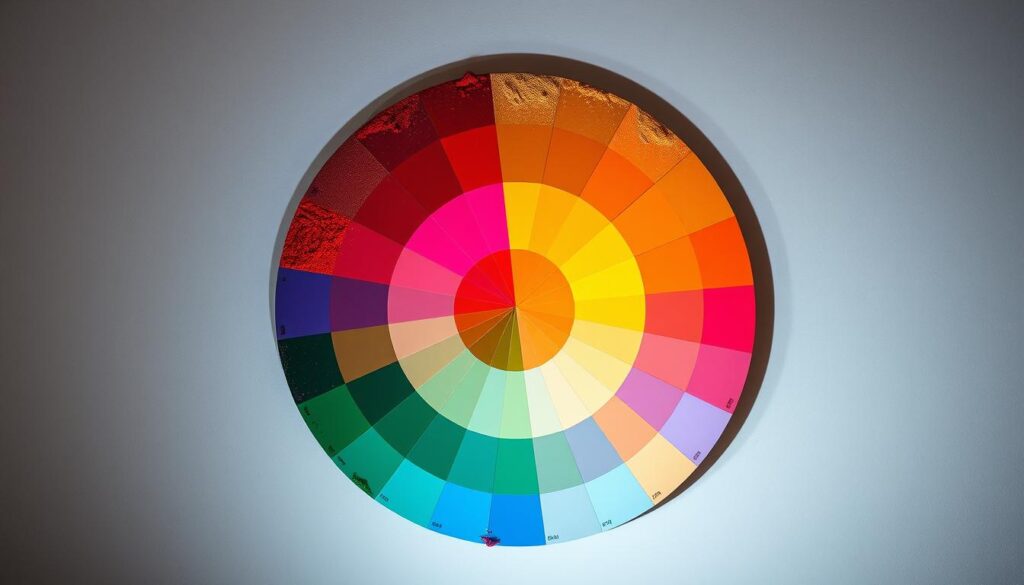
Color theory is used in many design areas, like graphic design and fashion. For example, designers might use contrasting colors to make text stand out. Or, they might pick colors that go together well to make a brand look smooth and consistent.
Principles of Color Theory in Design
The 60-30-10 rule is a big part of color theory. It says 60% of a design should be one color, 30% another, and 10% an accent. This rule helps designs look balanced. Also, knowing how colors make us feel is important. Blue, for instance, is often seen as trustworthy, which is why it’s used a lot in corporate designs.
How we see colors can change based on where we are and what we’re used to. Designers need to think about these things when they use color theory. This way, their designs can really connect with people.
In short, color in design is all about color theory and the color wheel. By using color theory, designers can make their work look better and say more. This makes their designs more appealing and effective.
The Impact of Colors on Mood
Colors affect our mood in many ways. They are influenced by biology and culture. Different colors can make us feel different emotions.
Colors and Emotional Responses: Colors can make us feel certain ways. Warm colors like red and orange make us feel energetic. Cool colors like blue and green help us relax.
Colors also have cultural meanings. In the West, white means purity. But in Asia, it means mourning. This shows how culture affects how we see colors.
The Psychological Impact of Color: Color affects our mood and how we think. Studies show that colors can change our feelings and actions. For example, blue and natural light can make us feel better and work better.
Knowing how colors affect us is useful in many areas. Designers and marketers use colors to change how people feel. Therapists use color therapy to help people’s mental health.
Exploring Color in Nature
As we explore the natural world, we see a stunning display of colors. These colors are both beautiful and functional. The environment is filled with a wide range of colors, each with its own role in the ecosystem.
The natural world is full of colors. We see blues and greens in landscapes, and vibrant hues in flowers and animals. These colors are not just pretty. They also serve important purposes for different organisms.
For example, the bright colors of flowers attract pollinators. The camouflage colors of animals help them avoid predators.
In nature, colors are key for communication, adaptation, and survival. Understanding the role of colors in the environment helps us appreciate the natural world more. It shows us the complex mechanisms at work.
By looking at the role of colors in nature, we learn about ecosystem interactions. We see why it’s important to keep the natural balance.
Technology and Color Representation
Technology has greatly improved color science. It has made it possible to measure and reproduce colors with high precision. Tools like colorimeters and spectrophotometers are key to this.
Accurate Color Measurement is vital in many fields. This includes textiles, paints, and digital displays. Colorimeters and spectrophotometers help achieve this accuracy. They measure color properties of objects for precise representation.
Color representation goes beyond just measuring. It’s about showing colors accurately on different devices and media. Technology ensures colors seen on one device match those on another. This is important for designers, manufacturers, and artists.
The role of technology in color representation is huge. It has made color consistency and precision possible. This is key for product quality and brand identity. As technology advances, we’ll see even better ways to measure and represent colors.
Future Trends in Color Research
Our understanding of color is growing, thanks to new research. This research is changing how we see color. It’s all about the latest in technology, materials, and how we see things.
New display tech like OLED and microLED is making colors look better. This is making us study color more. We’re learning how different colors work together.
Color science is used in many areas, like art, design, healthcare, and tech. As we learn more, we’ll see new uses for color. Think of better digital screens and color in therapy.
Looking into the future of color research helps us understand color better. It shows how color affects our world in many ways.