
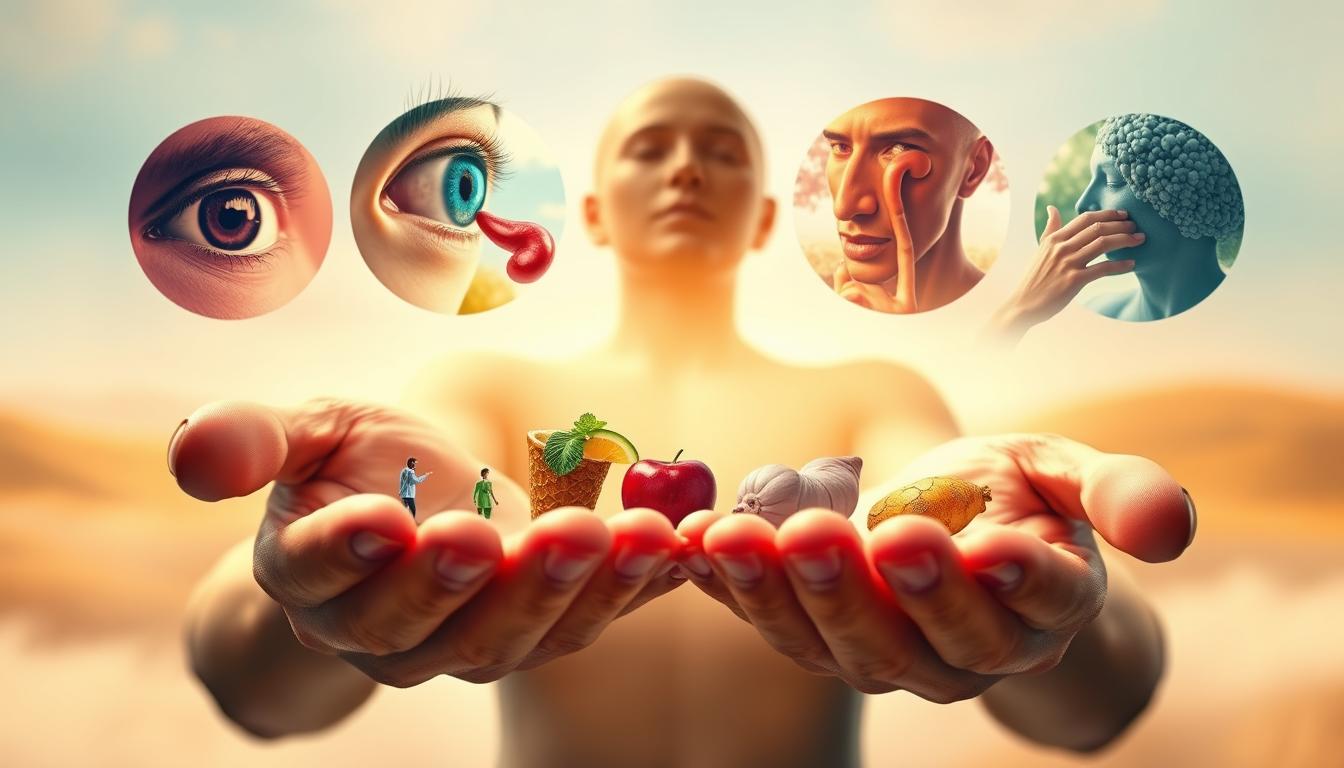
Our daily lives are shaped by how we see, hear, taste, smell, and feel. These abilities help us understand and interact with the world. Our human senses are key to our experiences.
From a young age, we learn about the five senses. They help us grasp and connect with our surroundings. Yet, many of us don’t fully get how they work or the complex science behind them.
It’s vital to understand perception and sensory processes. This knowledge helps us appreciate the complex ways we interact with the world. This article will explore the world of human senses, their importance, and the science that makes them work.
The Five Human Senses: An Overview
Our world is shaped by the five human senses. They help us every day, from navigating to staying healthy.
The five senses aresight,hearing,taste,smell, andtouch. Each sense has its own role and organ.
The eyes handle sight, catching light and color. They send this info to our brain, where we see it.
Hearing comes from our ears, which pick up sound waves. Our brain then figures out the sounds we hear.
The tongue is key for taste. It has taste buds for sweet, sour, salty, bitter, and umami flavors.
The smell is managed by our nose. It has olfactory receptors for different smells. These smells help us enjoy flavors and feel good.
Touch is all about our skin. It has receptors for pressure, temperature, and texture. This sense is vital for touching and feeling things.
The info from our senses goes to the nervous system. It processes this info, helping us react, talk, and keep our body working.
Understanding Vision
Vision is a complex process that starts with the eye catching light waves. It involves many parts of the eye working together. They capture and interpret light.
How the Eye Processes Light
When we see, light waves are transmitted across the cornea, the eye’s outer layer. These light waves then pass through the pupil. The pupil adjusts to control how much light enters the eye.
The light then goes through the lens, a flexible, clear part behind the iris and pupil. The lens changes shape to focus the light on the retina, a light-sensitive layer at the eye’s back.
The retina turns the light into electrical signals. These signals are sent to the brain through the optic nerve. The brain then makes sense of these signals, letting us see and understand what we see.
The process of perception is key. It’s not just about seeing but also how our brain makes sense of what we see. Things like context, past experiences, and what we expect can change how we see things.
In short, vision is a complex process. It needs the eye’s parts working together and the brain’s ability to interpret. Understanding how the eye processes light helps us appreciate the beauty and complexity of human sight.
The Mechanics of Hearing
The process of hearing is complex. It starts with sound waves traveling through the air. These waves must go through a detailed pathway to reach our brain.
Sound waves are made by vibrations in the air. They reach our ears, where the outer ear, or pinna, collects them. Then, they move down the ear canal.
When sound waves hit the eardrum, they make it vibrate. These vibrations then go through the auditory ossicles. These are three small bones in the middle ear.
The auditory ossicles help make the vibrations stronger. This ensures the sound is clear enough for our brain to understand. The bones are called the malleus, incus, and stapes.
The vibrations turn into electrical signals in the cochlea. This is a spiral-shaped part of the inner ear. These signals then go to the brain through the auditory nerve.
In the brain, these signals are understood as sound. This whole process happens fast and is key to our ability to hear. It shows how amazing and complex our auditory system is.
Exploring Taste
Taste, or gustation, is one of the five traditional senses. It’s key in how we enjoy food and drinks. The biology of taste is complex, with taste buds on the tongue and in the mouth.
These taste buds have receptors that catch chemicals in what we eat and drink. This is vital for tasting. When we eat or drink, molecules meet these receptors.
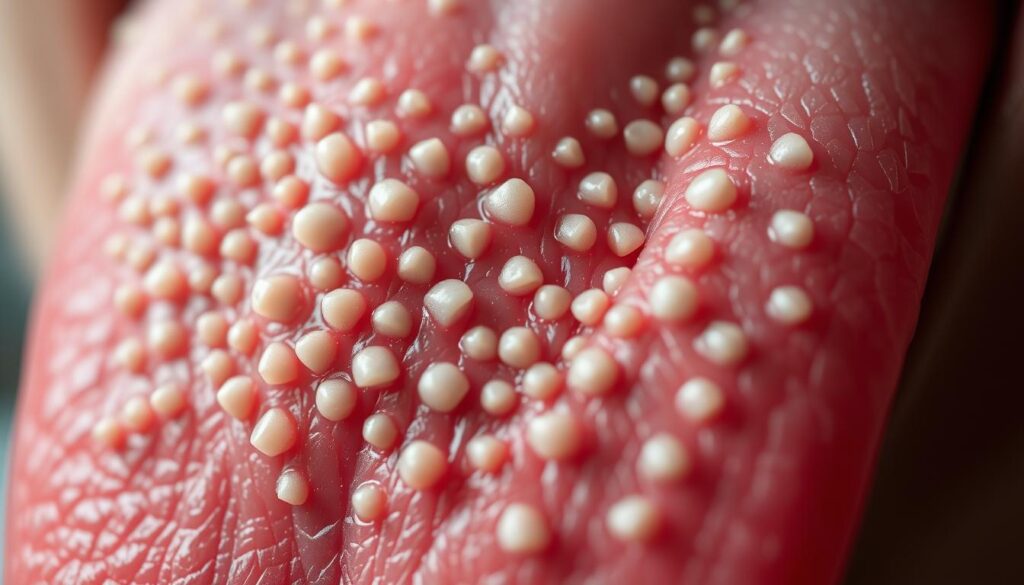
This meeting sends a signal to the brain. The brain then figures out what we’re tasting. We can taste sweet, sour, salty, bitter, and umami.
But, taste is also linked to smell, or olfaction. When we eat, the food’s smell goes up the throat to the nasal cavity. There, it’s picked up by smell receptors. Together, taste and smell create flavor.
Learning about gustation makes us appreciate eating and drinking more. It shows how our senses are vital in our daily lives. The biology of taste is amazing, showing how our bodies understand the world.
The Power of Smell
Our sense of smell comes from the olfactory system. It finds odor molecules and sends this info to the brain. Smelling starts with special nerve receptors on hairlike cilia in the nasal cavity’s top.
These receptors catch odor molecules. This action sends a signal to the brain. The brain then figures out what we smell.
“The sense of smell is closely linked to memory, with certain odors often triggering vivid recollections.”
The olfactory system is very complex. It uses many neural pathways to help us smell. This sense is key to our daily lives, shaping how we see the world.
In summary, smell is a complex and vital part of how we experience the world. Learning about the olfactory system shows us how important this sense is.
The Sense of Touch
The sense of touch is complex, involving many receptors in the skin. This lets us feel a wide range of sensations, from soft touch to sharp pain.
The skin, our biggest organ, has special cells for sensing. These cells pick up on pressure, temperature, and pain. They send signals to the brain through nerves.

Tactile perception is key for daily life. It helps us move around, identify objects, and avoid danger. Thanks to the skin‘s varied receptors, we can experience the world in many ways.
Each type of receptor in the skin is designed for a specific job. For instance, mechanoreceptors sense pressure and vibrations. Thermoreceptors notice temperature changes, and nociceptors detect pain. This makes our sense of touch detailed and rich.
In summary, the sense of touch is essential for our connection with the world. Learning about tactile perception helps us understand how we feel and react to various sensations.
The Role of the Intuition
Intuition is more than just a gut feeling. It’s a result of complex sensory integration that shapes our view of the world. Our brain takes in information from different senses, creating a detailed picture of reality.
This process happens mostly without us realizing it. Intuition is a powerful tool in how we perceive things. It combines past experiences, learned patterns, and the ability to spot subtle cues that our conscious mind might miss.
The blending of sensory information is key to our perception. For example, when we watch a movie, our brain mixes visual and sound information to make the experience feel real. This blending is not just about combining senses but also how our brain makes sense of it all.
Our intuition helps us make decisions, often based on subtle patterns learned from past experiences. This skill is very useful in complex situations where thinking it through might take too long.
Intuition in Decision Making
In many cases, intuition is a big part of making decisions. Our brain can make conclusions by combining different pieces of information, even if we’re not fully aware of the whole process.
Understanding the role of intuition in our perception shows how amazing our brain is. It’s a sign of the incredible abilities of the human brain to take in and process so much information.
Understanding Sensory Integration
Sensory integration is how our brain mixes information from different senses to understand our world. This complex process helps us make sense of what’s around us.
Our brain gets signals from our eyes, ears, tongue, nose, and skin. It then integrates these signals to create a single perception. For example, when we eat, our brain combines taste, smell, texture, and look of food for a complete experience.
“The brain is a complex organ, and its ability to integrate sensory information is fundamental to our understanding of the world.”
Neuroscience research shows sensory integration is key for us to move and interact in our world. It involves complex brain processes that work together smoothly.
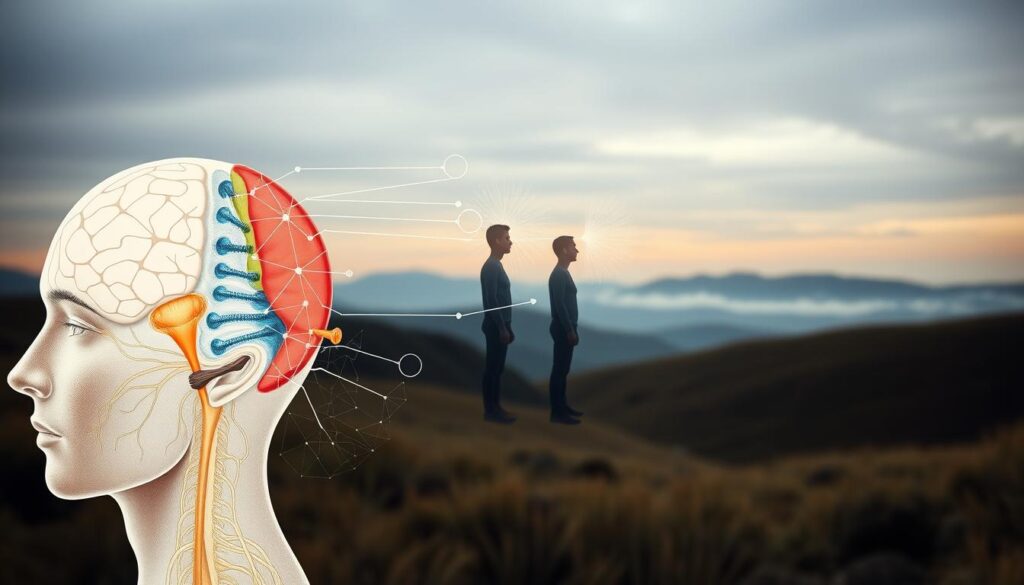
Learning about sensory integration helps us understand how we see reality. It shows how our brains handle all the sensory info we get every day.
The Influence of Age on Senses
Time changes how we see, hear, taste, smell, and feel. As we get older, our senses change a lot. These changes can affect our daily lives.
Aging and Vision: Our vision changes a lot with age. The lens of our eye gets less flexible. This makes it hard to focus on close things, a problem called presbyopia. Also, the risk of losing vision due to age increases.
“The aging eye is more susceptible to diseases that can impair vision, such as cataracts and glaucoma.” It’s important to get regular eye check-ups as we age. This helps manage these vision problems.
Hearing Changes with Age: Hearing loss is common with age. We lose the ability to hear high sounds and become less sensitive to sound. This is called presbycusis and can be due to genetics and environment.
Taste and Smell: Our taste and smell senses also change. We have fewer taste buds on our tongue. Our sense of smell can also decrease. This makes food less enjoyable and harder to smell.
“As we get older, our sense of taste and smell can become less acute, affecting our appetite and nutrition.”
The Sense of Touch: While some touch senses may decline, others stay the same. But, conditions like diabetes can cause numbness or tingling.
In conclusion, aging affects our senses in many ways. Knowing these changes helps us take care of our senses and overall health.
Enhancing Our Senses
Improving our senses is more than fixing what’s wrong. It’s about making our perception better. Our senses connect us to the world. Mindfulness and sensory training can boost how we see and feel things.
Mindfulness helps us stay in the moment. It makes us more aware of what’s around us. We notice sights, sounds, smells, tastes, and textures better. This makes our world feel richer and more detailed.

Sensory training has special exercises to sharpen our senses. Wine tasting and music training are examples. They help us better understand tastes and sounds.
Neuroscience shows our brains can change and get better. This is called neuroplasticity. It means we can improve how we sense the world through practice.
Adding mindfulness and sensory training to our day can improve our senses. This makes our world more vibrant and engaging.
The Future of Sensory Research
Sensory research is at the crossroads of psychology, physics, and biology. It’s a field that studies how we see, smell, and hear. This shows how neuroscience brings together different sciences to understand our senses.
Looking ahead, advances in technology and brain research will lead to big steps in sensory research. We’ll see better prosthetics that help people with sensory loss.
Research in neuroscience will also reveal how our senses work together in the brain. This could lead to new treatments for sensory problems and a better grasp of how we perceive the world.
The future of sensory research is about more than just learning. It’s about using that knowledge to make life better. By exploring new areas, we can improve our senses and solve sensory challenges.
In summary, the future of sensory research is bright, thanks to neuroscience and tech advancements. As we dive deeper into understanding our senses, we’re on the verge of major breakthroughs.
Conclusion: The Importance of Our Senses
Our senses are key to how we see and experience the world. They help us understand and interact with our surroundings. By learning about vision, hearing, taste, smell, and touch, we get a deeper look into our daily lives.
Our senses are vital to how we perceive reality. They play a big role in our overall understanding of the world. This is why studying our senses is so important.
Research into our senses is ongoing. It helps us understand the human body better. As we learn more, we can find ways to improve our lives. The study of our senses is exciting and full of possibilities for new discoveries.