
The change from liquid to solid is amazing and happens all around us. When water loses heat, it changes from liquid to solid. This is called the freezing process.
This change is more than just a state shift. It’s key for many things in nature and industry. For example, ice in rivers and oceans impacts sea life and weather worldwide. Knowing how a liquid turns into a solid helps us understand these effects.
The change from liquid to solid, or ice formation, is complex. It depends on temperature and pressure. By studying this, we learn more about our world and its delicate balance.
The Science Behind Freezing
Understanding the science behind freezing means looking at water molecules. These molecules have two hydrogen atoms and one oxygen atom. This makes their structure unique.
The way oxygen and hydrogen share electrons creates a polar bond. This bond leads to hydrogen bonding between water molecules. This bonding is key to how water freezes.
When water cools, its molecules slow down and get closer. The molecular changes during this time are very important. Hydrogen bonds form and change, leading to ice’s crystal lattice structure.
This change isn’t quick. It’s a slow process where water molecules organize into a solid. The science behind freezing is a complex mix of molecular interactions. It turns liquid water into solid ice.
By understanding these molecular changes, we can see how complex freezing is. Studying water molecules during freezing helps us understand this basic process. It also helps in fields like environmental science and food preservation.
Different States of Matter
It’s important to know about the states of matter to understand how substances like water change. Water can be in three main forms: solid (ice), liquid (water), and gas (water vapor).
The state of water changes with temperature and energy. When water heats up, it turns from liquid to gas through vaporization. On the other hand, cooling it down makes it turn into a solid through freezing.
The change between these states is key in physics and chemistry. It explains many things we see every day. For example, ice forms in winter because water turns into a solid.
Knowing about the states of matter and how they change is vital. It’s used in many fields, from industry to environmental studies. It shows us how substances change and interact with their surroundings.
The Freezing Process Explained
Freezing is more than just a change of state. It’s a complex process ruled by scientific rules. It turns a liquid into a solid, a key change in nature and industry.
The journey starts with supercooling. Here, a liquid gets cooled below its freezing point but doesn’t freeze. For example, pure water can be cooled below 0°C without freezing. This state is unstable, needing a nucleus or disturbance to start freezing.
Nucleation is the first step in freezing. It’s when ice crystals start to form. This can happen with a tiny particle or a flaw in the container. After nucleation, ice crystal formation begins, and the liquid freezes.
The speed and way ice crystals form matter a lot. Slow freezing makes bigger crystals, while fast freezing makes smaller ones. This affects things like preserving biological samples and making ice cream.
Knowing about nucleation and ice crystal formation helps us control freezing. It’s key for both natural and industrial uses. Understanding these steps helps us see the complexity of turning liquid to solid.
Types of Freezing Methods
Freezing materials in different ways can greatly affect their quality. There are many freezing methods to pick from.
There are mainly two freezing methods: quick freezing and slow freezing. Quick freezing quickly lowers the material’s temperature. This keeps its texture and quality good. It’s great for food because it forms small ice crystals that don’t damage cells much.
Slow freezing lowers the temperature slowly over time. This method might not keep the texture as good because of bigger ice crystals. But, it’s okay for some uses where texture isn’t the main thing.
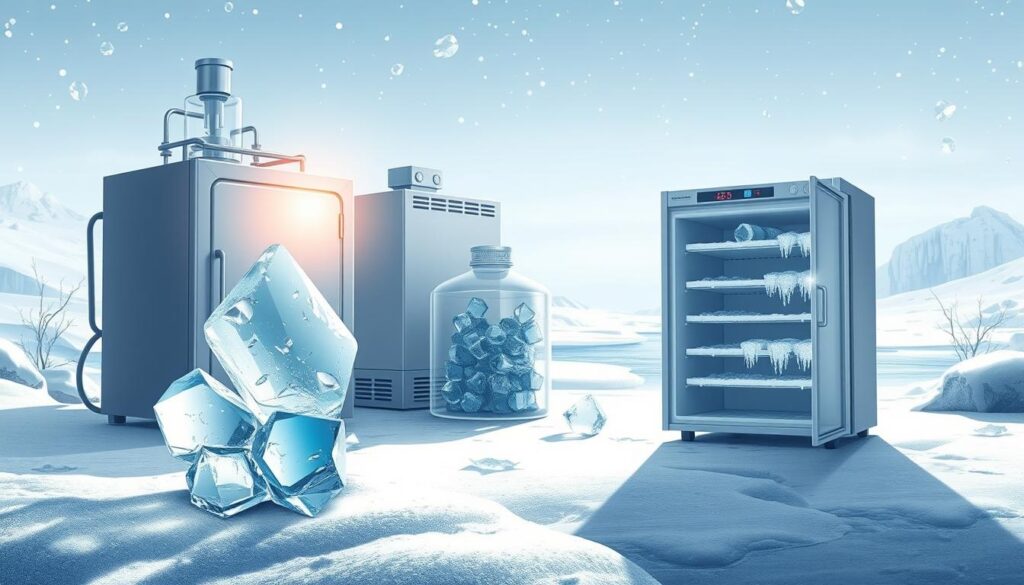
Experts say, “The choice of freezing method depends on the specific application and the desired outcome.” The quality of frozen products can change a lot with different freezing methods. So, picking the right one is key.
In short, knowing about the types of freezing and their uses is vital. Whether for food or other fields, the right freezing method ensures top quality. This is important for the best results.
The Importance of Freezing in Nature
Freezing affects many natural things, like weather and how living things live together. It changes our world in many ways.
The importance of freezing is huge. It helps move water around, creating ice caps and glaciers. These big chunks of ice help control the Earth’s weather.
Freezing also plays a big part in how animals and plants live. The natural freezing helps shape the weather too, by changing how hot or cold it is and how much rain we get.
In short, freezing is very important in nature. It helps keep the climate stable, balances ecosystems, and shapes the weather. Knowing about freezing helps us understand our world better.
Everyday Examples of Freezing
Freezing is all around us, from ice cubes in drinks to frost on windows. It’s a part of our daily lives, often unnoticed.
Making ice cubes is a simple example of freezing. We put water in an ice tray and freeze it. This turns the water into solid ice.
Freezing also helps keep food fresh. It slows down bacteria growth, making food last longer. This is why we freeze meats, veggies, and fruits.
Natural Occurrences of Freezing
Freezing happens naturally too. Frost forms when air gets cold enough to freeze water on surfaces. This happens during cold weather.
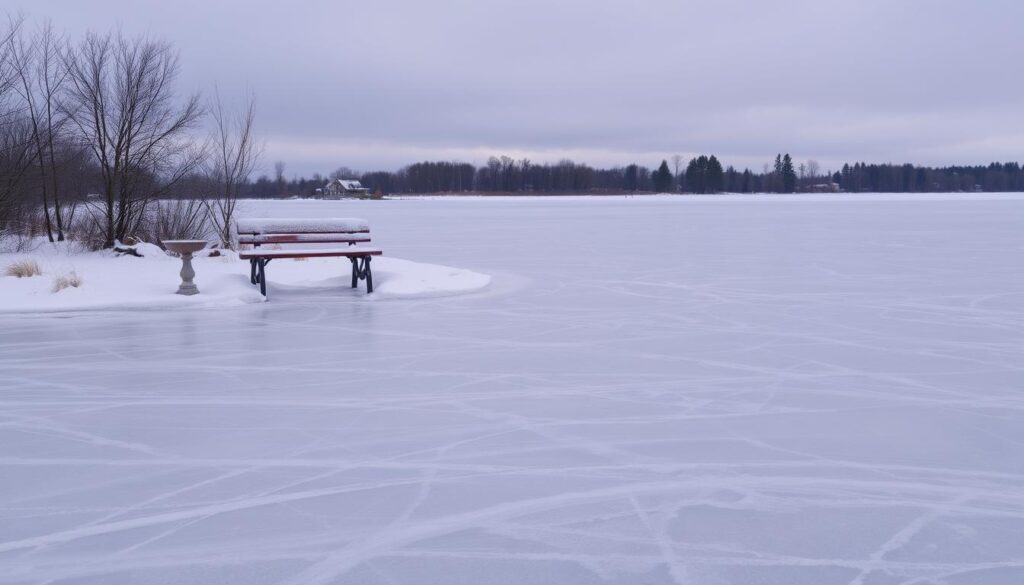
Lakes and rivers freeze in winter. This ice is important for nature and fun activities.
The Role of Freezing in Daily Life
Freezing is key in many areas, not just food and nature. It’s used in ice skating rinks and sports like ice hockey.
Seeing how freezing affects our lives shows its importance. It’s not just science; it’s part of our everyday experiences.
The Role of Freezing in Food Preservation
Freezing is a key method in food preservation. It slows down the deterioration process. By lowering the temperature, it stops the growth of microorganisms and slows chemical reactions that cause spoilage.
Freezing helps keep food quality and nutritional value. When food is frozen, the metabolic processes that lead to spoilage are significantly slowed down. This allows for longer storage without significant degradation.
Freezing also preserves the texture and flavor of food. For example, frozen fruits and vegetables keep much of their nutritional value and taste. They are a great alternative to fresh produce, even when it’s out of season.
The effectiveness of freezing in preserving food comes from its impact on microorganisms. Freezing temperatures make it difficult for bacteria, yeast, and mold to grow and multiply. This reduces the risk of foodborne illnesses. But, freezing doesn’t kill all microorganisms; it just puts them into a dormant state.
In conclusion, freezing is vital in food preservation. It stops microbial growth and slows down chemical reactions. This method keeps food quality and safety high. It also helps reduce food waste by allowing for long-term storage of perishable items.
The Art of Making Ice Cream
To make the perfect scoop of ice cream, you need to know about freezing and texture. It’s not just mixing ingredients. It’s an art that requires precision and understanding of freezing and texture.
First, you mix cream, sugar, and flavorings. Then, you churn them to add air. This air is key for a smooth and creamy texture, not icy.
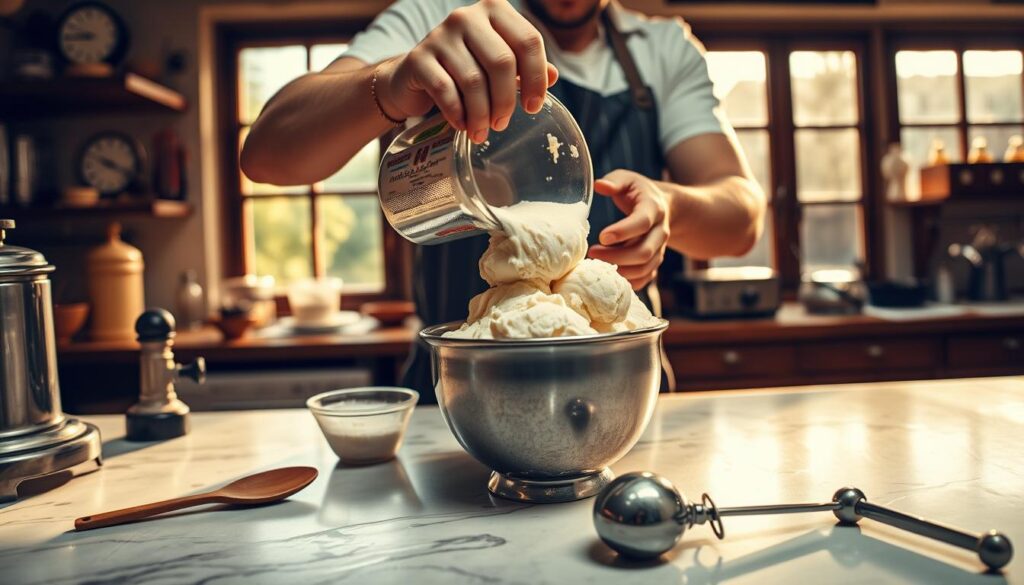
Freezing affects the ice cream’s quality. Slow freezing can make it icy. But, quick freezing makes it smooth.
The churning process is also important. It adds air and breaks down ice crystals. This makes the ice cream smooth and even. Finding the right balance between churning and freezing is essential.
In short, making ice cream is all about controlling freezing and texture. By managing the freezing and adding air through churning, you can create many textures and flavors. From classic vanilla to new seasonal flavors, the possibilities are endless.
Common Misconceptions About Freezing
Freezing is more complex than we think. It’s time to clear up some common myths. Many believe water always freezes at 0°C. But, the freezing point can change based on water purity and pressure.
Debunking the Myth of Uniform Freezing: Not all liquids freeze the same way or at the same temperature. For example, saltwater freezes at a lower temperature than pure water because of its salts. This is important for understanding things like sea ice formation.
Another common misconception is that freezing keeps food’s nutritional value forever. Freezing does slow down food spoilage, but it’s not perfect. The quality and nutritional value of frozen food can decrease over time, if not stored correctly.
Understanding freezing is not just about fixing wrong ideas. It’s also about the science behind it. By debunking myths and knowing the facts, we can use freezing better. This includes food preservation and industrial uses.
In conclusion, many people have wrong ideas about freezing. But, by looking at the facts, we can understand it better. Whether it’s how different liquids freeze or how freezing helps keep food fresh, there’s a lot to learn. This knowledge helps us appreciate this basic physical process more.
The Impact of Freezing on Health
Freezing weather can cause serious health problems like frostbite and hypothermia. These issues happen if you don’t protect yourself well. The body reacts differently to cold, based on how long and how cold it is.
Frostbite is a big worry when it’s very cold. It happens when skin and tissues freeze from being too cold for too long. Hands, feet, ears, and noses are most at risk. To avoid it, wear warm clothes, cover your skin, and don’t stay outside too long when it’s freezing.

Hypothermia is another serious problem. It happens when your body’s core temperature goes below 95°F (35°C). Signs include shivering, feeling confused, and getting very sleepy. If not treated, it can be deadly. Stay warm, dry, and avoid getting too tired to prevent it.
Being outside in the cold can also make health problems worse. This includes heart and lung diseases. People with these issues need to be extra careful when it’s cold.
For cold-related illnesses, warming up slowly is key. In serious cases, you might need to see a doctor. Knowing the risks and taking steps to prevent them can help keep you safe from the cold’s effects.
Innovations in Freezing Technology
New freezing methods are changing how we keep things fresh. Rapid freezing and cryogenic freezing are leading the way. They make frozen goods safer and better tasting.
Rapid freezing quickly cools items to keep them fresh. It’s great for food, keeping it tasty and nutritious. Cryogenic freezing uses super cold liquids to freeze things fast. It’s perfect for keeping delicate foods and samples safe.
These new freezing methods have many uses. They help food last longer and cut down on waste. In medicine, they keep samples safe for a long time. They also help keep medicines and vaccines at the right temperature.
These freezing tech advances bring many benefits. They make frozen goods safer and better. They also save energy and money over time. As tech gets better, we’ll see even more ways to freeze things.
In short, new freezing tech is changing many fields. By using these advances, businesses can make better products, save money, and help the planet.
Conclusion: Embracing the Freezing Process
Understanding how things freeze is key in many areas, like keeping food fresh or enjoying nature. The science behind freezing is complex. It involves different states of matter and various methods.
By embracing freezing, we can see its importance in our daily lives. It affects the food we eat and the natural wonders we see. New freezing technologies are making it even more exciting, with ongoing research and development.
Freezing is important in nature, affects our health, and helps preserve food. As we look to the future, freezing will keep being a big part of our lives and the world around us.