

The idea of mass is key to understanding our world. It shows us how much ‘stuff’ or matter is in an object. This is very important in physics and science.
In our daily lives and the universe, mass is very important. It affects how objects move and interact with each other. This helps us understand the world around us.
Looking into the role of mass can show its big impact. It’s a topic that’s both interesting and important to explore.
Understanding the Concept of Mass
Understanding mass is key to grasping many physics principles and more. Mass shows how much an object resists changes in motion and attracts other objects through gravity.
Mass as a Measure of Matter
Mass as a Measure of Matter
Mass measures the amount of matter in an object. It’s usually measured in kilograms (kg). For smaller objects, grams are used, and tonnes for the bigger ones. Unlike weight, mass doesn’t change with location.

It’s important to know the difference between mass and weight. Mass is a property of an object itself. Weight, on the other hand, is the force gravity puts on it. For instance, an astronaut’s mass stays the same on Earth and in space. But their weight changes because gravity is different.
Mass is not the same as density or volume. Density is mass per unit volume, and volume is how much space an object takes up. Knowing these differences is essential for science and everyday use.
In short, mass is a basic measure that’s different from weight and other properties. Its correct measurement and understanding are vital in many areas, from physics to engineering.
The Importance of Mass in Physics
Mass is a key concept in physics that affects how objects behave. It measures the amount of matter in an object. This property is vital for understanding our physical world.
In physics, mass links to an object’s inertia and its pull towards other objects. Newton’s laws show that more massive objects need more force to change their motion. This is known as inertia.
The force of gravity on an object depends on its mass and the gravity’s strength. On Earth, an object’s mass is directly tied to its weight. This is important for understanding how objects act in different gravity settings.
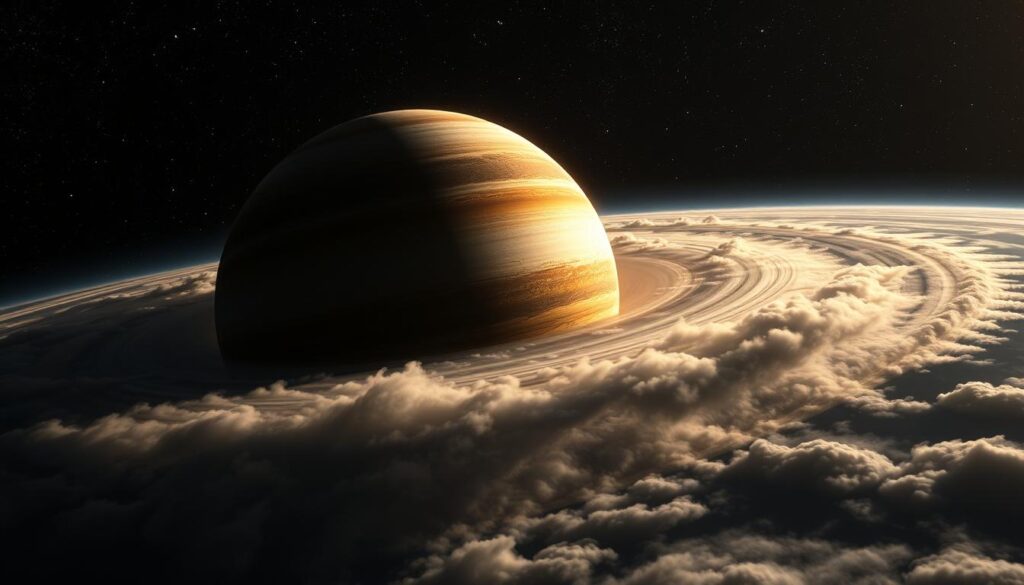
An object that weighs 100 pounds on Earth would weigh less on the Moon. This is because the Moon’s gravity is weaker, even though the object’s mass stays the same. This difference between mass and weight is key in physics.
Density is mass per unit volume. It’s a key property for understanding materials and their behavior under different conditions.
In summary, mass is a fundamental idea in physics. It affects how objects move and interact with gravity. Knowing about mass and density is essential for a deep understanding of physical phenomena.
How Mass Affects Everyday Life
Mass is more than just a scientific idea. It impacts our daily lives in many ways. Everything we touch and see is made of matter. Knowing about mass helps us understand our surroundings better.
Mass affects how objects weigh and interact. For example, lifting a heavy object shows the effect of its mass. The more massive an object is, the harder it is to move.
Mass and Energy: It’s key to know the difference between mass and energy. Mass is the amount of matter in something. Energy is the ability to do work. The famous equation E=mc2 shows that mass can turn into energy, and vice versa. This idea is vital in nuclear physics and has many uses.

Understanding mass helps us make better choices in our daily lives. For example, the mass of a product can show its quality or amount. In sports and fitness, knowing your body mass is important for health and performance.
The Role of Volume: Mass is about the amount of matter, while volume is about the space it takes up. Knowing the difference between mass and volume is important in science and everyday life. For instance, a balloon with air has a big volume but little mass. A small lead ball has a lot of mass but takes up little space.
In summary, mass is a big part of our daily lives. It affects the objects we use and how we see the world. By understanding mass and its difference from volume, we can appreciate the world more.
The Role of Mass in the Universe
Mass is a key concept in astronomy. It helps us understand galaxies, stars, and other objects in space. It’s vital for grasping how the universe works.
Mass and gravity are closely related. The more mass an object has, the stronger its gravitational pull. This is based on Newton’s law of universal gravitation. It explains how objects attract each other.
In the universe, mass affects an object’s gravitational pull. The more massive an object is, the stronger its gravitational field. This is why big galaxies and clusters warp space around them.
Astronomers use specific terms to describe mass. They say objects are more or less massive, not heavy or light. This helps them understand the universe better.
Mass plays a big role in the universe. It affects how objects move and how the universe changes over time. As scientists learn more, they uncover the universe’s secrets.
Understanding mass is key to unlocking the secrets of the universe. By studying mass, scientists can learn more about the cosmos. This helps us understand the universe’s many mysteries.
Mass vs. Volume: What’s the Difference?
Mass and volume are related but different. Mass is the amount of matter in something. Volume is how much space it takes up.
The SI unit for volume is the cubic meter (m3). For smaller amounts, cubic centimeters (cm3) are used. Liquids are usually measured in liters (L) or milliliters (mL).

Measuring Volume
How you measure volume changes based on the substance. Solids use geometric formulas if they’re regular shapes.
Irregular shapes need displacement methods. Liquids and gases are measured differently. Liquids use containers of known volume. Gases are measured by their container’s volume.
Knowing the difference between mass and volume is key. It helps calculate density, which is mass per unit volume. Density is vital in science and engineering.
Mass in Health and Nutrition
Understanding mass is key for good health and nutrition. In nutrition, mass helps measure food nutrients. This is important for knowing what we need and managing health.
Mass is also key in nutrition labels. It shows how much protein, carbs, and fats are in our food. Knowing this helps us choose healthier options.
In health, mass is used to check body weight. This is a big health indicator. Watching body weight changes can spot health issues early.
Also, knowing the mass of nutrients is vital for custom nutrition plans. This is true for people with special diets. They need to know exactly what they’re eating.
In short, mass is very important in health and nutrition. It helps us understand what we eat and how it affects our health. Accurate measurements are key to making smart health choices.
Technological Applications of Mass
Technological progress depends a lot on measuring mass accurately. This is true in many areas, like science and manufacturing. Knowing and measuring mass well is key.
To measure mass, people use a balance. In labs, they often use a triple beam balance or an electronic balance. These tools help with precise measurements for science and quality checks.
Getting mass right is very important. In pharmaceutical manufacturing, knowing the exact amount of ingredients is essential. It makes sure drugs work right and are safe. In material science, knowing the mass of materials helps study their properties.
“The precision of mass measurement directly impacts the validity of scientific research and the quality of industrial products.”
New tech is making mass measurement better. Modern electronic balances are more precise and easy to use. Also, nanotechnology lets us measure mass at the nanoscale.
Mass plays a big role in tech, not just in measuring it. For example, in making energy storage devices like batteries. The mass of materials affects how much energy they can hold and how well they work.
In summary, mass has many important roles in technology. As tech keeps getting better, understanding and measuring mass will become even more critical.
The Future of Mass Research
New trends in mass research are changing how we see the physical world. Scientists are always finding new ways to measure and study mass. This helps us learn more about the world around us.
Technology and science are key to the future of mass research. Better tools will help us understand mass at all scales. Advances in quantum physics and materials science are important for this.
Mass spectrometry is getting a lot of attention. It’s used in fields like environmental science, pharmaceuticals, and forensic analysis. Improvements in mass spectrometry techniques could lead to big discoveries in disease diagnosis and drug development.
Research into mass’s fundamental nature will keep going. This could give us new insights into the universe. Such findings could change how we see cosmic phenomena and matter under extreme conditions.
The mix of theoretical research and practical use will be key. The future of mass research is exciting. It promises to impact science and technology in many ways. By exploring these trends, we can grasp the importance of mass in our universe.
Conclusion: Embracing the Significance of Mass
Mass is key to understanding our world and the universe. It’s important in physics and affects our daily lives. Mass is behind many things we see and experience.
Knowing about mass helps us understand the universe better. It ranges from tiny particles to the vast cosmos. As scientists learn more, we’ll see new discoveries in tech and health.
By understanding mass, we see the world’s complexity. As we learn more, we might find new ways to change our lives and see the universe in new ways.