
The world of toy making has changed a lot with 3D printing technology. Now, we can make customized toys that fit what each person likes. This makes playtime more fun and personal.
3D printing lets designers and makers create things they couldn’t before. It’s opened up new ways to be creative and innovative in toys.
More people want customized toys for unique play experiences. This has made 3D printing toys more popular. It’s an exciting time for making toys.
What is a 3D Printer?
3D printing technology has changed many fields, like toy making. It makes complex designs easy to create.
A 3D printer is a machine that makes 3D objects from digital files. It uses materials like plastics, metals, and ceramics.
The process adds layers of material one by one. This lets us make objects with detailed designs. These designs are hard to make with old ways of making things.
There are many 3D printing technologies out there. Fused Deposition Modeling (FDM), Stereolithography (SLA), and Selective Laser Sintering (SLS) are some examples. Each has its own benefits and uses.
In toy making, FDM is often used. It’s affordable and works with many materials.
3D printing helps make toys fast. Designers can try out and improve their ideas quickly.
Benefits of 3D Printing Toys
3D printing has changed the game for making unique, personalized toys. It lets parents and creators make toys that fit a child’s interests and likes.
One big plus of 3D printing toys is making customized toys that spark a child’s creativity. For example, a dinosaur fan can get a custom dinosaur toy with cool details. These details are hard to find in regular toys.
Enhancing Play Experience
When kids have toys that match their interests, playtime gets better. 3D printing lets us make complex shapes and designs that grab kids’ attention. Plus, designing and printing a toy can teach kids about design, tech, and making things.
Let’s say a kid wants a special toy car. They can design it with their favorite colors or designs. This makes the toy more fun and gives them a sense of pride.
3D printing is also great because toys can change easily. If a kid gets bored with a toy, it can be updated or made new. This helps the toy last longer and cuts down on waste.
In short, 3D printing is a game-changer for children’s toys. It brings customization, creativity, and more fun to playtime. As 3D printing gets better, we’ll see even more cool toys in the future.
Materials Used for 3D Printed Toys
3D printing has made toy making more exciting with many materials to choose from. The right material makes a toy durable, safe, and of good quality.
PLA, ABS, and TPU are top picks for 3D printed toys. PLA is eco-friendly and easy to print with. It’s great for toys because it warps less.
ABS is strong and good for toys that need to last. But, it’s harder to print with because it warps more.
TPU is flexible and perfect for toys that need to move. It’s also good for toys that need to be elastic.
Safety Considerations
Safety is key when making 3D printed toys. The materials must be safe for kids. PLA and TPU are usually safe, but check the dyes too.
Toys should have no sharp edges or small parts that can choke kids. A smooth finish is important.
In short, 3D printing offers many materials for making fun and safe toys. Knowing about these materials helps make toys that kids love.
Designing Your Own 3D Toys
Using 3D modeling software is the first step in creating unique 3D printing toys. You can customize them to your liking. The process starts with picking the right software for your needs.
There are many 3D modeling software options out there. They cater to different skill levels and design complexities. Tinkercad is great for beginners because it’s easy to use. Fusion360 is for those who want to tackle more complex designs. SketchUp is perfect for those who know architectural or product design.
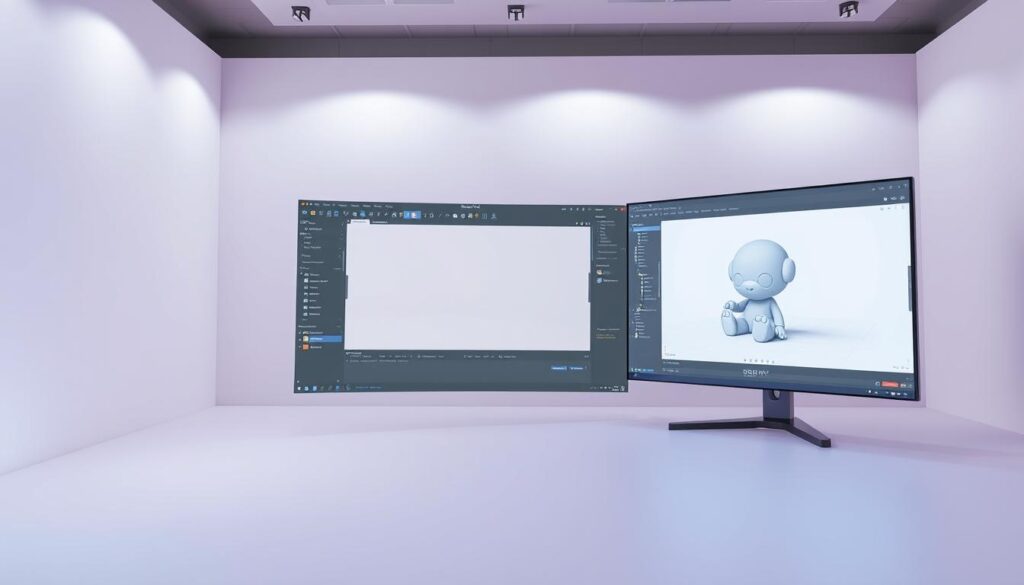
When designing your 3D toys, think about your 3D printer’s limits. Knowing what your printer can do will help you create designs that are both fun and possible to print.
Here are some tips for creating successful 3D printing toys designs:
– Start simple, even if you’re experienced.
– Make sure your design fits your printer’s build volume.
– Use software features like wall thickness and support material to help your design print right.
As you get better with 3D modeling software, try more complex designs. Add detailed features and mechanisms. The secret to great 3D printing toys is finding the right balance between creativity and technical limits.
Mastering 3D printing design opens up a world of possibilities. You can make custom figurines or functional toys that match your style.
How to Prepare Your 3D Toy Design
A well-prepared 3D design is key to a successful 3D printing project. To prepare your 3D toy design for printing, follow several important steps. These steps ensure a smooth and successful printing process.
File Preparation is the first step. You need to save your 3D model in a format that works with your 3D printing technology. The most common format is STL (STereoLithography). But, some printers also support OBJ and AMF formats.
Next, you should check your 3D model for errors. Look for gaps, holes, or other defects that could harm the print quality. Using software tools for 3D model repair can help find and fix these problems.
Then, it’s important to optimize your 3D model for printing. You might need to adjust the model’s size, orientation, and position on the print bed. Some 3D printing software can automatically create support structures if needed.
By carefully preparing your 3D toy design, you can greatly improve the quality of the final product. This attention to detail is what makes successful 3D printing projects stand out.
The 3D Printing Process Explained
The 3D printing process starts with setting up the 3D printer. It’s important to make sure it’s calibrated right for the material being used.
Next, the material is loaded into the printer. This can be filaments, resins, or powders, depending on the 3D printing technology. The material chosen will affect the product’s durability, texture, and look.
With the material ready, the printing begins. The printer follows the design file, layer by layer. It needs to control temperature, layer thickness, and material flow very precisely.
While printing, problems like layer adhesion, warping, or clogged nozzles can happen. To fix these, you might need to adjust settings, optimize the design, or pause to clear a jam.
Knowing the 3D printing process and how to solve problems is key to getting good prints. As 3D printing technology gets better, it makes creating complex objects easier, including toys.
Learning about 3D printing opens up a world of creativity. You can make custom toys and useful items with precision and care.
Post-Processing Your 3D Printed Toys
Post-processing is key in 3D printing. It helps make your toys look better. After printing, toys might have lines, rough edges, or other flaws.
Sanding is a common way to fix these issues. It smooths out lines and edges. Start with coarse sandpaper (120-150) and move to finer grits (220-240) for a better finish. Sanding carefully is important to avoid damage.
Painting also improves your toys’ look and protects them. Use paints that match your toy’s material. For example, acrylic paints are good for PLA and ABS plastics. A primer before painting helps the paint stick better and look even.
As Maker’s Muse says, “The right post-processing can turn a rough prototype into a masterpiece.” This shows how important it is to finish your toys well.
“The finishing process is where the magic happens, turning a good print into a great one.”
Other methods include varnishing or using resin for a glossy look. Chemical smoothing works for some filaments. Each method has its own tips and tricks, so research what’s best for your toys.
Spending time on post-processing can greatly improve your toys’ quality and look. It makes them more professional and appealing. Whether for fun or as gifts, post-processing is essential for a great final product.
Safety Considerations When 3D Printing Toys
When 3D printing toys for kids, safety comes first. This means picking the right materials and designing with care. Making sure 3D printed toys are safe for kids involves several important steps.
Choosing the right material is key. Non-toxic and child-safe materials are a must to prevent health risks. PLA and ABS are common choices, but always check their safety certifications.
Designing Safe Toys
The toy’s design is also vital. Avoiding small parts that could choke kids is essential. Designers should think about the toy’s age group and make sure it meets safety standards.
After printing, you can make the toy safer. Smooth out rough edges and check for any harmful materials or parts. This makes the toy safer for kids.
“The safety of 3D printed toys depends not just on the material, but also on the design and post-processing techniques used.”
By focusing on material safety, design, and post-processing, you can make sure 3D printed toys are safe. It’s a detailed process that requires a commitment to safety.
Where to Find 3D Toy Designs
Looking to explore 3D printing? You’re in luck because there are many places to find 3D toy designs. These sites range from places where people share their creations to places where you can buy designs.
Thingiverse is a top spot for 3D toy designs. It’s a community where people share their 3D models. You can find everything from simple toys to detailed figurines, all ready to print.
Shapeways is another great resource. It’s not just for finding 3D toy designs. You can also buy printed toys or get your designs printed. Shapeways uses different materials, like plastics and metals, giving you lots of options.
Using 3D toy designs from these online platforms makes starting with 3D printing easier. It lets you try out different designs and see what works. Then, you can create or change designs to fit your taste.
When looking for 3D toy designs, think about your 3D printer and the material you’ll use. This makes sure the designs fit your printer and material, making printing more fun.
Sharing Your 3D Toys with Others
The joy of 3D printing doesn’t have to end with your toys. You can share them with a community. This can be to show off your work, get feedback, or just spread joy. There are many ways to share your 3D printed creations.
Online communities are a great way to share your 3D toys. Websites and forums for 3D printing and modeling are full of people eager to see and share their work. Sites like Thingiverse, MyMiniFactory, and Pinshape are not just for sharing. They’re also for finding inspiration and learning from others.
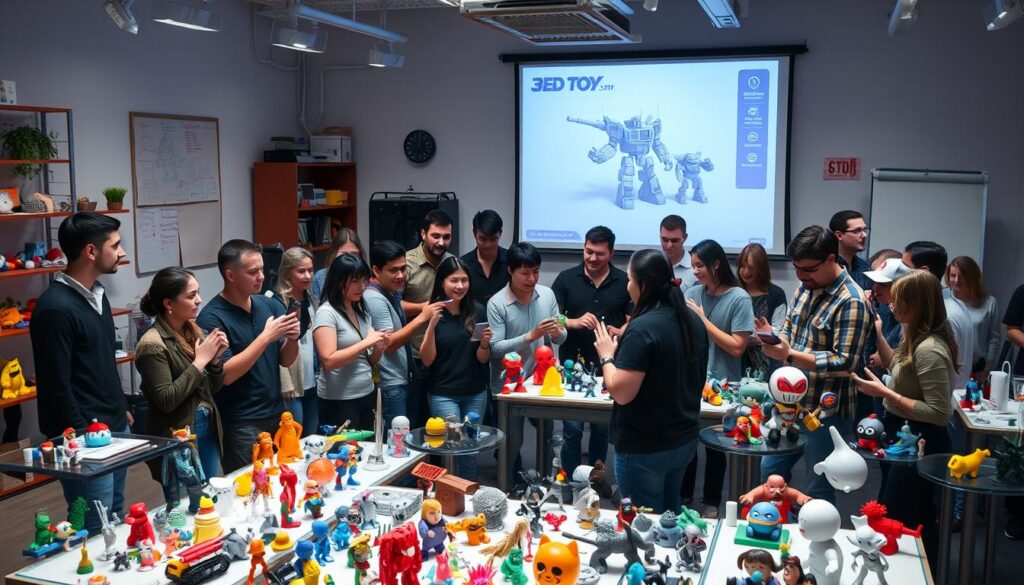
Social media platforms are another excellent way to share your 3D printed toys. Instagram, Facebook, and Twitter can help you reach many people. Use relevant hashtags and engage with 3D printing and toy collecting communities to get noticed and connect with fans.
If you want to make money from your creations, try online marketplaces like Etsy or eBay. But first, make sure you understand the rules and any legal issues of selling custom toys.
When sharing your 3D toys, think about a few things. Be careful of copyright laws, which are important if your design is based on someone else’s work. Also, be careful about what you share online to avoid legal problems.
Sharing your 3D printed toys can be very rewarding. It lets you connect with others who like what you do and might even inspire new makers. By picking the right places to share and being careful, you can enjoy sharing your creations with more people.
The Future of 3D Printing in Toy Creation
3D printing technology is changing the way toys are made. It’s making production better and opening up new creative paths in the toy world.
One big change is towards sustainable production methods. 3D printing is better for the environment. It cuts down on waste and uses materials that can be recycled.
Another big impact is on customized toys. Now, parents and kids can make toys that fit their interests. This makes playtime more fun and personal.
New materials and technologies are also coming into play. For example, biodegradable filaments are being developed. This will make 3D printed toys even greener. Also, new printing methods allow for toys with different textures and properties.
3D printing is also becoming a part of education. Schools are using it to teach design, engineering, and problem-solving. This prepares students for a world driven by technology.
As 3D printing gets better, we’ll see even more cool things in toys. We can expect to see more complex designs, faster production, and more options for customization. The future of toys is looking bright, thanks to 3D printing.
Getting Started with Your Own 3D Printer
Starting your 3D printing journey means picking the right printer. Look at print quality, how much you can print, and how easy it is to use. These factors help you choose the best one for you.
After picking your printer, follow the setup and calibration steps from the maker. Get to know the printer’s interface and software. This makes sure your printer works well.
Beginners should start with simple projects and then try harder ones. Use online guides and tutorials to learn and fix common problems.
Brands like MakerGear, Prusa, and FlashForge have great printers for beginners. Learning the basics and practicing will help you make many 3D printed items.