
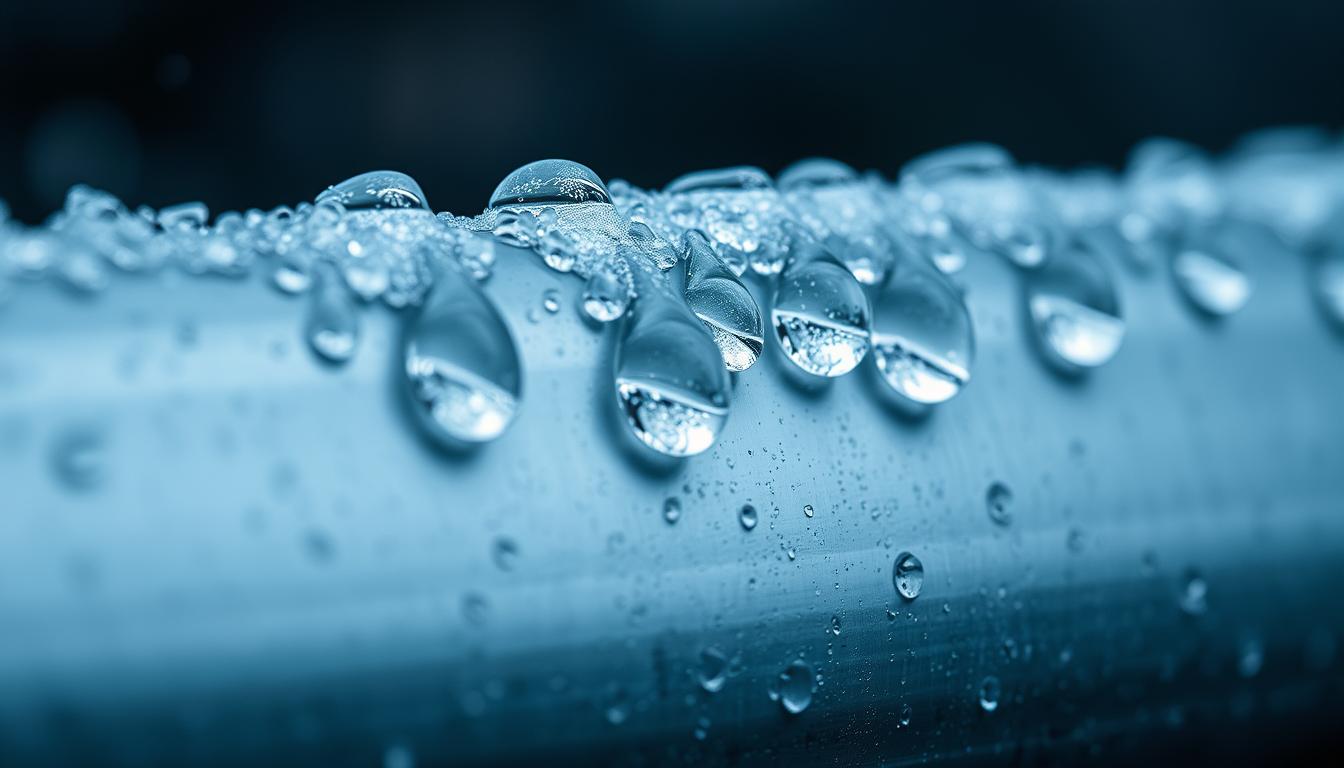
Have you ever wondered why water drops form on a cold glass or surface on a humid day? This phenomenon is a result of a simple yet fascinating process.
The formation of water drops on cold surfaces occurs due to condensation. This is when water vapor in the air cools down to its dew point. At this point, it turns back into liquid water. This process is key to understanding many everyday things, like foggy windows and dew.
Learning about condensation can give us a deeper understanding of these events. It makes for a really interesting topic to dive into.
What is Condensation?
Condensation is when water vapor turns back into liquid. This is key to many natural events and daily life.
Condensation is when water vapor in the air turns into liquid water. This happens when the air cools to its dew point. The dew point is when the air can’t hold any more water vapor.
The dew point is very important in understanding condensation. When the air hits its dew point, the water vapor turns into droplets. These droplets can form dew, frost, or even rain, depending on the situation.
In simple terms, condensation is the opposite of evaporation. Evaporation is when a liquid turns into vapor. Condensation is when vapor turns back into liquid. This process is essential in the water cycle and affects both nature and human-made structures.
The Science Behind Condensation
Condensation is all about temperature and humidity. These two things really matter.
Warm air with water vapor meets a cold surface. The air gets cooler and can’t hold as much moisture. This makes the water vapor turn into droplets on the surface.
For example, on a cold day, you might see water droplets on a cold glass. This happens because the warm air around the glass cools down. Then, the water vapor in the air turns into droplets.
How Temperature Affects Condensation
Temperature is very important in the condensation process. Cold air can’t hold as much moisture as warm air. This means cold surfaces can make water vapor in warm air condense.
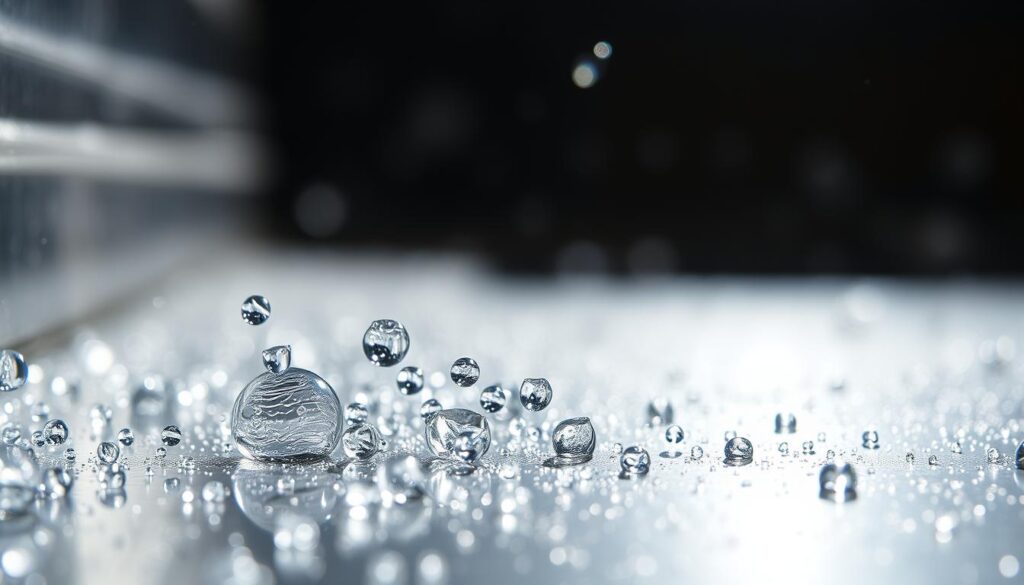
The mix of temperature and humidity is what makes condensation happen. High humidity means more water vapor in the air. This makes it more likely for condensation to happen when the air meets a cooler surface.
In short, the condensation process is closely tied to temperature and humidity. Knowing about these can help us predict and control condensation in different situations.
Common Occurrences of Condensation
Condensation happens all around us, in many parts of our lives. It’s a natural process. Warm, moist air meets a cooler surface, and water vapor turns into droplets.
Windows are a common place to see examples of condensation. In the cold months, the difference in temperature between inside and outside causes foggy windows.
Mirrors and cold drinks also show condensation. A hot shower makes mirrors fog up. A cold drink on a table will get water droplets as it cools the air around it.
In nature, condensation is key in cloud and rain formation. Water vapor in the air turns into clouds when it condenses on particles. These clouds can lead to rain or other precipitation when they get too heavy.
Understanding everyday condensation helps us see the science behind many things. It shows us how to deal with it, like keeping our windows clear or understanding weather patterns.
Factors Affecting Condensation
Condensation is shaped by surface characteristics and the environment. The surface type, whether smooth, rough, or cold, greatly affects condensation.
A smooth surface leads to even condensation. But a rough surface causes water droplets to form unevenly. This is because rough surfaces have more nucleation sites for water vapor.
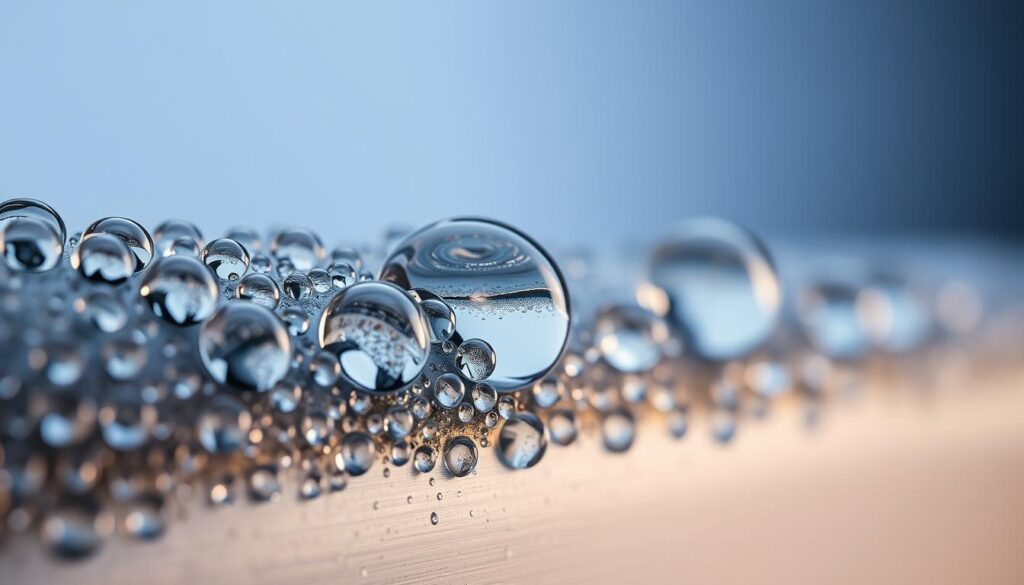
Environmental factors like air movement and humidity also play a big role. Air movement can either help or hinder condensation, depending on the air’s humidity.
Knowing these condensation factors is key to managing it. By adjusting the surface and environment, we can control condensation in many areas, from industry to home.
In summary, the mix of surface type and environment decides if and how condensation happens. By understanding and adjusting these condensation factors, we can either reduce or increase condensation as needed.
The Role of Dew Point in Condensation
The dew point is key to understanding condensation. It’s the temperature when air is full of moisture and can’t hold more water vapor. This leads to condensation.
When air cools to its dew point, water vapor turns into liquid water. This can form dew, frost, or rain, depending on the temperature. This process is important in nature and our daily lives. It affects weather, farming, and how comfortable we feel at home.
Knowing about dew point helps predict the weather and manage moisture issues. For example, a high dew point means high humidity. This can make us feel uncomfortable and cause mold in buildings. On the other hand, a low dew point means dry air. This can dry out our skin and cause other problems.
Significance of Dew Point
The dew point is very important in weather studies. It tells us about the chance of condensation and rain. By watching dew point temperatures, weather forecasters can predict weather better. They can also warn us about weather dangers.
Types of Surfaces That Experience Condensation
Certain surfaces are more likely to get condensation because of their nature. Cold surfaces, for example, can cool the air around them. This cooling causes water droplets to form.
Condensation happens on surfaces we see every day. Cold surfaces in refrigerators or freezers are common places for it. Even outside, surfaces that get chilly in the mornings can show condensation.
The material and temperature of a surface affect its chance of getting condensation. Metal surfaces, being good at conducting heat, quickly lose it. This makes them more likely to get condensation.
On the other hand, surfaces that keep heat in or are warmer tend to avoid condensation. Knowing how different surfaces work helps us manage condensation. This is true for both home appliances and outdoor areas.
Knowing which surfaces are most likely to get condensation helps us act early. We can use insulation or improve air flow to lower humidity.
The Impact of Condensation in Homes
Too much condensation in homes can cause big problems. It can harm the house’s structure and the health of people living there. Condensation in homes happens when warm, moist air meets cooler surfaces, creating water droplets.
Indoor condensation is a big issue, mainly in places with bad air flow like bathrooms, kitchens, and basements. When condensation builds up, it makes surfaces damp. This dampness helps mold and mildew grow.
Mold not only damages walls, ceilings, and things you own but also is bad for your health. Being around mold spores can cause allergies, breathing problems, and other health issues. Also, dampness can weaken a building’s structure by damaging wood and making materials rot.
To fight indoor condensation, homeowners can do a few things. It’s important to have good air flow. This can be done by putting in extractor fans in kitchens and bathrooms and opening windows often. Also, using dehumidifiers in damp spots can lower moisture levels.
By knowing why and how condensation in homes happens, homeowners can stop its bad effects. This helps keep their homes healthy and strong.
Ways to Prevent Condensation Indoors
Reducing condensation indoors improves air quality and protects your home. It keeps it safe from damage.
Several strategies can help. Improving ventilation is a top method. You can install vents or use extractor fans in moist areas like kitchens and bathrooms.
Using dehumidifiers is also effective. They remove extra moisture from the air. This lowers the chance of condensation.
Good insulation is key too. It keeps your home’s temperature steady. This stops warm air from meeting cold surfaces and causing condensation.
As noted by a condensation expert, “Proper ventilation and insulation are key to preventing condensation.”
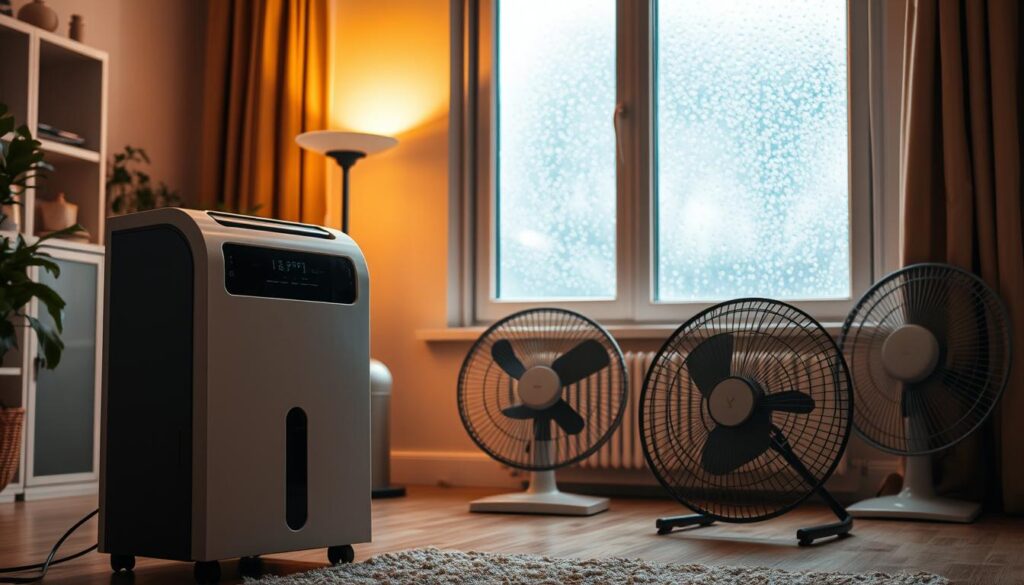
By using these methods, homeowners can greatly cut down on condensation.
The Importance of Condensation in Nature
Cloud formation and precipitation are key parts of our climate. They happen because of condensation. This is when water vapor in the air turns into liquid water, forming clouds.
This process is vital for our planet’s water cycle. It leads to rain and snow, which shape our weather and water distribution. The role of condensation in nature is huge, supporting life on Earth.
In the air, condensation happens when water vapor is too much for the air to hold. It turns into droplets around particles, creating clouds, fog, and dew.
Condensation is key in making clouds. Clouds are important for our climate, affecting temperature and weather. They help balance the planet’s energy.
Also, condensation is linked to the water cycle. It helps water move from the sky to the ground. This is essential for water sources, farming, and ecosystems.
To wrap it up, condensation is a critical process in our environment. It’s behind cloud formation, precipitation, and the water cycle. Understanding condensation helps us see how our world works.
Benefits of Controlled Condensation
Controlled condensation offers many benefits, affecting both industrial processes and climate control systems. It helps industries run better, use less energy, and avoid damage from excess moisture.
Industrial Applications of controlled condensation are seen in manufacturing. Here, managing humidity and temperature is key. For example, in making sensitive electronics, it keeps the environment stable. This reduces the chance of damage to components.

In climate control systems, controlling condensation is vital for air quality and comfort. HVAC systems can better manage humidity. This makes indoor spaces more comfortable and lowers mold risks.
Controlled condensation also benefits the environment. In farming, it keeps humidity levels right in greenhouses. This helps plants grow well.
Energy Efficiency is a big plus of controlled condensation. It helps industries and buildings use less energy. This saves money and cuts down on harmful emissions.
Interesting Facts About Condensation
Condensation is a fascinating phenomenon that occurs in various aspects of our lives. One of the most unique condensation phenomena is the formation of dew on grass and leaves. This happens when the air reaches its dew point.
Condensation plays a role in unusual weather phenomena like fog and mist. It also influences the Earth’s water cycle, affecting climate and weather patterns.
Condensation is seen in unexpected places, such as on cold beverages or in cloud formation. Understanding condensation helps us appreciate the complex processes that shape our environment.
By exploring these interesting facts, we can gain a deeper understanding of condensation’s importance in our daily lives. It shows its impact on the world around us.