
Creating a DIY kite is a fun activity for all ages. You only need a few things like a plastic bag, string, sticks, scissors, and ribbon. With these, you can make a beautiful kite.
To make a kite, you first create the frame. Then, you attach the sail and add a flying string and tail. This fun activity boosts your creativity and lets you enjoy the outdoors.
Making your own Kite Craft brings joy. You get to fly a kite you made yourself. It’s a great way to have fun outside.
Understanding Kite Craft Basics
Starting a kite project means knowing the basic parts of kite making. It’s about mixing simple materials to make your kite come alive. You’ll need two wooden dowels, a plastic bag or thin plastic sheet, string, scissors, and glue.
The dowels should be under 2 inches in diameter and about 40 inches long. Choosing the right dowels is key because they are your kite’s skeleton. The plastic bag or sheet will be the sail, catching the wind and lifting your kite.
The quality of your string and glue matters a lot. Your string needs to be strong and not break easily. The glue should stick well, keeping the sail and frame together.
Knowing what each material does is important for making a good kite. By picking the right materials and understanding how they work together, you can make a kite that’s fun to fly and lasts long.
Selecting the Right Kite Design
For those new to kite flying, picking a design that’s easy to make and fly is key. The right design can greatly enhance your experience, whether you’re a hobbyist or just want to enjoy the outdoors.
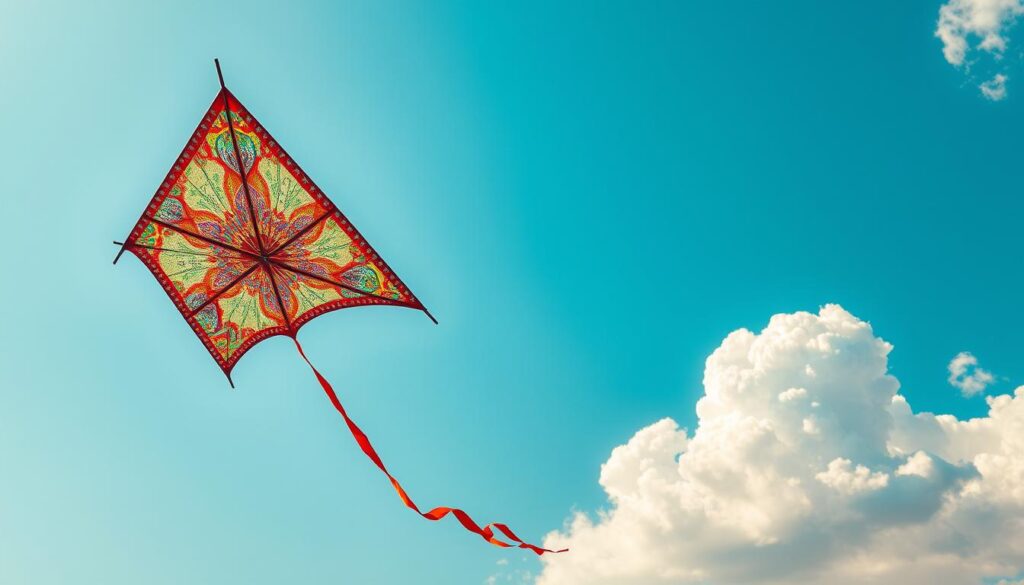
Popular kite designs include the diamond, delta, and sled kites. These designs are simple, reliable, and great for beginners. The diamond kite is a classic, known for its stability and easy build. The delta kite is loved for its great maneuverability. The is simple and performs well.
When picking a DIY kite design, think about your skill level and what you like. Beginners should start with simple designs that need few materials and little building know-how. As you get better, you can try more complex designs with advanced features.
The best kite design depends on what you aim to do. Whether you want a fun project or an exciting flying experience, there’s a kite for you.
Preparing Your Workspace
A clean, flat area is key for a great kite making project. You need a space where you can spread out without distractions.
First, clear a big, stable surface like a table. Make sure it’s dust-free. Then, get all your tools and materials ready. This includes scissors, glue, string, and dowels.
Keeping your workspace tidy makes kite making more enjoyable. Use small containers for things like glue and scissors. This saves time and reduces stress from lost items.
Having a dedicated area for your workspace preparation helps you focus on the fun parts of kite making. A neat workspace makes the project more enjoyable.
Crafting the Frame
A well-crafted frame is key for a kite that flies smoothly. It supports the sail and gives the kite its shape.
To build the frame, you need two dowels, one longer than the other. Place the longer dowel flat and put the shorter one on top, making a cross shape.
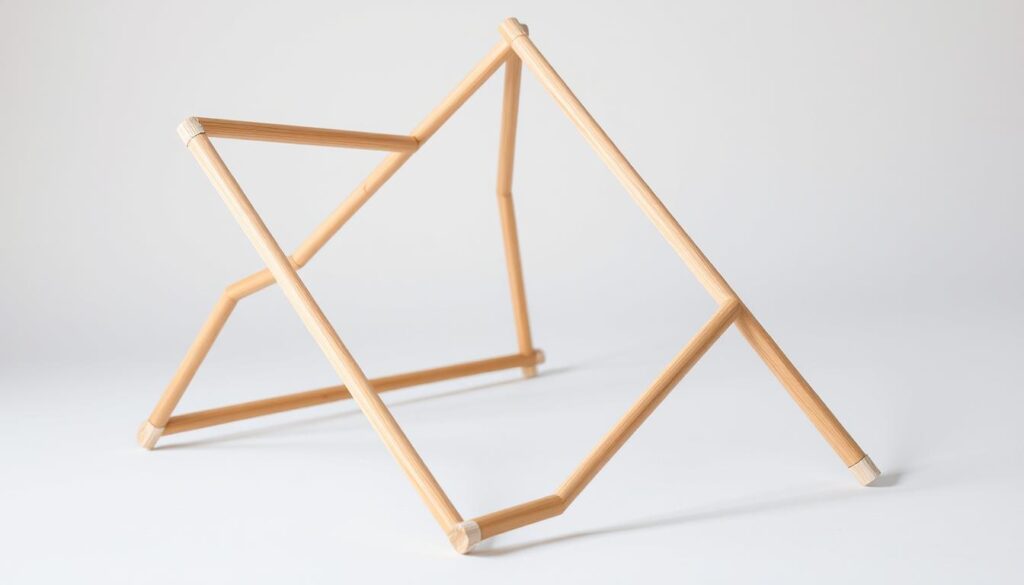
Wrap string around where the dowels meet to tie them together. Add a bit of glue to keep it tight. This makes your DIY kite have a strong kite frame.
Tying the Frame Together
Ensure the dowels are tightly tied. A loose frame can make the kite fly poorly. Also, check that the frame isn’t too heavy for the sail.
By following these steps, you’ll get a solid kite frame. A good frame is essential for a great flying experience.
Creating the Sail
A well-designed sail is key for a kite’s performance and stability. The sail catches the wind, lifting the kite into the air.
To make the sail, you need to cut the plastic bag or sheet to fit the frame. Leave some extra material around the edges. This extra will help secure the sail to the frame.
There are ways to attach the sail to the frame. You can use glue or fold the edges over the dowels and tie with string. Your choice depends on what you prefer and what you have.
When attaching the sail, make sure it’s tight and even. This ensures your kite flies smoothly and keeps its shape in the wind.
Creating the sail is a vital part of kite making. It needs detail and patience. With the right materials and a good sail, your kite will fly high.
Adding Tail and Accessories
Adding a tail to your kite makes it look better and helps it stay stable. You can use ribbons or streamers for the tail, attaching them to the kite’s back.

The tail’s length and weight are key for balance and stability. A longer tail adds stability but might make the kite fly lower.
Choosing the Right Materials for your kite tail is important. You can pick from fabric, plastic, or paper ribbons and streamers. Pick based on durability, weight, and look.
Designing the Tail for Optimal Performance
When making the tail, think about the length and weight and how they match your kite. For big kites, a longer, heavier tail is often needed for stability.
Other kite accessories can also boost your kite’s look and performance. You might add decorations, stabilizers, or even sound or light makers.
By picking and designing your tail and accessories well, you can make your kite fly better and more fun to use.
Decorating Your Kite
The decoration phase is where you can let your creativity shine. Make your DIY kite truly unique. Decorating your kite not only enhances its appearance but also makes it more enjoyable to fly.
You can decorate your kite using various methods. Markers and paint are great for adding colorful designs and patterns to your kite’s sail. You can also attach colorful ribbons and streamers to give your kite a more dynamic look.
When decorating, consider the overall aesthetic you want to achieve. You can opt for a themed design, such as a favorite animal or character, or go for a more abstract look. The key is to have fun and be creative with the kite decoration process.
Remember, the decoration of your kite is a reflection of your personality. So, don’t be afraid to experiment and try out different ideas. With a little creativity, your DIY kite will not only fly high but also stand out with its unique design.
Assembling the Final Product
Getting your kite ready to fly needs careful steps and attention. With all parts ready, you can now focus on the last steps to make your kite soar.
The first thing to do is attach the flying string to the kite. You need to tie the string to the frame well, making sure it’s strong for the wind. Also, creating a bridle is key. It helps keep the kite steady and controls its angle to the wind.

To make a bridle, tie the flying string to the kite’s frame at several points. Adjust the length and tension to get the perfect balance. This step is very important for kite flying. It affects how well the kite flies and stays steady in the air.
After setting up the flying string and bridle, check all connections again. Make sure everything is securely attached. This final check is important to avoid problems when flying.
Now that your kite is fully put together, you’re ready for the fun part. It’s time to take it to the skies and enjoy the excitement of kite flying.
Test Flying Your Kite
The final step is to test fly your kite and make any needed adjustments. This is an exciting moment. You get to see your creation soar through the air.
To launch your kite, have someone hold it while you back away, or run with the kite until it catches the wind. Make sure the area is clear of obstacles and the wind is blowing at a moderate speed. If the kite doesn’t lift off immediately, don’t worry; it might need a bit more running space or a slight adjustment.
Once your kite is airborne, observe its flight. If it’s unstable or tilts to one side, you may need to adjust the bridle to improve its balance. The bridle is the string that connects the kite to the flying line, and adjusting it can significantly affect the kite’s stability.
Another key aspect is the tail of the kite. If the kite wobbles or spins, adding more tail or adjusting its length can help stabilize it. The tail adds drag, which can help keep the kite flying steadily.
Test flying your kite is not just about launching it into the air; it’s about ensuring it flies smoothly and steadily. With a few test flights and adjustments, you’ll be able to enjoy your kite to its full extent.
Enjoying Kite Flying
Now that you’ve made and put together your kite, it’s time to fly it. Look for open spaces with steady winds, like beaches or parks. This will make your flying experience safe and fun.
It’s important to watch the weather. Don’t fly your kite in strong winds or during thunderstorms. It could get damaged or be dangerous. Also, keep your kite in good shape to enjoy flying it longer.
When you fly your homemade kite, you’ll feel even more joy. See your kite up in the air and try new flying tricks. It’s a great way to enjoy the outdoors and have fun.