
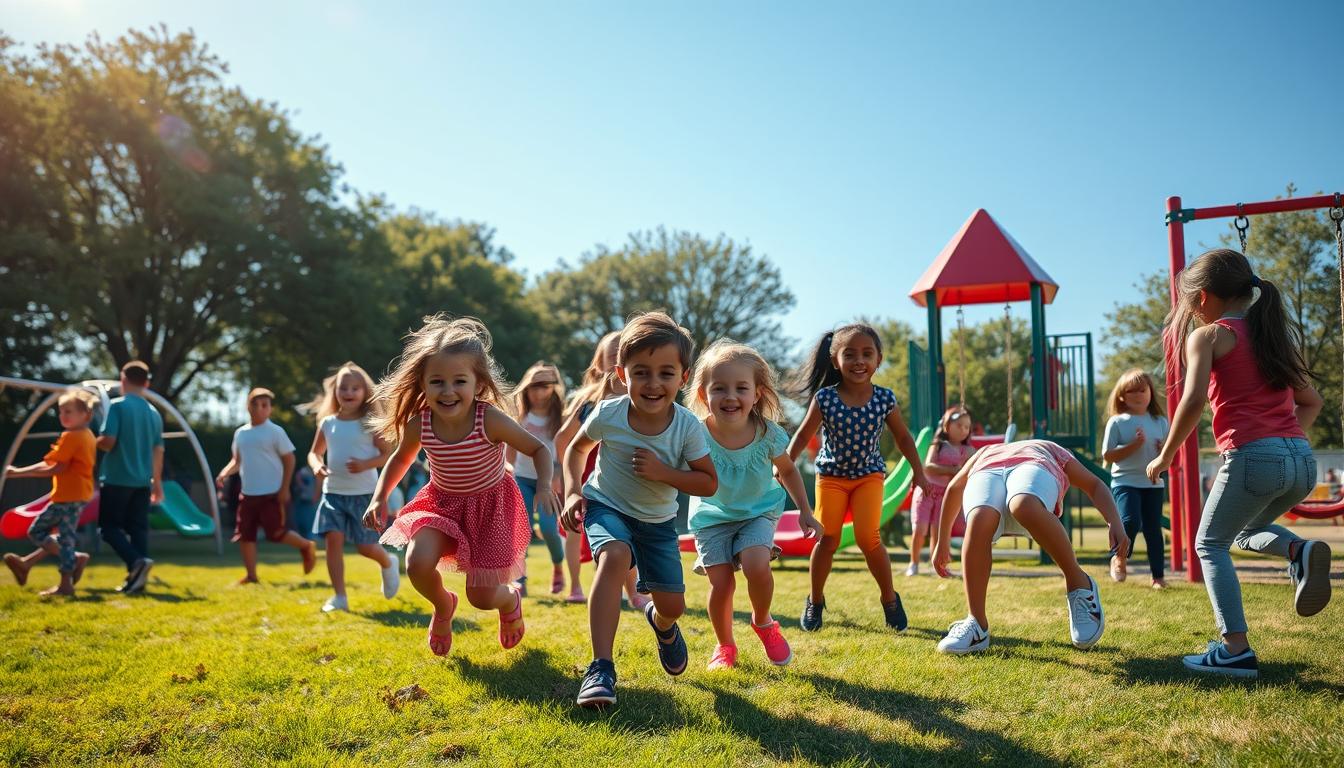
Outdoor activities are key for kids’ growth, and playground games are a fun way to get them active. These games boost physical health and help kids develop important social and emotional skills.
Playing outdoor games lets kids be creative, make friends, and learn to work together. It’s a great way to keep them happy and healthy.
In this article, we’ll look at different children’s games. We’ll talk about their benefits and fun for kids of all ages. This will help parents pick the best games for their kids.
Introduction to Playground Games
Playgrounds are more than places to play. They are key for learning and growing through play. The importance of play in childhood is huge. It lays the groundwork for many areas of growth.
Outdoor games at playgrounds are vital for kids’ all-around development. They help kids improve their physical skills like running and jumping. These games also teach important life skills like teamwork, cooperation, and communication.
Playgrounds are essential for kids’ physical and emotional growth. By playing outside, kids get better physically and learn social skills. Playground games help kids grow in many ways, including cognitively, socially, and emotionally.
Playground games help kids interact with others, teaching them social skills. The importance of play here is huge. It lets kids play together, solve problems, and make friends.
In short, playground games are key for kids’ development. They offer many benefits that go beyond the playground. They help shape kids’ physical, emotional, and social health, making them a vital part of a child’s life.
Classic Playground Games for Fun
Classic playground games have been loved by kids for many years. They offer endless fun and excitement. These games help kids work together, stay active, and learn strategy.
Games like tag are always a hit. They make kids run, dodge, and chase each other. It’s great for their heart health and agility. Red rover is another favorite. It teaches teamwork and strength as kids try to break through each other’s hands.
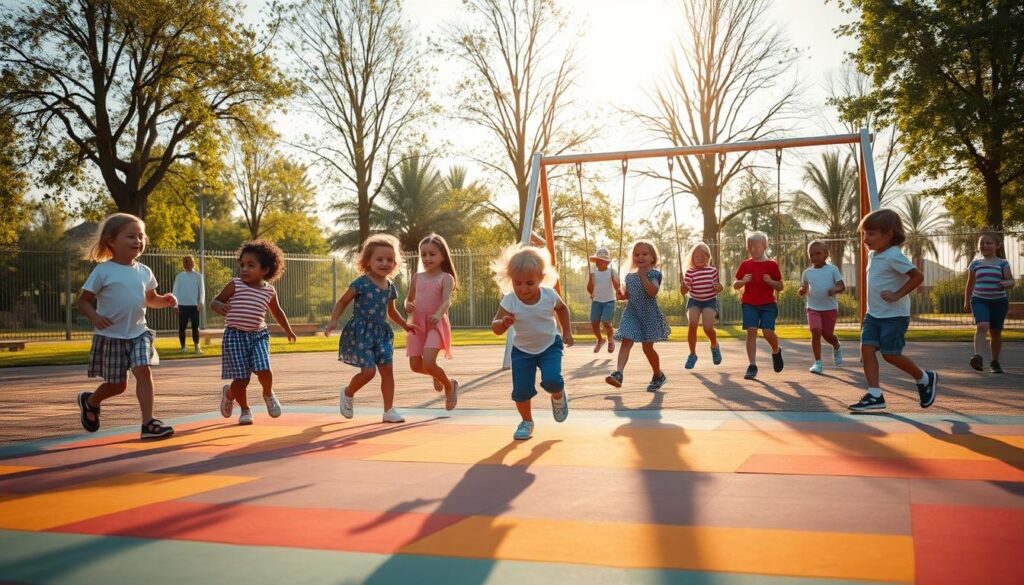
Kickball combines baseball and soccer. It teaches teamwork and coordination. It’s simple to learn and needs little equipment, making it a favorite in many places.
These classic playground games are more than just fun. They help kids develop social skills and stay fit. Playing these games outdoors is a healthy and fun way for kids to spend their time.
Playing these games every day can have a big impact on kids. They help kids feel part of a community, stay active, and make lasting memories. So, classic playground games are key to a healthy and social childhood.
Creative and Imaginative Games
The playground is a place where kids can show their creativity. Creative games like capture the flag and scavenger hunts are fun and teach teamwork and strategy.
Capture the flag is a game that makes kids think creatively and work together. It’s full of strategy and problem-solving, helping their brains grow. Scavenger hunts also spark creativity and imagination as kids search for things or complete tasks.
Simon Says is another classic game that boosts creativity and listening skills. It’s easy but teaches kids to follow directions and react fast. It’s a fun way to improve their listening and get them active.
These creative games are key for kids’ growth. They encourage imagination, strategy, and teamwork. By adding these games to playground activities, we give kids a fun way to learn and develop.
Physical Games to Promote Fitness
Playing physical games is key for kids’ growth and fitness. Games like dodgeball and activities on the monkey bars help kids get better at agility, strength, and endurance.
“Exercise is a celebration of what your body can do, not a punishment for what you ate,” an unknown source once said. This quote captures the essence of playground games. These games are not just fun; they’re vital for keeping kids active and reducing obesity risks.
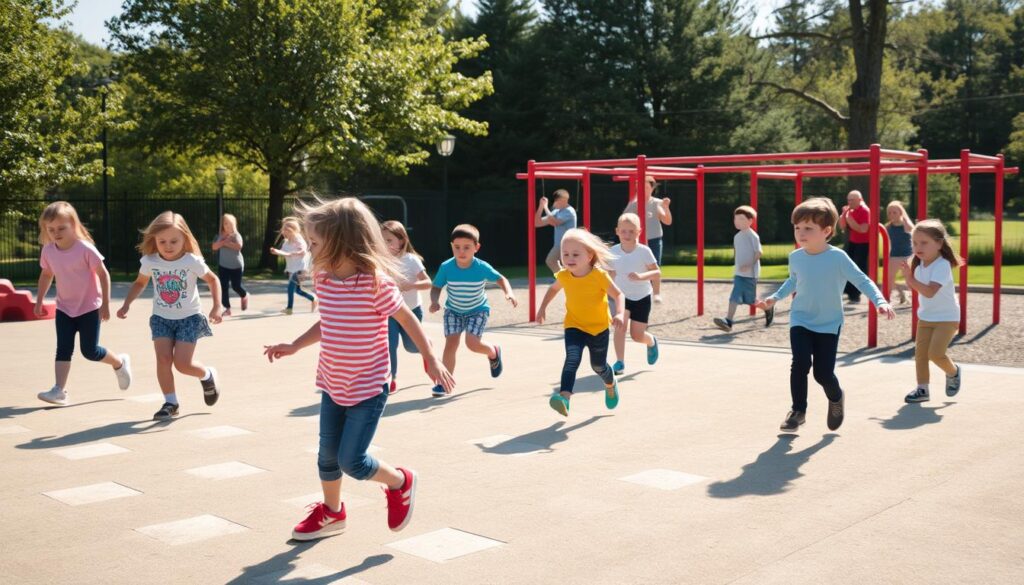
Playing dodgeball boosts kids’ reflexes and agility. It demands quick thinking and fast actions, making it great for improving physical fitness.
Monkey bars also play a big role. They help build upper body strength and coordination. Kids love the challenge, making it a fun way to stay fit.
Other games like tag, soccer, and capture the flag also promote fitness. They not only boost physical health but also teach teamwork and social skills.
“The greatest wealth is health.” – Virgil
Adding physical games to playground activities makes sure kids have fun while improving their physical abilities. This way of promoting fitness is both enjoyable and good for their health.
Games that Foster Social Skills
Social skills are key for kids. Games like freeze dance and duck duck goose help a lot. They’re fun and help kids learn to work together and talk better.
Playing freeze dance teaches kids to follow rules and take turns. They must pay attention to the music and the game’s rules. This makes them better at social skills in a fun way.
Duck duck goose also boosts social skills. Players choose who’s “it” and go around tapping others. It’s all about working together and reacting to the game.
These games help kids learn to be empathetic and value teamwork. They improve at sharing and solving problems. These are all important social skills.
Adding freeze dance and duck duck goose to playground fun is a great idea. It makes kids more confident and better at working together and talking.
Seasonal Playground Games
Seasonal games make playground fun all year round. They adapt to the weather, keeping kids active and happy. This way, every season brings its own special games.
In summer, water balloon toss is a favorite. It’s all about teamwork and strategy, and it keeps kids cool. Winter, on the other hand, is perfect for snowball fights. These games are great for physical activity and friendly competition.
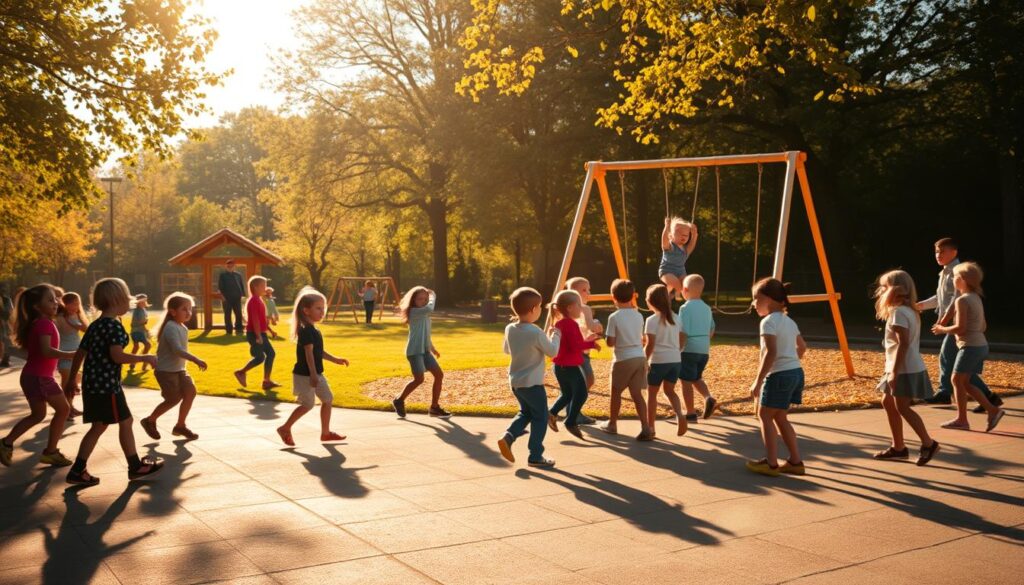
Seasonal games make playgrounds more exciting. They let kids enjoy the unique fun of each season. Whether it’s a summer game with water or a winter game with snow, there’s always something new.
Adding seasonal elements to games makes playtime more engaging. It encourages kids to be active, creative, and social all year.
Inclusive Games for Everyone
Games that include every child are the heart of a vibrant playground community. Inclusive games make sure everyone can join in and have fun.
Parachute games are a great example. They teach teamwork and coordination. The colorful parachute makes it fun to watch. Every child can help by holding the parachute and working together.
Wheelchair tag is another great example. It’s a version of tag that includes kids with mobility issues. It’s all about running, strategy, and making friends, so everyone feels welcome.
Inclusive games do more than just keep kids active. They help kids feel like they belong. By adding inclusive games to playgrounds, we make a place where everyone can have fun together.
Transforming Old Games for New Fun
Making classic games new again is a great way to capture kids’ imaginations. By customizing play, kids can see old games in a new light. This boosts their creativity and problem-solving abilities.
One easy way to make games new is by adding new rules or twists. For example, a game of hide and seek can get more exciting with a time limit or special safe zones. This makes the game more thrilling and teaches kids to think strategically.
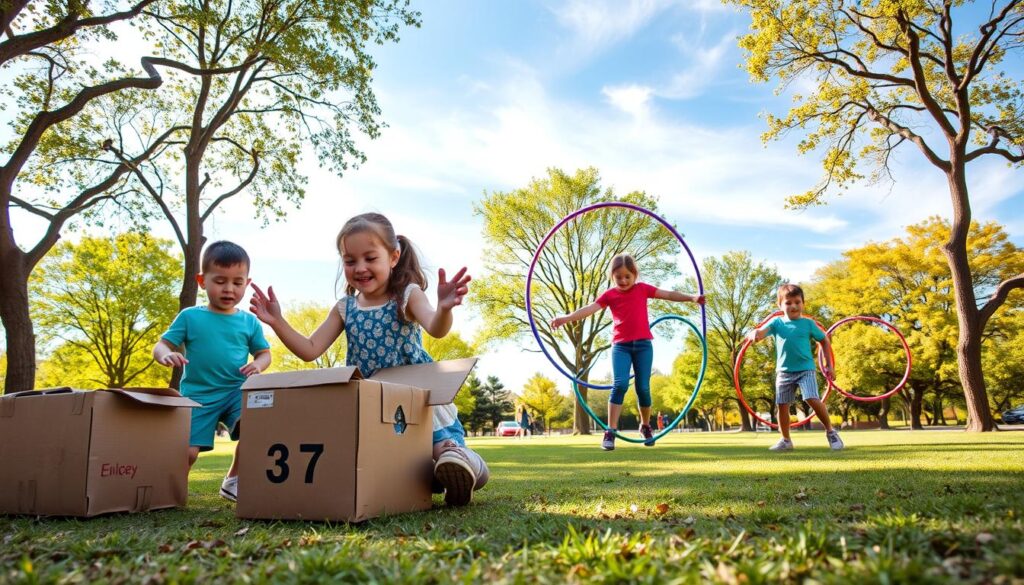
Transforming games also helps kids become more adaptable and resilient. As they adjust to new rules, they learn important life skills like flexibility and perseverance. Plus, letting kids help create new game versions encourages their creativity and makes them feel more in charge of their playtime.
Also, customizing play makes games more welcoming for everyone. Changing the rules of tag games to fit different abilities means all kids can join in and have fun.
In short, making old games new again is a fun and effective way to keep playtime exciting. By being creative and innovative, kids can enjoy their favorite games in fresh ways. They also gain valuable skills that help them in many areas of life.
Games with Educational Themes
Adding educational elements to playground games is a smart move. Educational games turn learning into a fun, interactive experience. They engage kids in ways that school might not.
Setting up a math relay is a fun way to learn math. Kids solve math problems while racing, mixing brain work with physical activity. It boosts math skills, teamwork, and keeps them active.
The alphabet scavenger hunt is another great educational game. Kids search for objects on the playground that start with different letters. It teaches letter recognition and gets them to explore their surroundings.
These games show how educational games can fit into playground fun. They make learning a key part of playtime. By adding educational themes, we create a more engaging and effective learning space.
Safety Tips for Playground Games
To keep kids safe, it’s important to follow safety tips during playground games. Making sure the playground is safe is key to avoiding injuries and creating a safe place for play.
Choosing the right equipment is a big part of playground safety. Make sure the equipment fits the age of the kids. Younger kids need softer surfaces and lower climbing structures. Supervision is also key; adults should always watch over play and step in if needed.
Setting safe play rules is another important step. Teach kids the game rules and why taking turns and respecting others is important. Safe play practices, like not pushing or shoving, should be encouraged to avoid accidents.
Also, check the playground equipment and area often. Look for hazards like sharp edges, loose parts, or uneven surfaces. Report any issues to the right people. Keeping the playground in good shape can greatly lower injury risks.
Teaching kids basic safety rules is also helpful. They should know to be aware of their surroundings and use equipment right. This helps prevent injuries and teaches kids to be safe and responsible.
By following these safety tips, we can make playgrounds safer and more fun for everyone. Our goal is to let kids have fun while keeping them safe, making playgrounds a positive and healthy place for all.
Organizing a Playground Game Day
Organizing a playground game day can make a lasting memory for kids. It’s a chance to teach them about teamwork and healthy competition. It’s more than just fun; it’s about building social skills too.
To make your game day a hit, planning is key. Choose games that fit different ages. This way, every child can join in and have a blast.
“The way to get started is to quit talking and begin doing.” – Walt Disney
When planning, mix old favorites with new games to keep everyone interested. Make sure to pick games that encourage teamwork. This helps kids learn to work together and communicate better.
A well-planned playground game day teaches kids important lessons. They learn about cooperation, fair play, and staying active. By making sure everyone plays, you create a welcoming space for all.
In short, a great playground game day needs careful planning and a focus on teamwork. With the right effort, it becomes a memorable day for the kids.
Conclusion: The Lasting Impact of Playground Games
Playground games deeply affect kids, making their childhoods unforgettable. These games shape their growth, influencing their physical, emotional, and social development.
The memories from playground games stay with us forever. They lay the groundwork for future success and joy. By introducing different games, we help kids grow into happy, healthy, and well-rounded people.
The lasting effect of playground games shows how vital they are in child development. Reflecting on their role, it’s evident they are key in shaping the next generation.