
A relay race is an exciting event that shows teamwork and coordination. It has its roots in ancient Greece. Now, it’s a key part of modern track and field events.
The heart of a relay race is the team working together. Each member uses their speed and agility for a common goal. It’s not just about individual skills but how well the team works together.
Relay racing is one of the most exciting events in track and field. It requires strategy, trust, and coordination. It’s a true test of teamwork and athletic ability.
What is a Relay Race?
Relay racing started in ancient Greece. Messengers passed information through a series of couriers. This history helps us understand today’s relay race definition. It’s a track and field event where teams take turns running parts of the race.
Now, relay races are a big part of track and field events, like the Olympics. They need speed, endurance, and teamwork. This makes them exciting for fans. The history of relay races shows how the event has changed over time.
A relay race usually has four athletes, each running a quarter of the race. The team’s success depends on smooth baton exchanges and each runner’s speed and endurance. The strategy adds to the excitement, as teams plan how to use their resources best.
The relay race definition is more than just running. It’s about coordination and strategy too. Relay races are a key part of track and field events. They attract fans worldwide with their mix of individual and team efforts.
The Dynamics of a Relay Race
Relay races are a true test of teamwork, requiring coordination and strategy among team members.
A relay race is an event where a team of four athletes run equal distances. Each athlete passes a baton to the next person. This setup demands that team members work together seamlessly, relying on each other’s strengths to achieve a common goal.
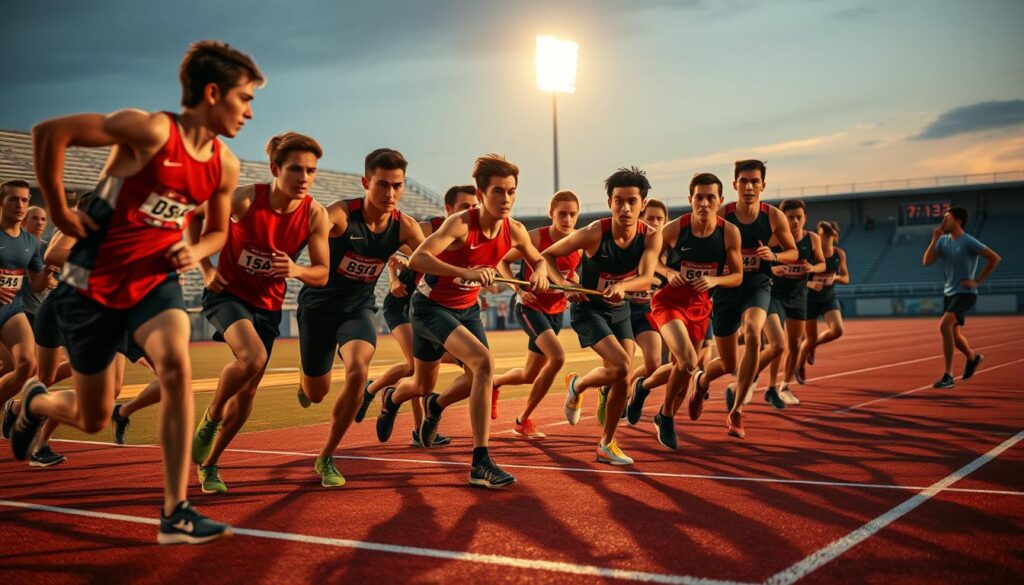
The dynamics of a relay race involve more than just individual speed. They require a cohesive unit working together towards victory. Effective communication is key, as team members need to be aware of their roles and the strategies employed by their competitors.
Strategies for Effective Teamwork
To succeed in a relay race, teams must employ relay race strategies that maximize their strengths. This includes selecting the right order for the runners, with the fastest runner often anchoring the team.
Another key aspect is the baton exchange, which requires coordination and practice to execute smoothly. Teams that master this exchange can gain a significant advantage over their competitors.
By focusing on teamwork in relay races and implementing effective strategies, teams can improve their chances of success and achieve their goals.
Essential Skills for Relay Racers
To do well in relay races, athletes need speed, endurance, and good baton exchange skills.
Developing Speed and Endurance
Relay racers must have a solid base in speed and endurance. Speed training helps them run fast. This can be done with interval training and sprint drills.
Endurance is also key. It lets athletes keep their speed up over long distances. They build endurance with longer runs and tempo runs.
The baton exchange is very important in relay races. It needs to be done smoothly to avoid penalties. Athletes should practice the exchange to make it efficient.
They need to know the baton exchange techniques, like visual and non-visual methods. Teams that get the baton exchange right can beat their rivals.
Good relay racers also need to communicate well and work well under pressure. They must take the baton and then speed up without losing pace.
This skill is not just about individual talent. It’s also about teamwork and coordination. By improving these skills, relay racers can help their team win.
Strategies for Success in Relay Races
A well-coordinated team with a solid strategy is key to winning a relay race. Teams must use relay race strategies that play to their strengths.
Choosing the right runner for each leg is critical. The most common strategy is to put your best runner last and your worst runner third. This keeps the team competitive and boosts their winning chances.
Pacing and Team Coordination Strategies
Effective pacing is essential in relay races. Teams must find a balance between speed and avoiding exhaustion. By coordinating their efforts, team members can ensure a smooth transition between legs.
Team coordination is also vital. This includes not just the runners but also those handling baton exchanges. Quick baton exchanges can save seconds, giving the team an edge.
By using these relay race strategies, teams can improve their performance. Whether it’s through careful runner selection, effective pacing, or seamless coordination, a well-planned approach is key to victory.
Preparing for a Relay Race
To do well in a relay race, teams need a strong training plan and smooth baton handovers. It’s not just about individual skills but also team preparation and strategy.
Good relay race training covers many areas. First, each team member must learn to run their part of the race well. They need to know their role and how it affects the team’s success.
“The strength of the team is each individual member. The strength of each member is the team.”
This quote by Phil Jackson shows how key teamwork is in relay races. Getting ready as a team means practicing baton handovers. These are key to winning, as they can save seconds.
Training Tips for Relay Teams
Relay teams should practice baton exchanges in different conditions. This includes various speeds and weather. Being ready for anything is important.
Teams should also improve their communication and coordination. Knowing each other’s running styles helps in perfecting baton exchanges.
By focusing on these areas, relay teams can improve their performance. This leads to success in competitions.
Equipment Needed for Relay Racing
Relay racing teams need the right gear to succeed. The most important item is the baton. It’s a key piece that must be handled carefully to avoid penalties.
The baton is usually a smooth, hollow tube made of metal or other rigid materials. Its size and weight are set by the competition’s rules. Teams must master the baton exchange to avoid disqualification.

Relay racers also need good running clothes and shoes. These items are important for performance, even if they’re not as critical as the baton.
It’s important for teams to know their equipment well. They should practice with the baton and understand the rules about its size, weight, and material. This helps them prepare for different situations during the race.
Common Challenges in Relay Racing
Relay racing is thrilling, but it has its own set of challenges. One big hurdle is the baton exchange. This part is key to a team’s success.
The baton exchange needs precision, timing, and lots of practice. Improper technique can cause delays or even disqualifications. Teams must practice hard to get this right.
Teams also face the challenge of team coordination. Each member needs to know their role and their teammates’. They must understand everyone’s strengths and weaknesses.
To tackle these issues, teams can use several strategies. They should practice the baton exchange a lot. They also need to analyze how each member performs to fit them into the team best.
By focusing on these areas and working together, relay teams can beat common challenges. This way, they can succeed in their events.
The Role of Coaching in Relay Races
A good coaching approach can greatly change the outcome of relay races. It makes the team work better together. Effective relay race coaching means knowing each team member’s strengths and weaknesses. It also means creating strategies that use these strengths well.
Coaches help teams get better by finding areas to improve and creating special training plans. They work on baton exchange, pacing, and teamwork. This boosts the team’s overall performance.
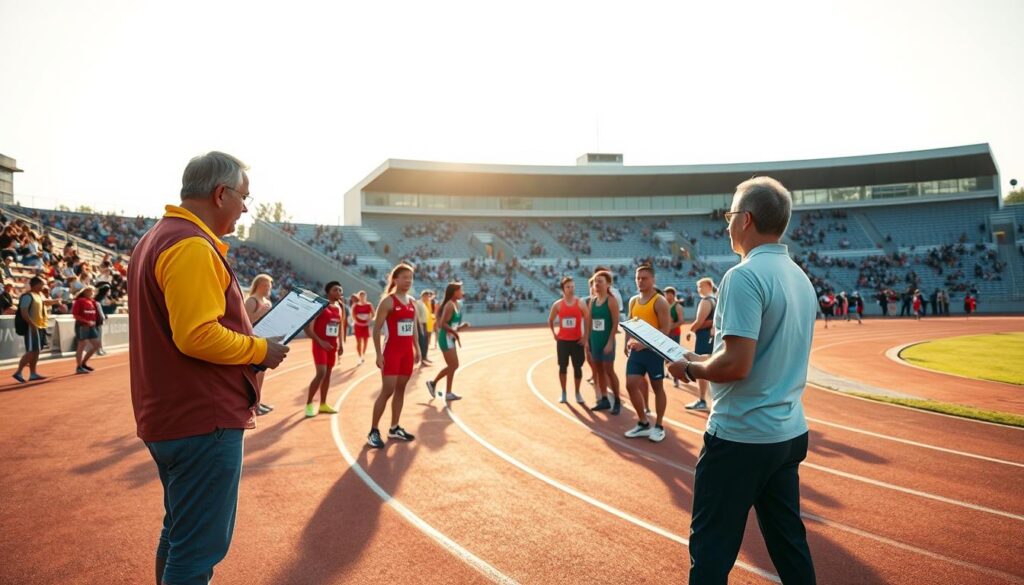
Coaches also create race strategies to help the team win. They decide who runs first, plan for race scenarios, and make decisions on when to push hard or save energy.
Coaches also build a positive team atmosphere. They encourage talking and trust among team members. This includes team activities and mental prep to help athletes stay strong under pressure.
In short, coaching relay teams is a big job that needs technical skills, strategy, and people skills. By focusing on these, coaches can really help their teams do well in relay races.
Health and Safety Tips for Relay Racers
Health and safety are key for relay racers to avoid injuries and perform better. This sport requires speed, endurance, and a focus on injury prevention and health.
Injury Prevention Strategies are essential. Proper warm-up and cool-down exercises are great for this. They prepare muscles for the race and help in recovery. Adding stretching exercises to your routine can also lower injury risks.
Nutrition is also vital. A balanced diet with carbs, proteins, and fats fuels the body. Relay racers should also drink lots of water before, during, and after races to stay hydrated.
Safety Tips include knowing the track and weather before racing. Being aware of the terrain and hazards helps athletes plan better. Relay teams should also have a clear communication plan, including baton exchange techniques to avoid dropping the baton.
Lastly, listening to one’s body is important. Relay racers should watch their physical condition and not overdo it. Rest and recovery are just as important as training. Ignoring signs of fatigue or pain can cause serious injuries.
By following these health and safety tips, relay racers can improve their performance and reduce injury risks. This approach combines training, nutrition, and safety awareness for success in relay racing.
Famous Relay Races in History
Relay races have been a part of the Olympic Games for over a century. They show off amazing athletic skills and the power of teamwork. These events are all about working together to win.
The history of Olympic relay races is filled with unforgettable moments. In 1936, the American team, led by Jesse Owens, set a new world record in the 4×100 meters relay. This victory was not just about speed. It was also a big step towards breaking racial barriers in sports.
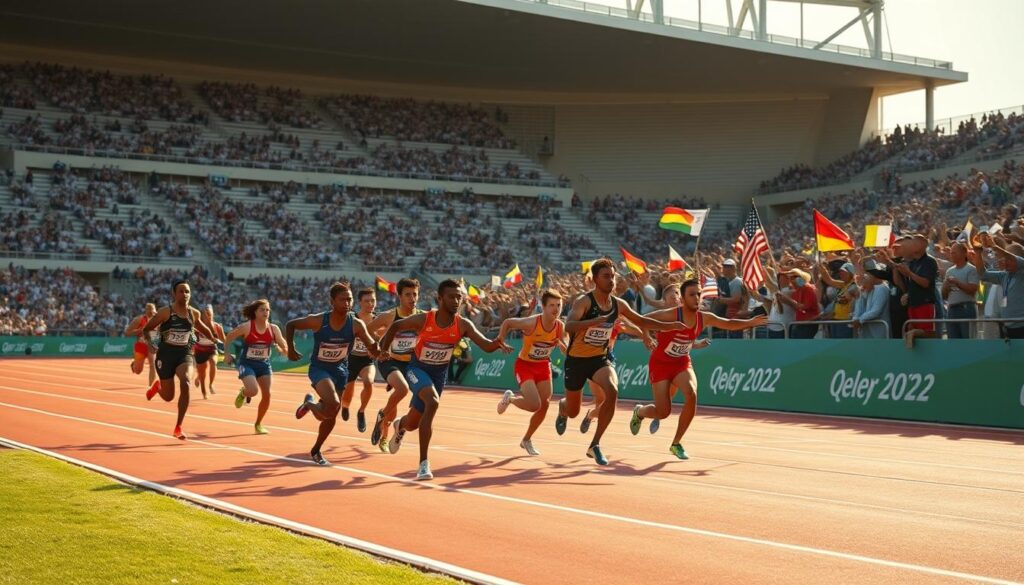
Relay races have given us some of the most exciting moments in Olympic history. For example, in 1984, the American team won the gold in the 4×100 meters relay. Carl Lewis was a key player on that team. Moments like these make relay races a big part of the Olympics.
“The 4×100 meters relay is one of the most exciting events in track and field, requiring not just speed, but precision and teamwork.”
Relay races are important not just in the Olympics. They are a key part of many international and national sports events. They teach athletes about teamwork and strategy. The skill needed for baton exchanges and team coordination makes these races thrilling.
Famous relay races have become a big part of sports history. They inspire athletes for generations. The Olympic relay races are a big draw because of their mix of speed, strategy, and teamwork.
The Future of Relay Racing
Track and field is always changing, and relay racing is no exception. New trends and innovations will shape its future. Technology, training, and athlete development will all play big roles.
Data analytics are becoming key in improving team performance. Coaches can spot areas for growth and create better training plans. This trend will make relay races more competitive and thrilling.
New equipment and apparel are also changing the game. Advances in materials and design are making racing gear faster and more efficient. As these innovations grow, relay racing will become even more exciting, pushing athletes to new levels and drawing in fans globally.