
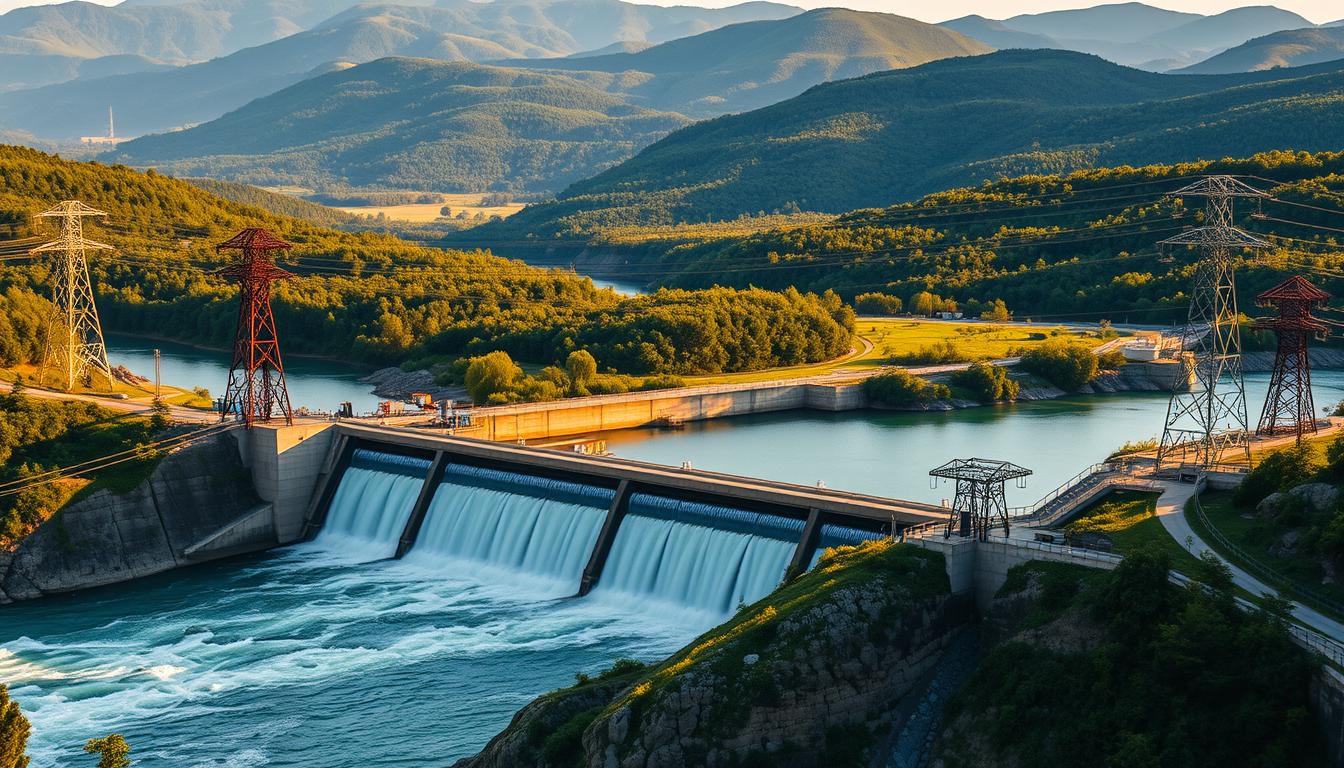
Reliable and sustainable, hydropower is a vital component of the world’s renewable energy mix. It uses water to make electricity without harming the environment or depleting resources.
Hydroelectric power plants use dams to change a river’s flow. This drives turbines, making electricity. It’s a clean and renewable source of energy that helps us use less fossil fuels and fight climate change.
The role of hydroelectric power is huge. As we move towards a greener energy future, its importance will keep growing.
What is Hydropower?
Hydropower, or hydroelectric power, is a clean and renewable energy source. It uses water to make electricity. This method taps into the power of moving water, like rivers or ocean tides.
To make electricity, hydropower changes a river’s flow with a dam or diversion. This creates a reservoir that holds water. The water then flows through turbines to generate electricity.
The water cycle is key to hydropower. It constantly recharges, making hydropower sustainable and renewable. Water evaporates, condenses, and falls back to Earth, refilling rivers and reservoirs for ongoing power.
Hydropower plants vary in how they operate. There are run-of-river, storage, and pumped storage systems. Each type has its own benefits, adding to hydropower’s diversity.
Hydropower’s use of the water cycle makes it clean. It doesn’t burn fossil fuels, so it doesn’t release greenhouse gases when making electricity.
The History of Hydropower
For centuries, humans have used water to make energy. This has grown into the advanced hydropower technology we see today. The story of hydropower’s growth from ancient times to now is one of creativity and change.
The first use of water power was in ancient times. People used water wheels to grind grain and power simple machines. This early technology helped start the growth of more complex systems later on.
Evolution of Hydropower Technology
The hydropower technology has seen big steps forward. In the late 1800s, the first hydroelectric power plants were built. This was the start of hydropower as a source of electricity. Ever after, technology kept getting better, with new turbine designs, more efficient generators, and better dam building methods.
Now, hydropower is a key part of the world’s sustainable energy mix. It’s a clean, renewable way to make electricity. It helps us use less fossil fuels and fight climate change.
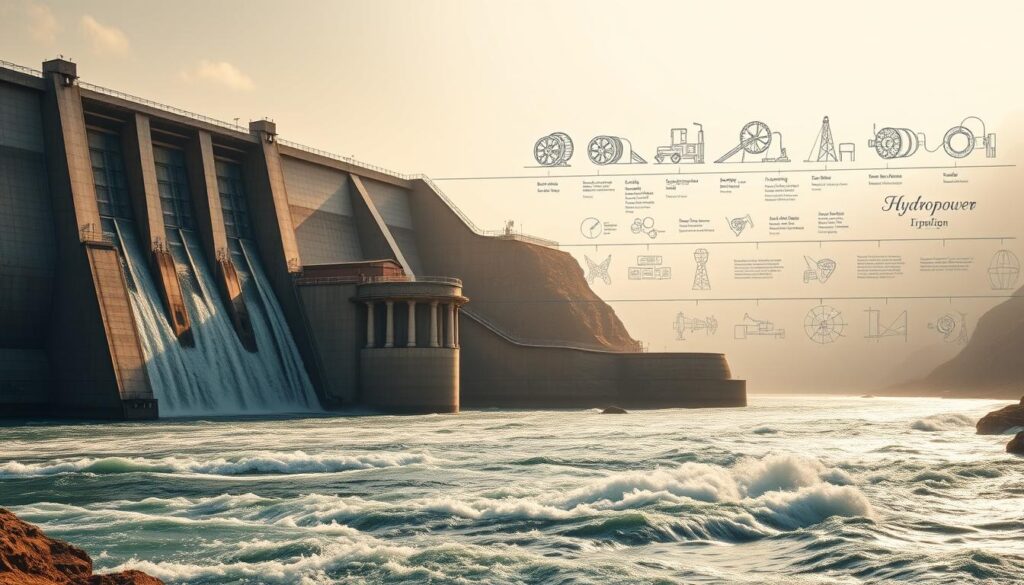
The history of hydropower is more than just tech growth. It’s also about how it has helped communities and the environment. As we look for more green energy, knowing about hydropower’s history can show us its future importance.
How Hydropower Plants Function
To grasp how hydropower plants operate, it’s key to understand their main parts and their functions. A typical plant has a dam, penstock, turbine, and generator.
The journey starts with the dam, which holds water in a reservoir. This water then moves through the penstock, a big pipe that takes it downhill to the turbine.
As the water flows through the penstock, it picks up speed and pressure. This makes the turbine spin. The turbine is linked to a generator, which turns the turbine’s energy into electricity generation.
“Hydropower is a clean and renewable source of energy, making it an attractive alternative to fossil fuels.” Using hydropower helps us use less non-renewable resources. This move towards sustainability is good for our energy future.
In the realm of renewable energy, hydropower plants are key. They provide electricity reliably with less harm to the environment than traditional power plants.
“The development of hydropower has been a cornerstone of renewable energy strategies worldwide.”
Hydropower plants are essential for a greener energy system. Their efficiency and dependability are vital for our global energy mix.
Benefits of Hydropower
The benefits of using hydropower are huge, helping both the planet and our wallets. It’s a renewable energy that helps us use less fossil fuels and fight climate change.
Hydropower is great because it makes energy without polluting. This makes it better for our planet than old fossil fuels. It helps us build a greener energy future.
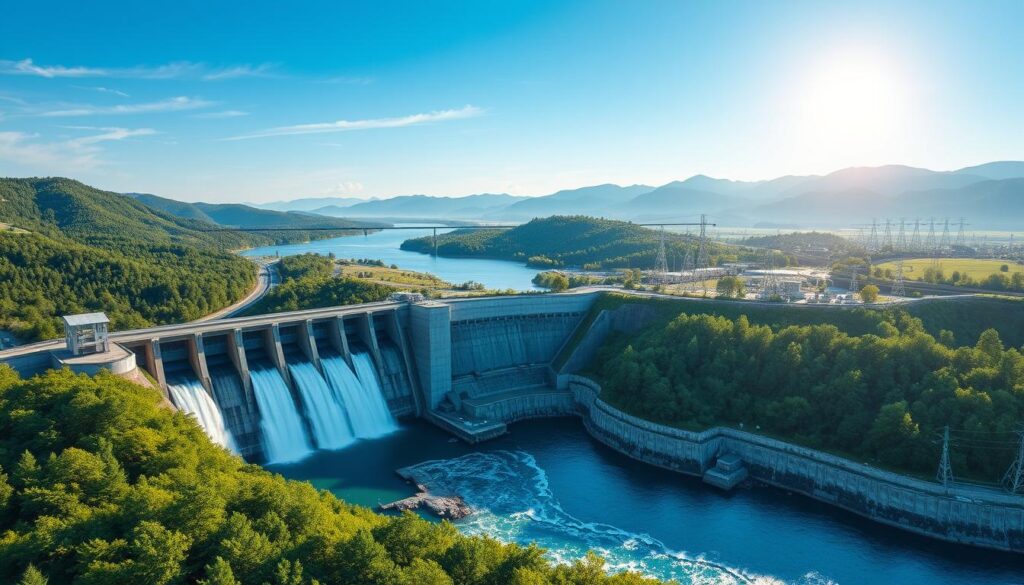
Hydropower also brings big economic benefits. It creates jobs and boosts local economies. Plus, it helps with flood control, irrigation, and water supply, adding to its value.
Choosing sustainable energy like hydropower helps communities grow. It supports local jobs and makes our air cleaner. This is good for our health and the planet for years to come.
Challenges Facing Hydropower
Hydropower faces many challenges that affect the environment and local communities. One big issue is changing natural water flows. This can harm water quality and the ecosystems that rely on it.
Building large dams for hydropower can displace communities and harm biodiversity. The environmental impact of hydropower is a complex issue that requires careful consideration.
Reservoirs from dams can change water temperature, chemistry, and sediment load. This affects the local ecosystem and water quality downstream.
Social Challenges
Large-scale hydropower projects have big social impacts. Displacing communities is a major concern. It can lead to the loss of cultural heritage, livelihoods, and social cohesion.
It is essential to engage with local communities and involve them in the planning and decision-making process to mitigate these impacts. This includes providing fair compensation and resettlement options for those affected.
Hydropower projects can also have positive social impacts. They can create jobs and boost local economies. But, these benefits must be shared fairly.
In conclusion, while hydropower has many benefits, we must address its challenges. By understanding and mitigating environmental and social impacts, we can achieve sustainable hydropower development.
Types of Hydropower Systems
Hydropower isn’t a one-size-fits-all solution. It comes in many types, each with its own way of making electricity. These systems are based on how they work and what they do.
One main type is the conventional hydropower system. It uses the power of moving water to make electricity. Water from dams or rivers goes through turbines, which turn generators to create electricity.
Conventional Hydropower is the most common. It’s a reliable source of clean energy. It works best in areas with lots of water.
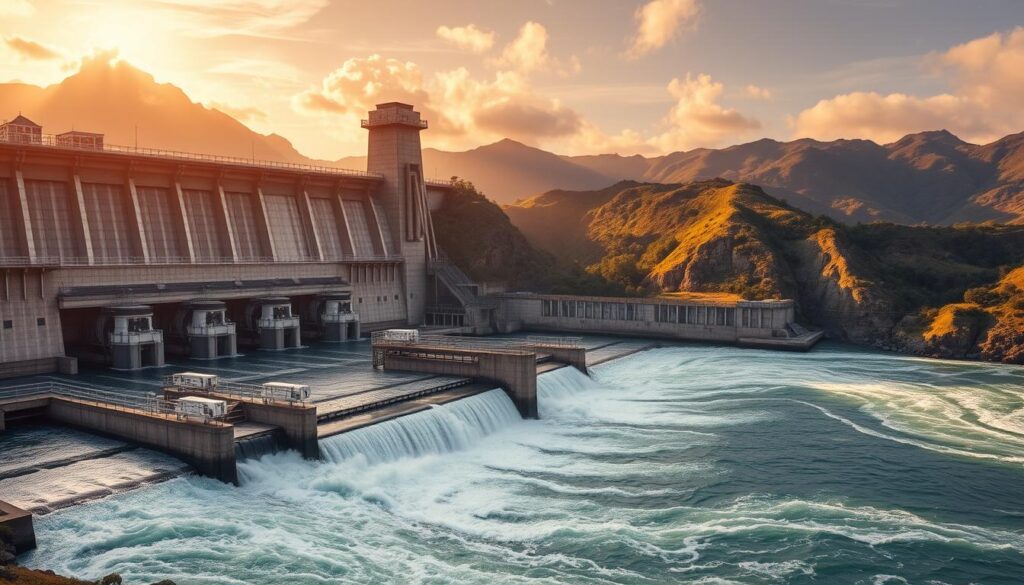
Pumped Storage Hydropower (PSH) systems are also key. They pump water from a lower reservoir to a higher one when energy is cheap. Then, when energy demand is high, they release the water back down, making electricity.
“Pumped storage hydropower is a vital component of our energy infrastructure, providing a unique solution for energy storage and grid stability.” – Experts say PSH systems are critical for keeping the grid stable and electricity flowing smoothly.
PSH systems are very efficient. They can store a lot of energy. This makes them essential for managing the ups and downs of renewable energy and keeping the grid reliable.
“The flexibility and reliability of pumped storage hydropower make it an indispensable asset in our transition to a more renewable energy-based grid.”
In summary, hydropower systems, like conventional and pumped storage, show the wide range of possibilities. They are key to a future powered by sustainable energy.
Major Hydropower Projects in the U.S.
The U.S. boasts some of the world’s biggest hydropower projects. These include the Hoover Dam and the Grand Coulee Dam. They are key to the country’s energy and symbols of renewable energy.
The Hoover Dam, on the Colorado River between Nevada and Arizona, is famous worldwide. Finished in 1936, it was a huge engineering achievement. It has been making electricity for millions ever after.
“The Hoover Dam is a marvel of modern engineering, harnessing the power of the Colorado River to generate enough electricity to serve over 1.3 million people.”
The Grand Coulee Dam, on the Columbia River in Washington State, is another giant hydropower project. It’s the biggest dam in the U.S. It’s key for the region’s energy and helps farms grow crops.
Hydropower projects are essential for the U.S. energy scene. They help a lot with renewable energy. They also manage water, prevent floods, and help farms.
These projects mean more than just energy. They show the U.S. is serious about renewable energy and a greener future. As the U.S. updates its energy plans, hydropower projects will keep being important.
The Future of Hydropower
The future of hydropower looks bright, thanks to new tech and a push for green energy. As we move towards cleaner energy, hydropower will be key in the world’s energy mix.
New tech is making hydropower better and greener. For example, advanced turbine designs boost energy output while harming nature less.
There’s also a big push for sustainable practices in hydropower. This means working to lessen the harm caused by dams, like building fish paths and fixing habitats.
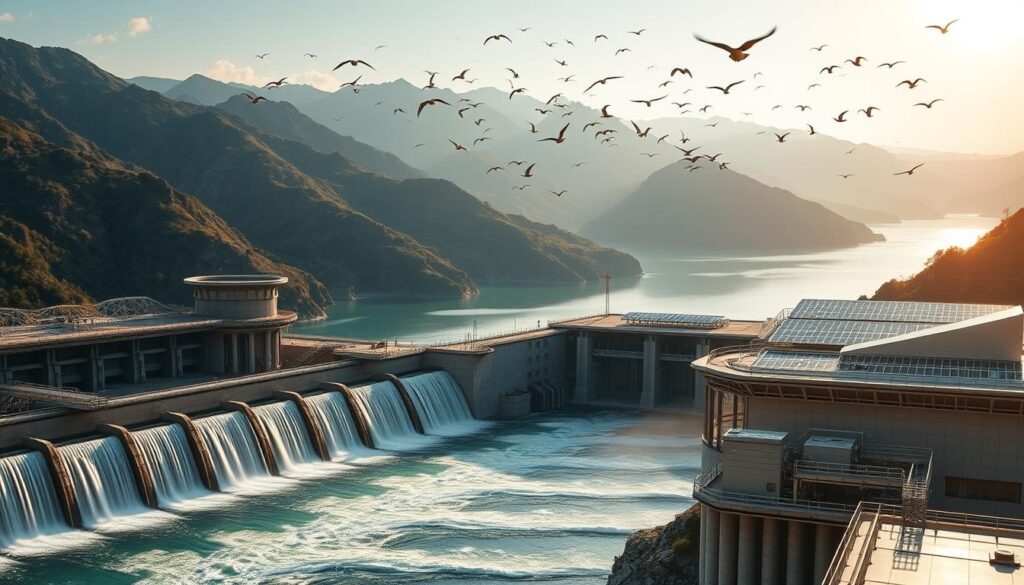
Digital technologies are changing hydropower too. Things like data analytics and smart grids make plants work better. They let us watch and fix things in real time.
As we aim for a greener future, hydropower will keep being important. With new ideas and a focus on the planet, it’s ready to help meet global green energy goals.
Hydropower and Local Communities
The relationship between hydropower and local communities is complex. It involves social and economic factors. Hydropower projects can create jobs and improve infrastructure. But, they can also deeply affect local populations.
One big impact is the displacement of communities. Dams and reservoirs can destroy homes and livelihoods. It’s important for developers to talk to locals early to lessen these effects.
Economic effects are also key. Hydropower can boost local economies with jobs and infrastructure. But, it can also hurt traditional industries like fishing and farming. It’s important to balance these impacts for hydropower to grow sustainably.
The cultural and environmental impact of hydropower is also significant. It’s important to do thorough assessments. This way, we can make sure everyone benefits from hydropower.
In conclusion, we must understand the full impact of hydropower on local communities. By doing so, we can reduce harm and increase benefits for everyone.
How You Can Support Hydropower
Supporting hydropower is key for a green future. You can make a big difference. By pushing for policies that back renewable energy, you help hydropower grow.
Everyday choices can also help. Use energy-saving gadgets, use less power, and support green companies. These small steps add up.
Learning about hydropower and its good points is important too. It helps spread the word and builds a community for green energy. Together, we can make a cleaner, greener world.