
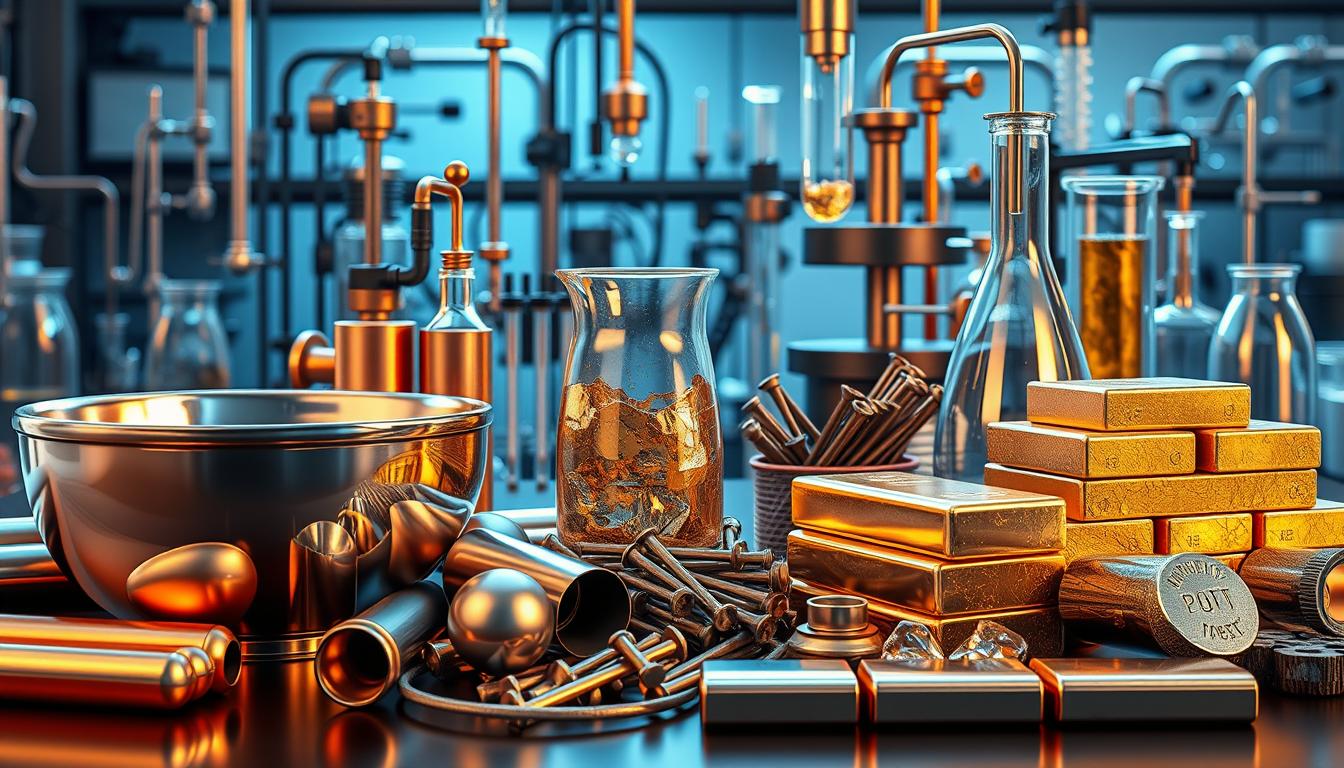
Metals have been key to human progress for centuries. Their unique properties make them very useful.
They are strong, flexible, and can handle high temperatures. This makes them perfect for many uses, like building and making electronics.
Metals also conduct heat and electricity well. They are tough, which adds to their value in many fields.
It’s their mix of qualities that makes metals so important today.
Introduction to Metals
Metals are known for their ability to carry electricity and heat well. A metal is a material that shines when polished or broken. It also conducts electricity and heat fairly well.
The characteristics of metals include their shine, ability to be shaped easily, and good conductivity. These traits make metals useful in many areas, like electronics and building.
One important metal property is their ability to form metallic bonds. These bonds help metals carry electricity and heat well. This is what makes metals different from other materials.
Knowing what metals are and their traits helps us see their importance in our world. Metals are more than just materials. They are key to our modern society.
Studying metals and their properties is a big field that keeps growing. New alloys and uses are found all the time. As we learn more about metals, we see how vital they are to our lives.
The Unique Properties of Metals
Metals are special because of their strength, durability, and conductivity. These traits make them essential in many areas, from building to electronics.
Metals can handle different environments well. They have high melting points and resist corrosion. A famous metallurgist said, “Their unique atomic structure makes them strong and flexible.”
“Metals are the backbone of modern technology, providing the necessary strength, conductivity, and durability for advancements in various fields.”
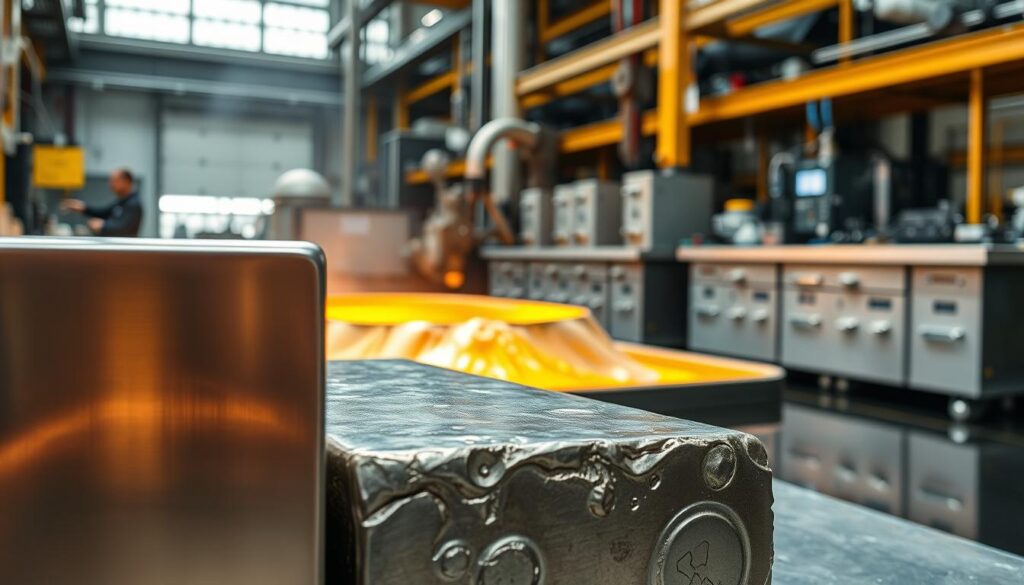
Metals are great at conducting electricity. Copper and aluminum are used in wiring and circuits. This is key for modern electronics and power systems.
Metals also move heat well. This is important for devices like heat sinks and cookware. Metals are perfect for heating things up in radiators and heaters.
The way metals conduct electricity and heat comes from their atoms. They have free electrons that move easily. This helps in transferring both electricity and heat. As technology grows, improving these properties is vital for new materials and uses.
Common Types of Metals
Metals are divided into two main groups: ferrous and non-ferrous metals. This division is based on whether the metal has iron in it.
Ferrous metals have iron and are strong and durable. They are used a lot in building, cars, and other places where strength matters. Steel and cast iron are examples. These metals are often mixed with other elements to make them even better.
Non-ferrous metals don’t have iron. They are less likely to rust and conduct electricity better than ferrous metals. Aluminum, copper, and zinc are some examples. These metals are used in things like electrical wiring, making planes, and for equipment that can’t rust.
Knowing the difference between ferrous and non-ferrous metals is key. Metal classification helps pick the right metal for a job. This makes sure the metal fits the needs of the task.
In many fields, knowing if a metal is ferrous or non-ferrous is important. For example, in building, steel is often used because it’s strong. But in making planes, aluminum is better because it’s light and doesn’t rust easily.
Learning about the different types of metals helps us make new technologies. As we find out more about metals, how we use them will keep changing in many industries.
Detection of Metal Alloys
Metal alloys are made from different metals and elements. They need special detection methods. This is important in many fields like manufacturing, aerospace, and construction.
These fields use metal alloys because of their special properties. These properties affect the quality and durability of the final product.
Several advanced techniques are used to detect metal alloys. Spectroscopy is one, which studies how materials react to electromagnetic waves. It helps figure out what’s in the alloy.
X-ray fluorescence (XRF) is another key method. It uses X-rays to find out what elements are in a sample. This gives detailed info about the alloy’s makeup.
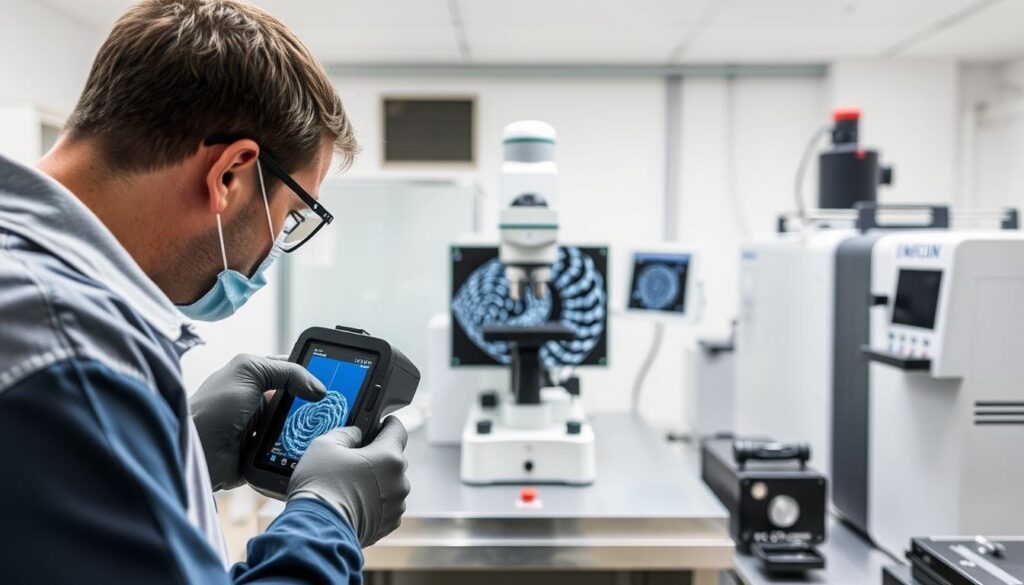
Other methods like inductively coupled plasma mass spectrometry (ICP-MS) and optical emission spectrometry (OES) are also used. They are very precise and can spot tiny amounts of elements. This is vital for checking if the alloy is up to standard.
Getting the alloy right is super important. It helps in making sure products are of high quality. This reduces the chance of things going wrong and makes products more reliable.
In short, finding out what’s in metal alloys is a complex task. It needs advanced tools. As technology gets better, we’ll be able to do this even more accurately.
The Role of Metals in Technology
Metals are key in making technology better, mainly in electronics and energy. They have special qualities like being good conductors and lasting long. These traits are vital for many tech uses.
Metals in Electronics
In electronics, metals like copper and gold are essential. Copper is used in wires and circuits because it carries electricity well. Gold is in connectors and contacts because it doesn’t corrode and is very flexible.
Metals are also important in energy fields, like solar panels, nuclear reactors, and batteries. For example, aluminum and silver boost solar panel efficiency and last longer. In nuclear energy, metals like zirconium and stainless steel handle high heat and radiation well.
Metals are also key in energy storage, like in batteries. Lithium is a main part of lithium-ion batteries. These batteries power many devices, from electric cars to smartphones.
The versatility of metals in technology shows how important they are. As tech keeps getting better, we’ll need more metals with special qualities. This will push innovation in making metals and materials science.
Environmental Impact of Metals
The extraction and processing of metals have big environmental effects that need careful study.
The environmental impact of metals is complex. It involves the harm caused by metal extraction and metal processing to ecosystems and human health.
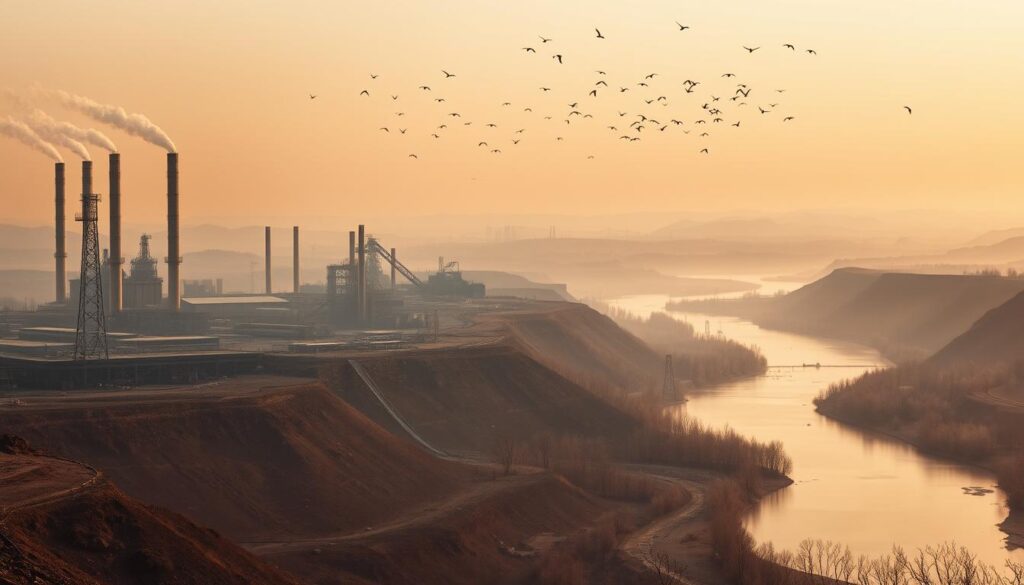
Metal extraction and processing can harm habitats, pollute water, and contaminate soil. For example, mining can cause deforestation and harm biodiversity.
Recycling and Sustainability
Recycling is key to lessening the environmental damage from metal production. Reusing metals cuts down on the need for new extraction and processing. This reduces the environmental harm.
Sustainability in metal production means using methods that harm the environment less. It also ensures metal resources last long. This includes using efficient recycling and cutting down on waste.
“Sustainable practices in metal production are not just good for the environment; they also save money. They reduce costs from extracting and processing raw materials.”
By focusing on recycling and sustainability, we can lessen the environmental impact of metals. This helps us move towards a more sustainable future.
Metals in Construction
Metals are a top choice in building applications because of their strength, versatility, and beauty. They are durable and can be shaped in many ways. This makes them perfect for different structural needs.
Many famous buildings and bridges show the importance of metals in construction. Steel is often used in skyscrapers because it’s strong yet light. Metals like aluminum are great for roofs and walls because they don’t rust easily and can be made stronger.
In structural applications, metals offer the support and stability needed. They can handle different weather conditions well. Plus, they can be recycled, which is good for the environment.
Metals are also used in many other parts of buildings, like in concrete, pipes, and decorations. Their wide range of metal uses shows how important they are in construction.
To wrap it up, metals are key in modern building. They bring strength, durability, and beauty to structures. Their use in construction proves their value in making strong, green buildings.
The Cultural Significance of Metals
Metals have been key in shaping cultures and societies for centuries. They’ve been used in many ways across different civilizations. This shows their deep importance in human history.
Humans first used metals like copper, bronze, and iron in ancient times. These metals helped us make tools and weapons. They also led to big changes in culture and society. The Bronze and Iron Ages, for example, were named after these metals.
Metals are also found in jewelry, coins, and decorations. They symbolize wealth, status, and power. Gold and silver, for instance, have been seen as symbols of wealth and royalty in many cultures.

Metals have spiritual and symbolic meanings too. Many cultures believe they have special powers. They’re used in rituals and ceremonies. This shows metals’ value goes beyond their practical uses.
The history of metals is complex and varied. Each metal has its own story and cultural ties. Knowing this helps us see how metals have shaped our world.
The cultural significance of metals shows their versatility and importance in history.As we move forward, metals will continue to play a role in our evolving societies.
Advancements in Metallurgy
Recent breakthroughs in metallurgy have opened up new avenues for material science. The development of new alloys and materials has been a significant area of research. This is driven by the need for improved performance, sustainability, and cost-effectiveness.
New Alloys and Materials: Advances in metallurgical research have led to the creation of novel alloys with enhanced properties. These include high-strength, lightweight alloys for aerospace applications and corrosion-resistant alloys for marine environments.
The research and development efforts in metallurgy have not only resulted in new materials but have also improved our understanding of the underlying metallurgical processes. This has enabled the development of more efficient production techniques. These techniques reduce environmental impact and costs.
Potential Applications: The new materials and alloys developed through metallurgical advancements have a wide range of applications. They are expected to play a key role in emerging technologies. This includes renewable energy systems, advanced transportation systems, and high-performance infrastructure.
As metallurgy continues to evolve, we can expect further innovations. These innovations will drive technological progress and address some of the world’s most pressing challenges.
Challenges Facing the Metal Industry
The metal production sector is facing many challenges. These include environmental damage and economic ups and downs. As metal demand grows, the industry must find ways to meet these challenges.
One big environmental challenge is how metal extraction harms ecosystems. Mining can cause deforestation, water pollution, and soil contamination. This hurts biodiversity and human health. For example, mining for copper and gold often destroys forests and uses harmful chemicals.
The metal industry also faces economic challenges. Changes in metal prices, trade rules, and energy costs can hurt profits. The industry must also invest in sustainable practices, which can be costly.
The industry is working on sustainability. It needs to cut down on energy use and emissions. This means improving how it makes metals and using more recyclable materials.
To tackle these issues, the metal industry is looking at new technologies. Better metallurgy and recycling can reduce environmental harm. Also, adopting circular economy ideas can help reduce waste and promote recycling.
In summary, the metal industry has to deal with many challenges. By focusing on sustainability and innovation, it can stay viable and help the planet.
The Future of Metals
The future of metals is looking bright, thanks to new trends and tech. Advances in metallurgy and new materials are leading the way. This research is creating materials with special properties.
New tech is making metal extraction, processing, and recycling better. This reduces harm to the environment. Trends like metals in renewable energy are also boosting the industry.
As metal demand changes, so will the industry. New materials and tech will be key. They will help make solutions more sustainable and efficient.