
It’s important to know how viruses work with cells. They take over cellular processes to make more copies of themselves. This is what happens in viral infections.
When viruses do this, they mess up how cells work. This can cause many health problems. Learning about how viruses affect cells helps us understand viral infections better.
Understanding Viruses
To understand viral infections, we must first know the structure of viruses. Viruses have genetic material, like DNA or RNA, wrapped in a protein shell called a capsid. This basic setup is key for them to infect cells.
Some viruses also have an outer layer made from the host cell membrane, known as enveloped viruses. Others don’t have this layer and are called non-enveloped viruses. Whether or not they have this layer changes how they interact with host cells and replicate.
The virus structure is vital in its lifecycle. It helps with attaching, penetrating, and replicating inside host cells. Knowing this is important for creating effective treatments and prevention methods against viral infections.
Understanding viral replication and what affects it helps researchers. They can then better fight viruses and prevent diseases caused by them.
How Viruses Infect Cells
Viruses enter host cells through several steps, including envelope fusion and endocytosis. They use different ways to get inside, taking advantage of the cell’s processes.
One main way viruses get in is by fusing their envelope with the cell membrane. This happens thanks to viral fusion proteins. These proteins change shape to help the viral and cell membranes join together.
Fusion of Viral Envelope with Cellular Membrane
The fusion process is complex. It involves many viral proteins working with the host cell membrane. Viral fusion proteins are key, helping the virus find the right cell and fuse with it.

After the viral envelope merges with the cell membrane, the virus’s genetic material gets into the cytoplasm. There, it starts to take over the cell’s functions for its own replication. Different viruses use different ways to get in, like endocytosis. This is when the cell swallows the virus and then releases it from the endosome.
Knowing how viruses enter cells is key for making antiviral treatments. By focusing on the viral fusion proteins or how viruses enter, we might stop infection and disease from spreading.
Research on how viruses enter cells is ongoing. It’s important for understanding how viruses cause disease and for finding new treatments.
Viral Replication
Viral replication is a key part of a virus’s life cycle. It uses cellular processes to make more of itself.
When a virus gets into a host cell, it takes over the cell’s tools to make copies of its genetic material. It uses enzymes and ribosomes to create new viral genomes and proteins.
How viruses replicate can vary. It depends on their genetic material (DNA or RNA) and the host cell type. Some viruses add their genetic material to the host genome, while others replicate in the cytoplasm.
Viruses hijacking cellular processes helps them replicate. But it also disrupts normal cell functions. This can lead to the symptoms of viral infections.
Knowing how viral replication works is key to making antiviral treatments. These treatments aim to stop viruses at specific stages of their life cycle. This could help fight viral diseases.
Effects on Host Cells
Viral infections have many effects on host cells, causing both direct harm and immune system reactions. When a virus attacks a cell, it takes over the cell’s tools to make more viruses. This often damages the cell.
This damage can make the cell die or change how it works. This can help viral diseases grow. The immune system fights back by making antibodies and activating immune cells like T cells and macrophages.
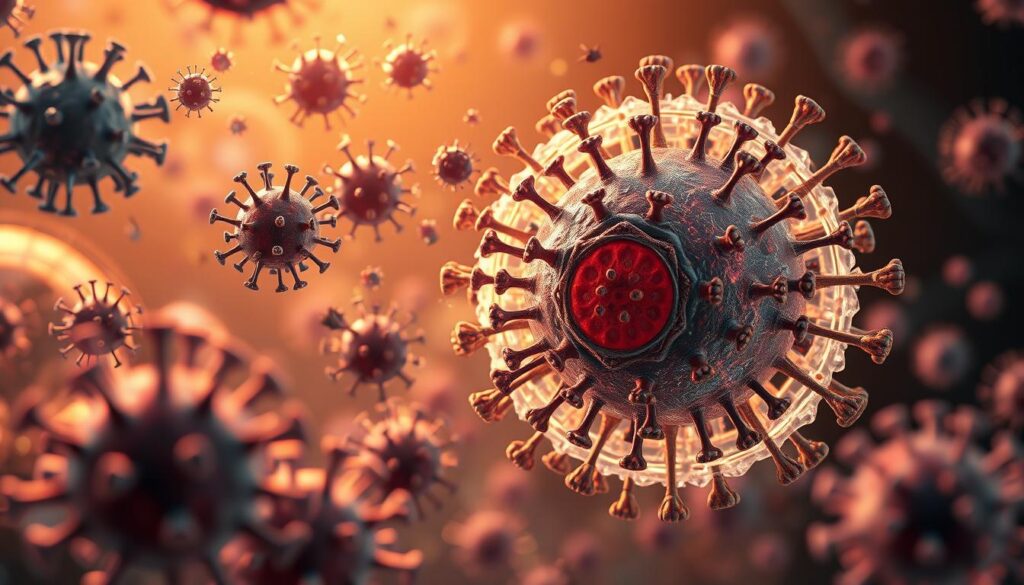
The immune response tries to stop the virus by killing infected cells and reducing virus growth. But sometimes, it can also cause inflammation and damage tissues.
It’s key to understand how viruses affect host cells and the immune system to fight viral diseases better. Ongoing research is revealing more about how viruses and their hosts interact.
Viruses and Disease
Different viruses cause a range of health problems, from common colds to severe diseases like Ebola. These viral diseases have been a big problem for humans for a long time. They affect public health a lot, causing outbreaks and chronic conditions that need ongoing care.
Viral diseases come from many viruses, each with its own effects on the body. For example, viruses like influenza and RSV mainly hit the respiratory system. On the other hand, HIV attacks the immune system, causing it to weaken.
The severity of viral diseases varies a lot. Some, like norovirus or rotavirus, cause stomach problems. Others, like herpes simplex virus, lead to skin and mucous membrane issues. Knowing the specific virus and its effects is key to finding good treatments.
Creating antiviral therapies is a tough task because viruses can change a lot. But, there’s been a lot of progress. Now, antiviral drugs are a big part of treating viral infections. For example, ART has made HIV a manageable condition instead of a death sentence.
The biggest challenge in treating viral diseases is their ability to develop resistance to drugs. We also need vaccines to stop outbreaks. It’s important to keep researching viral diseases and antiviral therapies to improve public health and reduce the global impact of viral infections.
Transmission of Viruses
Viruses spread in many ways, affecting host cells differently. Knowing these ways is key to stopping viruses.
One main way viruses spread is through respiratory droplets. When someone with a virus coughs or sneezes, they release droplets. These droplets can be breathed in by others, causing infection. This is how viruses like influenza and COVID-19 spread.
Another big way viruses spread is through touching contaminated surfaces. Viruses can live on surfaces for a while. If someone touches a surface and then their face, they can get infected. This shows why washing hands and cleaning surfaces are important.
Vector-borne transmission is also important for some viruses. Vectors like mosquitoes and ticks carry viruses from one host to another. For example, mosquitoes spread diseases like dengue fever and Zika virus. Knowing how vectors help viruses spread is vital for controlling outbreaks.
In summary, viruses spread in many ways. Understanding these routes helps us fight viruses better. By knowing how viruses spread, we can protect host cells from getting infected.
Diagnosing Viral Infections
Getting a correct diagnosis for viral infections is key for good treatment and care. Doctors use different methods to find out what’s causing the infection. These include PCR (Polymerase Chain Reaction), serology, and viral culture.
PCR is a very sensitive test that finds the genetic material of viruses. It’s great for catching infections early when there’s a lot of virus. “PCR has changed how we diagnose viruses,” say virology experts.
Serology tests for antibodies against specific viruses in the blood. This shows how the immune system reacts to viruses. It’s important for finding infections later or looking back at them.
Viral culture is slower and less accurate than PCR but is also useful. It helps isolate and study viruses. This information helps doctors create better treatments.
“The diagnosis of viral infections is a complex process that requires a combination of clinical evaluation, laboratory tests, and epidemiological data.”
It’s also important to understand how the immune system fights viral infections. The immune response can affect how well the infection is treated and diagnosed.
In summary, diagnosing viral infections needs a mix of different tests and knowing about the immune system. With these tools, doctors can give accurate diagnoses and effective treatments.
Treatment of Viral Infections
Viral infections need special treatments. Antiviral therapies and vaccines are key in fighting these infections.
Antiviral drugs aim to stop viruses from copying themselves inside cells. Effective antiviral therapies have been made for many viral infections. This has greatly helped patients.
Vaccines are also vital in fighting viral infections. They help the body prepare to fight off future infections. Recent advancements in vaccine technology have made vaccines for viruses we couldn’t treat before.
But, there are challenges in treating viral infections. The rapid mutation rate of some viruses makes antiviral drugs less effective. Also, making vaccines can be hard because of the complexity of viral genomes.
More research is needed in antiviral therapies and vaccine development. As we learn more about viruses and how our bodies fight them, we’ll find better ways to treat and prevent viral infections.
Viruses in Biotechnology
Viruses are being engineered for safe use in gene therapy and vaccine delivery. This is a big step forward in biotechnology. The use of viral vectors is creating new ways to treat genetic disorders and fight infectious diseases.
Viruses in biotechnology are mainly used to carry genetic material into cells. This is done with viral vectors, which are safe and efficient. They help introduce genes into human cells to fix genetic problems or boost the immune system against pathogens.
One big plus of viral vectors is their ability to target specific cells or tissues. This makes them very effective for gene therapy. For example, some viral vectors can be made to target cancer cells. They deliver genes that kill these cells but not healthy ones.
But, there are also challenges with viral vectors. These include the risk of the immune system reacting to the vector, possible off-target effects, and the difficulty of making these vectors on a large scale. Researchers are working hard to solve these problems through ongoing research and development.
The use of viruses in biotechnology also goes beyond gene therapy to include vaccine development. Viral vectors can carry vaccine antigens, helping to create a strong immune response against diseases. This method has shown great promise in making vaccines for diseases like Ebola and COVID-19.
In summary, the use of viruses in biotechnology, mainly through viral vectors, is a major breakthrough in medical research and treatment. While there are challenges, the benefits are huge. These technologies offer new hope for treating and preventing many diseases.
The Future of Virology
Looking ahead, virology will keep growing, thanks to new findings and antiviral therapies. The field is moving fast, thanks to new tech and a better grasp of viral diseases.
New tech like CRISPR and advanced immunotherapy could change how we fight viruses. These breakthroughs could help tackle some of the toughest viral diseases we face.

Creating effective antiviral therapies for many viruses is a big challenge. But, researchers are making good progress. They’re testing new treatments in clinical trials.
Understanding how viruses change is key to virology‘s future. Scientists study viral evolution to predict new strains. This helps them develop targeted treatments.
Artificial intelligence and machine learning are also changing virology. They help analyze big data fast. This reveals patterns that might not be seen by humans.
Understanding Viral Evolution
It’s key to understand how viruses evolve to make better vaccines and treatments. Viral evolution happens because of high mutation rates and genetic mixing.
Viruses change fast because they mutate a lot. In one host, a virus can be many different versions. Some versions might be better at avoiding drugs or the immune system.
The way viruses copy themselves often leads to mistakes, causing mutations. When different viruses infect the same cell, they can swap genes. This mixing can create new strains that might be more harmful or spread easier.
Implications for Public Health
The quick change of viruses is a big problem for health. We need to watch viruses closely to spot new ones that could cause big outbreaks. Knowing how viruses evolve helps us get ready for these dangers.
Making vaccines and treatments that keep up with viral evolution is hard. We need to understand how viruses change and guess what will happen next. By studying how viruses evolve, scientists can find better ways to fight infections.
Conclusion: The Dual Nature of Viruses
Viruses are complex entities with a dual role in the biological world. They are significant pathogens causing various viral diseases in humans, animals, and plants. Yet, they are also valuable tools in biotechnology, helping in medical treatments, genetic engineering, and research.
Understanding viruses is key to improving public health and biotechnology. Scientists must keep researching virology. This way, they can find new ways to fight viral diseases and use viruses in biotechnology.
The study of viruses has led to big breakthroughs in molecular biology and disease understanding. As virology research grows, we’ll likely see new uses for viruses. This includes gene therapy and vaccine development.