
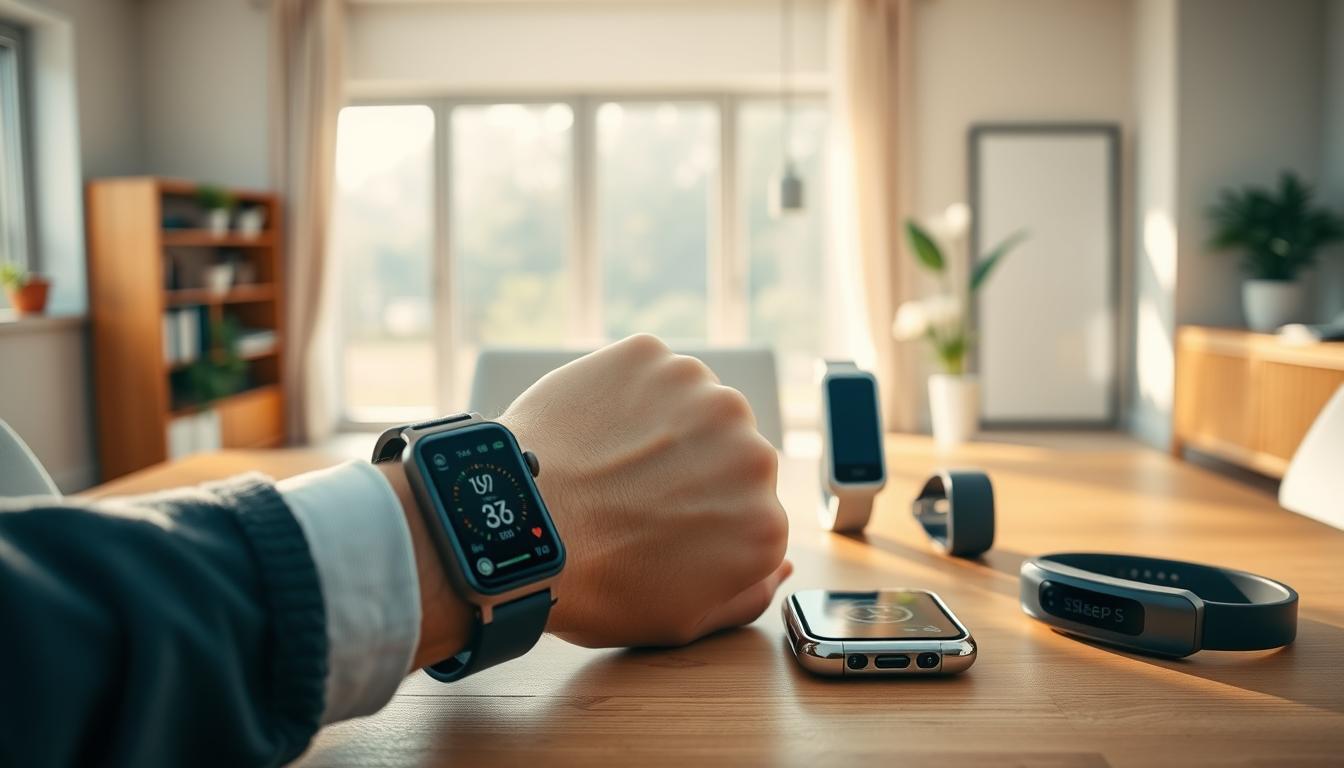
Keeping up with your health and fitness goals is now easier than ever. Thanks to health technology, devices that track your movement and body functions are getting more popular. They help you see how you’re doing and make better choices for your health.
Health tracking has really changed with wearable devices. These gadgets can track your steps, heart rate, and sleep. They give you important info about your health, so you can live better.
Using fitness monitoring lets people take charge of their health. It helps reach fitness goals and improves overall health.
What Is Wearable Tech and How Does It Work?
Wearable technology includes devices like smartwatches and smart clothing. These gadgets are made to be worn on the body. They help with health monitoring and fitness tracking all day long.
There are many types of wearable devices. You can find fitness trackers, clip-on gadgets, smart jewelry, and even smart glasses. They use sensors to track how much you move and your body’s functions. This gives you important info about your health and fitness.
Smartwatches can check your heart rate, and fitness trackers can count your steps and calories. This info is sent to your phone or computer. It lets you see all your health data in one place.
Wearable tech helps you make better choices about staying healthy and fit. You can set goals and see how you’re doing over time. As this tech gets better, it will help us track our health and fitness even more.
The Benefits of Tracking Health with Wearable Tech
Wearable technology has changed how we track our health. It offers many benefits for those wanting to better their well-being. One key advantage is its ability to provide personalized health monitoring. This lets users track their vital signs and activity in real-time.
Personalized Health Monitoring
Wearable devices help us keep an eye on our heart health and activity. They can even spot irregular heart rhythms. Research shows that using these devices can boost personal activity and help manage chronic conditions.
A study in a top health journal found that people using fitness trackers hit their activity goals more often.
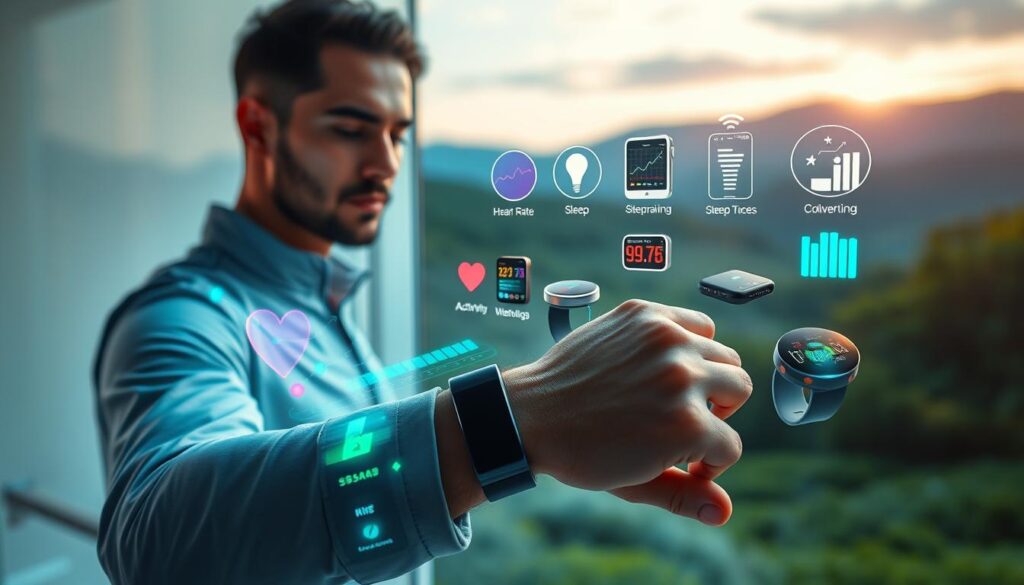
The early detection capabilities of wearable tech are impressive. Many devices can spot heart rhythm issues, like atrial fibrillation. Catching these problems early can prevent serious health issues.
Wearable tech also motivates people to move more. By tracking daily activity and setting goals, users stay on track with their health goals. The motivation provided by wearable tech can lead to lasting lifestyle changes, improving overall health.
In summary, wearable tech offers many benefits, from personalized monitoring to early detection and motivation. As this technology advances, it will likely play an even bigger role in improving our health.
Popular Wearable Tech for Health Monitoring
Wearable technology has made health monitoring easy and convenient. Devices like smartwatches and fitness trackers track health metrics. They are very popular.
Brands like Apple, Fitbit, and Garmin lead the market. Their devices offer heart rate monitoring, step tracking, and GPS tracking. These features are great for those who care about health and fitness.
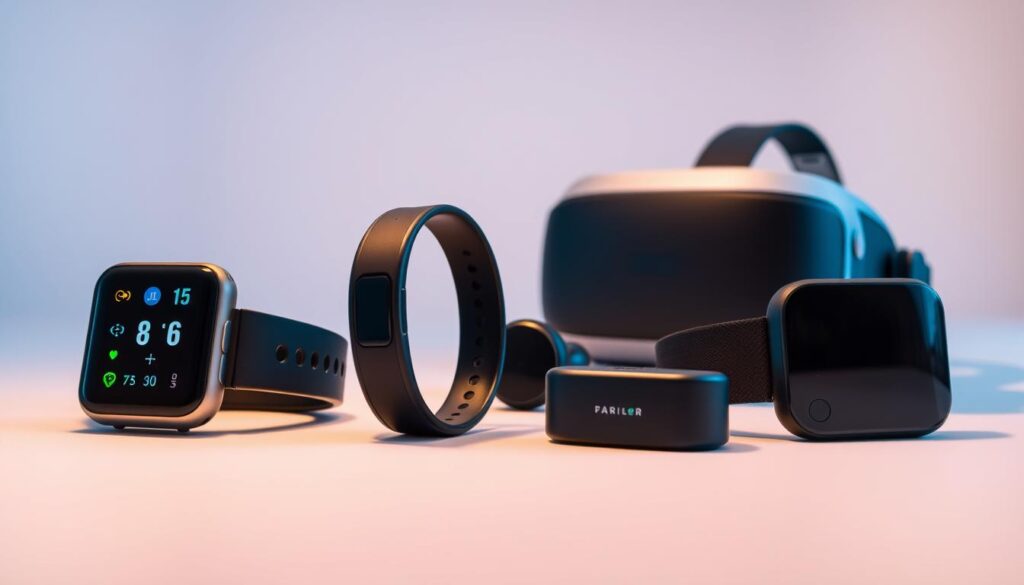
Wearable tech lets us monitor health all the time. Many smartwatches have ECG monitoring and fall detection. These are great for older adults or people with health issues.
A recent report said, “Wearable devices with advanced health features are changing how we manage our health.”
“Wearable technology is not just about tracking fitness; it’s about empowering individuals to take control of their health.”
The wearable market offers many choices. From simple fitness trackers to smartwatches with health features. It’s important to pick a device that fits your health and fitness goals.
When choosing, think about battery life, water resistance, and compatibility. The right device can help you stay on track with your fitness goals.
Tracking Vital Signs with Wearable Devices
Wearable devices can now track vital signs with great accuracy. This has made it easier for people to keep an eye on their health. It gives them important information about their well-being.
Heart Rate Monitoring: Many wearable devices can track your heart rate. The Apple Watch and Fitbit are examples. They show your heart rate in real-time. This is great for athletes and people with heart issues.
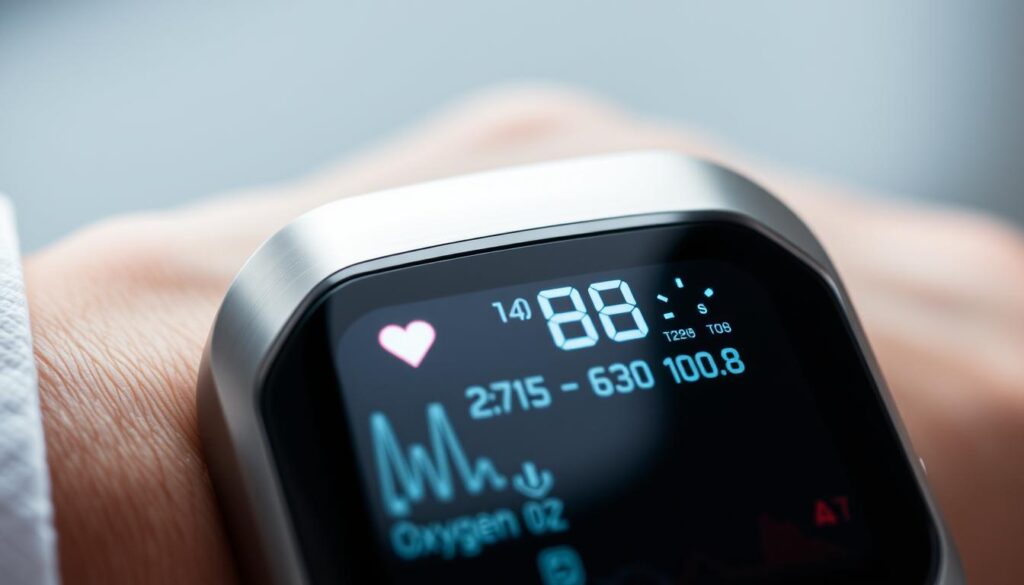
Blood Pressure Tracking: Some smartwatches can track blood pressure. They use sensors to measure it. But, not all devices are approved for medical use.
Examples of Devices
Some devices are better at tracking vital signs than others. For example, the Garmin Forerunner series is popular among athletes. It’s known for its heart rate monitoring. Some smartwatches also have ECG features, which help with health monitoring.
The accuracy of these devices can vary. It’s important to know what your device can do. Always talk to a doctor for medical advice.
In summary, wearable devices have made tracking vital signs easier. As technology gets better, we’ll see even more health tracking features.
Wearable Tech for Fitness Enthuisasts
Wearable technology is changing how we track our fitness. It has features like GPS and heart rate monitoring. These tools give us insights into our workouts.
Fitness tracking is now more detailed. It helps users see how they’re doing over time. This tech lets people set and reach their fitness goals.
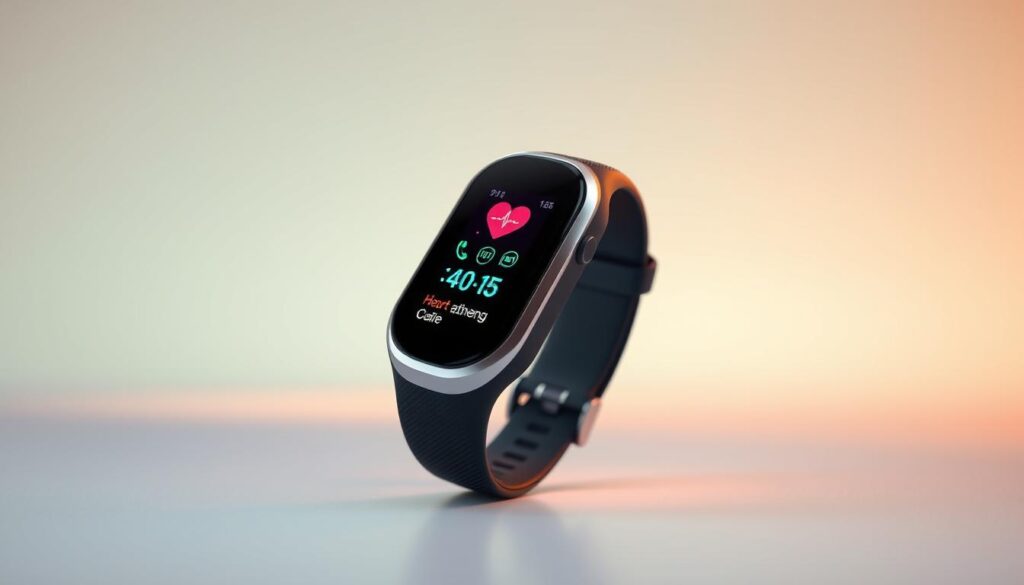
Wearable tech is great for performance monitoring. It tracks important signs and activity. This helps people get better results from their workouts. It also offers personalized fitness coaching for better fitness.
Wearable tech is more than just tracking runs or gym sessions. It helps us understand our health and fitness better. We can use the data to make smart choices about our training and rest.
Also, wearable tech for fitness keeps getting better. New features and technologies are always coming out. This means fitness lovers get to use the latest in health and performance tracking.
The Role of Wearable Tech in Chronic Disease Management
Wearable technology is changing how we manage chronic diseases. These devices help track health metrics, giving insights for better treatment plans.
Wearable tech keeps an eye on vital signs and health indicators. For example, smartwatches and fitness trackers monitor heart rate, blood pressure, and activity. This info is key for managing diseases like diabetes, high blood pressure, and heart disease.
Continuous monitoring helps spot health problems early. This means doctors can act fast. Wearable devices also help patients remember to take their meds, which is great for those with ongoing health needs.
Enhancing Patient Outcomes
The data from wearable devices helps doctors make better choices. This teamwork leads to better health results. Treatment plans can be made just for the person.
Wearable tech also gets patients involved in their health. It shows them their health numbers, helping them make smart choices about their health and treatment.
In short, wearable tech is a big help in chronic disease management. It lets healthcare teams and patients work together. This leads to better health and a better life for those with chronic conditions.
Privacy and Security Concerns of Wearable Tech
The use of wearable devices is growing fast. This has raised big worries about data privacy and security risks. These devices collect a lot of personal data, making them a target for hackers.
One big worry is data breaches. Wearables collect health info like heart rates and GPS locations. If this data gets stolen, it could be used for bad things like identity theft.
Manufacturers need to do more to protect our data. They should encrypt data, use secure login methods, and update software often. This helps keep our info safe.
Users also have a big role in keeping their data safe. Knowing how your wearable device uses your data is key. As one expert said,
“Users need to be informed about what data is being collected and how it is being used to make informed decisions about their privacy.”
Regulators are starting to pay attention too. They’re talking about making rules to protect our health data. This means companies must follow data laws and be open about how they handle our data.
In short, wearable tech is great but it also has big privacy concerns and security risks. By understanding these risks and taking steps to fix them, we can make wearable tech safer for everyone.
Future Trends in Wearable Health Technology
Emerging technologies are changing wearable health tech. They offer new insights into our health and wellbeing. The future of wearables is about more than just tracking steps or heart rate. It’s about seeing our health in a whole new way.
Advanced Sensors and AI Integration lead this change. Next-generation wearables will have better sensors. They’ll track health metrics like blood glucose and hydration. AI will analyze this data, giving us personalized insights and predictions.
Machine learning algorithms will help wearables understand our health patterns. They’ll offer advice to improve our health. For example, a device might spot early signs of a health issue and suggest how to prevent it.
Wearables are getting better at monitoring health. They’ll soon track blood pressure, sleep, and even mental health. This lets us take a more active role in our health.
Wearable health tech is also getting more connected. Devices will share data with healthcare providers. This interoperability makes healthcare smoother, leading to better care and quicker help.
As wearable health tech keeps improving, we’ll see big changes in health technology. These advancements will make wearables essential in healthcare. They’ll improve our health and make our lives better.
Getting Started with Wearable Tech
Starting your health tracking journey with wearable tech is both thrilling and a bit daunting. With so many devices out there, picking the right one is key for good health monitoring.
Think about what health metrics you want to track, like heart rate, steps, or sleep. Make sure the device works well with your phone or computer for easy data sharing.
For newbies, brands like Fitbit and Apple Watch are great. They offer easy-to-use devices that track health and fitness. Reading reviews and comparing features can help you choose wisely.
After picking your device, setting it up is easy. Most come with an app that walks you through setup. To get the most out of it, learn its features, set goals, and check your progress often to stay motivated.
By adding wearable tech to your daily life, you can actively manage your health and fitness. Begin your journey now and see how health tracking with wearable devices can benefit you.