
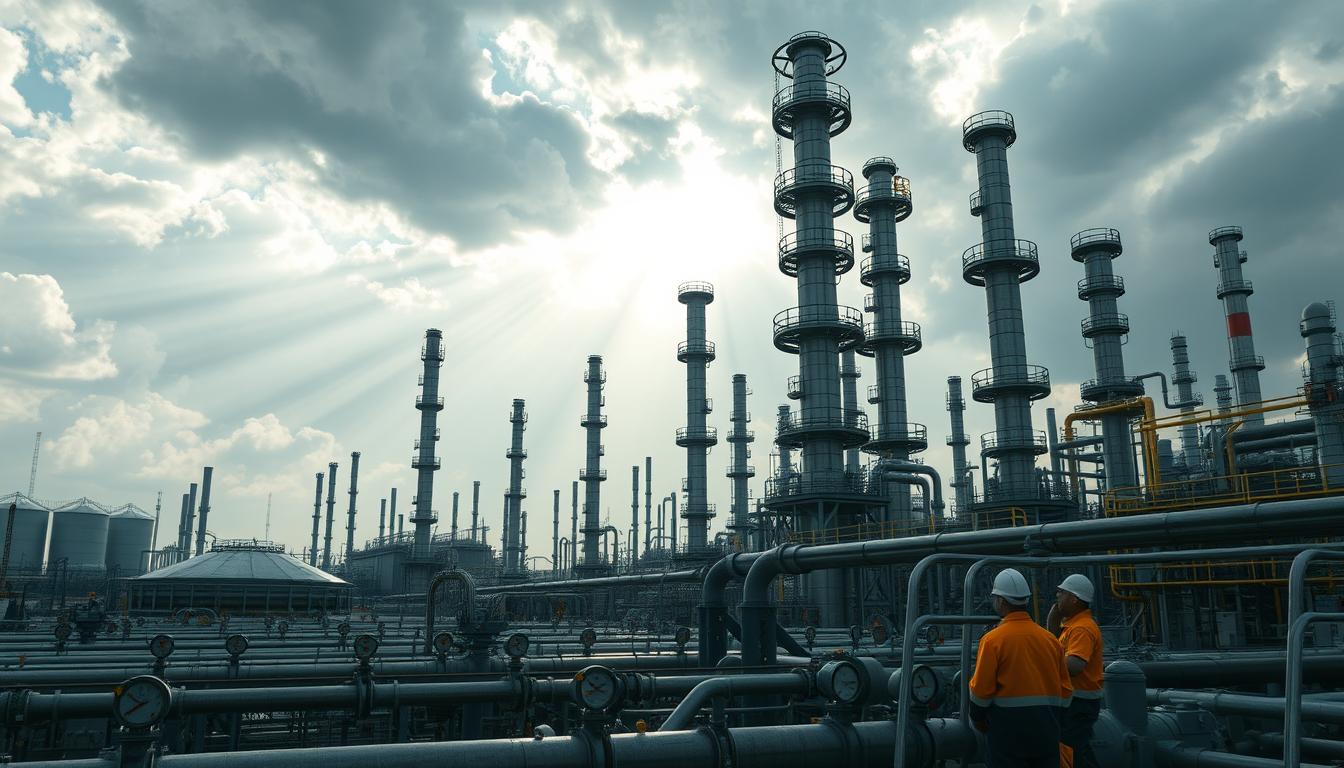
Gasoline is a key part of our daily lives, powering our cars and trucks. But have you ever thought about where gasoline comes from and how it’s made? It all starts with crude oil refining, a complex process that turns raw crude oil into the gasoline we use.
The U.S. uses over 20 million barrels of petroleum products every day. Almost half of this is gasoline for over 200 million vehicles. This shows how important it is to know how gasoline is made, from crude oil refining to the fuel in our cars.
The process changes crude oil, full of hydrocarbons, into gasoline. This detailed process is key to meeting our nation’s energy needs.
Understanding Fossil Fuels
The journey to understand gasoline starts with its main source: fossil fuels. These are energy resources made from ancient plants and animals. They go through geological processes like heat and pressure for millions of years.
Crude oil, the main source of gasoline, is a mix of hydrocarbons. Hydrocarbons are molecules made of hydrogen and carbon atoms. The quality of crude oil varies, with some being light and sweet, and others heavy and sour.
The type of crude oil affects how it’s refined. Its density and sulfur content are key. Knowing this helps make gasoline efficiently.
Crude oil quality changes the refining process. Light, sweet crude oil is easier to refine. It makes high-quality gasoline and other products. Heavy, sour crude oil needs more complex and expensive refining.
The Formation of Fossil Fuels
Fossil fuels start with the buildup of organic matter like plankton and algae in sedimentary basins.
As more sediment layers pile up, the organic matter gets hotter and more pressurized. This turns it into kerogen, a waxy substance, and then into crude oil.
“The transformation of organic matter into fossil fuels is a natural process that occurs over millions of years, involving geological processes that are both intricately and fascinating.”
The creation of fossil fuels is more than just burying organic material. It involves complex chemical and physical changes. As it’s buried deeper, it faces higher temperatures and pressures, changing its molecular structure.

Experts say making crude oil needs just the right heat and pressure over millions of years.
“The process of forming fossil fuels is a testament to the Earth’s ability to transform and create new resources over geological timescales.”
Knowing how fossil fuels are made helps us understand the gasoline we use. It shows the ancient history behind our energy sources.
How Oil is Extracted
Oil extraction starts with drilling wells into underground reservoirs. This first step is key because it lets us get to the oil.
Drilling uses advanced techniques to reach the right depth. After drilling, different methods are used to get the oil up.
Getting as much oil as possible from a reservoir is a big challenge. Enhanced Oil Recovery (EOR) methods help a lot.
Enhanced Oil Recovery Methods
EOR methods include using water, gas, or chemicals to push more oil towards wells. Experts say, “EOR techniques can greatly boost oil recovery from a reservoir.”
“The application of EOR methods has revolutionized the oil industry by allowing for the extraction of oil that was previously inaccessible.”
EOR methods are vital for oil companies. They help get more oil from existing fields. This makes wells last longer and boosts overall oil recovery.
Effective oil extraction needs advanced tech and careful planning. With the latest drilling and EOR methods, the oil industry can keep up with global energy needs.
Refineries: Turning Crude Oil into Gasoline
Refineries are key in changing crude oil into the gasoline for our cars. The refining process includes several steps, starting with fractional distillation.
Fractional distillation heats crude oil and separates its parts by boiling point. This happens in a distillation column. There, crude oil is split into different fractions, or types of hydrocarbons.
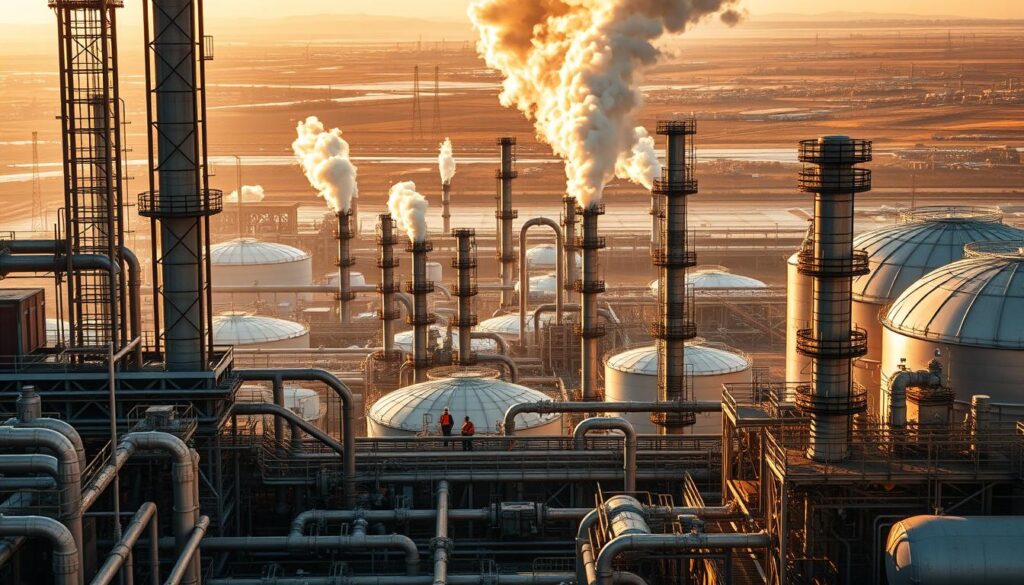
The fraction meant for gasoline is then processed further. It’s cleaned and its properties are adjusted. This makes sure it burns well and cleanly in engines.
The gasoline’s quality depends on the crude oil type and refinery setup. Different crude oils have different impurities and hydrocarbon mixes. This affects the refining and gasoline quality.
Modern refineries use advanced tech to make high-quality gasoline. They use catalytic cracking and reforming to get more gasoline from crude oil.
In short, refineries are complex places that are essential for gasoline production. They use fractional distillation and further processing to turn crude oil into a vital fuel for our daily lives.
The Role of Natural Gas
Natural gas plays a big role in our energy world. It’s used for heating, making electricity, and even powering vehicles.
Natural gas is a key fossil fuel found with crude oil. Its many uses make it a big part of the global energy mix. It heats homes, powers factories, and generates electricity.
Natural gas is also becoming a popular choice for cars. This is because it can help cut down on harmful emissions compared to gasoline or diesel.
It’s important to understand natural gas’s role in our energy mix. As we move towards cleaner energy, natural gas will likely keep being a topic of interest.
The Economics of Gasoline Production
The economics of making gasoline is complex and affects people all over the world. The price of gasoline changes due to many things. These include the cost of crude oil, how much it costs to refine it, getting it to stores, and taxes.
Production Costs and Economic Factors are key in setting gasoline prices. Global events, like wars in oil-rich areas, can also change prices. For example, conflicts can disrupt oil supply chains, raising global crude oil prices.
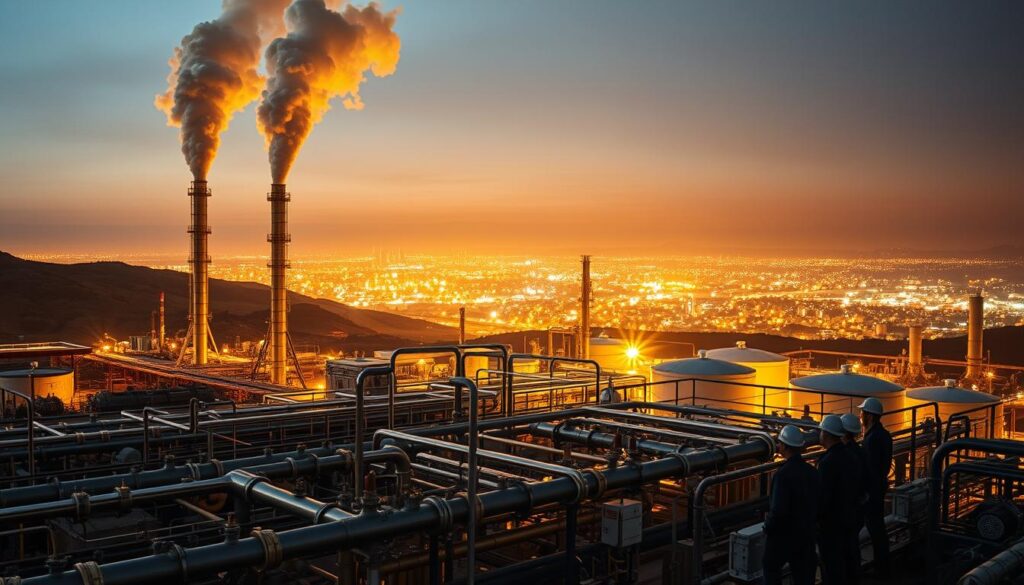
The refining process is a big part of gasoline production economics. Refineries turn crude oil into gasoline and other products. The cost of refining, including labor, equipment, and energy, adds a lot to the final gasoline price.
Economic factors, like demand and supply changes, also affect gasoline prices. When more people travel, demand for gasoline goes up, making prices higher. But when fewer people travel, prices might drop.
It’s important for both consumers and policymakers to understand these economic factors. Knowing how gasoline is made helps everyone make better choices about energy use and policy.
Environmental Impact of Fossil Fuels
The environmental impact of fossil fuels is a big concern. Using fossil fuels, like gasoline, harms the environment. This is mainly because of the emissions of greenhouse gases and other pollutants.
These emissions lead to climate change and air quality issues. They affect not just local areas but also the whole world. Burning gasoline releases carbon dioxide and other pollutants, causing global warming and air quality problems.
It’s important to understand these impacts to find ways to lessen them. We can improve fuel efficiency, switch to cleaner energy, and make policies to cut emissions. The environmental harm from fossil fuels is a big problem that needs a wide range of solutions.
Also, the process of getting and refining fossil fuels has its own environmental costs. Oil spills and emissions from refineries can destroy local environments. This shows we need strict rules and safety steps.
Looking ahead, we must think about the long-term effects of using fossil fuels. We should look for alternatives that can lessen our environmental harm. This way, we can aim for a more sustainable future.
The Future of Gasoline and Fossil Fuels
The future of gasoline is uncertain as alternative fuels gain traction. Concerns about climate change and air pollution are driving interest in alternatives to traditional gasoline-powered vehicles.
Emerging Trends in the energy sector are pointing towards a significant shift. Electric vehicles (EVs), for instance, are becoming increasingly popular due to their ability to reduce greenhouse gas emissions. Governments and manufacturers are investing heavily in EV technology, with many countries setting targets to phase out internal combustion engines in the coming decades.

Another emerging trend is the development of biofuels, which can be used as a direct replacement for gasoline in vehicles. Advances in technology are making it possible to produce biofuels from non-food sources. This reduces competition with food crops and minimizes environmental impacts.
The role of alternative fuels in the future energy mix is likely to grow. As technology continues to evolve, we can expect to see more efficient and environmentally friendly options becoming available. This shift is not only driven by environmental concerns but also by economic factors, as the cost of renewable energy technologies continues to decline.
In conclusion, the future of gasoline is closely tied to the development and adoption of alternative fuels and technologies. As the world moves towards a more sustainable energy future, understanding these emerging trends will be key for stakeholders across the energy sector.
Regional Variations in Gasoline Sources
Regional differences shape the global gasoline market. The sources and consumption patterns vary worldwide. This is due to crude oil quality, refining capacities, and energy demands.
Crude Oil Quality and Refining Capacities
Different regions have unique crude oil qualities. For example, the Middle East has light crude oil, easy to refine. Canada, on the other hand, has heavier crude oil, needing more complex refining.
Refining capacities also differ. The United States and Europe have advanced refining, producing more gasoline. Other regions may import more to meet their needs.
Energy demands and consumption patterns also vary. North America, with many cars, uses more gasoline. Europe, with good public transport, uses less.
The growth of electric vehicles is changing gasoline use. Norway and parts of the United States are seeing a shift in their markets.
Implications for the Global Gasoline Market
Understanding these regional differences is key for the gasoline market. It helps producers, refiners, and policymakers make better decisions. They can invest wisely and set effective energy policies.
Conclusion: The Road Ahead for Gasoline
The world is changing how we use energy, and gasoline’s role is set to change too. From crude oil to the fuel we use, gasoline’s journey is complex. It involves many steps, like extraction, refining, and distribution.
It’s important to understand these steps and the challenges they face. This knowledge is key to moving towards cleaner energy. The future of gasoline will be influenced by the move to alternative energy and reducing fossil fuel’s environmental harm.
We need to find a balance between energy needs, cost, and protecting our planet. This balance is vital for a smooth transition to a greener energy future.