
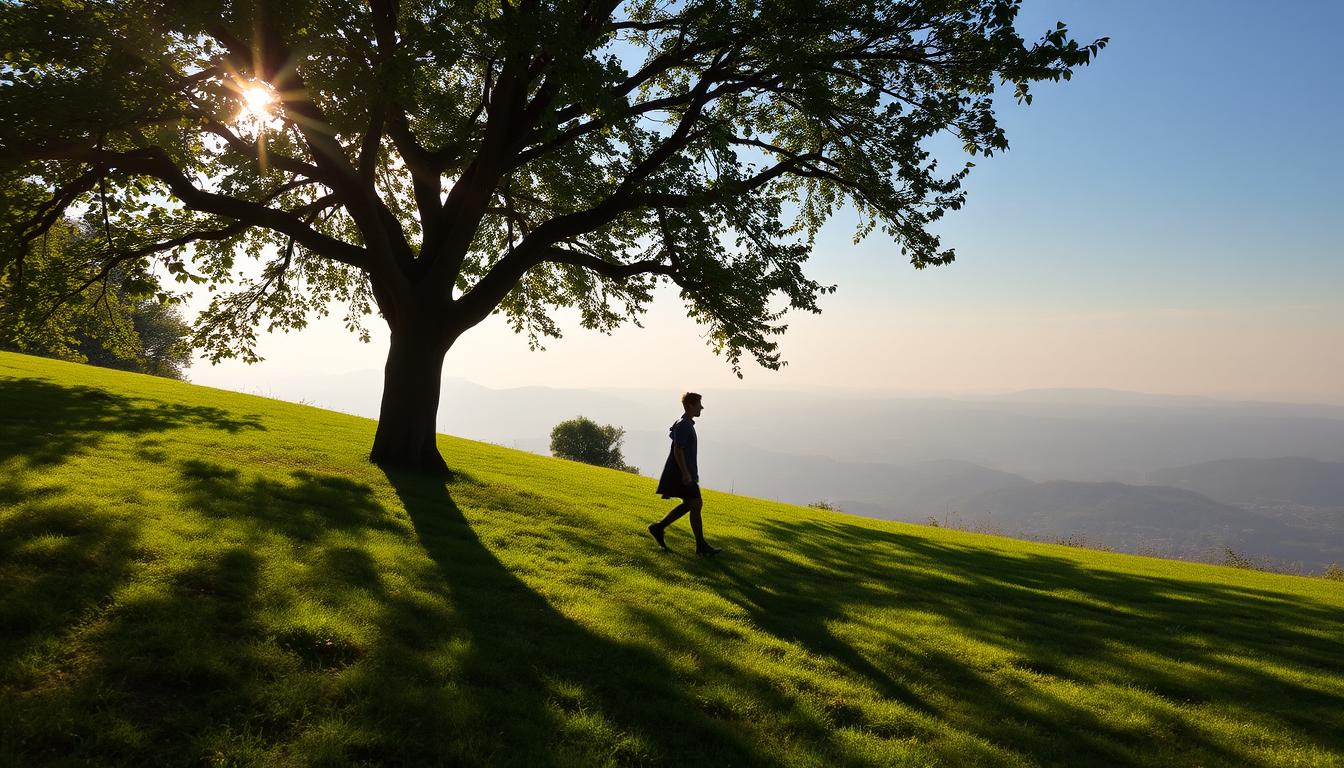
Have you ever noticed how shadows seem to change shape all day? This happens because an object blocks light from a light source.
The shape of the object affects the shadow shape. When the light source moves, the shadow shape changes too. This basic idea helps us see the interesting world of shadows and light.
Learning about shadows and how they change can deepen our understanding. It shows us how objects, light, and shadows interact.
Understanding Shadows: The Basics
Shadows form when objects block a light source. They are a big part of our lives. Shadows happen because of light, objects, and the environment.
Light travels in straight lines. This is key to understanding shadows. When light hits an opaque object, it can’t go through. This creates an area without light, which we see as a shadow.
The shadow formation process is simple yet interesting. It happens when light is blocked by an object. This creates a shadow on the surface behind or around the object. The shadow’s size and clarity depend on the light source, object shape, and distance.
To really get Shadows, think about the light source. Different light sources change shadow effects. For example, the sun’s distant light makes sharp shadows. But a lamp’s light, being closer, makes softer shadows.
The Science Behind Shadows
The size and shape of shadows depend on the light source’s position relative to the object. When the light is directly above, the shadow is smaller because the light rays are more focused.
On the other hand, if the light is at an angle or to the side, the shadow grows larger. It is cast on the opposite side. Shadows are all about how light interacts with objects.
René Descartes said, “The nature of light is such that it illuminates the surrounding space, making objects visible.” When light hits an object, it can’t go through, leaving an area behind dark. This creates a shadow.
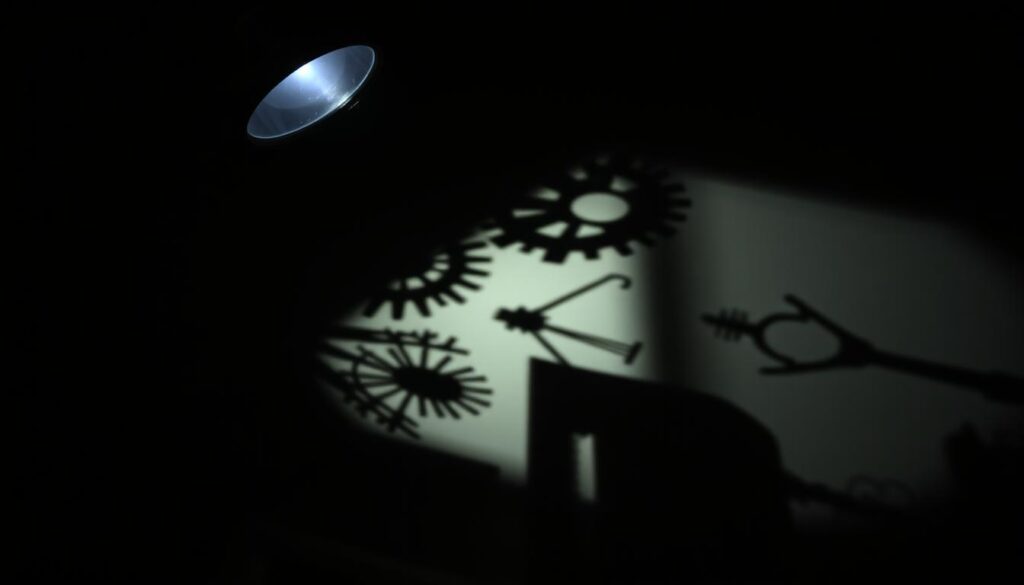
The size and shape of a shadow change with the light source’s position. For example, during the day, as the sun moves, an object’s shadow changes in size and direction.
“Light is the left hand of darkness, and darkness is the right hand of light.”
Knowing how the light source’s position affects shadows helps us see the complex relationship between light, objects, and their surroundings.
Factors Influencing Shadow Shape
Learning about how object size and shape affect shadows can be fascinating. It shows us a lot about light and shadow. The shape and size of an object are key to understanding its shadow.
The size of an object affects its shadow’s size. Larger objects cast bigger shadows, and smaller objects cast smaller ones. But, the distance from the object to the light source also matters.
How Object Size and Shape Affect Shadows
The shape of an object is also vital for its shadow. Complex objects with detailed features create shadows that show their complexity. For example, a sculpture with detailed features will have a shadow that looks like those features, but with some changes due to the light’s angle and distance.
Simple objects, like a sphere or a rectangle, have simpler shadows. A sphere casts a circular shadow, and a rectangle casts a rectangular one. The way the object is positioned relative to the light source can change the shadow’s shape.
In summary, an object’s size and shape are key to understanding its shadow. By knowing these, we can see how light, objects, and shadows interact in a complex way.
The Impact of Time of Day on Shadows
The time of day greatly changes the shape and size of shadows. This is because the Sun moves across the sky as the Earth rotates. Shadows change direction and size as a result.
In the early morning and late afternoon, the Sun is low. This makes longer shadows because the Sun’s rays hit the Earth at an angle. When the Sun is high at noon, shadows are shorter and more compact because the Sun’s rays are more direct.
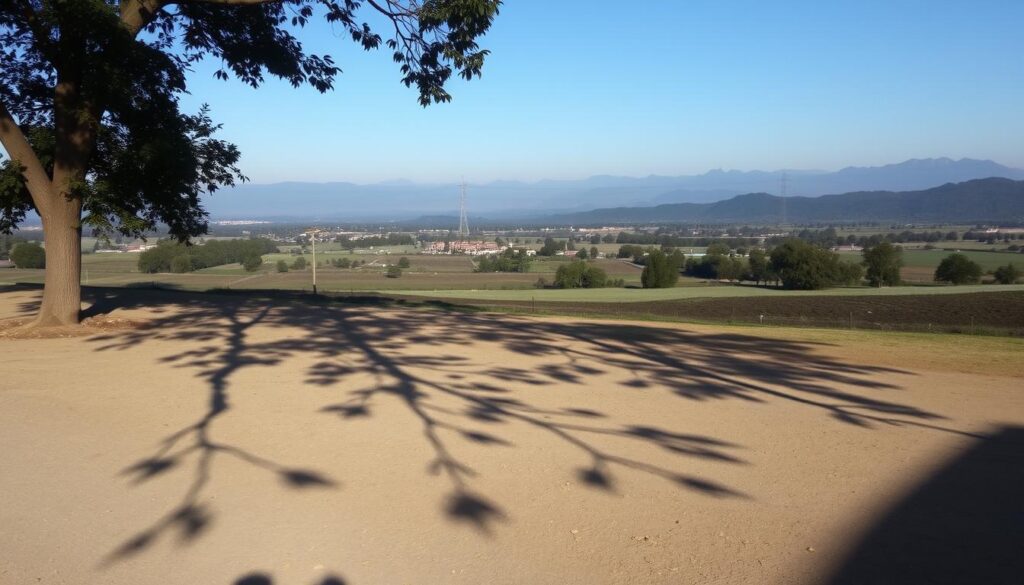
The length of shadows changes with the Sun’s position in the sky. Knowing this is key for many fields, like photography and architecture. Shadows can greatly affect the outcome or design in these areas.
Understanding how time of day influences shadow change helps in planning. It’s useful for taking great photos or designing buildings that use natural shading well.
The Influence of Environmental Elements
Shadows aren’t just where light isn’t. They change based on what’s around us. Different environmental elements can make shadows look very different.
Weather affects shadows a lot. On cloudy days, shadows are softer because sunlight is spread out. This makes shadows less clear. But on sunny days, shadows are sharp because sunlight hits directly.
What’s around us also changes shadows. Objects can cast new shadows or reflect light. This can make shadows look different. For example, shadows on surfaces with different textures or colors can look distorted.
Knowing how environmental elements change shadow change is key. It helps in art, photography, and urban planning. By understanding these factors, we can control and predict Shadows in various settings.
Shadows and Perspective
How we see an object and its shadow changes a lot. When we look at an object, its size and the area around it seem different because of its shadow. The way we see space and distance is affected by the object, its shadow, and where we stand.
Understanding Shadow Projection is key. Shadow projection is how an object’s shadow falls on a surface, based on the light’s direction and strength. The shadow’s shape and size change with the light’s angle and the object’s position.
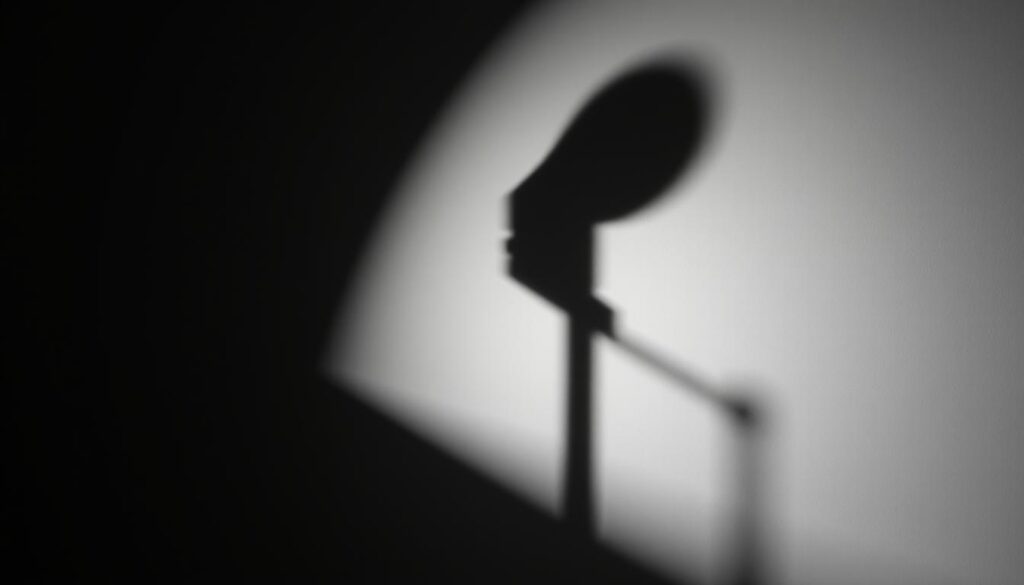
Shadows can tell us about an object’s distance and direction. For example, a shadow right under an object means the light is above it. A shadow at an angle shows the light’s direction compared to the object.
The Role of Viewpoint
Where we stand affects how we see shadows and objects. A small change in our view can make a shadow look different, changing what we think about the object’s size and position. This connection between viewpoint, object, and shadow helps us understand how we see things.
In summary, shadows and perspective are closely linked. Knowing how perspective changes shadow perception helps us understand how we interpret what we see.
Cultural Significance of Shadows
Shadows are more than just the dark side of light. They hold deep meanings in many cultures, shaping art, literature, and everyday life. How we see and understand shadows varies widely, showing the rich tapestry of cultures, societies, and histories.
In some cultures, shadows are seen as the soul or the hidden self. For example, in African traditions, harming someone’s shadow is thought to harm the person. In ancient Greece, shadows were tied to the soul, with no shadow suggesting a loss of life or vitality.
Shadows also play a big role in art and literature. They help artists and writers set moods, hide meanings, or represent complex ideas. In film noir, shadows add mystery and suspense. In books, they can symbolize the unknown or hidden parts of our minds.
“Shadows are the canvas on which our deepest fears and desires are painted.” This quote shows how shadows carry deep symbolic weight in stories, revealing our deepest emotions and experiences.
Shadows are also key in creating the look and feel of artworks. The dance of light and shadow adds depth and interest to visuals. This effect is not just for pictures; it’s also used in books and movies to change the mood and feel of the story.
The meaning of shadows is complex and varied, giving us a peek into human experiences and how we see our world. By looking at how shadows are used in different cultures and in art, we learn more about ourselves and our surroundings.
Practical Applications of Shadows
Shadows are key in art, science, and design. They help achieve specific goals in these areas. Understanding and using shadows is vital.
In art, shadows add depth and dimension. Artists use shadows to guide the viewer’s eye and stir emotions. For example, chiaroscuro, a technique using light and dark contrasts, can make paintings dramatic.
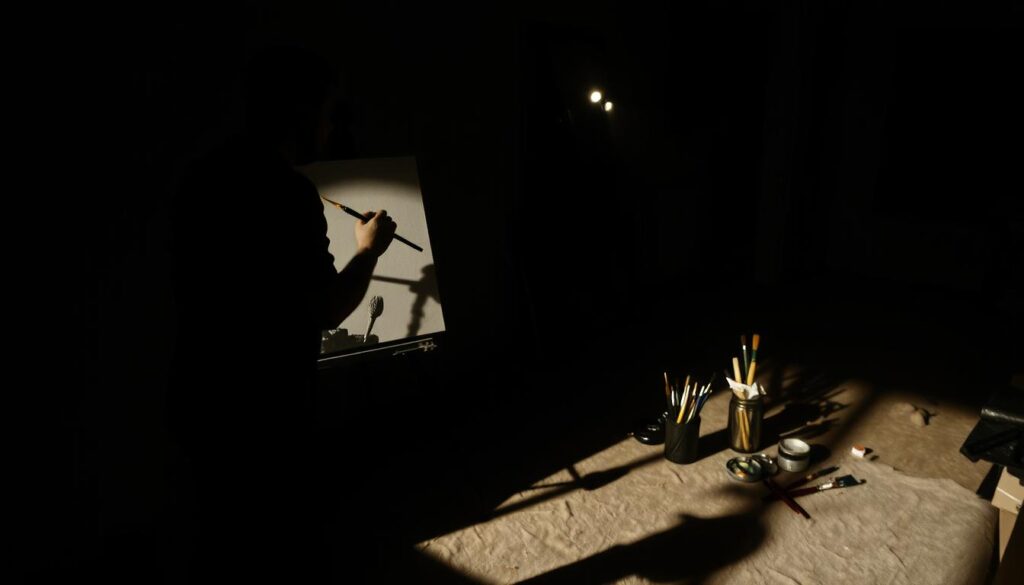
In science, shadows help us understand light and objects. Scientists study shadows to learn about objects and light. During solar eclipses, the Moon’s shadow on Earth’s surface gives insights into the Sun’s corona.
In design, shadows make visuals appealing and realistic. Graphic designers and architects use shadows to add depth. This makes their work more engaging and lifelike.
The practical applications of shadows are wide-ranging and growing. Shadows help professionals in many fields do their jobs better.
The study and application of shadows are vital in many areas. They drive innovation and creativity. As technology improves, new ways to use shadows are discovered, expanding their uses.
The Relationship Between Shadows and Motion
The way shadows and motion interact is quite interesting. It happens when objects move around a light source. This is key to understanding how shadows evolve.
When an object moves, its shadow changes too. This shows the object’s new spot compared to the light. This dynamic relationship is seen everywhere, from people walking in the sun to machines moving in factories.
The change in shadows isn’t just about where the object is. It also depends on how fast and in which direction it moves. For example, a speeding car’s shadow moves fast too, staying the same shape unless the car turns.
Knowing how motion and shadow change work is important in many areas. This includes film, animation, and security. By using shadows and motion, artists and techs can make scenes look more real and engaging.
“The interplay of light and shadow, coupled with motion, creates a visual language that can convey emotion, depth, and complexity.”
In summary, the bond between shadows and motion is complex. It’s shaped by the object’s speed, direction, and the light’s position. Understanding this helps us see how shadows add depth and emotion to what we see.
Techniques for Capturing Shadows
Capturing shadows is an art that requires a deep understanding of lighting, composition, and post-processing. Photographers and artists use many methods to capture and shape shadows. This enhances the mood, depth, or focus of their work.
Adjusting the lighting is a key technique for capturing compelling shadows. Natural light, like during the golden hour, creates long, dramatic shadows. These add depth to an image. Artificial light sources, such as studio lights or household lamps, can also create interesting shadow effects.
Composition is also vital in capturing shadows. By placing the subject correctly in relation to the light source, photographers control shadow length and direction. This can create drama or guide the viewer’s eye through the image.
Post-processing techniques add another level of control over shadows. Tools like Adobe Lightroom or Photoshop let photographers tweak shadow density, contrast, and color. Post-processing can make shadows look more natural or stylized, depending on the desired effect.
Trying out different techniques and understanding their interactions is essential for mastering shadow capture. Whether it’s adjusting lighting, refining composition, or post-processing, photographers and artists can greatly improve their work’s visual impact.
Fascinating Facts About Shadows
Shadows are more than just dark shapes. They show us amazing phenomena that spark our curiosity. During solar eclipses, shadows change in ways that seem magical. They create patterns that show the beauty of shadow diversity.
Learning about shadows helps us understand our world better. By studying how shadows fall, we learn about light and its interactions. This knowledge is useful in photography, architecture, and art.
Discovering more about shadows can change how we see light and darkness. As we keep exploring shadow phenomena, we might find even more interesting things about them.