
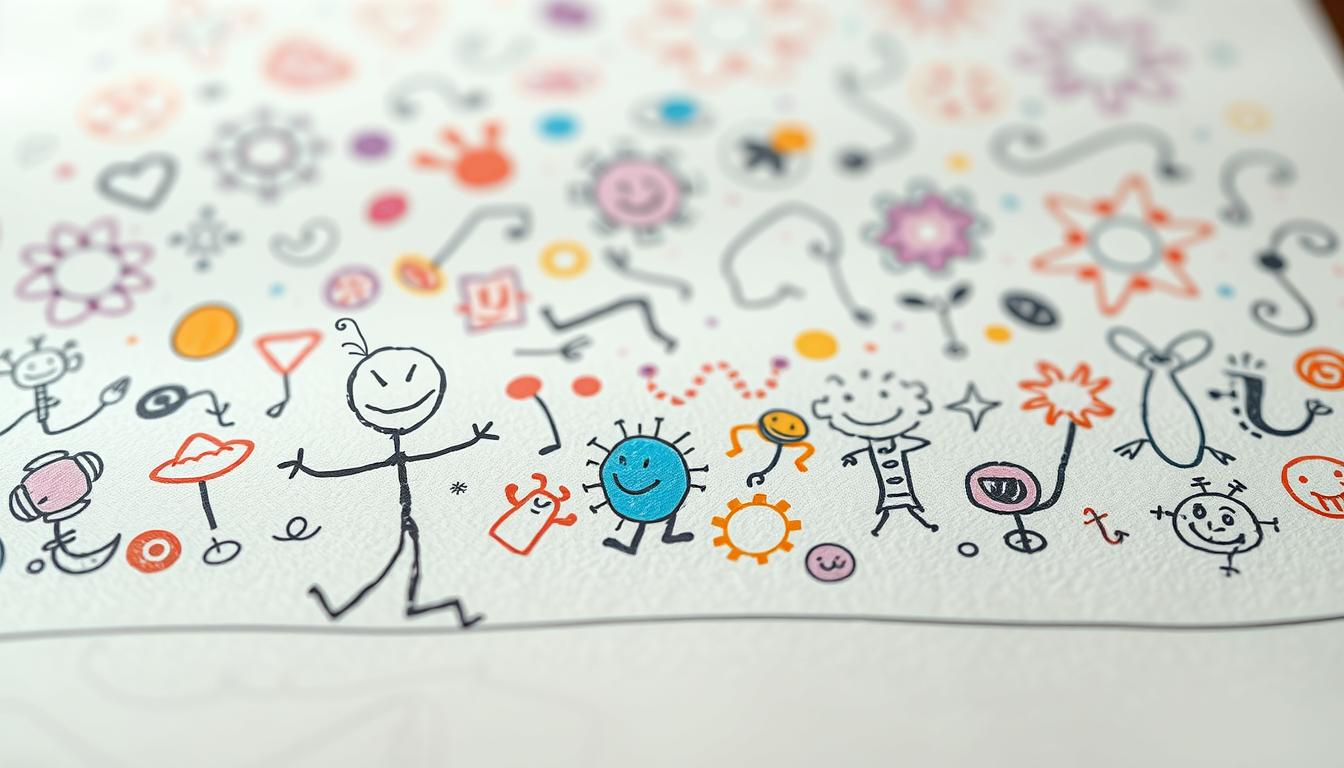
Creating silly doodles is a fun activity for everyone. It’s a way to express yourself and make your imagination come alive. You can do it with simple, playful art.
Recently, people have been sharing their doodle art on Instagram. They fill their sketchbooks with cute chibis and funny characters. It’s a way to show off their creativity.
This activity brings joy and lets people express themselves. By exploring doodle art, you can unleash your creativity. And you’ll have a blast doing it.
What Are Drawing Doodles?
Doodling is about making simple, fun drawings. These drawings bring happiness to both the person making them and those who see them. Doodles can be anything from simple stick figures to detailed drawings, showing doodling’s wide range of possibilities.
Doodles are known for being easy and spontaneous. You can make them with just a pen and paper. This makes doodling something everyone can enjoy.
The Basics of Doodle Drawing
The basics of doodling include simple shapes and lines. Simple shapes like circles, squares, and triangles are the base of many doodles. Lines, whether straight, curved, or zigzagged, add detail and complexity to these shapes.
You don’t need to be a great artist to start doodling. The joy of doodling is in its freedom and creativity. You can try different doodling techniques, like hatching, shading, and pattern-making, to make your doodles more interesting.
Exploring doodling opens up a world of doodle ideas. You can draw cartoon characters or create abstract patterns. The most important thing is to have fun and enjoy making them.
Tools You Need for Doodling
Starting your doodling journey means getting the right tools to spark your creativity. For doodling for beginners, you don’t need to spend a lot or get complicated gear.
The basic doodling tools are pens, pencils, and paper. These simple items can create everything from simple sketches to detailed designs. They offer plenty of doodle inspiration.
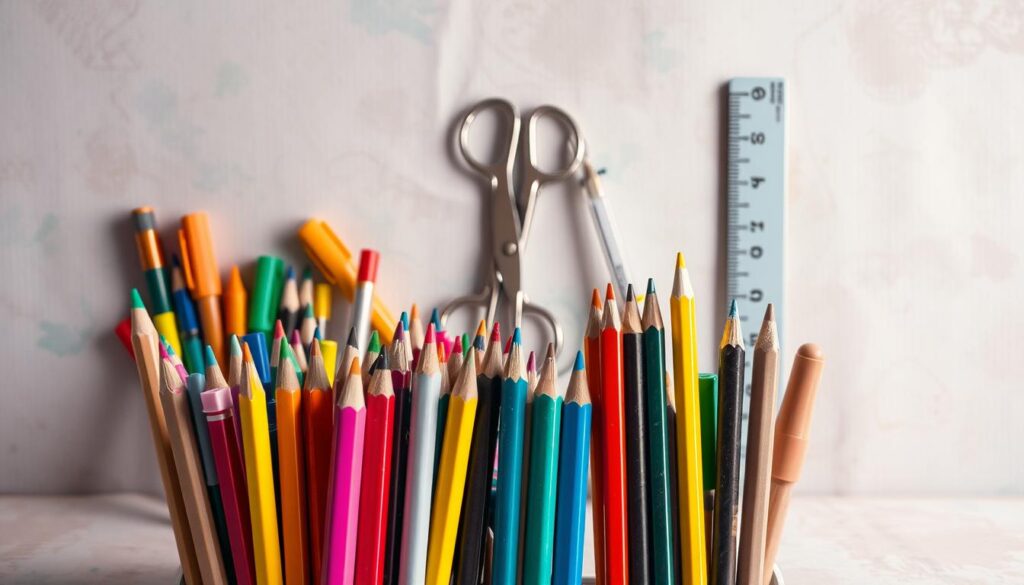
Different doodling tools can change how your doodles look. A fine-tip pen is great for detailed lines, while a pencil is better for shading and erasing. Trying out different tools can help you find your own doodling style.
The paper you use also matters. Smooth paper is best for detailed work, while textured paper adds a unique touch. As you doodle more, you’ll see how the right tools can boost your creativity and give you endless doodle inspiration.
The most important thing about doodling isn’t the cost of your tools. It’s about trying new things and finding what works for you. Begin with the basics, and as you get better, explore more tools to grow your creativity.
Tips for Getting Started with Doodles
The world of doodling is full of endless possibilities. With a few tips, you can start creating your own funny doodles. For beginners, the key is to start simple and have fun.
Start by practicing simple doodles you find online or in sketchbooks. Imitation is a great way to build confidence and develop your skills. As you become more comfortable, you can start experimenting with different styles and techniques.
It’s normal to feel hesitant when starting something new. But doodle challenges can help you overcome this. By setting a simple challenge for yourself, you can break the ice and get your creative juices flowing.
Don’t worry too much about perfection. The goal is to have fun and be creative, not to create a masterpiece. As you continue to doodle, you’ll find that your skills improve, and you’ll become more confident in your abilities.
Remember, the most important thing is to enjoy the process and not be too hard on yourself. With practice and patience, you’ll be creating funny doodles and participating in doodle challenges in no time.
Different Styles of Doodles
Doodles come in many styles, from cute and playful to complex and detailed. This variety makes doodling fun for many people.
Creative doodles can be simple shapes or complex designs. They can tell stories or evoke emotions. The simplicity or complexity of a doodle greatly affects its impact and message.
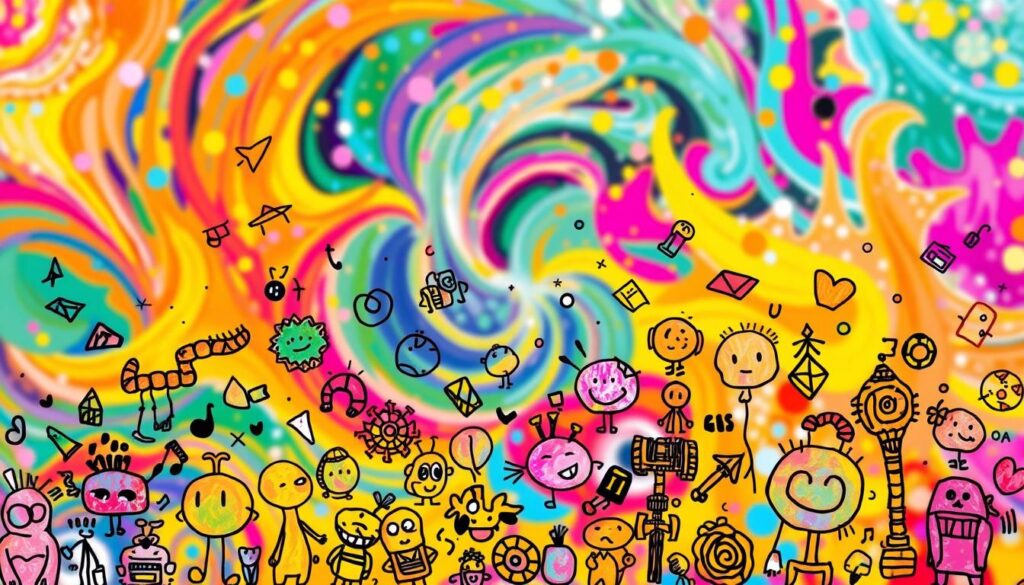
Cute and silly doodles are very popular. They often feature cartoon characters, animals, or abstract shapes. These doodles are fun to make and bring joy to those who see them.
At the other end are detailed doodles that need patience and focus. These include mandalas, zentangles, and other doodle art that show off the artist’s skill.
Exploring Themes through Doodles
Doodles can express many themes and emotions, like happiness, love, sadness, or frustration. The doodle style greatly affects how these themes are shown.
Bright colors and playful shapes can show happiness. Darker, muted tones might show sadness or melancholy.
By trying different styles and techniques, doodlers can explore many themes and emotions. This makes doodling a powerful way to express oneself.
Doodling Techniques to Try
Exploring different doodling techniques can really boost your creativity. Doodling is more than just drawing simple shapes. It’s an art that includes many techniques, from basic lines to detailed shading and patterns.
Start with simple doodling like contour doodling. This focuses on the outlines of things. Or try gesture doodling, which captures the movement of subjects. These basics improve your observation and hand-eye coordination.
Experimenting with Different Methods
Once you’re comfortable with basics, try more advanced doodling. Pattern doodling is great for creating repeating patterns. It’s calming and improves your fine motor skills. You can also play with shading techniques to add depth to your doodles.
Doodle art combining is another fun way to mix different styles. You can blend geometric shapes with organic ones. Or try different textures and line weights. The most important thing is to have fun and be open to trying new things.
By exploring these doodling techniques, you’ll get better at doodling and boost your creativity. So, pick up a pen and paper, and start doodling!
Doodle Challenges and Prompts
Doodle challenges are a fun way to boost your creativity and stay motivated. They help you explore different themes and styles. This keeps your doodling fresh and engaging.
One of the benefits of doodle challenges is the constant doodle inspiration they provide. By following a prompt or theme, you can overcome creative blocks. You also develop new ideas.
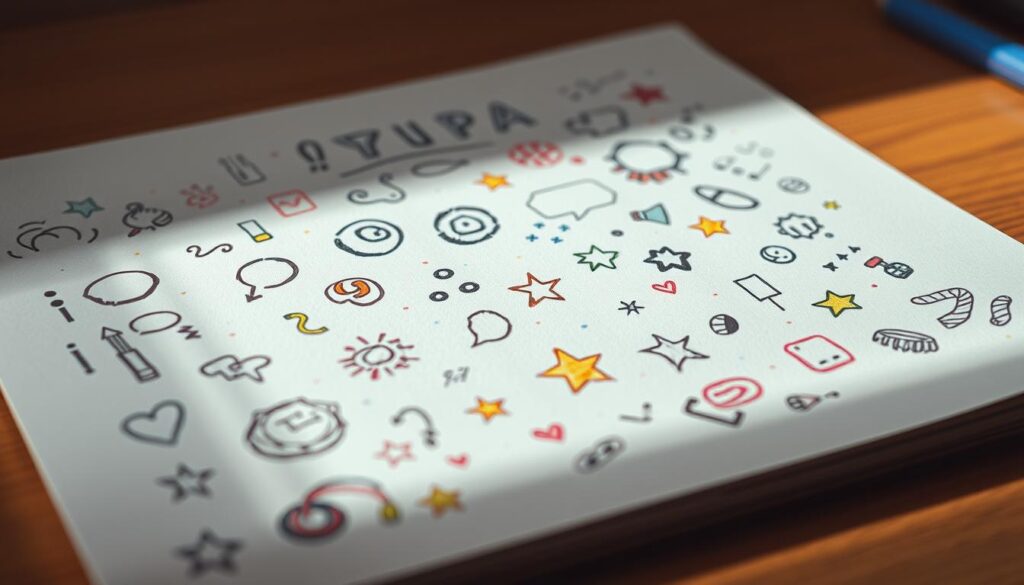
Popular doodle challenges include daily or weekly prompts. You’re given a theme or subject to doodle. You can find these prompts online or create your own based on your interests.
To get the most out of doodle challenges, try different techniques and styles. Don’t be afraid to step out of your comfort zone. Try something new.
How Doodling Enhances Creativity
Doodling is a fun way to boost creativity. It lets people connect with their subconscious mind. This way, they can freely express their ideas and imagination.
It’s not just for artists. Anyone can use doodling to spark their creative thinking. This activity helps in brainstorming and coming up with new ideas.
Doodling lets the mind explore freely. It’s a way to find new insights and solutions. It also helps in reducing stress and anxiety, making it easier to think creatively.
Doodling is also a fun way to try out different styles and techniques. By experimenting, people can find new patterns and designs. It’s a judgment-free activity that’s fun for everyone, no matter their age or skill level.
To get the most out of doodling, be open-minded and willing to explore. Make doodling a regular part of your routine. As you doodle more, you’ll find your creative thinking and idea generation improve.
Adding doodling to your daily life can greatly enhance your creativity. It can be a tool for brainstorming or just a way to relax. By embracing doodling, you can discover new ways to express yourself and innovate.
Incorporating Doodles into Art Projects
Silly doodles are more than just for fun. They can add a special touch to art projects. Artists can use doodle art to make their work more unique and playful.
Doodles can start a piece or be part of the final work. For example, doodle art can make borders or backgrounds. These add depth to paintings or mixed-media art.
“The simplest acts of creativity can often lead to the most profound outcomes.”
Using silly doodles in art can spark new ideas. Artists can mix doodles with other techniques. This creates complex and interesting artworks.
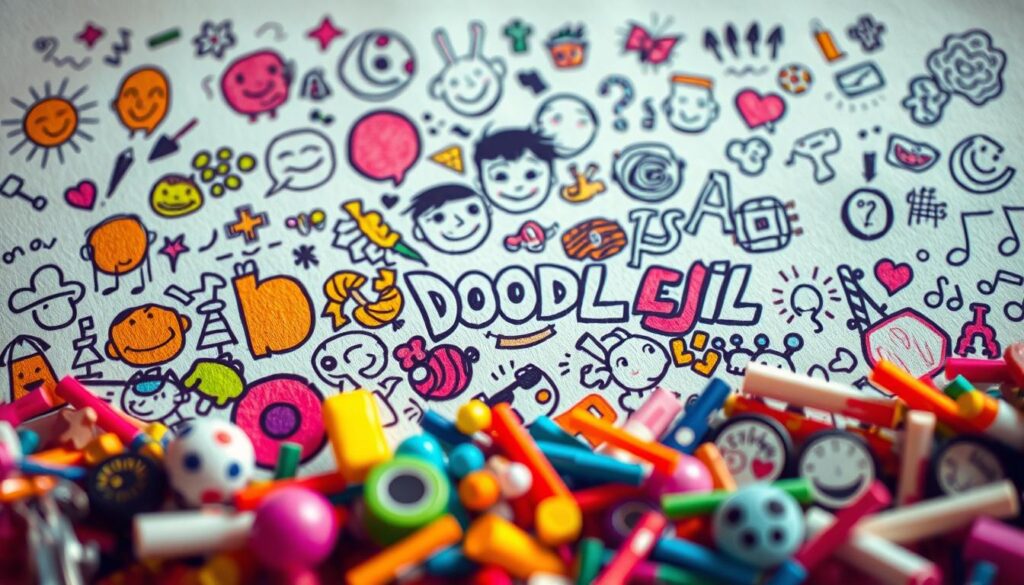
Embracing doodle art lets artists explore new ways to be creative. They can make art that looks great and touches the heart.
Showcasing Your Doodles
If you’re proud of your doodle ideas, there are many ways to share them. Showing off your doodles can help you get feedback and encouragement. It’s also a chance to inspire others who love doodling.
One great way to share your doodles is on social media. Sites like Instagram, Facebook, and Pinterest are full of artists and doodlers. You can post your funny doodles, use hashtags to reach more people, and join doodling groups.
Joining doodle communities is another smart move. Online forums, social media groups, and doodling websites are perfect for sharing your work. You can get feedback, see what others are doing, and even find new doodle ideas.
Don’t be shy about sharing your doodles and talking to others. The doodling community is very supportive. Sharing your work can lead to new friends, inspiration, and even art collaborations.
Tips for Showcasing Your Doodles
When you share your doodles, make sure the photos or scans are good quality. Good lighting and clear images can really help. Also, be open to feedback. It’s a chance to learn and improve as a doodler.
Resources for Doodlers of All Levels
Doodlers can find lots of inspiration and help online. Websites like Pinterest have huge collections of doodles. You can find everything from simple shapes to detailed designs.
For beginners, YouTube and Skillshare have tutorials. They teach you how to doodle step by step. Online groups, like those on Facebook, let artists share their work and get feedback.
Want to get better at doodling? Look for beginner-friendly resources online. Many artists post their doodles on Instagram. They use hashtags to connect with others.
Using these resources, doodlers can grow their skills. They can learn new techniques and stay inspired to keep making art.