

The world is moving towards a sustainable lifestyle. People are now more likely to give old items a new life. This helps reduce waste and supports eco-friendly practices.
Repurposing old items is a creative way to do this. For example, old windows can become decorative pieces. They add a unique touch to any room. This not only cuts down on waste but also saves natural resources.
By choosing recycling and repurposing, we can lessen our impact on the environment. It’s a simple yet powerful way to help our planet.
What is Recycling?
Recycling is about giving old materials a new life. It reduces the need for extracting, processing, and transporting raw materials. This helps conserve natural resources and supports waste reduction and environmental conservation.
Recycling means collecting and processing materials that would be thrown away. These materials are turned into new products. This reduces the need for raw materials and lowers environmental impacts.
The recycling process is key for environmental conservation. It helps decrease waste sent to landfills and saves natural resources. This protects biodiversity and reduces pollution.
Learning about recycling is the first step to help our environment. By joining recycling programs and choosing eco-friendly products, we all help the planet.
Effective recycling needs everyone’s help. Individuals, communities, and governments must work together. Together, we can reduce waste and promote sustainability.
Types of Recyclable Materials
Knowing what can be recycled is key for managing waste well. Many household items can be recycled, like paper, plastic, glass, and metal. Each has its own recycling method.
Paper, Plastic, Glass, and Metal
Paper is a common recyclable. It includes newspapers, cardboard, and mixed paper. Recycling paper saves trees and cuts down energy needed for new paper.
For example, recycling one ton of paper saves 17 trees, 7,000 gallons of water, and 4,100 kilowatt-hours of electricity.
Plastic is also widely recyclable. Different plastics, marked by their resin code, can become new items like bottles and clothes. Proper sorting is key for plastic recycling.
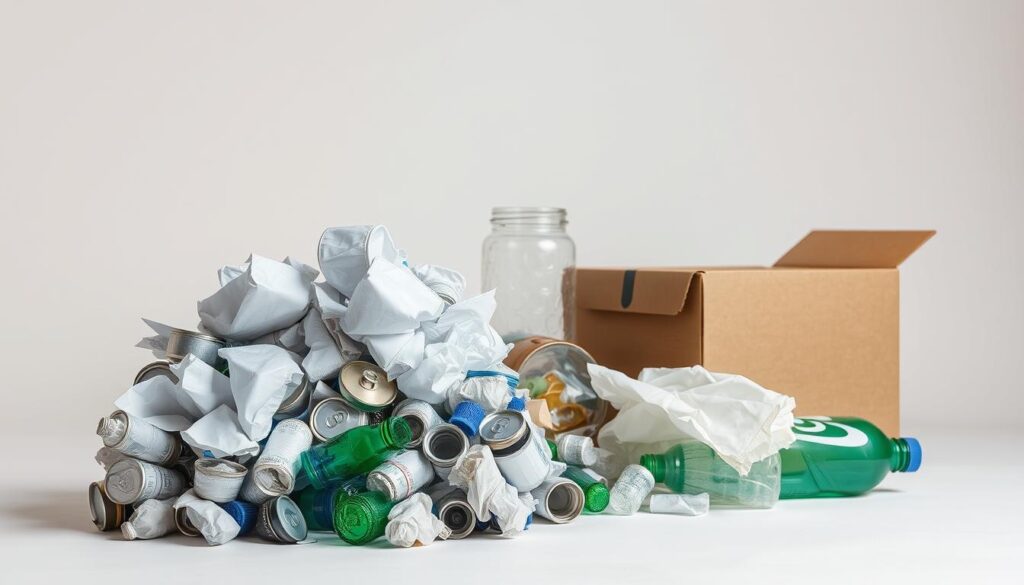
Glass can be recycled endlessly without losing quality. It saves raw materials and cuts energy needed for making glass. Common recyclable glass items are bottles and jars.
Metal recycling, like aluminum and steel, is very beneficial. It saves natural resources, cuts landfill waste, and saves energy. Recycling aluminum cans uses 95% less energy than making new aluminum.
By recycling these materials, households can greatly help reduce waste and support sustainability.
How Recycling Works
It’s important to know how recycling works to see the effort in making waste into valuable resources. The recycling process has several key steps. These steps turn old materials into new products.
The first step is collection. Recyclable materials are picked up from homes, businesses, and recycling centers. Then, they go to a sorting facility. There, they are sorted by type, like paper, plastic, glass, or metal.
“The key to successful recycling is proper sorting and processing of materials. It’s not just about putting items in a recycling bin; it’s about ensuring those items are turned into something new and useful.”
After sorting, materials are processed into raw materials for new products. For example, plastic bottles are cleaned, shredded, and melted. They become small pellets for making new items. This step is key for waste management, as it cuts down landfill waste.
The last step is manufacturing new products from recycled materials. This saves natural resources and reduces environmental harm. For example, recycling aluminum cans uses 95% less energy than making new aluminum.
In conclusion, the recycling process is complex but essential for managing waste and saving resources. By understanding recycling, we can see our important role in it.
Benefits of Recycling
Recycling is a key way to fight climate change. It has many benefits. Recycling helps reduce greenhouse gases, saves natural resources, and cuts energy use.
Environmental Benefits of recycling are big. It cuts down pollution and saves habitats. For example, making aluminum cans from recycled cans uses 95% less energy than making new aluminum.
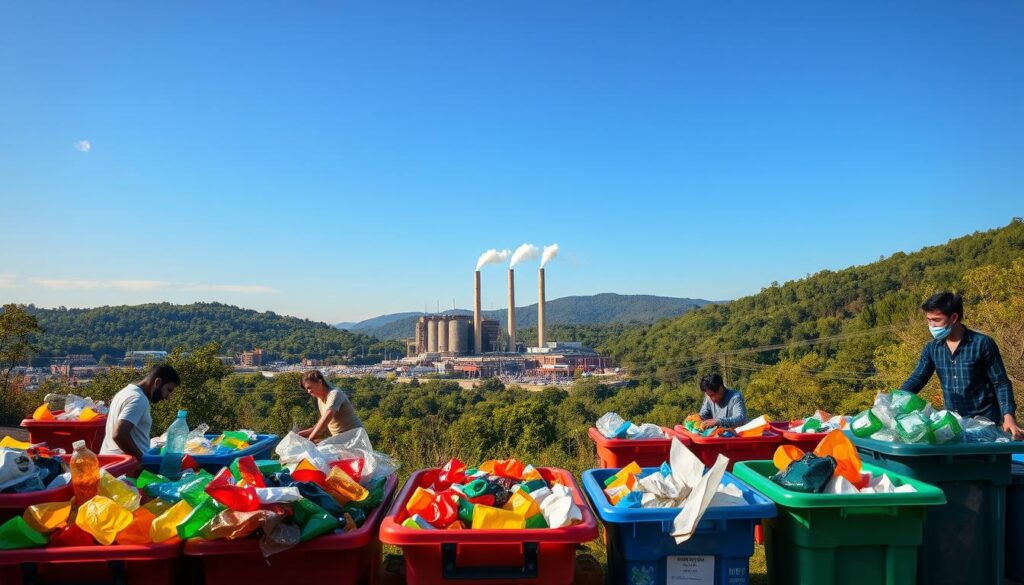
Economic Benefits are also big. Recycling creates jobs, boosts innovation, and saves money on waste. It also saves money by not needing to get raw materials.
Promoting Sustainability
Recycling is vital for sustainable living. It helps communities reduce their environmental impact. This fight against climate change also promotes a sustainable culture.
Sustainability through recycling means less waste and more reuse. It’s a big step towards a circular economy. This way, materials keep being used, not wasted.
In short, recycling is very important. It helps us reduce our environmental impact, saves money, and supports sustainable growth. By understanding these benefits, we can work towards a greener future.
The Role of Government in Recycling
Government policies are key in shaping recycling practices and promoting sustainability. They can make recycling better by setting rules and starting initiatives. This helps increase recycling rates and cuts down on waste.
Regulatory Frameworks are vital for making recycling the same everywhere. Governments set rules on what can be recycled, how it’s processed, and who does what in recycling. This makes recycling consistent and clear.
One big way governments help recycling is through sustainability initiatives. They run education campaigns, give money for recycling programs, and build recycling facilities. For example, many governments teach people why recycling is important and how to do it right.
Also, governments use economic incentives to boost recycling. They offer tax breaks or subsidies to businesses that recycle. This encourages more companies to join recycling efforts.
Building infrastructure for recycling is another important step. Governments invest in new recycling facilities and tech. This makes recycling faster and cheaper.
In summary, governments have a big role in recycling. They use rules, education, incentives, and infrastructure to improve recycling. This helps make our future more sustainable.
Innovations in Recycling Technology
The recycling industry is on the verge of a big change. New technologies are making recycling more efficient and green. These advancements help sort, process, and turn waste into useful resources.
One big innovation in recycling technology is advanced sorting systems. These use artificial intelligence and machine learning to sort materials accurately. For example, optical scanners can now identify materials by their chemical makeup, making recycling better.
New materials and products are also being made from recyclables. Companies are creating sustainable packaging materials from recycled plastics. This reduces the need for new materials and cuts down on environmental harm.
The impact of innovation in recycling technology goes beyond just the process. It also opens up new business models and market chances. As recycling gets cheaper and more efficient, more companies are investing in green practices. This pushes the industry towards being more sustainable.
In summary, recycling technology innovations are changing the industry for the better. With ongoing tech advancements, we can look forward to even more progress. This will help create a more circular and sustainable economy.
Challenges in Recycling
Recycling is key for sustainability, but it faces many challenges. These hurdles affect its ability to work well and effectively.
One big problem is contamination. When recyclables mix with non-recyclables or trash, it messes up the recycling process. For example, a dirty plastic bottle or a food-stained cardboard box can ruin a whole batch. Contamination raises costs and lowers the quality of recyclables.
Another big issue is the lack of infrastructure. In many places, recycling facilities are scarce or don’t exist. This makes it hard to recycle and discourages people from trying.
Public awareness is also a big deal. Many don’t know what can be recycled or how to prepare it right. We need education and clear rules to get more people involved in recycling.
To tackle these problems, we need collaboration from governments, businesses, and communities. Governments can fund better recycling facilities. Businesses can adopt green practices and support recycling efforts. Communities can help by teaching people about recycling.
By working together and finding good solutions, we can beat recycling’s challenges. This means better infrastructure, less contamination, and a culture that values recycling.
How to Recycle at Home
Recycling at home is easy and can greatly help the environment. It’s more than just sorting trash. It’s about living in a way that’s good for our planet and cuts down on waste.
Simple Steps to Start Recycling at Home
First, find out what can be recycled in your home, like paper, plastic, glass, and metal. Always clean containers before recycling them. You can also compost food waste to make soil for your garden.
Creative DIY Projects
Turning old things into new ones is fun and helps reduce waste. You can make planters from jars or a bird feeder from a plastic bottle. It’s a fun way to be creative and teach your family about sustainability.
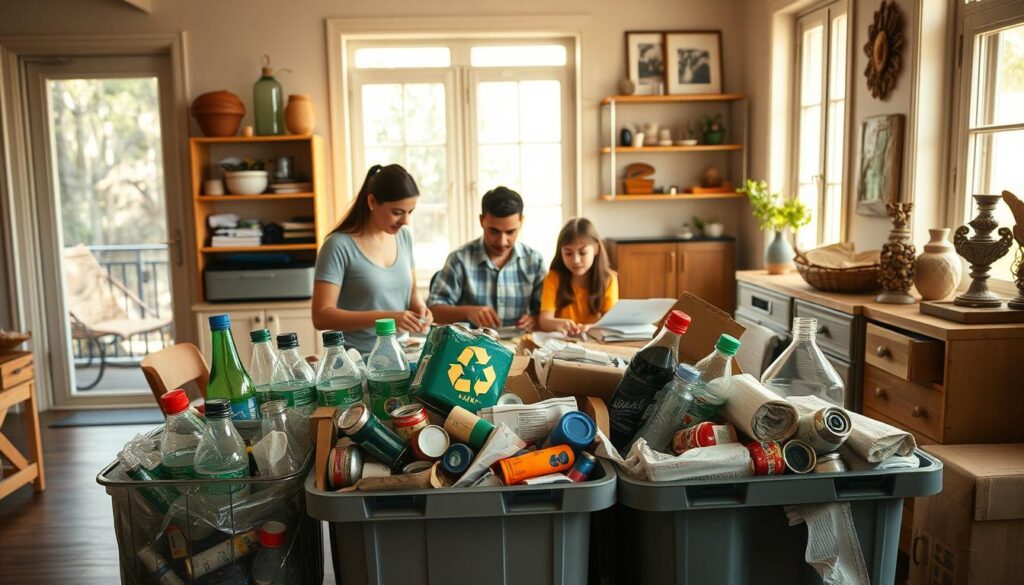
“The earth has enough resources for our need, but not enough for our greed.” – Mahatma Gandhi
Practical Tips for Effective Recycling
To recycle well, know what can and can’t be recycled. Look up your local recycling rules. Also, use fewer single-use plastics and choose reusable items instead.
Repurposing Household Items
Think twice before throwing something away. Old t-shirts can make reusable bags, and cardboard boxes are great for storage or kids’ crafts. Being creative with what you have saves money and reduces waste.
Every small step towards sustainability matters. By recycling and doing DIY projects, you help make the world a better place. Start these habits today for a greener tomorrow.
The Future of Recycling
The recycling industry is on the verge of a big change. This is thanks to new trends and technologies that aim to make things more sustainable and cut down on waste.
One big trend is the use of advanced technologies like AI and robotics in sorting facilities. These tools make recycling faster and more accurate. This means more materials can be turned into something new.
There’s also a growing focus on the circular economy. This means products are made to be recycled or reused. It helps reduce waste and saves resources.
New recycling technologies are on the horizon. They can handle a variety of materials, including tricky plastics and electronics.
As these trends and technologies keep improving, they will greatly affect our planet and economy. They will bring new chances and challenges. It’s important to adapt to these changes for a greener future.
Recycling Symbols and Labels Explained
Recycling symbols and labels are more than just marks on packaging. They share important info about sustainability. These symbols tell us what can be recycled, how to recycle it, and what materials are in the product.
The most common recycling symbol is the mobius loop, or recycling symbol. It shows a product or packaging can be recycled. But, just because it has this symbol, it doesn’t mean local recycling will take it. This depends on local rules and facilities.
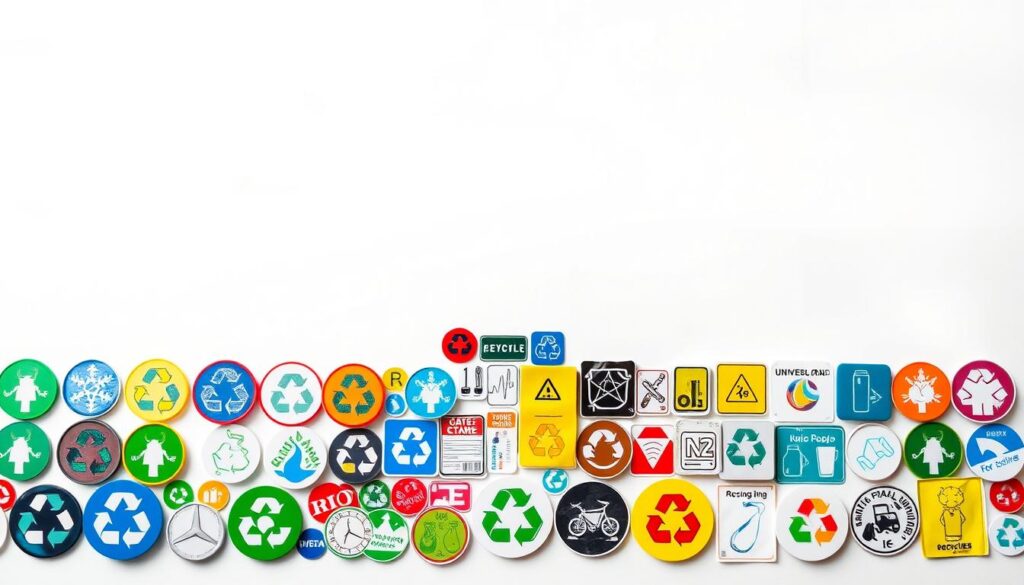
Other key labels show what materials are in the product, like PET (Polyethylene Terephthalate) or HDPE (High-Density Polyethylene). These labels help both consumers and recycling places know the plastic type. This is key for recycling.
Understanding Label Variations
It’s also key to know that recycling symbols and labels differ by country and region. For example, the European Union has its own rules and symbols for packaging waste. Knowing these differences helps us make better recycling choices.
By understanding and correctly reading recycling symbols and labels, we can help a lot with sustainability and waste reduction. It’s a simple but powerful way to help the environment.
Community Involvement in Recycling Efforts
Community involvement is key to successful recycling programs. When people work together, they help the environment and build a greener future. This teamwork creates a culture of responsibility.
Local recycling programs let people make a real difference. By joining curbside recycling, clean-up events, and workshops, they help a lot. Community participation is vital for these programs to succeed.
Getting involved in recycling can inspire others. It makes people feel proud of their community. Teaching kids and adults about recycling helps them develop good habits for life.
To boost community involvement, local groups can try different things. They can run awareness campaigns, make recycling easy, and honor those who help a lot. Together, communities can be more sustainable and reduce waste.
In short, community involvement is very important for recycling. It’s through working together that we can make a big difference. We must keep supporting recycling efforts in our communities.
The Global Impact of Recycling
Recycling has a big role in fighting climate change and promoting sustainability worldwide. It helps cut down on greenhouse gas emissions, which is key in the battle against global warming. The need for effective recycling practices is more important than ever as we face climate change.
Recycling helps the environment by saving natural resources and reducing landfill use. This action also lowers greenhouse gas emissions from waste disposal. As more communities start better recycling programs, we move closer to a sustainable future.
Improving recycling practices is key to its global success. By using new recycling technologies and getting more people involved, we can lessen our carbon footprint. This supports a culture of sustainability.
Looking ahead, recycling will keep playing a critical role in tackling climate change. It will help make the world a better place for generations to come.