
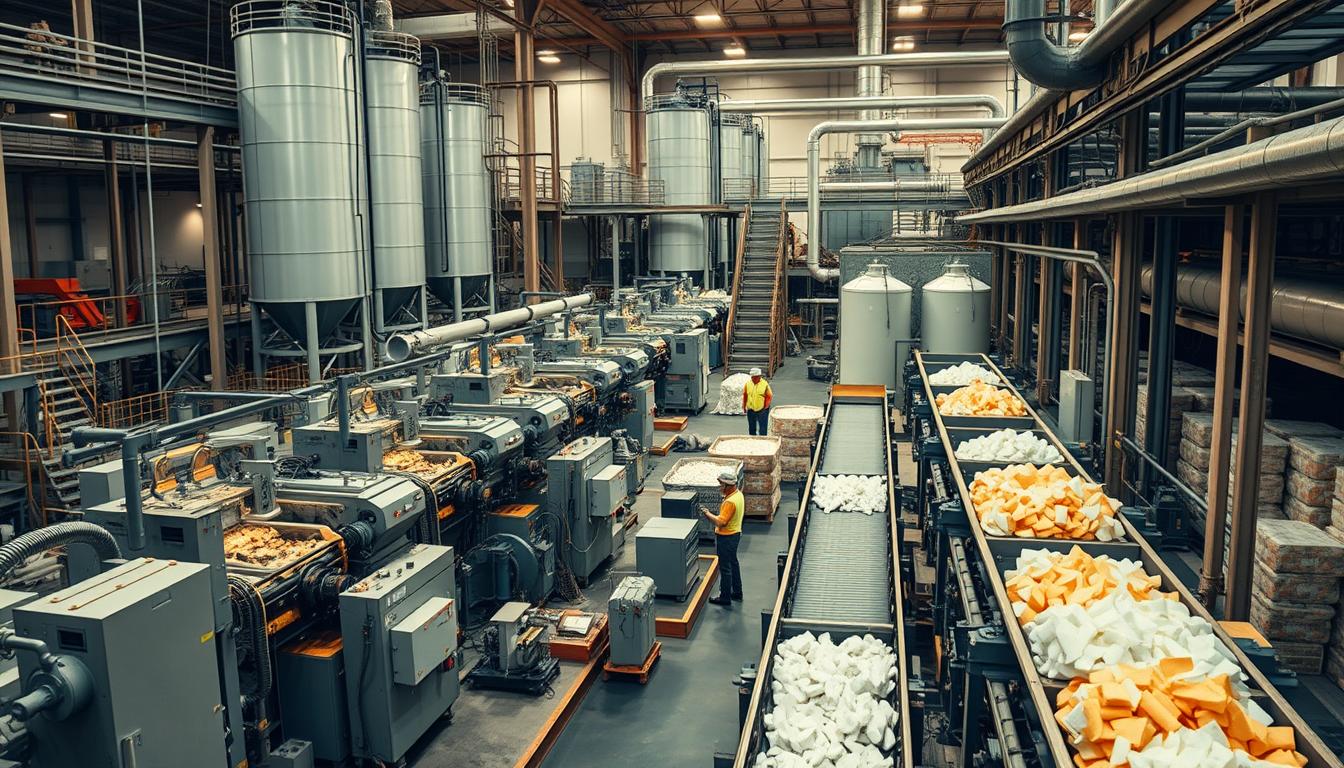
The process of plastic manufacturing is complex and uses a lot of resources. It goes from getting raw materials to making the final product.
It’s interesting to know that almost all plastic production comes from chemicals made from oil and natural gas. These are found deep in the Earth.
To understand how plastic is made, we need to see the detailed steps. We also need to know the big resources needed to turn raw materials into the plastic products we use every day.
The Basics of Plastic
Plastic is a versatile material that plays a big role in our daily lives. It can be molded and shaped into many forms. This makes it useful in many industries.
Plastic comes from two main sources: synthetic and biobased. Synthetic plastics come from non-renewable resources like oil and gas. They are made through chemical reactions that turn these materials into polymers.
Biobased plastics, on the other hand, come from renewable sources like corn and sugarcane. They are a greener option compared to traditional plastics. This is because they use renewable resources and help reduce our reliance on fossil fuels.
Knowing what plastic is helps us understand its basics. Plastic is a synthetic or semi-synthetic material that can be molded. This ability to be shaped makes plastic useful for a wide range of products, from simple items to complex parts.
The difference between synthetic and biobased plastics is important. Synthetic plastics have been more common, but biobased plastics are becoming more popular. This is because they offer environmental benefits.
The History of Plastic Production
The story of plastic starts with ancient cultures using natural latex. Mesoamerican people used it to make waterproof containers and clothes. This was the start of a long journey to today’s plastics.
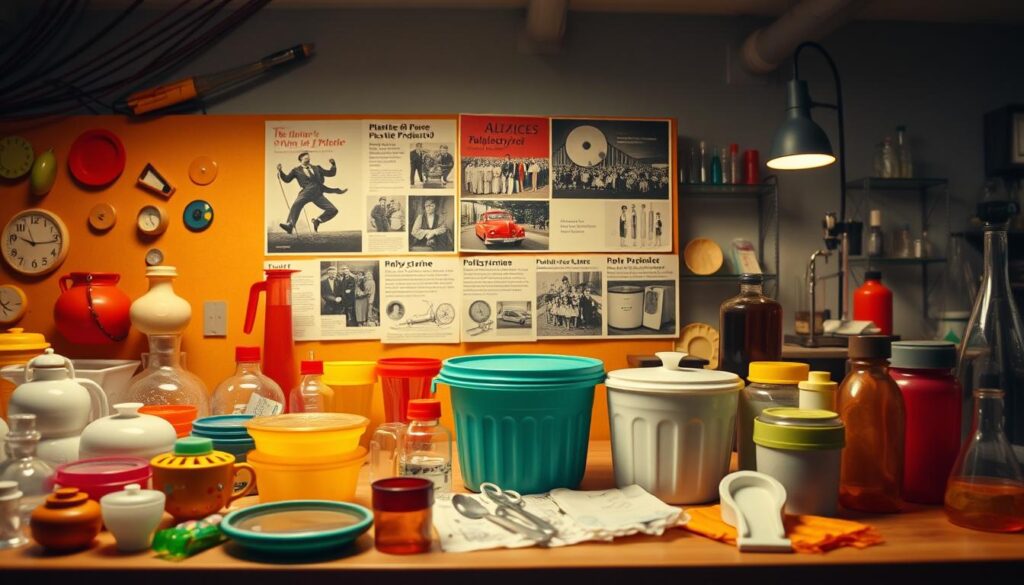
The use of natural latex was a big step in plastic history. Early people mixed it with other things to make stronger materials. This early work helped create more advanced plastics later on.
Natural Latex and Rubber
Natural latex, from the rubber tree sap, was the first plastic material. It was used for waterproof clothes and containers. It showed how versatile these materials were.
A big leap in plastic history was Alexander Parkes’ invention of Parkesine. It was made from plant fibers and was the first man-made bioplastic. This was a big step towards synthetic plastics we use today.
Plastic has changed a lot from natural latex to synthetic materials. This change came from new technologies and the need for better materials. Knowing about plastic history helps us understand today’s plastics better.
Raw Materials for Plastic
Plastic production relies heavily on hydrocarbons from crude oil, natural gas, and coal. These fossil fuels are key for making plastic.
First, crude oil, natural gas, and coal are extracted. Crude oil is refined into petrochemicals, which are plastic’s building blocks. Natural gas gives ethane and propane, used to make ethylene and propylene, essential for plastic.
Coal, though less used, can also be turned into petrochemicals. The hydrocarbons are then changed into various plastics through polymerization and chemical reactions.
The use of fossil fuels shows how the energy and plastics industries are connected. As plastic demand rises, so does the need for these raw materials.
Knowing what goes into plastic is key to solving environmental and sustainability issues. By understanding these sources and processes, we can look for better ways to make plastic.
The Polymerization Process
At the heart of plastic production lies the polymerization process. It’s a chemical reaction that turns raw materials into versatile plastics. This process is key to making the many plastics we use every day.
The polymerization process happens in two main ways: addition polymerization and condensation polymerization. Knowing these methods helps us understand how different plastics are made.
Addition Polymerization
Addition polymerization joins monomer units without losing atoms. It starts with heat, light, or catalysts. For instance, polyethylene and polypropylene are made this way. They’re used in packaging, containers, and household items.
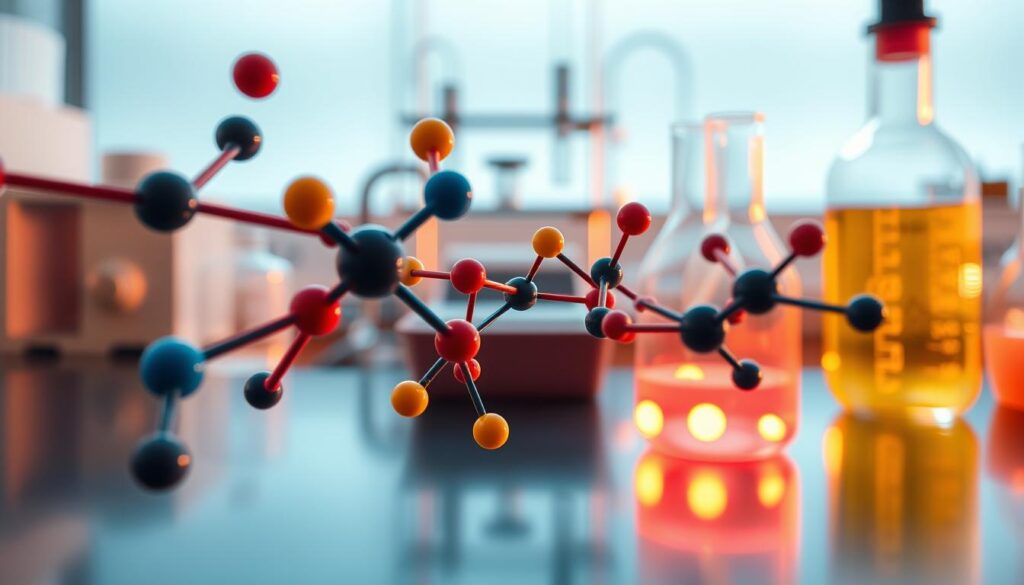
Condensation polymerization, on the other hand, combines monomers and loses small molecules, like water. This makes polymers like nylon and polyester. They’re used in textiles, car parts, and more.
Choosing between addition and condensation polymerization depends on the plastic’s needed properties. By controlling the polymerization process, makers can create plastics for specific uses.
In summary, the polymerization process is vital in making plastics. It allows for the creation of many plastics through different methods. Understanding these processes shows the complexity and versatility of modern plastics.
Additives in Plastic Production
Plastic products mix polymer resin with additives for better properties. “The use of additives in plastics has revolutionized the industry, enabling the creation of materials with diverse properties,” says an expert in plastic manufacturing.
Additives are chemicals that make plastics better. They can make plastics tougher, more flexible, and change their color. The type of additive used depends on what the plastic is for.
Stabilizers, which protect plastics from damage by heat, light, or chemicals.
Colorants, which add color to plastics.
Choosing the right additives is key to a plastic’s final quality. Experts say, “The right mix of additives can greatly improve a plastic’s durability and use.”
“Additives play a vital role in the plastic production process, allowing for the creation of a wide range of products that meet specific needs.”
In summary, additives are vital in making plastics. They help manufacturers create materials with specific qualities. Knowing about different additives and their roles shows how complex and versatile modern plastics are.
The Manufacturing Process
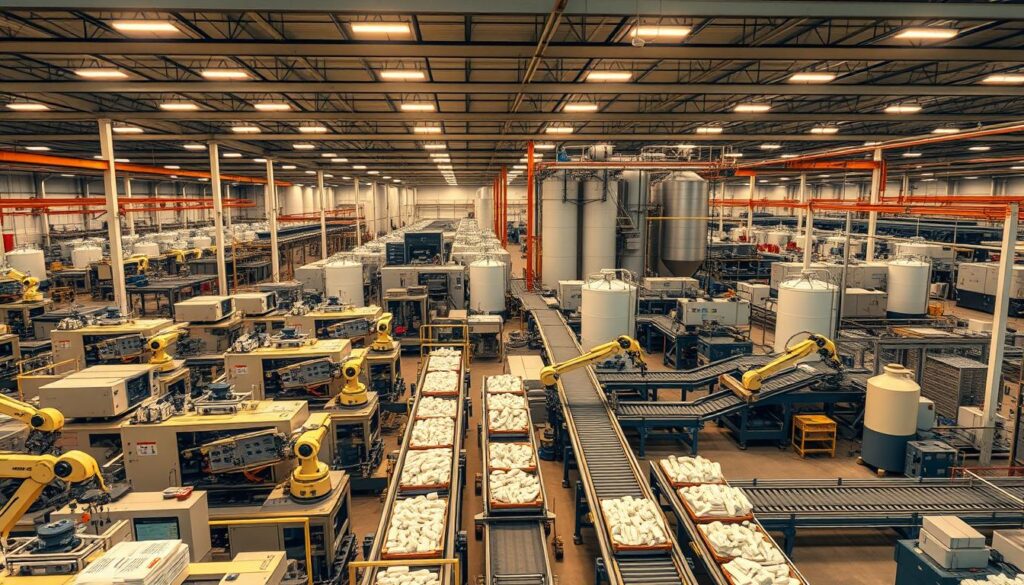
Plastic manufacturing is a detailed process that turns raw materials into finished products. It involves several key steps, from extracting raw materials to making the final plastic product.
The first step is extracting raw materials. This usually means getting petroleum or natural gas, the main sources for plastic. The materials then go through refining to make them ready for further processing.
Next, cracking happens. This process breaks down the refined materials into smaller molecules like ethylene and propylene. These molecules are what plastics are made of.
Then, polymerization occurs. Here, these small molecules are combined into long chains, or polymers, through chemical reactions. This step is key because it decides the plastic’s strength, flexibility, and durability.
After that, compounding takes place. Additives are mixed with the polymer to improve its properties. These additives can include colorants, UV stabilizers, and fillers.
“The plastic manufacturing process is a testament to human innovation, transforming simple raw materials into complex products that are integral to modern life.”
The final stages involve shaping the plastic into the desired form. This is done through extrusion, injection molding, or blow molding. The result is a wide range of plastic products, from packaging and consumer goods to automotive parts and medical devices.
In conclusion, the plastic manufacturing process is complex and requires precision and innovation. Understanding these steps helps us appreciate the versatility and importance of plastic in our daily lives.
Recycling of Plastic
As the world faces plastic waste, recycling is key. The importance of recycling plastic is huge. It can greatly lessen the harm plastic production causes.
The recycling process starts with collecting plastic waste. Then, it’s sorted by type and processed into raw materials. This saves natural resources and cuts down landfill waste.
Plastic recycling helps lessen plastic’s environmental harm. Reusing plastic means we need less new plastic. This cuts down on fossil fuel use and emissions.
But, recycling faces hurdles like contaminated recyclables and missing recycling spots. Also, some plastics are hard to recycle. We must tackle these issues to make recycling better.
The importance of recycling goes beyond the environment. It also boosts the economy. Recycling creates jobs and helps communities save on waste costs.
In short, plastic recycling is vital for a green future. By understanding its value and working on recycling, we can achieve a better world.
Environmental Impact of Plastic
Plastic production and disposal harm our environment, leading to pollution and climate change. Plastic waste often ends up in oceans and landfills. This hurts marine life and contaminates soil.Plastic Pollutionis a big problem, with millions of tons of waste each year. This waste pollutes waterways and damages natural habitats.
The impact on marine life is very worrying. Plastic debris can be eaten or cause entanglement. This can injure or kill animals.
Plastic production also affectsclimate change. Making plastic needs a lot of energy, often from fossil fuels. This leads to greenhouse gas emissions. Also, getting and moving raw materials for plastic production has more environmental costs.
As we face plastic waste challenges, it’s key to tackle theenvironmental impact of plasticwith green practices and new ideas. We need to use less plastic, recycle more, and find biodegradable options. These steps are vital to lessen plastic’s harm to the environment.
Understanding plastic’s wide effects helps us strive for a greener future. We must change our ways and push for policies that help the planet.
Innovations in Plastic Alternatives
Innovations in bioplastics and sustainable materials are changing how we see plastic. The world is facing big challenges with plastic waste. So, finding plastic alternatives is now a top priority.
Biobased plastics come from things like carbs, starch, and oils. They are made from renewable resources. This means they can help us use less fossil fuels and reduce carbon emissions.
Using sustainable materials in making plastics is good for the planet. It also leads to new ideas. For example, bioplastics can break down easily. This makes them great for things like packaging and clothes.
The push for plastic alternatives is also boosting other industries. Companies are spending a lot on research to make greener products. This helps them lessen their harm to the environment.
Looking ahead, plastic alternatives will be key in making our future greener. By exploring bioplastics and sustainable materials, we can tackle plastic’s environmental problems. This will help us build a cleaner world.
Regulations Surrounding Plastic Production
Governments around the world are making rules to cut down on plastic waste. They want to make plastic production more eco-friendly. These rules differ by country but aim to lessen plastic’s harm to the environment.
Government rules for plastic production include setting standards for the industry. They limit some plastics and require recycling. For example, some places ban single-use plastics. Others make companies pay for the waste their products cause.
The plastic industry is also working to reduce waste. Many companies use recycled materials in their products and packaging. This helps cut down on waste and saves natural resources.
Key Initiatives
Some important steps include:
- Setting plastic regulations to limit production and encourage recycling.
- Supporting biodegradable plastics.
- Pushing for a circular economy through recycling and reuse.
These actions are key to tackling the plastic waste problem. By teaming up, governments and industries can make a big difference. They can help create a more sustainable future.
Future of Plastic Manufacturing
The future of plastic making is set for big changes thanks to new tech and green concerns. As plastic use keeps rising, the industry must find new, eco-friendly ways to work.
Using renewable resources is becoming a big trend in making plastics. The need for oil is growing, so plastics made from plants, waste, or even CO2 are becoming more common. This change saves oil and cuts down on carbon emissions from making plastics.
Advancements in Plastic Technologies are key to the industry’s future. New plastics that break down easily, better recycling methods, and fresh ways to make plastics are being explored. For example, biodegradable plastics can replace regular plastics in packaging, helping to clean up the environment.
The industry is moving towards circular economy practices too. This means plastics are made to be recycled or reused. It cuts down on waste and opens up new business ideas based on recycling and upcycling plastics.
Looking ahead, the plastic making world will keep changing to tackle environmental issues and new tech. By focusing on innovation and being green, the industry can meet the demand for plastics without harming the planet.
Conclusion: The Journey of Plastic
The journey of plastic from raw materials to finished products is complex. It involves many technologies and stages. Understanding this process helps us appreciate plastic’s role in our lives.
The plastic industry has grown a lot over the years. New ways to make and recycle plastic have made it more sustainable. This progress is key to a greener future.
We need to reduce plastic’s environmental impact. Using eco-friendly practices and recycling technologies is important. This helps cut down waste and supports a circular economy.
The plastic journey is about more than making products. It’s about being responsible and sustainable. Together, we can make the plastic industry better for our planet.