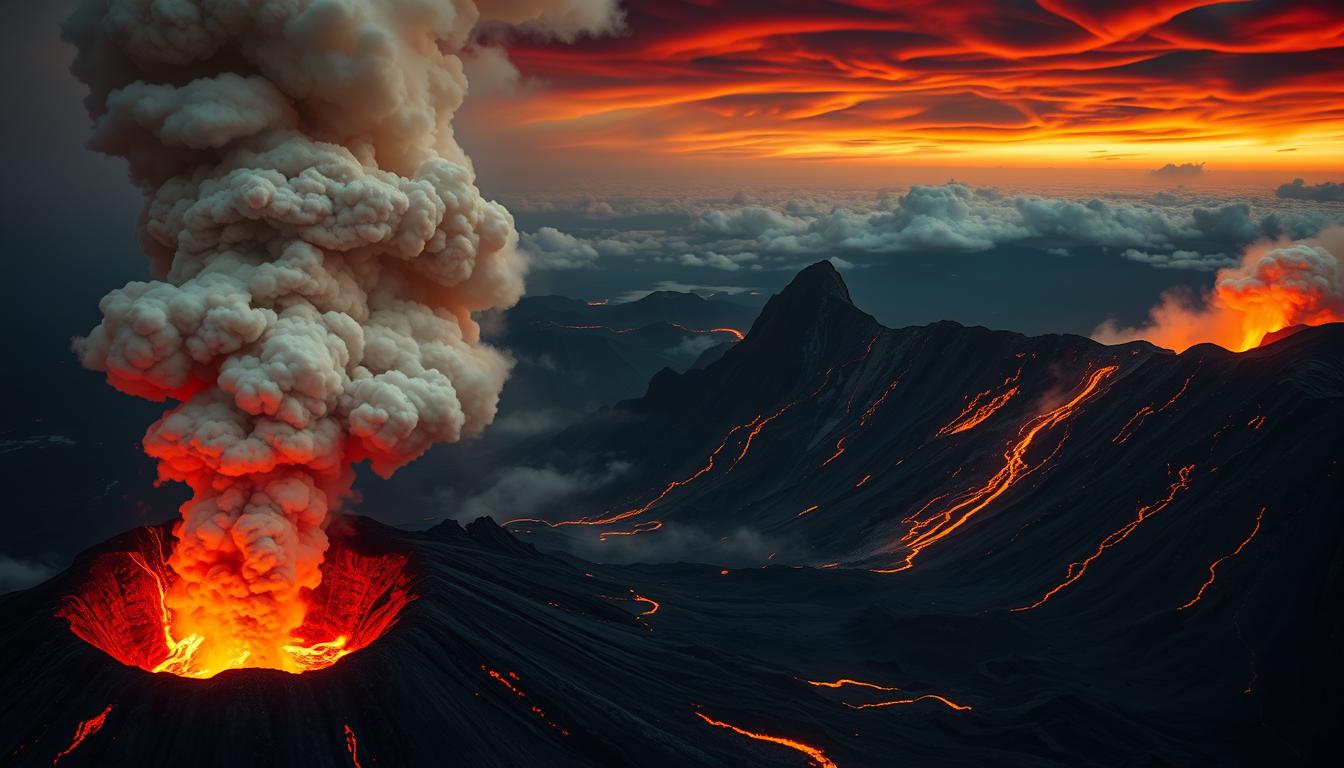
The natural world is full of awe-inspiring phenomena, and volcanic eruptions are among the most stunning. But what drives these eruptions? The answer lies in the way heat moves beneath Earth’s surface.
Heat is conveyed from the planet’s interior to its surface largely by convection—the transfer of heat by movement of a heated fluid. In this case, the fluid is magma—molten or partially molten rock—which is formed by the partial melting of Earth’s mantle and crust.
As magma forms, it rises to the surface, eventually erupting as lava or volcanic ash. Understanding the eruption process helps us appreciate the complex geological processes that shape our planet.
Understanding the Science Behind Volcanic Eruptions
The science of volcanic eruptions centers on magma properties like viscosity and gas content. The magma’s makeup greatly influences if an eruption will be explosive or not.
Magma’s viscosity is key in eruption dynamics. Viscous magma leads to explosive eruptions because it holds gases until pressure is too high. This causes a violent release. On the other hand, less viscous magma lets gases escape more freely, leading to less explosive eruptions.
The gas content in magma is also vital. Gases like carbon dioxide and sulfur dioxide expand as pressure drops, making eruptions more explosive. The more gas in magma, the higher the chance of an explosive eruption.
The Role of the Volcanic Explosivity Index (VEI)
The Volcanic Explosivity Index (VEI) measures eruption size. It looks at the volume of materials like ash and pumice. The scale goes from 0 (non-explosive) to 8 (mega-colossal), with each step up being ten times larger.
Knowing the VEI helps volcanologists classify eruptions and predict their effects. By studying past eruptions, scientists can forecast future risks.
In summary, volcanic eruptions are complex, involving magma properties, gas content, and eruption dynamics. By studying these and using the VEI, researchers can understand volcanic activity better.
Different Types of Volcanoes
It’s important to know about the different types of volcanoes. They show how the Earth’s interior is always changing. Volcanoes are more than just mountains; they tell us about the Earth’s inner workings.
Most volcanoes are linked to plate tectonic activity. Places like Japan, Iceland, and Indonesia have volcanoes because of these plates. When these plates move, they create different kinds of volcanoes.
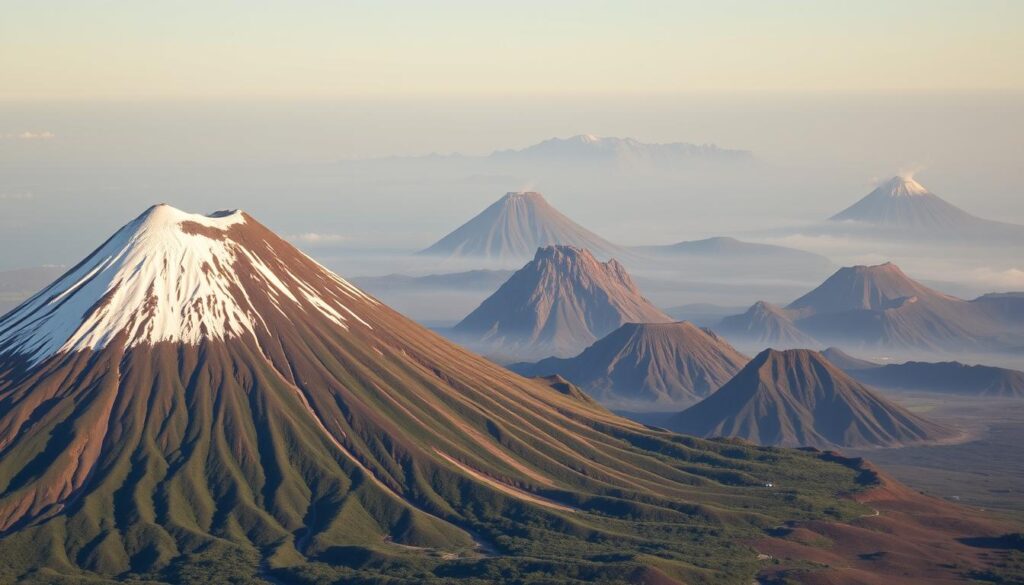
There are three main types of volcanoes: shield volcanoes, stratovolcanoes, and cinder cones. Each type looks different and forms in its own way.
Shield Volcanoes
Shield volcanoes look like a warrior’s shield because of their flat shape. They grow from fluid lava flows. You can find them at hotspots, like in Hawaii.
Stratovolcanoes
Stratovolcanoes, or composite volcanoes, are tall and have a conical shape. They are made of layers of lava and ash. They are known for their steep sides and explosive eruptions. You can find them in subduction zones, like Mount St. Helens and Mount Fuji.
Cinder Cones
Cinder cones are the simplest volcanoes. They are small and formed from ash and cinder. They can be found alone or in groups, often near bigger volcanoes.
The way volcanoes form is tied to tectonic plates. Knowing about these plates helps us understand the different landscapes volcanoes create.
The Eruption Process Explained
Understanding how volcanoes erupt is key to knowing their power. Magma’s journey from deep in the Earth to the surface is complex. It involves several important stages.
The journey starts in the magma chamber, a big underground space. Magma is a mix of melted rock, minerals, and gases. It’s lighter than the rock around it, so it rises.
Pathways to the Surface: Magma can move up in different ways. It can form slow-moving “balloons” or travel through cracks in the rock. Sometimes, it pools at the base of the crust before going up.
When magma gets close to the surface, it reaches a volcanic vent. This is an opening in the Earth’s surface. The type of eruption depends on the magma’s thickness and gas content.
Once magma comes out, it’s called lava if it flows smoothly, or ash if it’s thrown into the air. The lava flow can go far, based on its thickness and the land’s slope.
The eruption process shapes the landscape and can affect the climate. Scientists study it to understand volcanic eruptions better.
Signs of an Imminent Eruption
Several key indicators suggest that a volcano is on the verge of erupting. These include increased seismicity and gas emissions. Volcanologists closely monitor these eruption signs to predict when an eruption might occur.
One of the primary signs of an imminent eruption is an increase in earthquake swarms. As magma moves beneath the surface, it can cause a series of earthquakes. By monitoring the frequency and intensity of these earthquakes, scientists can gauge the likelihood of an eruption.
Another critical indicator is the emission of gases such as sulfur dioxide. An increase in gas emissions can signal that magma is rising to the surface. Monitoring volcanoes for gas emissions is a key part of predicting eruptions.
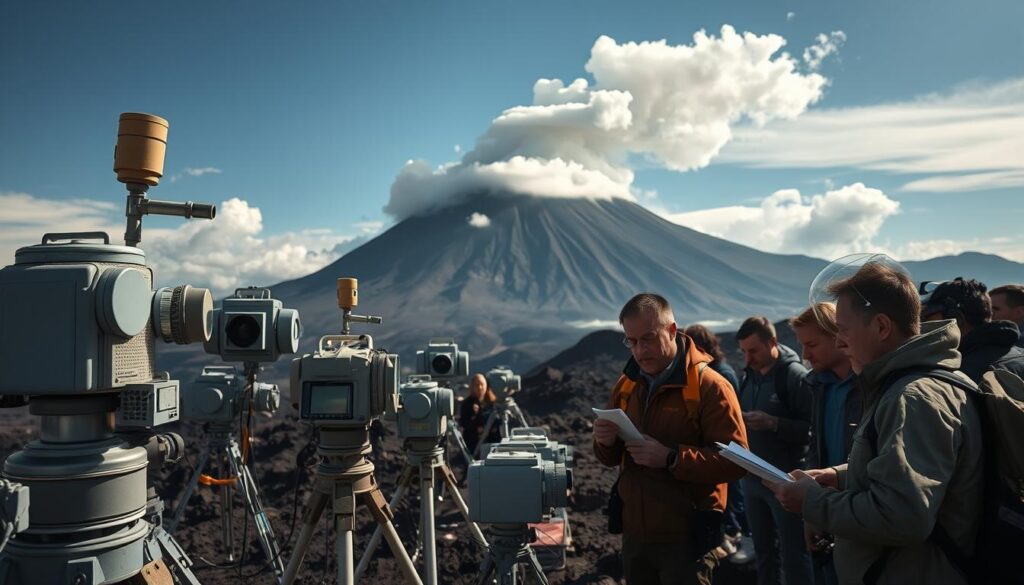
Ground deformation is also a significant sign. As magma accumulates beneath the surface, it can cause the ground to swell or deform. Measuring this deformation helps volcanologists understand the movement of magma and predict an eruption.
“The ability to predict volcanic eruptions is critical for saving lives and reducing the impact of these natural disasters on surrounding communities.”
By combining data on seismicity, gas emissions, and ground deformation, scientists can better understand volcanic activity. This helps them provide early warnings for possible eruptions.
The Role of Plate Tectonics
The movement of the Earth’s lithosphere, known as plate tectonics, is key to volcanic activity. Most volcanoes sit at tectonic plate boundaries. Here, plate interaction can melt the crust, causing magma to erupt.
There are three main types of plate boundaries: divergent, convergent, and transform. Divergent boundaries see plates moving apart, creating new crust. This is seen in continental rifts and can spark volcanic activity. The East African Rift System is a prime example.
Convergent boundaries have one plate being pushed under another, forming subduction zones. These areas have deep-sea trenches and volcanic arcs. The Pacific Ring of Fire is a clear example of this.
Transform boundaries see plates sliding past each other. They’re less linked to volcanoes but can affect where volcanoes form. This is due to the tectonic forces they create.
In short, plate tectonics is vital for understanding volcanic activity. By studying plate boundaries and their geological processes, we learn about our planet’s surface.
Famous Volcanoes Around the World
Mount Vesuvius and Kilauea are just two examples of famous volcanoes. They have changed the Earth’s surface and affect our lives. These natural wonders are fascinating and powerful.
Mount St. Helens in the United States is known for its massive eruption in 1980. It showed us the power of volcanoes and how nature can recover.
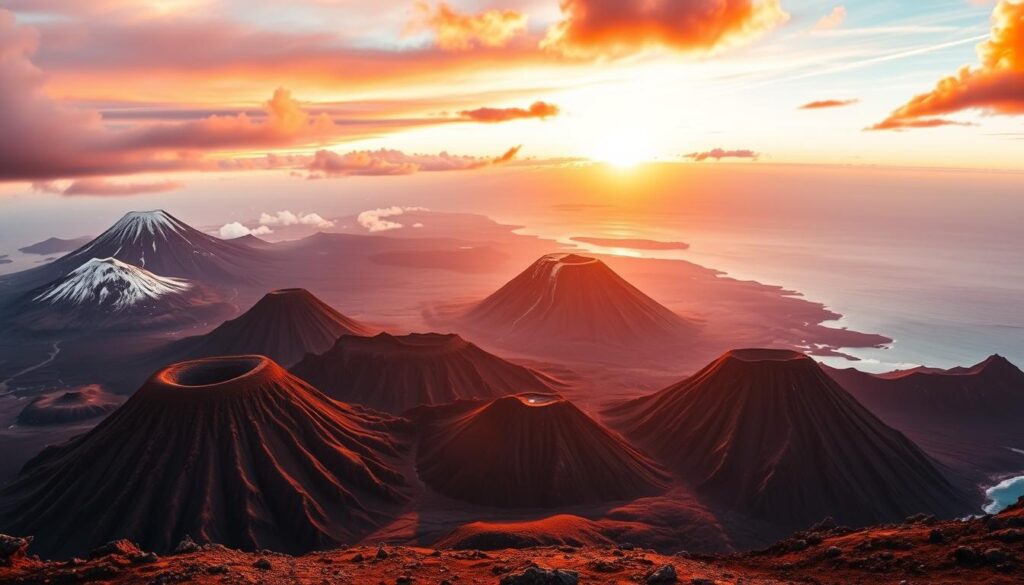
Kilauea in Hawaii has been erupting non-stop for over 30 years. It’s a key place for scientists to learn about volcanoes. Its activity has changed the island and helped us understand volcanoes better.
Mount Vesuvius is famous for destroying Pompeii in 79 AD. Its eruptions have been well-documented. They remind us of the dangers of volcanoes.
These famous volcanoes teach us about the Earth’s power. They show us the importance of respecting nature.
Effects of Volcanic Eruptions
Volcanic eruptions can cause huge damage to the environment and people. They have many effects, from harming nature to affecting our economy and society.
The damage to the environment is huge. Ash fall can spread far, harming water, crops, and soil. For example, the 2010 eruption in Iceland stopped many flights in Europe because of the ash cloud.
Volcanoes can also create lahars and pyroclastic flows. Lahars are mudflows that destroy everything. Pyroclastic flows are hot, fast clouds that can wipe out areas and people.
People also suffer a lot from eruptions. Health effects include breathing problems from ash. Buildings and services can get damaged, leading to economic problems. The 1980 Mount St. Helens eruption in the US caused a lot of damage and lost money.
“Volcanic eruptions are among the most powerful forces on Earth, capable of affecting global climate patterns, devastating local ecosystems, and disrupting human societies on a massive scale.”
In summary, volcanic eruptions have many effects. We need to watch them closely and find ways to lessen their harm to nature and people.
Volcanic Eruption Monitoring
Scientists use many methods to watch volcanoes. They aim to predict eruptions and keep nearby communities safe. The United States Geological Survey (USGS) leads this effort. They check hazards at almost 70 active and potentially active volcanoes in the United States.
Seismometers are key in monitoring volcanic activity. These devices catch earthquakes and tremors before an eruption. This gives scientists early warnings. They look at seismic data to find patterns that might mean an eruption is coming.
Gas monitoring is also very important. Volcanoes release gases like carbon dioxide and sulfur dioxide. Changes in these gases can show that the volcano is getting more active.
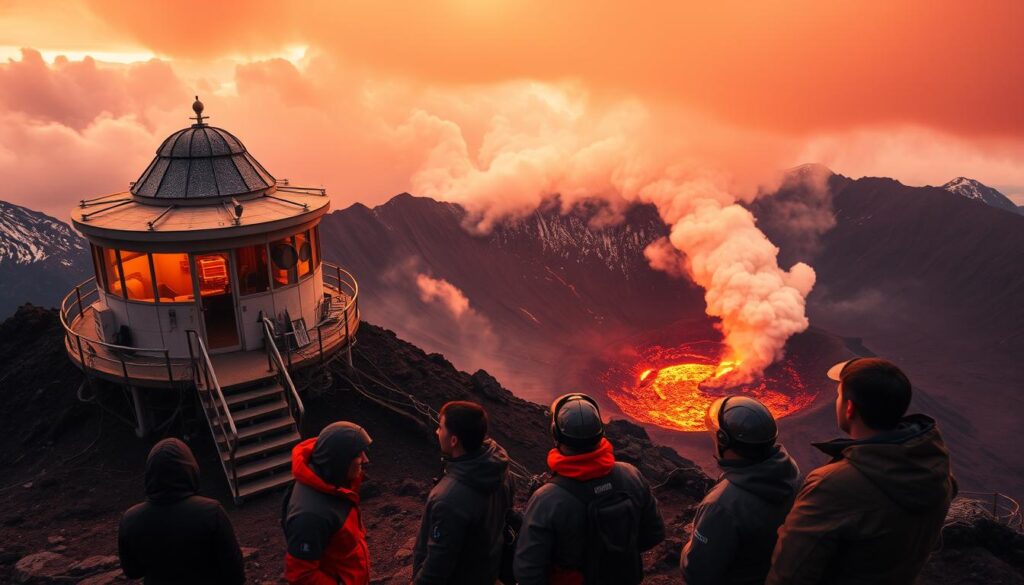
Satellite surveillance is a big help in watching volcanoes. Satellites can spot changes in a volcano’s shape, temperature, and activity. This is useful in areas where it’s hard to monitor from the ground.
By using data from seismometers, gas monitoring, and satellites, scientists get a better picture of volcanic activity. This helps them predict eruptions better. It also helps reduce the harm eruptions can cause to nearby communities.
Mitigating the Risks of Eruptions
To reduce the dangers of volcanic eruptions, we need a few key steps. These include eruption prediction and hazard mapping. Communities near volcanoes must have detailed plans to lessen the eruption’s effects.
Eruption prediction is a big part of this. Scientists watch for signs like more earthquakes and gas releases. This helps them warn authorities early, so people can leave safely.
Evacuation plans are also very important. These plans must be practiced and ready for different eruption types. Drills and public education make these plans work better.
Volcanic hazard maps help a lot too. They show where dangers like lava, ash, and fast-moving hot ash flows might happen. Knowing these risks helps communities protect their buildings and people.
In short, fighting volcanic eruption risks needs good eruption prediction, solid evacuation plans, and volcanic hazard maps. With these steps, areas near volcanoes can lower the risks a lot. This keeps people and buildings safe.
The Future of Volcanic Research
Volcanoes have shaped over 80 percent of the Earth’s surface. The future of volcanology looks bright, thanks to new research. This research will help us understand volcanoes better, leading to better warnings and safety plans.
Scientists are working on better models to predict eruptions. This will help save lives and reduce damage. New technologies like remote sensing and machine learning will also play a big role in monitoring volcanoes.
Volcanic research is getting better, helping us manage risks better. By learning more about volcanoes, we can prepare for eruptions. This knowledge is key to living safely with these powerful forces of nature.