
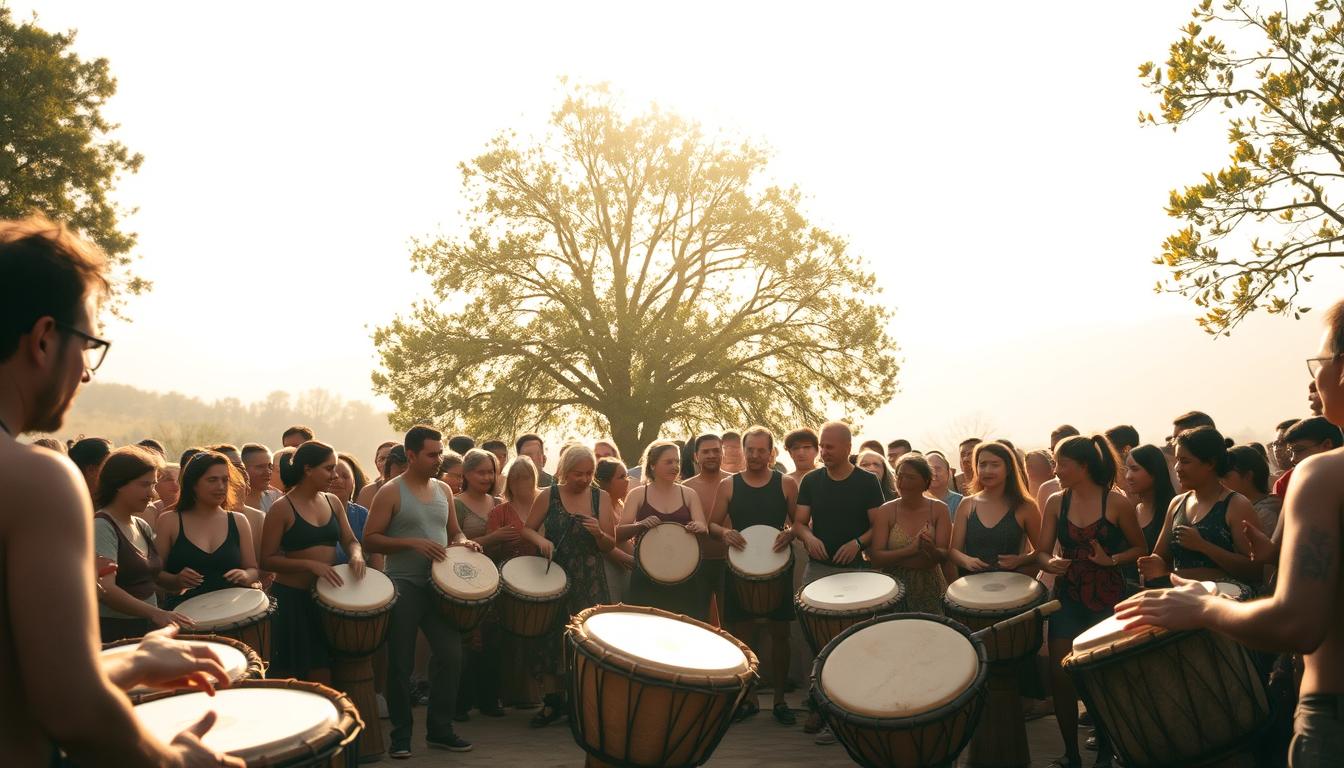
Starting a drum circle is fun and rewarding. It brings people together through rhythm. It’s a great way to build a community by sharing a fun activity.
With good planning and the right materials, your event will be unforgettable. Choose the perfect spot and lead fun activities.
Hosting a drumming event does more than just gather people. It creates a space for bonding and joy. This guide will help you make your event a hit.
What is a Drum Circle?
A drum circle is a group of people playing drums and percussion together. It’s a place where everyone can join in and share their creativity. It’s all about community and making music together.
The drum circle definition covers many types of gatherings. These can be casual meetups or events with a theme. The origins of drum circles come from African and Afro-Caribbean traditions.
In North America, drum circles started in Congo Square in New Orleans. This place was known for its rich culture. Now, community drumming brings people together from all backgrounds. It’s a way to connect through music.
Drum circles are more than just music. They help build communities and foster friendships. By understanding the drum circle definition and its origins, we see how important they are today.
Benefits of Participating in a Drum Circle
Drumming together in a circle has deep effects on people. It builds community and lowers stress. Taking part in a drum circle brings many benefits that improve your life.
One big plus of drum circles is stress relief. Drumming is good for your mind, reducing anxiety and helping you relax. Drumming releases tension, and being together makes you feel connected.
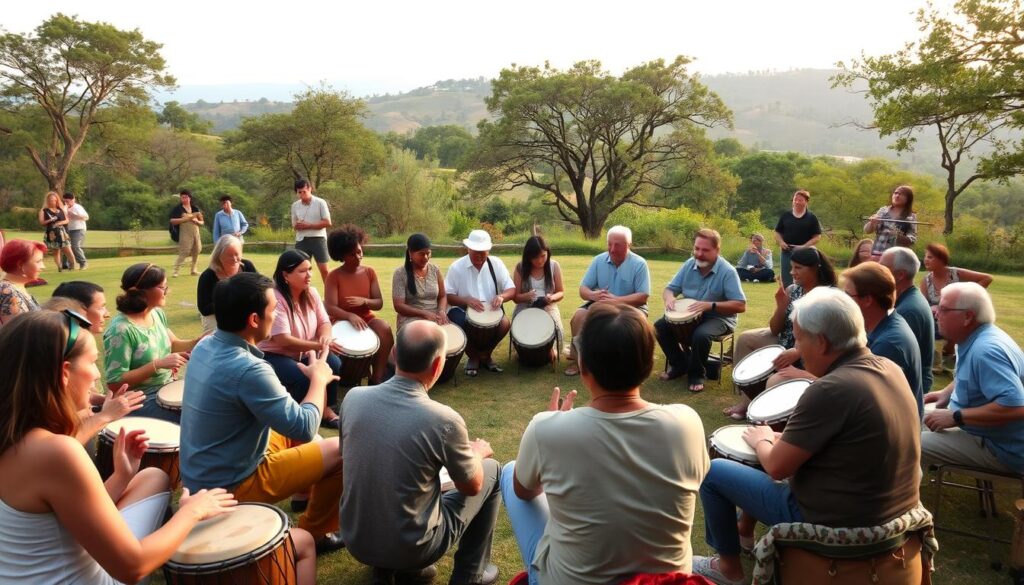
Drum circles also help with social bonding. When people drum together, they make music and connections. This is great for those wanting to meet new people or feel part of a community.
Drum circles also boost mental health. Drumming can ease depression and anxiety symptoms. It makes life more balanced and healthy.
In short, drum circles offer many benefits. They help with stress, build community, and improve mental health. Drumming together creates music and a supportive community, improving life quality.
How to Set Up Your Own Drum Circle
To host a successful drum circle, you’ll need to consider several key factors. The first step is choosing the right location. A drum circle can be held in various settings, such as parks, community centers, or even private backyards.
The chosen location should be easily accessible. It should also have enough space for participants to sit in a circle. Plus, it’s ideal if it has some ambient noise to blend with the drumming.
When it comes to logistics, having the right equipment is key. This includes a variety of drums and percussion instruments. You’ll also need seating or blankets for participants.
Logistics and Planning
Effective planning is essential for a successful drum circle. This involves not only gathering the necessary equipment but also promoting the event to attract participants.
Use social media, local community boards, and word of mouth to spread the word. Also, consider the timing and duration of the drum circle.
Typically, a drum circle can last from 1 to 2 hours. This depends on the participants’ engagement and the event’s purpose.
Think about the structure of the drum circle. Will it be a free-form session, or will there be a specific theme or rhythm to follow?
Having a clear idea of how you want the drum circle to unfold is important. It helps in creating a more cohesive and enjoyable experience for everyone involved.
By focusing on these aspects, you can set up a drum circle that is not only fun but also welcoming and engaging for all participants.
Essential Drumming Techniques for Beginners
Drumming is an art that needs practice. Beginners can greatly benefit from learning key drumming techniques. Knowing the basics can make your drumming better and improve your rhythm skills.
Mastering basic rhythm patterns is key. Rhythm patterns are the heart of drumming, giving music its structure and timing. Start with simple patterns and then move to more complex ones.
Hand drumming is also vital for beginners. It’s about using your hands to make different sounds and rhythms. You can practice hand drumming on many surfaces and instruments, making it a flexible skill.
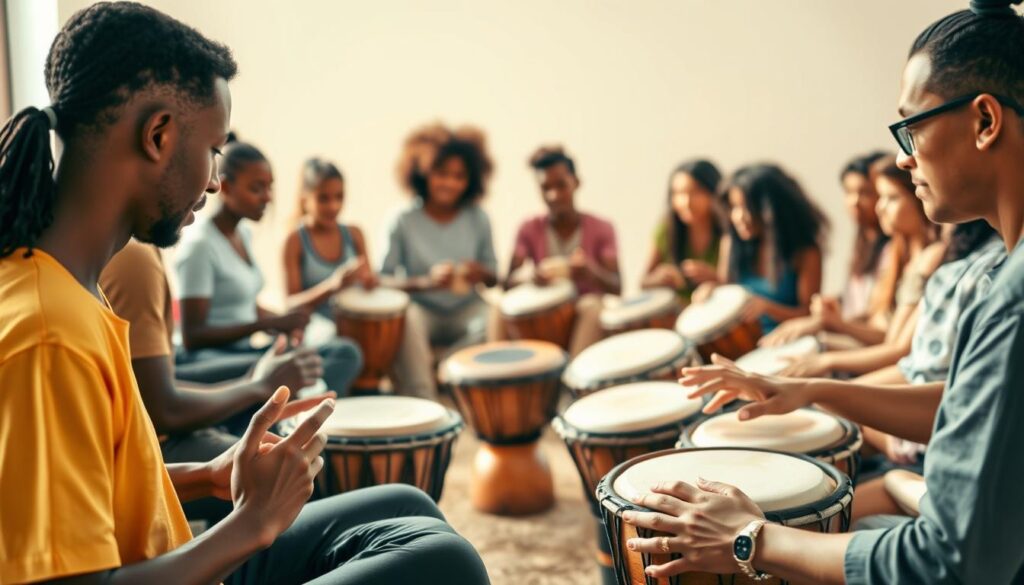
To get better at rhythm skills, practice often. Begin with simple exercises like clapping or tapping to your favorite songs. As you get more comfortable, try more complex rhythms and techniques.
Listening to a wide range of music is also helpful. Try to spot different rhythm patterns. This improves your rhythm and introduces you to various drumming styles and techniques.
Adding these drumming techniques to your practice routine can really boost your skills. The most important thing is to keep practicing and be open to learning.
Finding the Right Instruments for Your Drum Circle
The instruments you pick for your drum circle greatly affect the music experience. A mix of drum circle instruments can make the sound rich and fun.
Popular percussion instruments for drum circles include djembes, doumbeks, congas, bongos, and frame drums. Each has its own sound and rhythm.
Djembes have a deep, resonant sound and often lead the rhythm. Doumbeks have a goblet shape and offer many tones.
Congas and bongos are favorites, with different tones and rhythms. Frame drums, like tambourines and bodhrans, add a sharp sound.
Success in a drum circle comes from playing different types of drums and percussion instruments together. Try out different drums to find the best mix for your group.
How to Facilitate a Drum Circle
A drum circle facilitator is key in making the session fun and engaging for everyone.
They create a welcoming space where everyone feels free to join in. This is done by setting clear rules and encouraging everyone to speak up.
Leadership in a drum circle means guiding the group, not controlling the music. A good facilitator knows how to adjust based on the group’s mood.
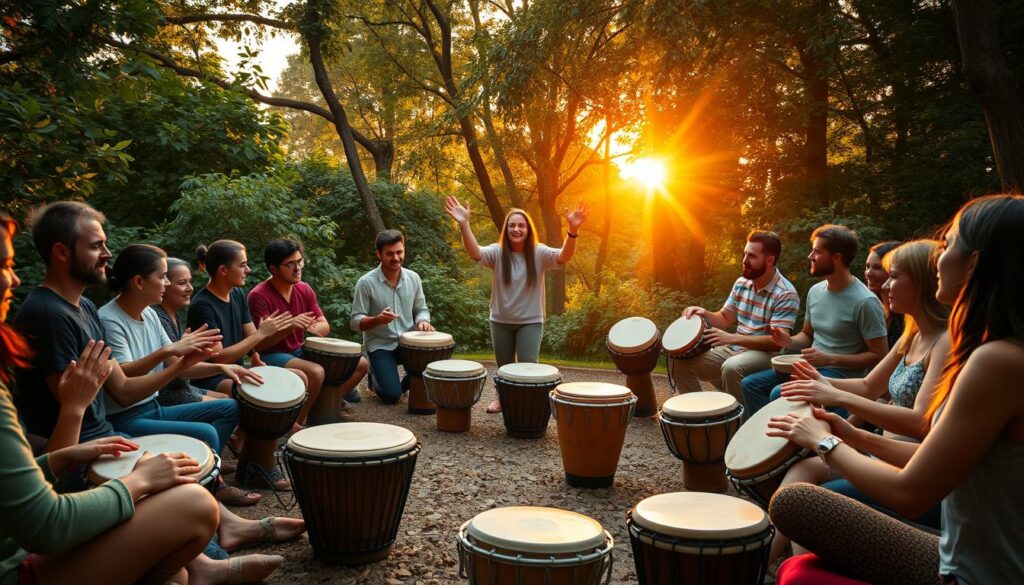
Guidance is also vital. It involves teaching new drummers and helping them fit into the group’s rhythm. The facilitator should share tips on drumming basics.
To make a drum circle successful, try these tips:
Start with a positive and welcoming vibe. Use icebreakers or simple drumming exercises to connect everyone.
Pay attention to the group’s mood and adjust your approach. This might mean changing the rhythm or introducing new patterns.
Make sure everyone gets a chance to contribute and be heard. This can be done by rotating leadership or creating smaller groups.
Drum Circle Activities and Games
Drum circle activities and games make the experience better. They bring people together and keep everyone interested. These fun parts add variety and keep the energy high.
Rhythm games are a hit. They challenge people to play complex rhythms or come up with new ones. Rhythm games are an excellent way to engage participants and enhance their drumming experience.
Call-and-response is another favorite. It starts with one drummer, then others join in. This game makes everyone feel part of the group. Call-and-response is a powerful tool for building cohesion within the group.
Popular Drum Circle Games
“Follow the Leader” is a fun game. One person sets the rhythm, and the rest follow. It’s great for listening skills and group unity.
“Musical Conversations” is all about rhythmic dialogue. Participants respond to each other’s beats. It boosts creativity and the group’s musicality.
Adding these games to your drum circle makes it more fun for everyone. The trick is to mix things up and include everyone. This way, everyone feels important and has a good time.
Incorporating Different Musical Styles
Drum circles are special because they mix many musical styles. This shows the rich cultural backgrounds of those who join. It makes the drumming more exciting and helps everyone appreciate different cultures more.
These circles draw from many cultural influences. For example, adding Afrobeat rhythms brings energy. Native American drumming styles add a spiritual touch.
“The drum is the heartbeat of the community, and when different cultures come together through drumming, it creates a powerful and moving experience.”
Drum circles can mix musical styles in many ways. One way is to let people from different musical backgrounds lead. This brings new sounds and helps everyone learn from each other.
Another way is to use different instruments. For example, adding djembes from West Africa or congas from Latin America makes the drumming richer.
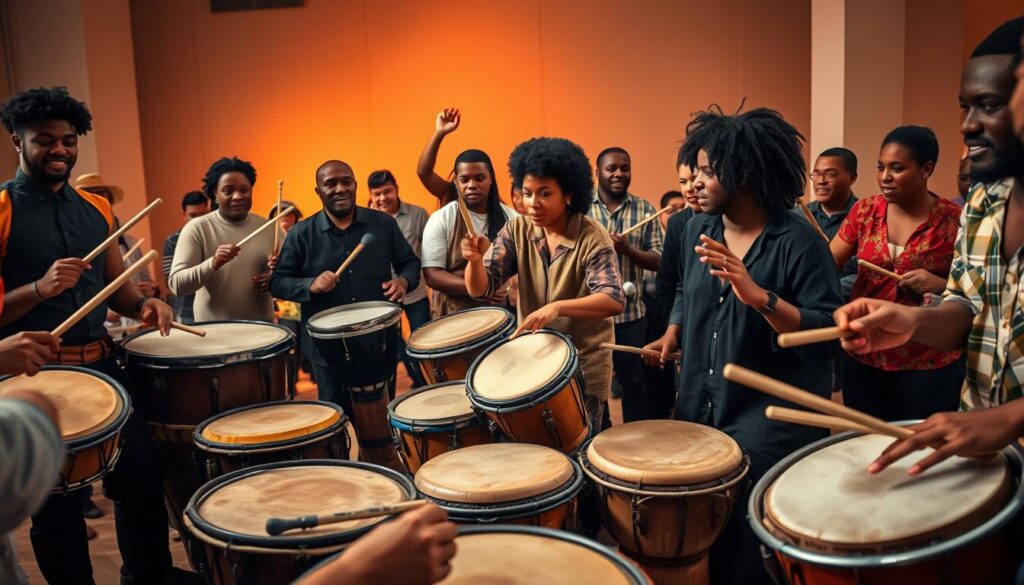
Drum circles can also try out different genres like jazz or rock. They can use jazz rhythms or funk beats to mix things up.
The secret to a great drum circle is being open and welcoming. By celebrating diversity, drum circles become lively celebrations of global music and culture.
Safety and Inclusivity in Drum Circles
Keeping everyone safe and making sure everyone feels included is key to a drum circle’s success. A place where everyone feels welcome lets people show their true selves. This builds a strong community feeling.
Setting clear rules for drum circle etiquette is vital. This means respecting each other’s space, keeping the noise down, and talking openly. It helps everyone get along and enjoy the music.
When everyone feels safe and respected, the music becomes a reflection of the collective energy and creativity.
This shows how important it is to make a space where everyone feels important.
Promoting Inclusivity
To make drum circles inclusive, make sure everyone can play, no matter their music skills. This could mean having different instruments or teaching the basics to beginners.
Leaders should also watch out for everyone’s needs and comfort levels. This way, everyone feels free to join in.
Maintaining Safety
Safety in drum circles means looking out for both physical and emotional health. Make sure the place is safe and watch how people are feeling. This helps avoid any problems.
By focusing on safety and inclusivity, drum circles can help people come together and feel better.
Maintaining the Groove After the Circle
After a drum circle, many want to keep the excitement alive. There are many ways to do this. Activities that bring people together are key.
Creating online forums or social media groups is a great idea. Here, people can share their drumming experiences and ask questions. It keeps the community spirit alive and builds friendships.
Hosting more drumming events or workshops is also a good plan. It lets everyone keep learning and sharing their love for drumming. Plus, it brings in new faces, growing the community.