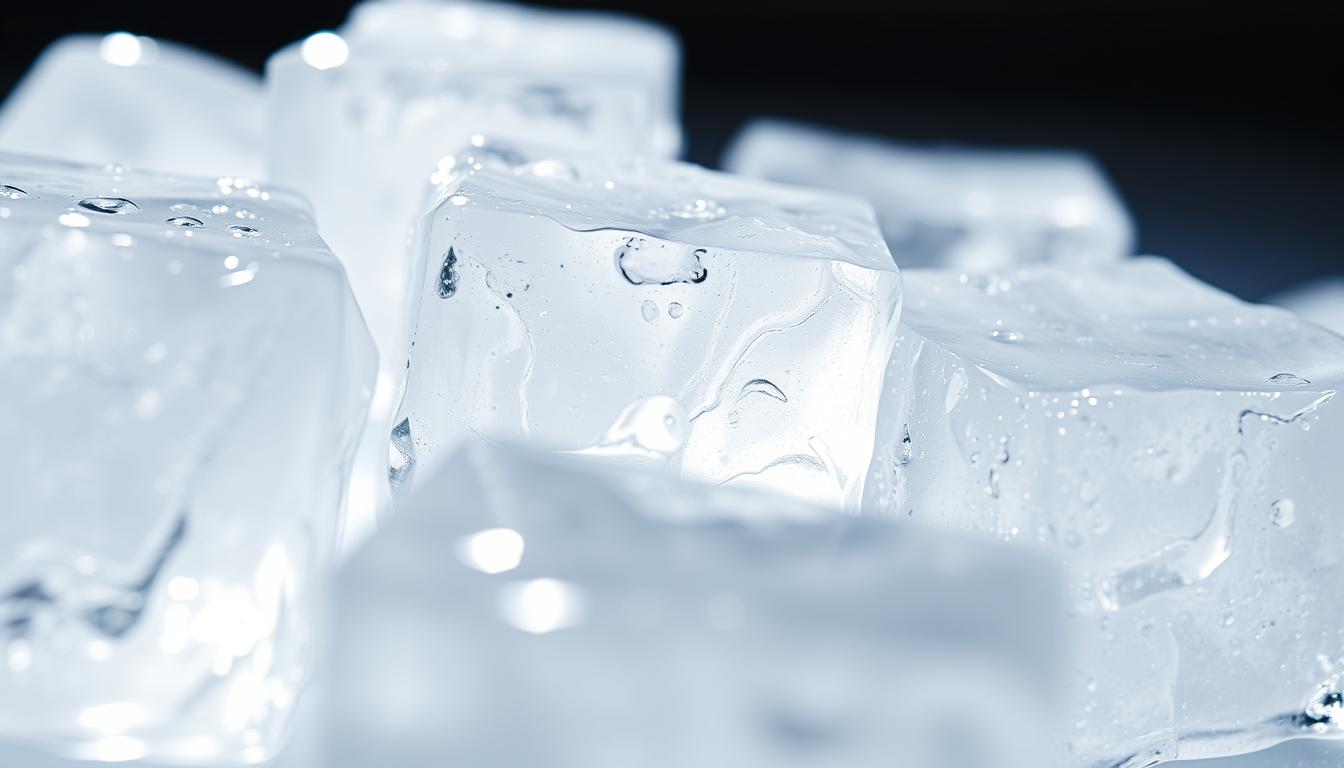
Have you ever watched ice melt into water? It’s a simple yet fascinating process that happens everywhere. From ice cubes in drinks to glaciers in the polar regions, it’s all around us. This change from ice to water is key to understanding the states of matter.
When ice melts, it changes from solid to liquid. This ice melting process depends on temperature and pressure. Learning about melting helps us appreciate the world and its complex interactions.
The Science Behind Melting Ice
The melting of ice is a complex scientific process. It’s both fascinating and full of details. The science behind melting ice helps us understand how ice turns into water.
One interesting part of this is supercooling. This is when water stays liquid even when it’s colder than freezing. Supercooling happens when water is cooled slowly, without forming ice crystals. It’s key to understanding water’s behavior under different conditions.
The start of ice crystal formation is called nucleation. Nucleation sites are where water molecules start to form ice. For supercooled water, a tiny ice crystal or dust particle can trigger freezing.
Melting ice experiments, like the instant ice science experiment, show these principles. By cooling water to supercool it and then adding a nucleation site, ice forms quickly. This experiment is not only educational but also fun to watch.
Knowing the science of melting ice is important for more than just experiments. It helps us understand natural processes like glacier and sea ice behavior. It also has uses in climate science and engineering.
Everyday Examples of Melting
Melting ice is common, from our kitchens to the outdoors. The speed of melting ice changes a lot, based on where it is.
Imagine a family watching ice melt in various places. They see it melt fast on a sunny driveway and slow in the shade. On the kitchen counter, it melts at a middle pace. And in the fridge, it melts the slowest.
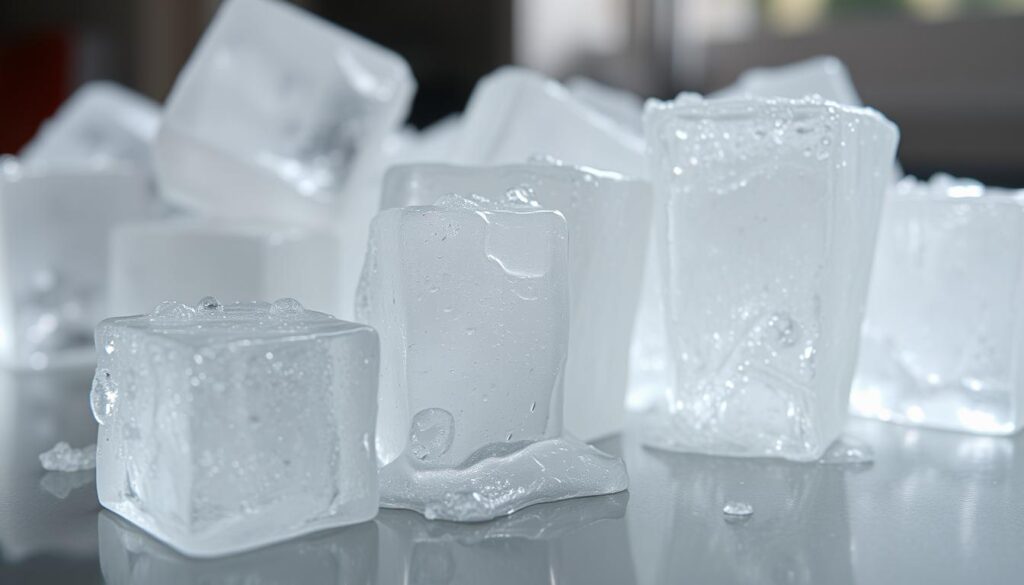
In the kitchen, ice on the counter melts at a steady rate. But in the fridge, it melts the slowest. These examples show how different places affect melting ice.
Knowing how melting ice changes in different places helps us. It’s useful for simple tasks and big environmental issues. By understanding melting, we see the science behind it in our daily lives.
The Process of Ice Melting
The ice melting process is complex and influenced by many factors. At its core, it’s about ice changing from solid to liquid. This change is mainly driven by temperature changes.
Ice starts to melt when it’s exposed to temperatures above 0°C or 32°F. But, the speed at which it melts isn’t just about temperature. Factors affecting the melting rate include things like humidity, wind speed, and impurities on the ice surface.
Temperature and Environmental Conditions
Temperature is key in the ice melting process. As temperatures rise above the melting point, melting speeds up. But, other environmental conditions can also play a big role.
For example, high humidity can slow down melting by making the temperature difference between ice and air smaller.
On the other hand, wind can make melting faster by bringing warmer air to the ice. Impurities or nucleation sites on the ice can also change how fast it melts. These sites can help start the melting process more easily.
Supercooling is another interesting part of ice melting. It happens when water is cooled below freezing without freezing. This state is unstable, and a nucleation site can cause it to freeze quickly. Supercooling is more about freezing, but it shows how complex water’s phase transition can be.
In summary, ice melting is influenced by temperature, environmental conditions, and the presence of nucleation sites or impurities. Knowing these factors is key to understanding and managing ice melting in different situations, from nature to industry.
Different Types of Ice
Ice comes in many forms, each with its own special properties. It can be supercooled water or ice made under extreme pressure. Ice is not just one thing; it’s many, each with its own way of forming.
Supercooled water is water that stays liquid even when it’s below freezing. This happens when water is cooled slowly to stop ice from forming. When this water is disturbed, it quickly turns into ice.
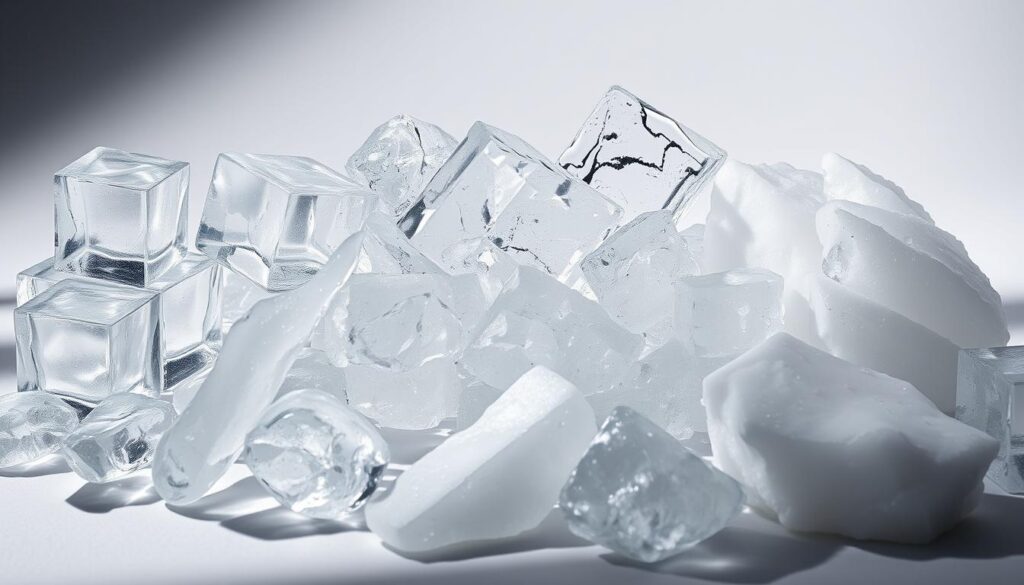
Glacier ice forms when snow is pressed together over time. It’s important for studying climate change because glaciers show us how the Earth is warming. By studying glacier ice, we learn about the Earth’s past and how it’s changing.
A famous glaciologist once said, “Glaciers are like slow-moving rivers of ice that shape the landscape over time.” This shows how glacier ice changes the world around it.
“The formation of ice in nature is a complex process influenced by various factors, including temperature, pressure, and the presence of impurities.”
There’s also sea ice and ice made through industrial processes. Each type has its own features and affects different places and activities.
Knowing about all the types of ice and how they form is key for science and everyday uses. It helps us understand climate and how to make things in industry.
The Importance of Melting in Nature
In nature, melting is more than just a phase change. It’s a critical component of environmental harmony. The melting of ice and snow is key to keeping our planet’s balance. It supports biodiversity and helps regulate the climate.
One major importance of melting is in the water cycle. When ice melts, it fills rivers, lakes, and aquifers. This keeps the water supply fresh for animals and people. It’s essential for healthy ecosystems and farming.
Melting in nature also shapes wildlife habitats. Many animals rely on ice melting for survival. It guides their migrations, breeding, and feeding. The timing and amount of melting affects their numbers and biodiversity.
Also, the environmental impact of melting ice is huge. It changes weather, sea levels, and the Earth’s energy balance. Knowing and tracking these changes helps us predict and prepare for climate change.
Exploring Melting at Home
You don’t need a lab to explore the science behind melting ice. Simple home experiments can be just as enlightening.
One of the fascinating melting ice experiments you can try at home is the instant ice science experiment. This experiment involves supercooling water and then suddenly freezing it. It shows the concept of nucleation.
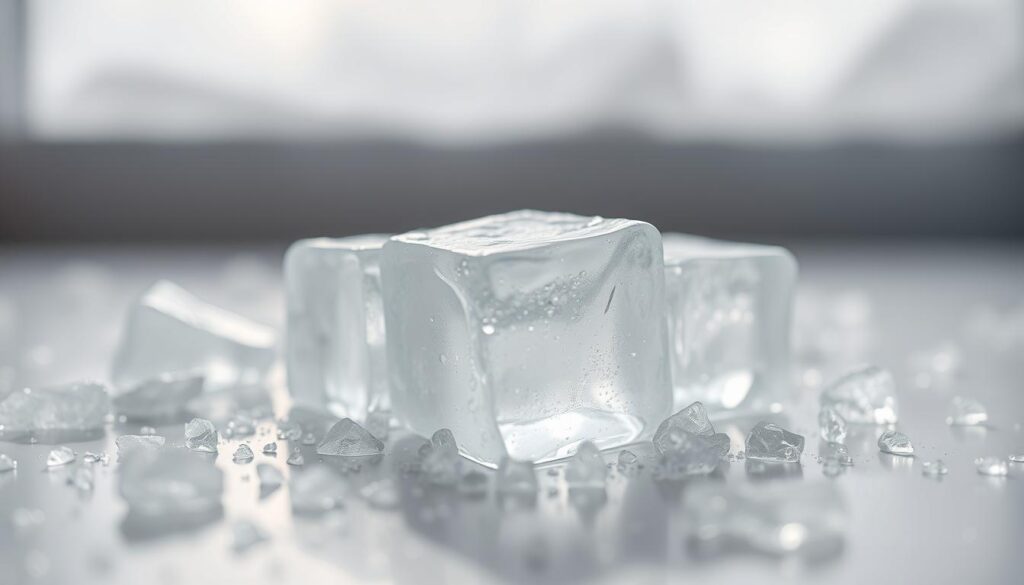
To conduct this experiment, you’ll need distilled water, a container, and a freezer. First, place the distilled water in the freezer until it becomes supercooled. Then, introduce a nucleation site, like a small ice crystal or a rough surface, to instantly freeze the water.
Another engaging home experiment involves observing how different conditions affect the melting rate of ice. For instance, you can place ice cubes in different environments. Try direct sunlight, shade, or cold water, and measure how long it takes for them to melt.
These melting ice experiments not only show the science behind melting ice. They also provide a fun and interactive way to learn about water’s physical properties.
The Culinary Side of Melting Ice
In the kitchen, melting ice has many uses. It cools drinks and helps keep food fresh. The way ice melts is key to many cooking methods, making food better to eat and look at.
One big culinary use of ice is cooling drinks. It’s essential for a cold cocktail or water. The ice melting process also softens strong flavors, making drinks taste better.
Melting ice is also key in keeping food fresh. For example, it keeps seafood cold during transport. This slows down spoilage, keeping the seafood fresh for eating.
Culinary Techniques Involving Melting Ice
Chefs use melting ice in many ways. For instance, melting ice in cooking can make sauces or braising liquids. These are then used to cook meat or veggies, making them tender and flavorful.
In summary, the ice melting process is very useful in cooking. It can improve flavors and keep food fresh. Knowing how to use melting ice can make cooking at home or in restaurants better.
The Environmental Impact of Ice Melting
The environmental impact of melting ice is a pressing concern that warrants immediate attention. As global temperatures continue to rise, the consequences of ice melting are becoming increasingly evident. This affects not just polar regions but ecosystems worldwide.
One of the most significant effects of melting ice is the contribution to sea-level rise. As glaciers and polar ice caps melt, the resulting water flows into the oceans, leading to higher sea levels. This rise poses a threat to coastal communities, potentially displacing millions of people and inundating low-lying areas.
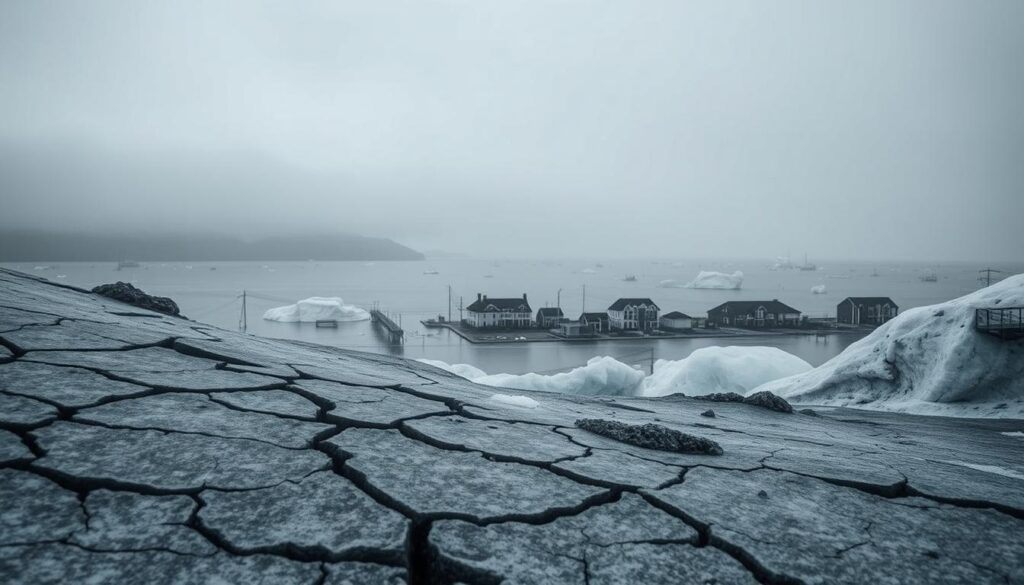
Also, the melting of ice influences global weather patterns. Freshwater input from melting glaciers can alter ocean currents and affect regional climates. For instance, changes in the North Atlantic Ocean’s circulation could lead to cooler temperatures in Western Europe, despite the overall global warming trend.
The impact on ecosystems is also profound. Many species, such as polar bears and penguins, rely on ice for their habitats. The loss of ice threatens their survival, potentially leading to extinctions. Further, melting ice can disrupt the delicate balance of Arctic and Antarctic ecosystems, affecting biodiversity.
“The melting of ice at the poles is a clear indicator of climate change, with far-reaching consequences for our planet.”
Addressing the issue of melting ice requires a multifaceted approach. We need to reduce global carbon emissions and mitigate the effects of climate change. This includes transitioning to renewable energy sources, improving energy efficiency, and protecting natural habitats that play a key role in regulating the climate.
In conclusion, the environmental impact of melting ice is a complex issue that demands immediate and sustained action. By understanding the causes and effects of ice melting, we can work towards mitigating its consequences. This will help preserve our planet for future generations.
Melting in Art and Culture
In the world of art, melting ice is a powerful symbol for change and the fleeting nature of things. Artists have always been drawn to ice’s brief existence. They use it to share deep messages about our surroundings.
The cultural representations of ice are diverse. From sculptures that melt away to performances that show the melting process. These works not only highlight ice’s beauty but also its impact on our world.
The ice melting process is a common theme in art. It stands for the passage of time or the effects of environmental changes. By featuring melting ice, artists can stir feelings of urgency or reflection in their viewers.
Through art and culture, melting ice keeps inspiring and making us think. It reminds us of the ever-changing and delicate state of our environment.
Future of Melting Ice
The future of melting ice is linked to climate change, with big environmental effects. As ice melts fast, we must think about what might happen next.
More ice melting means worse climate change, leading to sea levels rising. This can cause coastal erosion, flooding, and saltwater in freshwater. It harms both people and animals living in these areas.
We need to act together to stop ice melting. By learning about melting ice and its effects, we can lower our carbon footprint. This helps keep our planet’s resources safe for the future.