
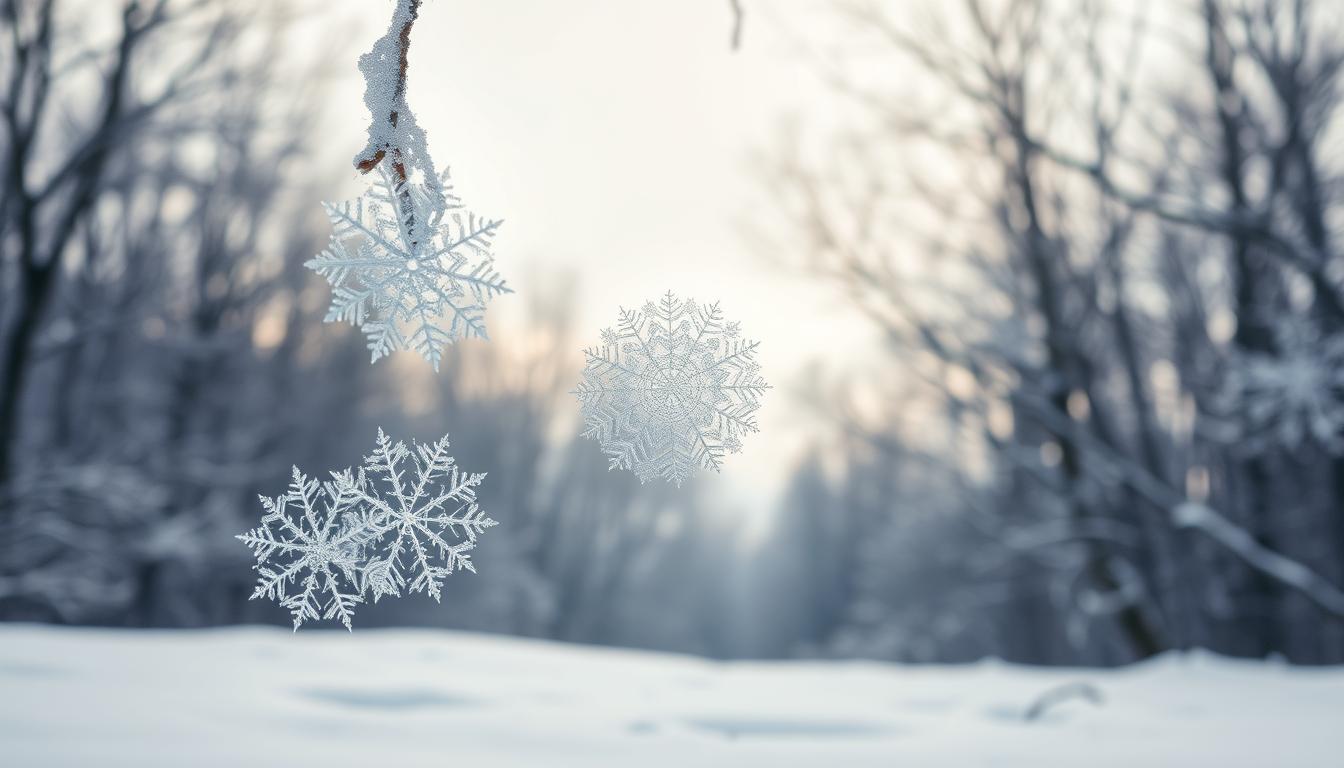
The uniqueness of snowflakes has amazed people for centuries. Scientists believe the odds of finding two identical ones are about 1 in 1 million trillion. This makes each snowflake a natural wonder.
The way they form is both complex and fascinating. Temperature, humidity, and air currents shape them in the atmosphere. This process leads to the amazing variety of unique snowflakes we see.
Learning about these delicate crystals shows their beauty and the wonders of nature. Their detailed patterns and symmetrical shapes amaze people everywhere.
The Science Behind Snowflakes
Snowflakes form through a captivating process. It starts with water vapor freezing onto tiny dust particles. This happens high in the atmosphere where it’s cold enough for water vapor to freeze into ice crystals.
As these ice crystals fall, they go through different air layers. These layers have different temperatures and humidity levels. When an ice crystal meets supercooled water droplets, it grows bigger and more complex. This is how a snowflake forms.
The unique conditions in the atmosphere affect the snowflake’s shape and complexity. The presence of water vapor and dust particles plays a big role. The temperature and humidity levels decide if the snowflake will be simple or have a detailed design.
Ice crystals are the base of snowflakes. Their growth into complex shapes is fascinating. Learning about snowflake formation helps us understand the beauty of winter weather.
The Journey of a Snowflake
The path a snowflake takes from the clouds to the ground is filled with changes. These changes happen because of temperature and humidity.
At first, a snowflake is small and irregular. But as it falls, it meets different conditions. These conditions, like temperature and humidity, shape its final look and size.

Temperature controls how fast a snowflake grows. In cold temperatures, growth is slower, making patterns more delicate. But near freezing, snowflakes grow bigger and more complex.
Humidity also matters a lot. When humidity is high, snowflakes can grow bigger by adding more moisture. This makes them larger and more detailed. But too much humidity can make snowflakes stick together, forming clumps.
The mix of temperature and humidity during winter weather shapes snowflakes. Knowing this helps us see how special each snowflake is.
The Different Types of Snowflakes
Snowflakes come in many shapes, from simple to complex. They capture the interest of scientists and fans. The variety in snowflake shapes comes from the complex ways they form.
There are several types of snowflakes, like stellar, fernlike, and needle-like. Stellar snowflakes look like stars with detailed patterns. Fernlike snowflakes have a delicate, fern-like shape. Needle-like snowflakes are long and thin, forming in certain weather conditions.
Snowflakes often show hexagonal symmetry, thanks to water molecules in the crystal lattice. The symmetry of snowflakes is not just beautiful; it also tells us about their formation conditions.
The variety in snowflake shapes and symmetry comes from temperature, humidity, and wind. Knowing these factors helps us classify snowflakes and understand their complexity.
In conclusion, the different types of snowflakes show the beauty and complexity of nature. By studying their shapes and types, we learn about the detailed processes of their creation.
The Beauty of Snowflake Symmetry
Snowflakes are known for their six-sided symmetry, thanks to their crystal structure. This unique feature is not just beautiful but also scientifically interesting. It shows how snowflakes form.
The hexagonal arrangement of water molecules in ice crystals is why snowflakes have six sides. This shape is the most stable way for water molecules to bond. As snowflakes grow, this shape stays the same, creating the symmetrical patterns we see.
The beauty of snowflake symmetry is more than just looks. It’s also about the complex process of how water molecules freeze into ice crystals. This natural wonder has amazed people for centuries, inspiring many.
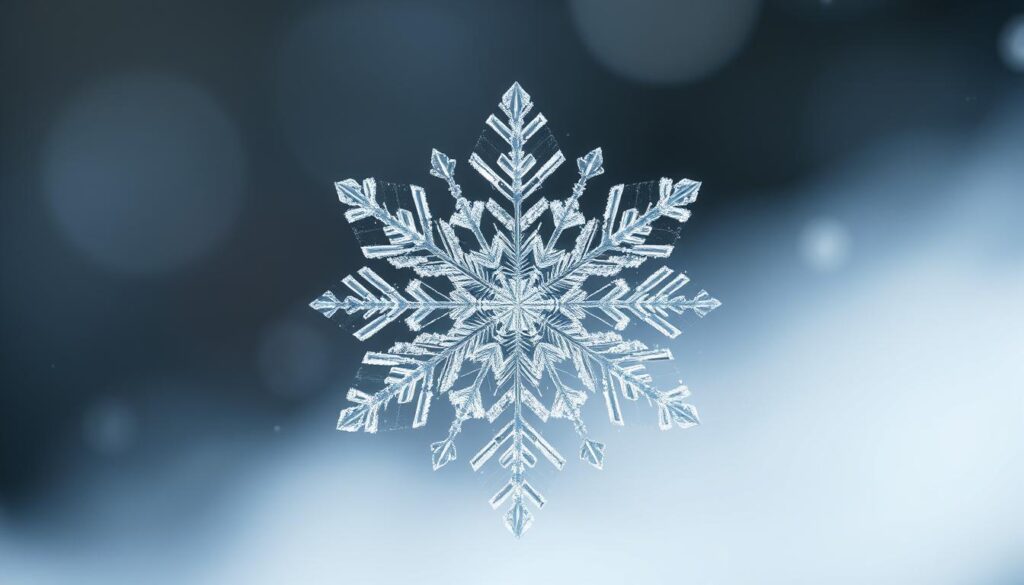
Snowflakes’ symmetry also makes them aesthetically pleasing. Their unique patterns and shapes, thanks to the hexagonal structure, make each one special. This uniqueness is why we find snowflakes so fascinating.
In summary, snowflake symmetry is a mix of science and beauty. Learning about their crystal structure and formation makes us appreciate these natural wonders even more.
Environmental Impact on Snowflake Formation
Temperature and humidity are key environmental factors that affect snowflake formation. The dance of water vapor and temperature changes in the air shapes snowflakes.
The temperature affects how fast water vapor freezes onto snowflakes. This impacts their growth and shape. Warmer temperatures make snowflakes bigger and more delicate. Cold temperatures make them smaller and more dense.
Humidity is also important. It decides how much water vapor is available for snowflakes. High humidity means more moisture, leading to bigger and more complex snowflakes.
The mix of these factors creates the amazing variety of snowflakes we see. Knowing how environmental conditions shape snowflake formation makes us appreciate their beauty and complexity.
The Cultural Significance of Snowflakes
Snowflakes have amazed people for centuries. They inspire many cultural expressions. Their detailed patterns and short lives symbolize uniqueness and wonder.
Snowflakes inspire art and literature with their beauty. In books, they stand for individuality and life’s fleeting moments. For instance, snowflakes are likened to human experiences, showing each moment and person is special.
In art, snowflakes are shown in many ways, from simple drawings to complex designs. Their detailed patterns inspire artists to create works that show their beauty and fragility. The use of snowflakes in art symbolizes the delicate and short-lived nature of life, urging viewers to see beauty in the small things.

Snowflakes’ cultural importance goes beyond art and literature. They influence cultural practices and traditions. In many cultures, snowflakes symbolize hope and renewal, showing the chance for new starts. This is seen in winter celebrations and rituals.
Also, studying snowflakes adds to cultural heritage. Scientists and artists work together to understand and capture their beauty. This shows the deep cultural value of snowflakes, blending science and art.
In summary, snowflakes are deeply valued in culture, representing uniqueness, wonder, and life’s shortness. Their presence in art and literature continues to inspire and fascinate, showing their lasting impact on human creativity and imagination.
Snowflake Photography
Snowflake photography is an art that needs patience, skill, and a deep understanding of these delicate ice crystals. It’s not just about pointing a camera. It’s about combining technical knowledge with artistic vision.
To photograph snowflakes well, you must first understand their fragile nature. Snowflakes are short-lived and melt fast. Photographers must work quickly and gently to preserve the snowflake’s integrity.
Wilson Bentley, a pioneer in snowflake photography, said, “Under the microscope, I found that snowflakes were miracles of beauty; and it seemed a shame that this beauty should not be seen and appreciated by others.” This quote shows why we try to capture snowflake images.
“The beauty of a snowflake lies in its intricacy and symmetry, making it a fascinating subject for photography.”
Getting high-quality snowflake images needs special equipment like microscopes and high-resolution cameras. Photographers also use cold environments or cooling techniques to slow down melting. This gives them more time to get the perfect shot.
For stunning snowflake photos, use a black background to enhance contrast. Adjust lighting to highlight the snowflake’s details. And always be patient, waiting for the perfect moment to snap the photo.
By mastering snowflake photography, you can capture breathtaking images. You also help in understanding and appreciating these natural wonders.
The Unique Nature of Each Snowflake
Snowflakes are truly unique, each one special in its own way. They form through a complex process involving temperature, humidity, and wind. This ensures that no two snowflakes are exactly alike.
The odds of finding two identical snowflakes are about 1 in 1 million trillion. This makes each snowflake truly unique. Scientists study snowflakes, or snowflake science, to understand these factors.
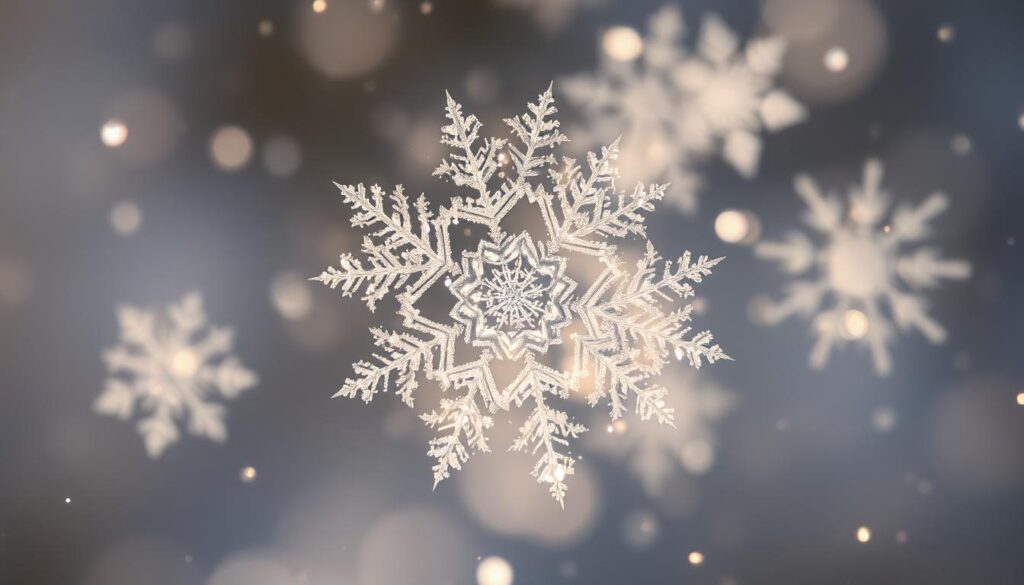
The uniqueness of snowflakes goes beyond their beauty. It shows the complex snowflake uniqueness from environmental interactions. So, unique snowflakes remind us of our atmosphere’s intricacy and dynamic nature.
Fun Facts About Snowflakes
Snowflakes are full of fascinating aspects, from their unique shapes to their role in weather patterns. They have captivated humans for centuries with their beauty and complexity.
One of the most interesting snowflake facts is that no two snowflakes are alike. This uniqueness comes from the vast number of possible combinations in their crystal structure. Each snowflake is a one-of-a-kind natural wonder.
Did you know that snowflakes can have up to 12 sides? This is because the crystal structure of ice allows for a six-sided symmetry. Some snowflakes can form complex shapes with multiple branches. This complexity makes snowflake trivia so fascinating.
Another fun fact about snowflakes is their role in weather forecasting. Snowflakes can indicate the temperature and moisture levels in the atmosphere. This provides valuable information for meteorologists. As fun facts about snowflakes continue to emerge, our understanding of these delicate ice crystals deepens.
“The intricacy of a snowflake is a marvel of nature, a fleeting wonder that captures our imagination and inspires our curiosity.”
Snowflakes also play a significant role in cultural and artistic expressions. They have inspired literature and visual arts, symbolizing uniqueness and the beauty of nature.
In conclusion, snowflakes are not just beautiful to look at; they are also rich in interesting facts and trivia. Whether you’re a weather enthusiast or just someone who enjoys the magic of snowfall, there’s always something new to learn about these captivating natural wonders.
How Snowflakes Influence Weather
Snowflakes have a big role in weather patterns. They are more than just pretty to look at. As they fall, they change the air around them, affecting temperature and rain.
The way snowflakes form is connected to the weather. Snowflakes can show us when a big weather system is coming. They also reflect sunlight, which can cool the air.
It’s important to understand how snowflakes and weather work together. Snowflakes help us predict the weather. By studying them, scientists can learn more about weather patterns and how snowflakes affect them.