

Engaging kids in creative activities is key for their brain and motor skills growth. Making shapes with play dough is a fun way to teach them about geometry.
Kids improve their fine motor skills by molding play dough. They learn about various shapes and their features. This hands-on learning helps them in math and problem-solving later on.
As kids play with play dough, they get ready for school. It’s a great activity for parents and caregivers to support their learning.
The Benefits of Playing with Play Dough
Play dough is more than just a toy. It helps kids develop fine motor skills. By playing with it, children strengthen their hand muscles. This is key for writing and other precise tasks.
Playing with play dough involves actions like rolling and shaping. These activities improve finger and hand coordination. They also boost dexterity and hand-eye coordination.
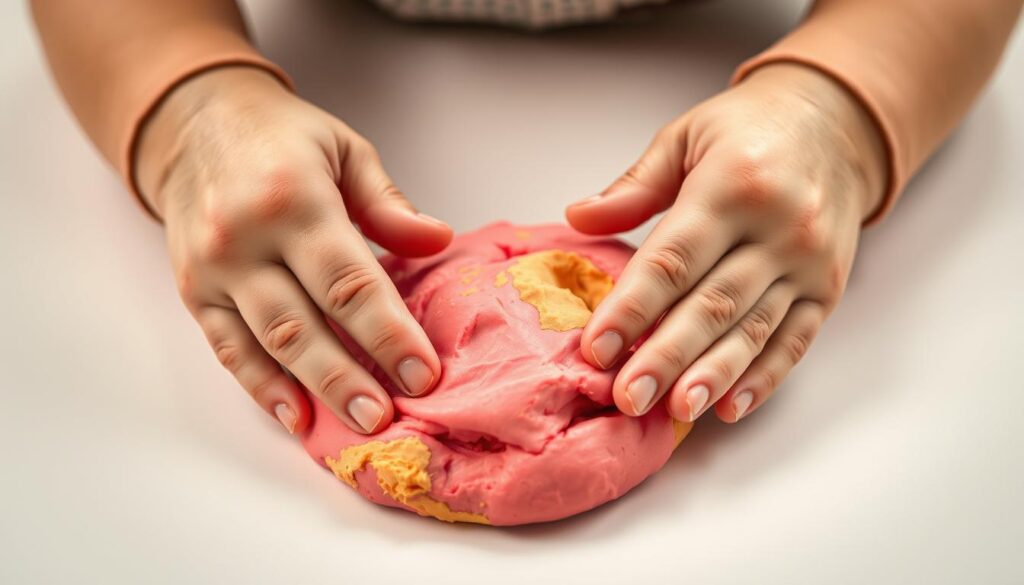
Play dough also offers cognitive benefits. Kids learn about geometry and problem-solving as they create shapes. This creative play helps them understand different shapes and structures.
Playing with play dough can be calming and creative. It’s a fun way for kids to learn and develop important skills. It keeps them engaged and active.
In short, play dough offers many benefits. It improves fine motor skills and hand muscles in kids. It also supports cognitive development through creative play.
Choosing the Right Play Dough
The world of play dough is vast, with homemade and store-bought options. Each has its own benefits. Parents and educators must think about the child’s age, safety, and the play experience they want.
Homemade play dough is a favorite among parents. It’s customizable and safe. Making it at home lets you pick non-toxic ingredients. You can also choose different textures and colors for a unique experience.
One easy homemade recipe is the 4-ingredient no-cook play dough. It needs flour, salt, water, and cream of tartar. Another fun option is Jell-O play dough, which is colorful and fragrant. These recipes are great for kids and can be tailored to their likes.
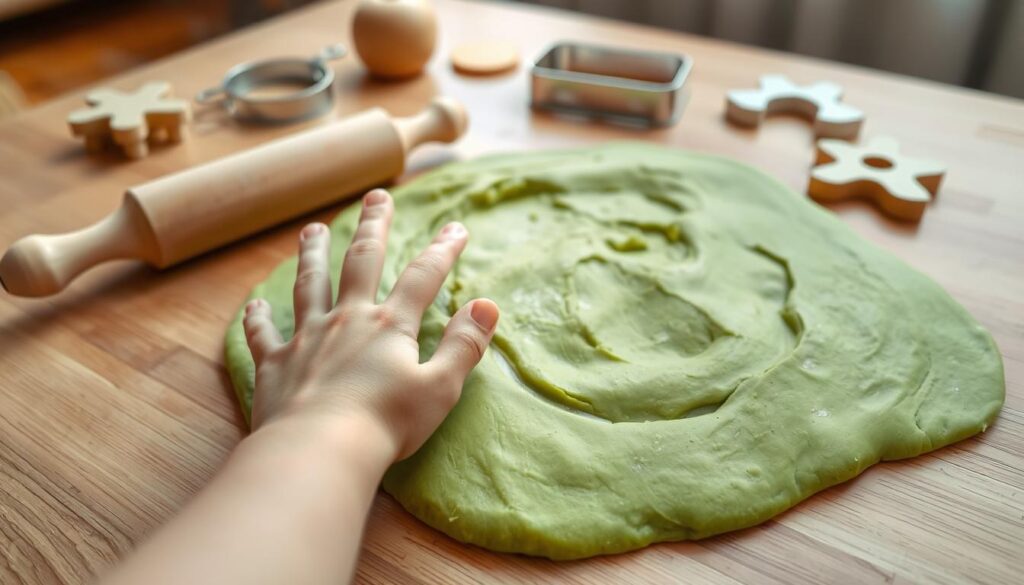
Store-bought play dough is easy to find and comes in different ages. It has a consistent texture. But, it might have preservatives and artificial colors, which some parents worry about.
Choosing between homemade and store-bought play dough depends on what you prefer. Think about the benefits and drawbacks of each. This way, you can pick the best option for your child’s creativity and growth.
Basic Techniques for Shaping Play Dough
With a few simple techniques, you can create many shapes and designs with play dough. First, learn the basics of shaping and molding.
One key technique is rolling. Rolling out play dough improves fine motor skills. It’s a great way to start making different shapes.
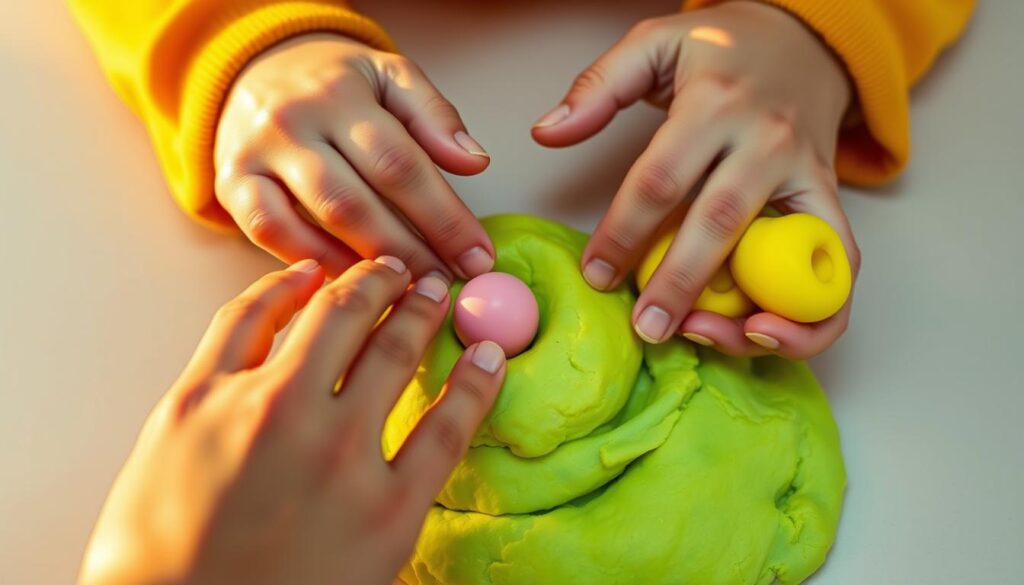
To make simple shapes, roll the play dough evenly. Then, use tools or your hands to shape it into what you want.
You can make 2D shapes like squares, triangles, and circles. These shapes help teach kids about geometry and spatial awareness.
For instance, to make a square, flatten a rolled-out piece of play dough into a rectangle. Then, cut off the corners to get a perfect square.
Learning these basic techniques encourages creativity and learning through play dough shaping activities.
Fun Tools for Sculpting
Play dough sculpting gets more fun with craft sticks and other cool tools. The right tools make shaping play dough more creative and enjoyable.
Craft sticks are super versatile for play dough sculpting. They help create detailed designs, patterns, and three-dimensional shapes. Craft sticks can help children develop their fine motor skills as they make something unique.
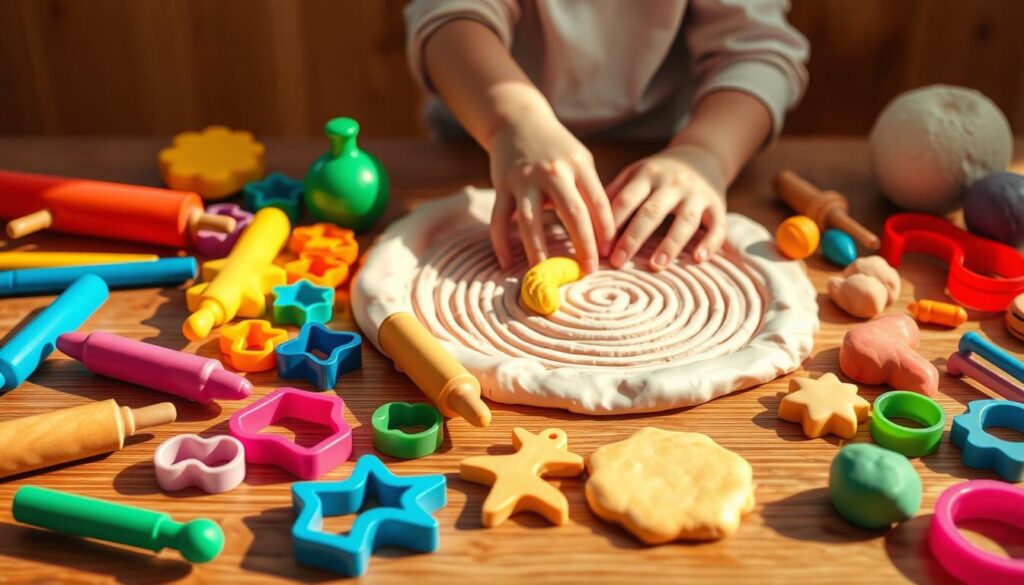
Toothpicks are great for adding small details to play dough creations. They help make small features or patterns, adding complexity. Experimenting with different tools like toothpicks encourages children to think creatively and try new techniques.
Other materials like rolling pins, shape cutters, and even household items can be used for play dough sculpting.
“The possibilities are endless when it comes to play dough creativity, and the right tools can make all the difference.”
Using many tools lets children try different textures and techniques. This makes their creative experience even better.
Encouraging kids to try different tools and materials boosts creativity and problem-solving skills. As they explore, they can make unique and detailed designs that show their imagination and skill.
Popular Shapes to Create with Play Dough
Play dough lets kids be creative and learn about shapes. This activity boosts their creativity and teaches them about geometry and math.
Creating 2D shapes with play dough is a fun way to learn about basic geometry. Kids can make squares, circles, triangles, and rectangles easily. For example, they can roll out the dough into a rope and bend it into a circle. Or, they can use a cookie cutter to make different shapes.
For 3D shapes, play dough is perfect for exploring complex geometries like cubes, spheres, and pyramids. By shaping the dough, kids improve their spatial awareness. They learn how to build different shapes.
Creating these shapes is more than just fun; it’s educational. It helps kids improve their fine motor skills, hand-eye coordination, and problem-solving. It also prepares them for more advanced math later on.
Using play dough in math lessons makes learning fun and interactive. Teachers and parents can show geometric concepts in a real way. This makes it easier for young learners to understand.
Play dough combines creativity with learning, giving kids a special chance to grow. Encouraging them to try different shapes and designs helps them grasp geometry and math better. This prepares them for success in school.
Tips for Keeping Play Dough Fresh
Keeping play dough fresh is easy with a few simple steps. By taking care of it, you can make it last longer. This way, it stays soft and ready for play.
Storing play dough in an airtight container is key. This stops it from drying out. Use plastic containers or zip-lock bags and make sure to remove air before sealing.
Maintenance is also important. If your play dough starts to dry, add a few drops of water and knead it. If it’s too sticky, add a bit more flour to get the right feel.
Don’t forget to store play dough tools properly. Clean and dry tools prevent moisture or debris from getting into the play dough. This helps it last longer. Clean your tools with soap and water, then dry them well before storing.
If your play dough is very dry, it might be time to make a new batch. But for minor dryness, you can revive it with a few drops of water and kneading.
By following these maintenance and storage tips, your play dough will last longer. It will stay a fun and creative play option for you.
Creative Play Dough Activities for Kids
Let your child’s creativity shine with fun play dough activities. Play dough is more than just fun; it helps kids learn and grow. It boosts their fine motor skills and sparks their imagination.
One great way to spark creativity is by letting kids make their own shapes. They can turn play dough into animals, objects, or even new creatures. Decorating these shapes with beads, glitter, or other craft supplies makes it even more fun.
Building play dough scenery is another fun activity. Kids can create landscapes, scenes from their favorite stories, or even their favorite places. This activity boosts their creativity and storytelling skills. Using different colors and textures makes these scenes come alive.
Play dough is also great for making three-dimensional art. Kids can explore different dimensions and create unique designs. It’s a fun way to express their creativity.
Encouraging kids to try different tools and materials with play dough is key. It’s not just about what they make, but the journey of creating something special.
Safety Considerations with Play Dough
Supervision is key to preventing accidents when kids are playing with play dough. Play dough is a fun and creative toy. But, it’s important to know the hazards it can have.
Choking hazards are a big concern, mainly for young kids who like to put things in their mouths. To avoid this, supervise children closely when they play with play dough. Also, make sure the dough is safe and non-toxic.
Allergic reactions to play dough ingredients can also be a problem. Some kids might be allergic to certain materials in homemade or store-bought dough. Always check the ingredients and watch for signs of an allergic reaction, like skin irritation or breathing problems.
To make play dough safe and fun, take these steps: play with it in a well-ventilated area, don’t eat it, and wash hands well after playing. As one expert says,
“The safety of children is the most important thing. A little care can prevent accidents.”
Knowing these hazards and taking precautions can make play dough a safe and enjoyable activity for kids.
Inspiring Play Dough Challenges
Play dough challenges are great for boosting kids’ creativity and imagination. By setting up specific challenges, like making a certain shape or design, parents and educators can inspire kids. This encourages them to think creatively.
Some fun challenges include making a miniature city, sculpting a favorite animal, or designing a new creature. These activities improve fine motor skills and hand-eye coordination. They also foster creativity.
To make play dough challenges even more exciting, consider using inspiration from nature, art, or architecture. This can spark kids’ imagination and creativity while they have fun with play dough.