
Keeping your home safe is very important. A motion sensor is key in any security system. It warns you of any danger.
These devices watch for movement detection and act when they see it. They help with automation and make life easier. Knowing how they work is vital for a strong home security plan.
Adding motion sensors to your security makes your home much safer.
What is a Motion Sensor?
Motion sensors are electronic devices that detect movement and changes in their surroundings. They play a key role in many areas, like security systems, automated lighting, and smart home devices.
A motion sensor is designed to sense movement. This makes it a vital tool for improving home security and automation. A security expert once said,
“Motion sensors are the eyes of a security system, detecting possible threats and alerting homeowners.”
Motion sensors are used in security systems to spot intruders, in lighting control to turn lights on or off automatically, and in home automation to make homes smarter.
Motion sensors make homes safer and more convenient. They are a key technology in updating home security and automation.
Types of Motion Sensors
The world of motion sensors is full of variety. You’ll find PIR, microwave, ultrasonic, and dual-technology sensors. Each one works in its own way, making them perfect for different uses.
PIR sensors are very common. They catch changes in infrared radiation from all objects. This makes them great at finding people. PIR sensors are energy-efficient and dependable, which is why they’re often chosen.
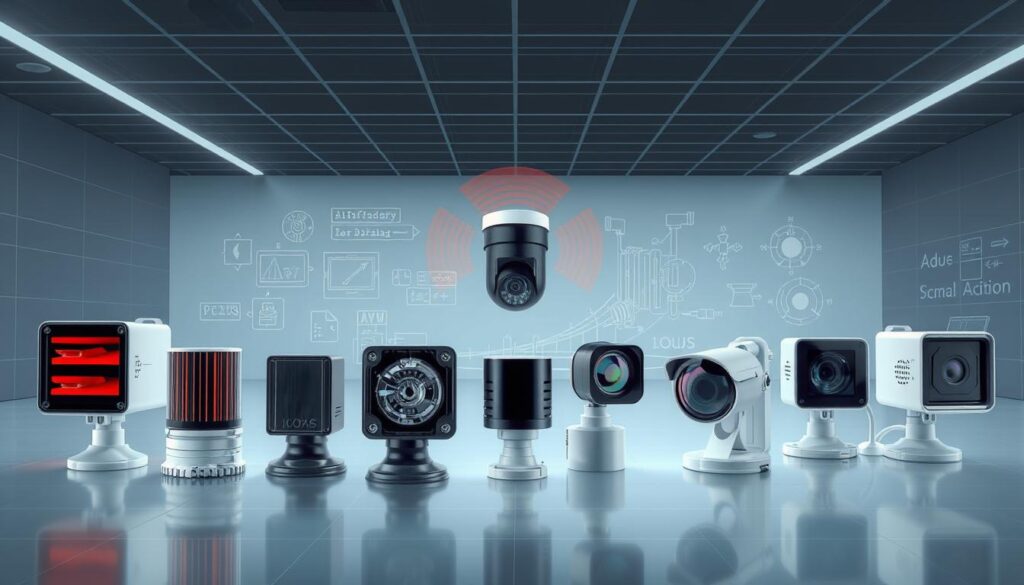
Microwave sensors use microwave signals to spot movement. They send out microwave waves and check how they bounce back. This tells them if something is moving in their area. Microwave sensors are very sensitive and can see movement even when things are in the way. This makes them good for some security jobs.
How Microwave Sensors Work
Microwave sensors send out microwave waves and watch for the ones that bounce back. When a microwave wave hits an object, it bounces back. If the object moves, the wave’s frequency changes. The sensor picks up this change, showing that something is moving.
“Microwave sensors offer high sensitivity and can penetrate certain materials, making them versatile for various applications.”
Ultrasonic sensors find movement with high-frequency sound waves. Dual-technology sensors mix two or more ways to detect things. This makes them more accurate and cuts down on false alarms. Knowing how each type of motion sensor works is key to picking the right one for your needs.
Applications of Motion Sensors
Motion sensors are key in many areas. They boost home security and help save energy. This makes them essential in our daily lives.
In home security systems, motion sensors catch intruders. They set off alarms or send alerts. This keeps homes safe from unwanted visitors.
Motion sensors also play a big role in automation. They control lights and heating/cooling systems. This means energy is saved when no one is around. It makes living in a smart home more convenient and saves money.
They also make automated lighting systems better. Lights turn on and off when people enter or leave a room. This creates a smooth and comfortable atmosphere.
In offices and stores, motion sensors help save energy too. They make HVAC systems and lights work better. This cuts down on costs.
To wrap it up, motion sensors are vital today. They make our homes and workplaces safer and more energy-efficient. Their wide range of uses shows how important they are.
Benefits of Using Motion Sensors
Motion sensors bring enhanced security, lower energy use, and more convenience. They detect movement and can automate tasks. This makes homes and businesses safer and more efficient.
Motion sensors boost security by spotting intruders. They can set off alarms or notify people, keeping homes and businesses safe. This gives everyone peace of mind.
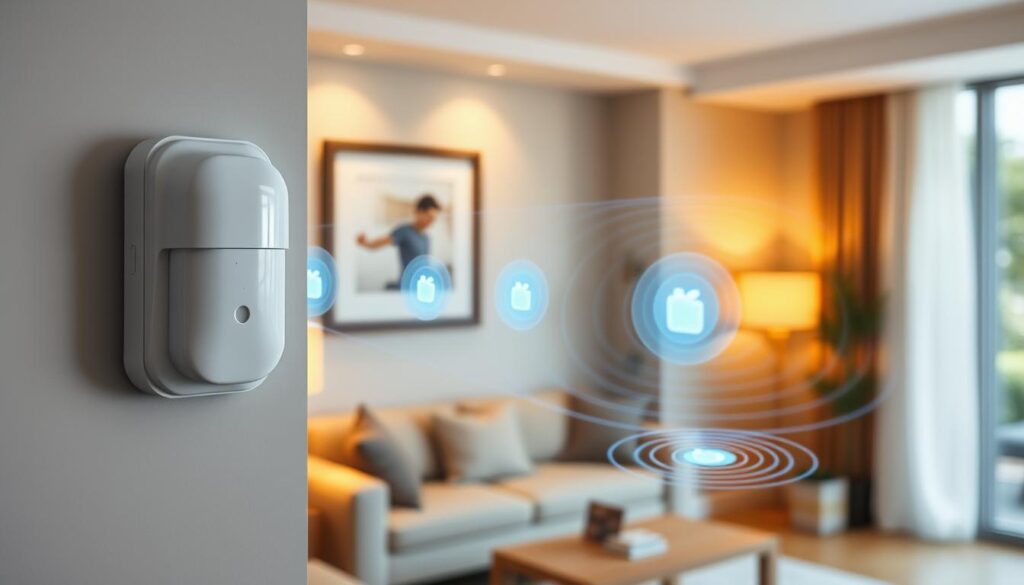
Motion sensors also help save energy. They control lights and HVAC systems only when needed. This cuts down on energy use, lowers bills, and is good for the planet.
They make life easier by automating tasks. For example, lights turn on when you enter a room. This is great for busy areas or places where you don’t want to use your hands.
Using motion sensors is a big step towards automation and smart technology. As tech gets better, motion sensors will offer even more benefits. They’ll make our homes and businesses safer, more efficient, and more convenient.
Choosing the Right Motion Sensor
The key to getting the most out of motion sensors is choosing the right one. There are many types, each for different uses. It’s important to pick a sensor that fits your needs.
When choosing motion sensors, think about a few key things. The detection range is important. It shows how far the sensor can see movement. Make sure it covers the area you want to watch.
The sensitivity of the sensor is also key. A sensitive sensor picks up small movements. A less sensitive one needs bigger movements to work. The right sensitivity depends on where and how you use the sensor.
Think about the power source too. Sensors can run on batteries or be plugged into a power source. Battery ones are flexible but need battery changes. Wired ones always have power but are tied to a source.
Also, check if the sensor works with your other devices or systems. If it’s for a smart home or security system, make sure it fits with what you already have. This ensures everything works together smoothly.
By looking at detection range, sensitivity, power source, and compatibility, you can find the perfect motion sensor. It could be for better home security, automating lights, or watching certain areas.
Common Features of Motion Sensors
Motion sensors have evolved to include various features that improve their performance. These features not only enhance the functionality of motion sensors but also make them more user-friendly.
One of the key features of modern motion sensors is sensitivity adjustment. This allows users to fine-tune the sensor’s detection capabilities, reducing the likelihood of false alarms. By adjusting the sensitivity, users can ensure that the sensor responds appropriately to different environments.
Another valuable feature is pet immunity. This feature ensures that the sensor can differentiate between humans and pets, avoiding unnecessary triggers. Pet immunity is very useful in households with pets, giving homeowners peace of mind.
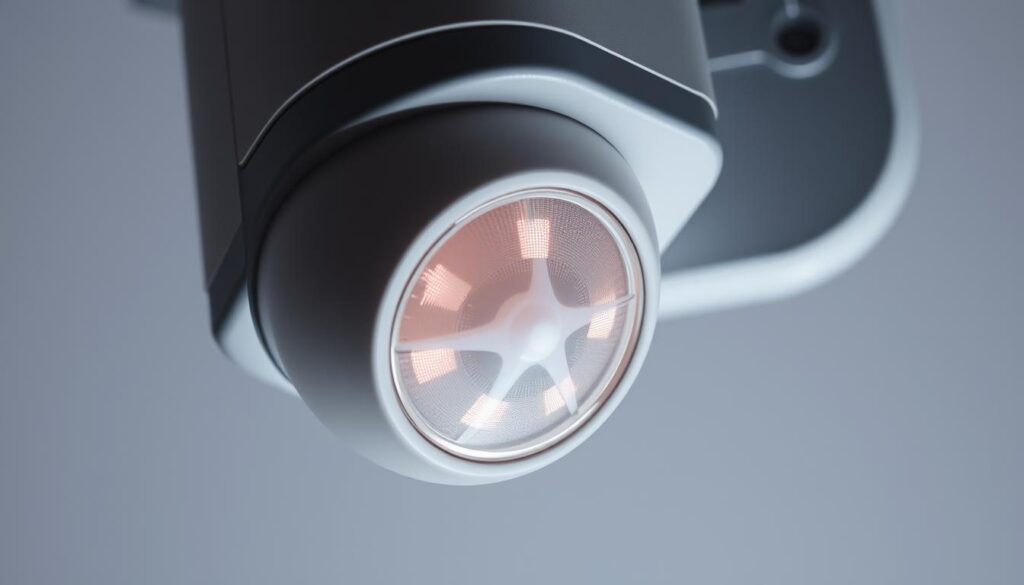
Smart home integration is also a significant feature of many modern motion sensors. By integrating with smart home systems, motion sensors can automate various tasks, such as turning on lights or adjusting thermostat settings. This integration enhances the overall smart home experience, making it more convenient and efficient.
Also, motion sensors play a key role in automation. They can trigger a range of automated actions, from lighting to security systems, based on detected movement. This automation not only improves home security but also contributes to energy efficiency.
In summary, the common features of motion sensors, including sensitivity adjustment, pet immunity, smart home integration, and automation, significantly enhance their functionality and usability. These features make motion sensors an indispensable component of modern smart home systems.
Challenges with Motion Sensors
Motion sensors have many benefits but also face some challenges. One big issue is false alarms.
These can happen for many reasons. Pets moving, strong winds, or big changes in temperature or sunlight can all cause them.
For example, a pet running across a room can set off a motion sensor. This leads to a false alarm.
Also, wind blowing through trees or bushes can make outdoor motion sensors go off when they shouldn’t.
False Alarms and Pet Sensitivity
To lessen false alarms, some motion sensors are made to ignore pets. They can tell the difference between pets and people.
This helps cut down on false alarms. But, not all sensors can do this, and how well they work depends on the pet’s size and the sensor’s settings.
Interference from Other Devices
Motion sensors, mainly the wireless ones, can also face problems. Other electronic devices can interfere with their signals.
This interference can mess up the signal between the sensor and the control panel. It might cause false alarms or not detect movement when it should.
For instance, changes in sunlight or temperature can mess with passive infrared (PIR) sensors. These are common in security systems.
Knowing about these environmental factors is key for motion sensors to work right.
By understanding and tackling these challenges, users can make their motion sensors work better. This ensures they detect movement accurately and reliably.
Tips for Installation
Installing motion sensors right is key to better home or business security. It’s important to put them in the right spots for the best results.
Optimal Placement is essential for good motion detection. Place sensors at entry points like doors and windows. Also, put them in high-traffic areas where people move a lot.
It’s also important to avoid blocking sensors. Make sure they can see clearly by keeping them away from furniture, curtains, or other objects. These can mess up their ability to detect movement.
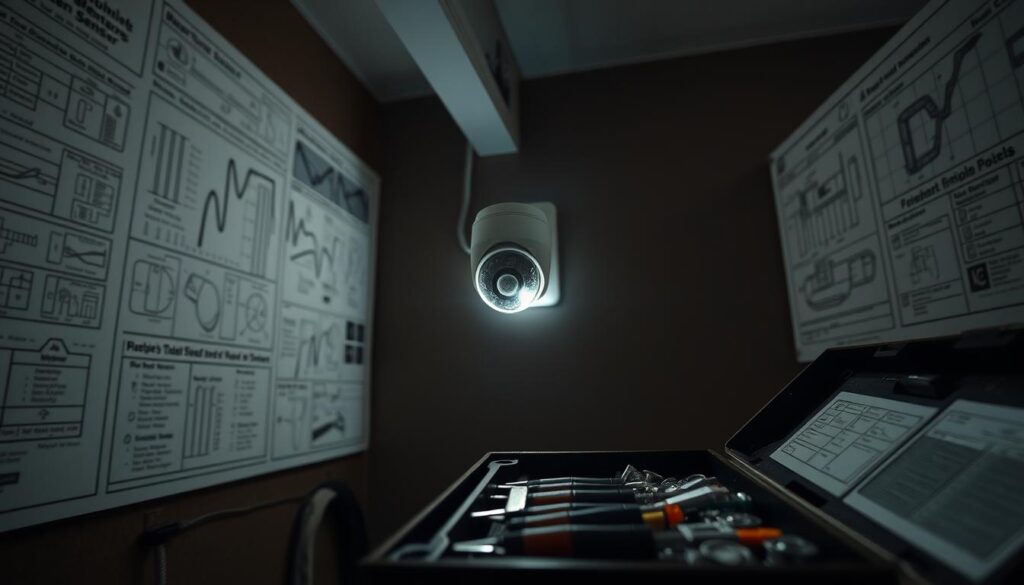
Think about the field of view and range of the sensor when you install it. Some sensors cover big areas, while others work better in smaller spaces.
By planning the installation and placement of motion sensors well, you can make them work better. This will help improve the security of your place.
Maintenance of Motion Sensors
Maintaining motion sensors is key for their best performance and long life. Regular upkeep keeps them working well, giving you reliable security.
Cleaning the sensor lens is a big part of keeping them in top shape. Dust and dirt can block the sensor’s view. A soft cloth can help keep it clear.
For wireless sensors, battery replacement is a must. Dead batteries can stop the sensor from working. Always check the batteries and replace them when needed.
Regular checks are also important. They help make sure the sensor is detecting movement as it should. This keeps your security system running smoothly.
By doing these maintenance tasks, you can make your motion sensors last longer. This ensures they keep providing you with the security you need.
Future of Motion Sensor Technology
Motion sensor technology is set to see big changes soon. These changes will make detection more accurate and seamless with smart homes. We’ll see motion sensors that work better and more efficiently.
AI will be a big part of these advancements. It will help motion sensors learn and adapt to their surroundings. This will make them better at detecting things, improving smart home automation and security.
As technology improves, motion sensors will get better at spotting movements. This means fewer false alarms and better system performance. They’ll be able to catch even the smallest movements, making them key for home security.
The future of motion sensors is linked to smart home systems. They aim to make our homes more integrated and automated. With better security and accuracy, motion sensors will keep homes and businesses safe.