
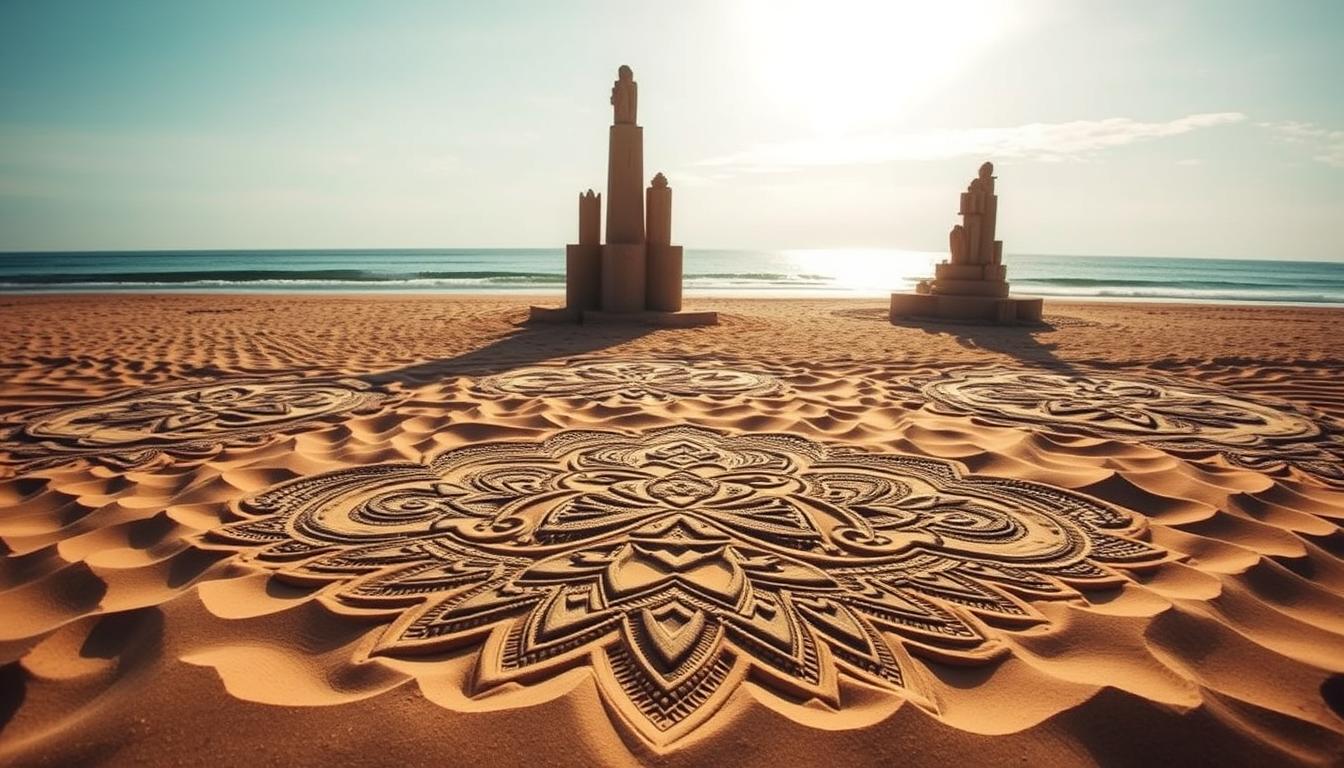
Creating sand drawing is a timeless activity that has captivated people of all ages. The transient nature of these creations, often washed away by the tide, adds to their charm.
The rise of digital tools has made it possible to enjoy sand art without being limited by the beach environment. Apps like Sand Draw allow users to create realistic sand drawing on their devices, providing an entertaining outlet for creativity.
This digital beach art form is not only fun but also accessible to everyone. It’s a great way for both children and adults to express themselves creatively.
Introduction to Sand Art
Sand art has deep roots in ancient cultures. It has grown into a special form of digital art and creative expression. Sand drawing is a part of sand art, made from sand, volcanic ash, or clay. It involves creating a continuous line on an imagined grid to make beautiful, symmetrical patterns.
Sand art has long fascinated many, with its fleeting beauty. It demands skill and creativity, as the designs are detailed and complex. Artists use sand to make striking patterns and designs that challenge our thoughts.
The history of sand art is colorful and varied, with many cultures adding to it over time. From ancient designs to today’s sand sculptures, it has changed a lot. Now, it keeps growing, with new techniques and materials being used.
When it comes to materials, sand is the most used. But, volcanic ash or clay are also used for different textures and effects. The choice depends on the artist’s style and the technique they use.
Techniques in sand art range from simple drawings to complex sculptures. It needs patience, skill, and focus, as the designs can be ruined by wind or water.
Materials Needed for Sand Art
The art of sand drawing relies on the materials used. It ranges from traditional sand to digital tools. Traditional sand art uses different types of sand, each with its own texture and look.
Types of Sand: Artists can work with rocky sand, lava sand, dead sea muddy sand, grassy sand, and white sand. The type of sand chosen greatly affects the artwork’s look and detail.
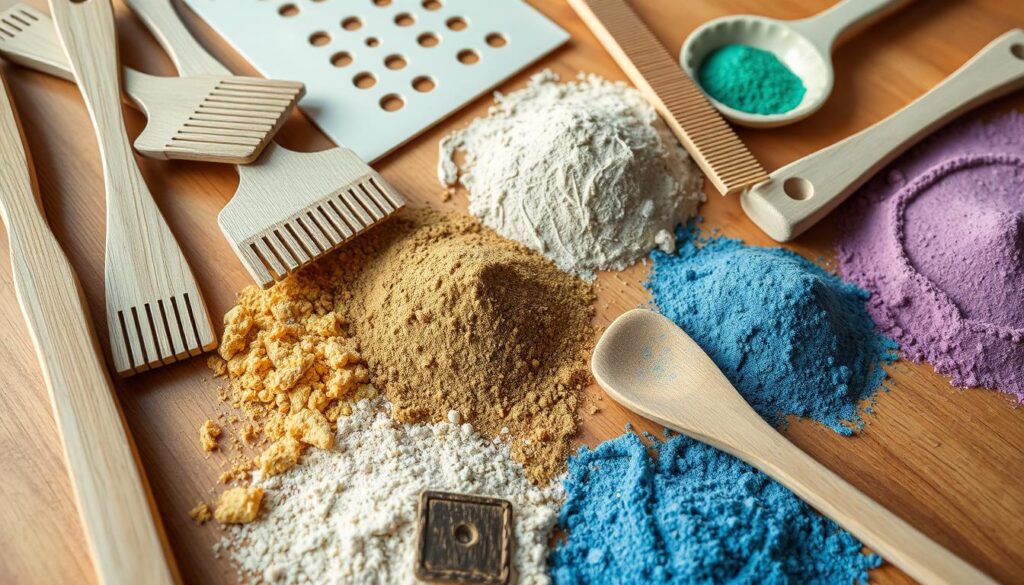
Other natural materials like volcanic ash or clay can also be used. They add unique textures and make the artwork last longer.
Digital art tools, like the Sand Draw app, offer a new way to create sand art. These apps let artists make digital sand drawings on different surfaces. They come with various brushes and effects, both similar to and different from traditional sand art.
Whether to use traditional materials or digital tools depends on the artist’s choice. Both methods allow for creative freedom, from temporary designs to lasting pieces.
Techniques for Creating Sand Art
The art of creating on sand is a delicate dance between form and impermanence. Sand art, by its very nature, is transient. Yet, the techniques used can result in stunning, detailed designs that capture the imagination.
Traditional sand drawing often starts with a simple tool: a single finger. This method allows for a direct connection between the artist and the medium. It enables the creation of delicate patterns and designs with a personal touch. “The simplicity of using one’s finger to create art on sand is both its beauty and its challenge.” As artists become more comfortable, they can experiment with various techniques. They can vary the pressure or use different parts of their hand.
Creating Patterns and Designs
Creating patterns and designs in sand art involves understanding the properties of the sand. It’s important to know how it responds to different techniques. For instance, damp sand can be molded and shaped, while dry sand is better for detailed designs using tools or fingers. A key to successful sand art is choosing the right type of sand for your technique.
One of the most compelling aspects of sand art is its versatility. Artists can create anything from simple, geometric patterns to complex, detailed scenes. The use of tools, such as rakes or small shovels, can add variety to the designs. This allows for a range of textures and effects.
As sand art continues to evolve, artists are incorporating digital tools into their creative processes. This can include designing patterns on a computer before translating them into sand. Or using digital platforms to share and showcase their work.
“The fusion of traditional sand art techniques with modern digital tools opens up new avenues for creativity and expression.”
Ultimately, the techniques used in sand art are as varied as the artists who practice them. Whether through traditional methods or innovative digital means, the art form continues to captivate audiences. It does so with its unique blend of creativity and impermanence.
Popular Sand Art Styles
Sand art offers many styles, each unique in its own way. Artists and fans can try out simple or complex designs. This lets them create beautiful artworks on the beach.
One great thing about sand art is its variety. It’s perfect for both newbies and seasoned artists. You can play around with different styles to find your favorite.
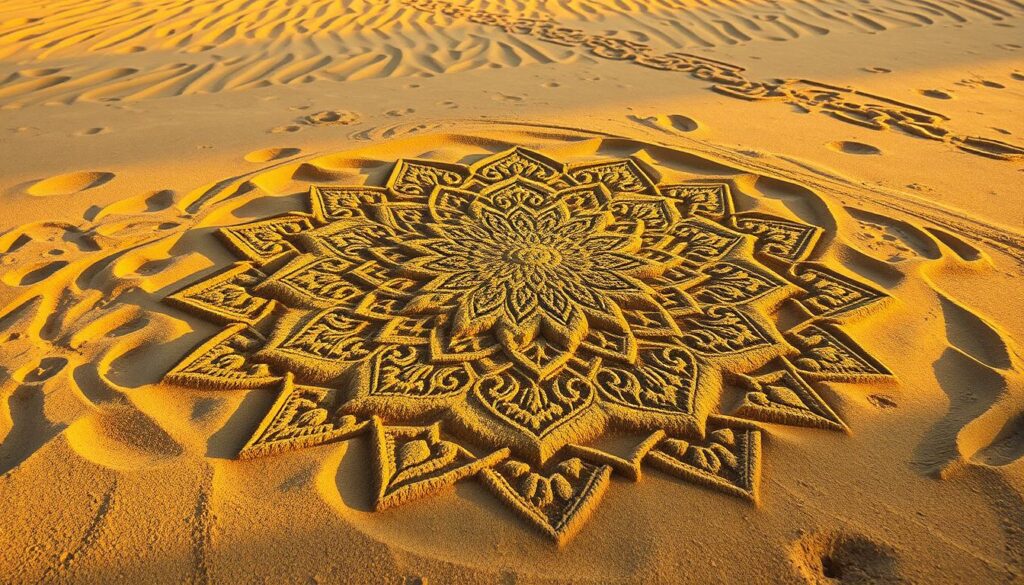
Symmetrical compositions are a favorite in sand art. They involve patterns that mirror each other on both sides of a center line. These designs often use geometric patterns to make them even more eye-catching.
Sand drawing is a technique that uses a continuous line on an imaginary grid. It creates beautiful, symmetrical patterns. This skill shows off the artist’s talent and makes the art mesmerizing.
Symmetrical designs can be simple or very detailed. This makes them great for all kinds of sand artists. By trying out different patterns and shapes, artists can make unique and engaging pieces.
Geometric patterns add depth and beauty to sand art. These patterns can make the designs look dynamic or peaceful. It all depends on the artist’s vision.
Sand Art for Kids
Creating sand art is not just fun for kids; it also has therapeutic benefits. It lets children express their creativity freely. They can explore different textures and forms.
It’s an excellent way for kids to enjoy the outdoors. They also develop their fine motor skills and hand-eye coordination.
Sand art is suitable for children of various ages. It’s an inclusive activity for families or classrooms. Younger kids can start with simple designs like patterns or basic shapes.
Older children can try more complex designs. They can make intricarte patterns or even three-dimensional sculptures.
The therapeutic aspect of sand art for kids is huge. It provides a calming and meditative experience. It helps children relax and express their emotions in a healthy way.
For children dealing with anxiety or stress, sand art is very beneficial. It offers a constructive outlet for their feelings.
Tips for Parents and Educators
To get kids started with sand art, choose a suitable location with compact, moist sand. Provide a variety of tools like rakes, molds, and stamps. This helps them create different designs.
Encourage experimentation and praise their efforts, no matter the outcome. It’s also a good idea to work alongside them. This makes it a fun, bonding experience.
For a more structured activity, consider setting a theme or challenge. Like creating a specific animal or object. This guides their creativity while allowing for personal expression.
Remember, the goal is to have fun and enjoy the process of creating together.
By engaging kids in sand art, you’re fostering their creativity. You’re also contributing to their emotional and psychological well-being. It’s a simple yet powerful activity that brings joy and numerous benefits to children.
Sand Art in Therapy
Sand art is becoming a key tool in therapy. It gives people a way to express feelings without words. This is great for those who find it hard to talk about their emotions.
Using sand art in art therapy has shown great results. Art therapy uses creative activities to help people deal with their feelings. Sand art is a perfect fit, as it’s both hands-on and visually appealing.
Teachers for special needs kids use sand art to help with spelling. It’s also great for those with sensory issues or autism. The feel of sand is very appealing to them.
Sand art in therapy offers many benefits. It’s a creative way to express oneself and improves fine motor skills. It also helps with hand-eye coordination. Plus, making sand art can be calming and relaxing.
As therapy grows, using new methods like sand art can make it better. Therapists can create special plans using sand art. This makes therapy more engaging and effective for everyone.
Seasonal Sand Art Ideas
Shaping sand into beautiful creations can match the mood of different times. As seasons change, so do the chances to make unique sand art.
Summer’s warm weather and long days are perfect for detailed beach art. Beach art can be simple or complex, showing the season’s vibrant spirit.
Winter might seem tough for sand art because of cold and harsh beach conditions. But, it offers a special chance for creativity. The soft, wet sand is great for smooth designs or textured artworks.
Seasonal sand art in winter can include snow, ice, or natural textures. It’s a time to try new techniques, like using the tide to change your art.
Creating sand art in summer or winter is all about embracing the season. Letting the season inspire you makes your art reflect nature’s beauty and the time of year.
Participating in Sand Art Festivals
Joining sand art festivals is exciting for both new and experienced artists. These events let you show off your sand art talents and get noticed.
The National Sand Drawing Festival in Vanuatu is a great example. It celebrates and keeps alive traditional sand drawing. Artists worldwide can join in sand sculpture contests and other sand art competitions.
To get started, look for sand art festivals near you or online. Many have sign-ups for artists, where you might need to send in your designs or ideas. Creativity and originality are what make you stand out.
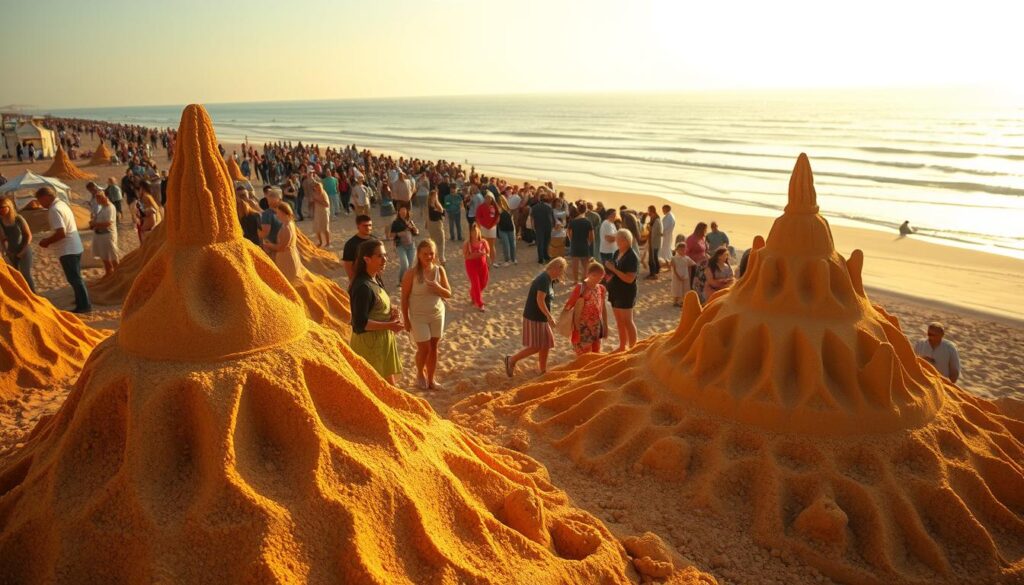
Some festivals also have workshops and classes. These are chances to learn new things and get better at sand art. By taking part, you can meet other artists, get seen, and help sand art grow.
Festivals are perfect for showing off your sand art. They give you a place to show your work and get feedback from many people. Whether you make detailed sculptures or big designs, festivals are a great way to share your love for sand art.
Environmental Impact of Sand Art
The fleeting nature of sand art sparks important discussions about its environmental footprint. As a form of art tied to nature, it’s vital to think about its effects on ecosystems.
Traditional sand drawing, recognized by UNESCO, shows its cultural value. Yet, modern sand art, on a bigger scale, can harm the environment.
The environmental impact of sand art is seen in several ways. First, taking sand from beaches or riverbanks can harm local ecosystems. Second, using certain materials or tools can introduce harmful substances.
To lessen these effects, artists and fans can follow sustainable practices. They can pick less sensitive spots, use natural materials, and keep their art’s footprint small.
The digital side of sand art, like digital sand art or sharing it online, is greener. It lets fans enjoy sand art without harming the environment.
In summary, sand art does affect the environment, but we can make it better. By choosing the right materials and spots, artists can protect the beauty that inspires them.
Creating Lasting Sand Art
With a few simple techniques, you can make your sand art last longer. Sand art, though often short-lived, can be kept or turned into lasting forms. This is done through various methods.
Using the right materials and techniques can make sand art last. The correct sand type and a binding agent can extend its life. Artists also mix other materials into their designs for better durability.
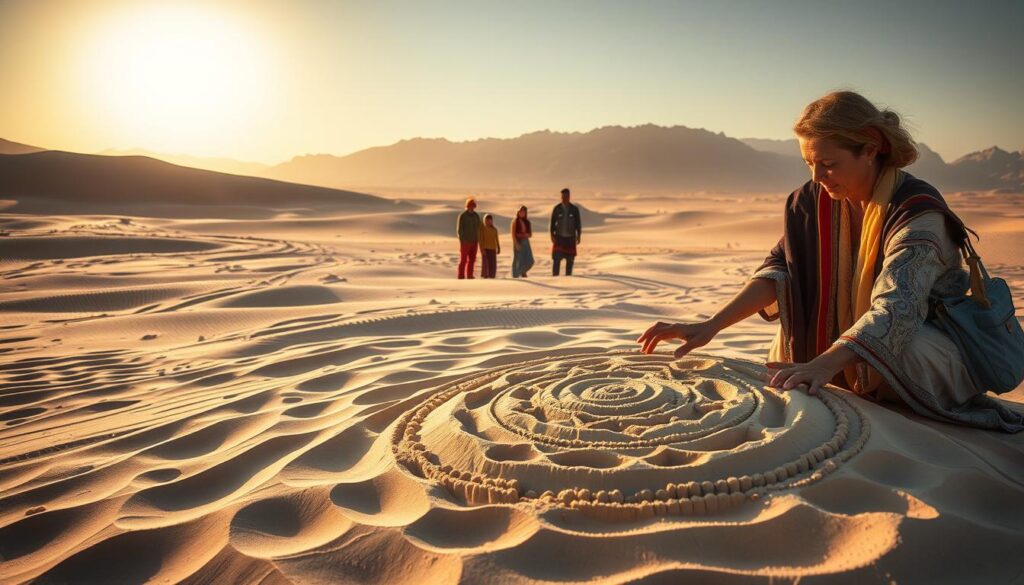
Preserving Sand Art: To keep your sand art, consider a few techniques. Using a fixative or varnish can protect it from erosion. Another way is to take photos of the art before it fades.
Adapting Sand Art to Other Mediums: Some artists use sand art to create lasting pieces. For example, Navajo weavers make blankets that look like sand paintings. They change details to meet demand, keeping the art alive and evolving.
Exploring these techniques lets artists enjoy their work for longer. They can share it with more people. Whether preserved or transformed, sand art’s beauty can be enjoyed for a long time.
Sharing Your Sand Art with the World
Your sand art is ready to be shared with the world. There are many ways to do this. Social media has made it easier than ever.
Instagram and Facebook are great for sharing your sand art. You can upload high-quality images and reach a wide audience. Using hashtags can also help you get noticed by people who love sand art.
Tips for presenting your sand art online include using good lighting. Capture your artwork from different angles. Also, tell people about your creative process.
As Mark Sanders, a renowned sand artist, once said,
“The joy of sand art lies not just in creating it, but in sharing it with others and inspiring them to create their own.”
By sharing your sand art, you’re not only showing off your talent. You’re also joining a community of artists who inspire and motivate each other.
Apps like Sand Draw can make sharing easier. They let you save your artwork or share it on social networks or by email.
Conclusion: Embrace Your Creativity
Sand art is a world full of endless inspiration. It’s not just for kids, like in games like Sand Draw. It’s also a way for adults to relax and express themselves.
We’ve shown you many ways to start your sand art journey. You can make traditional sand art or digital versions. The most important thing is to have fun and let your imagination soar. So, get your bucket and sand ready, or open your favorite digital tool, and create something amazing.
Sand art offers endless possibilities and inspiration. By embracing your creativity, you’ll make beautiful art and feel good while doing it. So, let your creativity shine and let sand art inspire you.