
Effective public speaking is key in many places, like conferences and recording studios. Using a microphone makes the speaker’s voice clearer. This ensures the message hits home.
Good microphone technique is vital for clear communication. It boosts the speaker’s voice and cuts down on background noise. This helps the audience stay focused on what’s being said.
Learning to use a microphone well lets speakers be heard clearly. This makes their talks more engaging and effective.
Understanding the Basics of Microphones
The world of microphones can seem complex, but knowing the basics is essential. Microphones are key for public speaking, helping speakers reach more people.
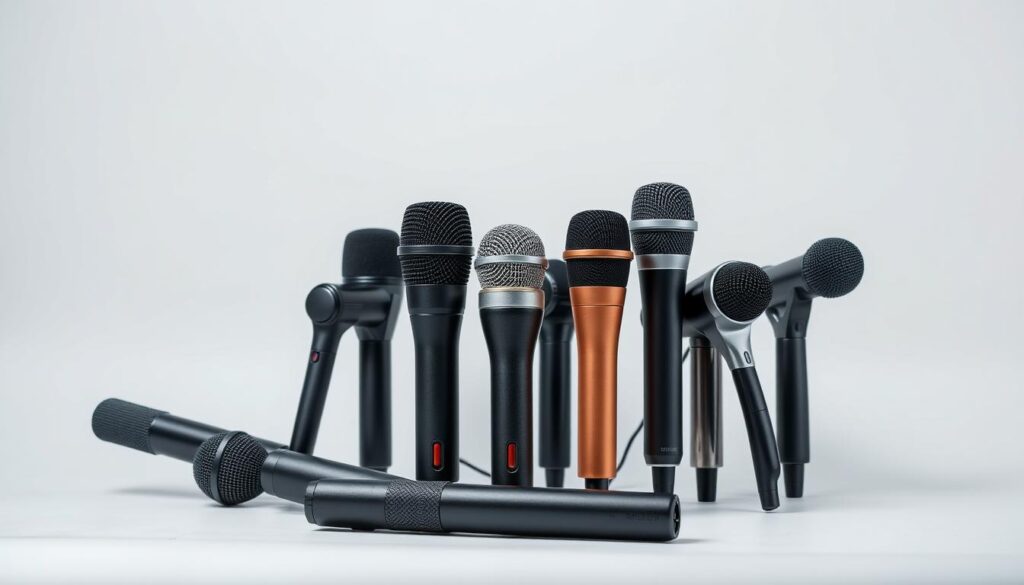
There are many types of microphones, each for different microphone uses. Handheld microphones, for example, are great for public speaking. They let speakers move around easily.
Lectern microphones are fixed and best for formal events or presentations. They’re used when the speaker doesn’t move much. Lapel microphones, or lavalier microphones, are clipped to clothes. They’re perfect for situations where speakers need to use their hands.
Headset microphones are worn on the head, freeing up the speaker’s hands. They’re great for presentations, performances, or any time you need to move around.
Choosing the right public speaking equipment, like microphones, depends on the event, audience size, and speaker’s preference. Knowing the different types of microphones and their microphone uses is key for clear communication.
By picking the right microphone, speakers can make sure their voice is heard well. This improves their public speaking experience.
Types of Microphones for Different Uses
Handheld microphones are great for many things like public speaking, live shows, and recording. They are easy to use and can be carried around, making them perfect for many people.
Using handheld microphones right is key to getting good sound. It’s important to hold the microphone the right distance from your mouth. If it’s too close, the sound gets distorted. If it’s too far, the sound is weak.
To use your handheld microphone well, here are some public speaking tips: Hold it 6-8 inches from your mouth. Don’t cup your hands around it, as this can make the sound muffled.
Also, think about your microphone’s pickup pattern. Most handheld microphones pick up sound best from the front. This means they’re less sensitive to sound from the sides and back. Knowing this can help you use your microphone better and cut down on background noise.
By learning how to use handheld microphones well, you can improve your public speaking. You’ll be able to share your message clearly and confidently.
Choosing the Right Microphone for Your Needs
It’s important to know what you need when picking a microphone. Different places, like conferences or classrooms, need different types of microphones.
The setting where you’ll speak is key. For example, a noisy environment may need a microphone that picks up your voice better to cut down on background sounds.
What you like also matters. Some people like handheld microphones because they’re easy to move around. Others prefer lavalier microphones for being hands-free.
There are many types of microphones, each with its own benefits. Dynamic microphones are tough and great for live shows. Condenser microphones are more sensitive and used in studios.
“The microphone is an extension of your voice; it should enhance your message without drawing attention away from it.” – A public speaking expert
Think about where you’ll speak and what you like. This way, you can pick a microphone that makes your speaking better and gets your message across.
Setting Up Your Microphone
To deliver your message clearly, setting up your microphone is key. A well-set-up microphone makes your public speaking experience better. It ensures your voice is heard by your audience.
The type of microphone you use affects how you set it up. For example, if you’re using a lectern microphone, adjust its position for better sound.
Positioning Lectern Microphones
To place a lectern microphone right, start by setting it 6-8 inches from the top of the lectern. Angle it towards your mouth. Speak across it, not directly into it, to avoid popping sounds.
Clipping Lapel Microphones
For lapel microphones, clip them correctly to your clothes. Place them 6-8 inches below your chin. Clip it to the center of your shirt or tie. Make sure it’s secure and won’t fall off.
Before you start, test your microphone. Check it’s working and adjust the volume if needed. A quick sound check can prevent last-minute problems.
Do a quick rehearsal to check your microphone. This will make you more confident and ready for your public speaking engagement.
Microphone Technique for Clear Speaking
Using a microphone well is more than just talking into it. It’s about using the right method to share your message clearly. This technique is key for public speakers, podcasters, and anyone recording audio.
Understanding Microphone Technique
Microphone technique includes voice projection and how the microphone is placed. Sound engineers say, “the key to clear speaking is not just speaking loudly, but speaking clearly and at a consistent distance from the microphone.”
Voice projection is key when using a microphone. It’s not just about being loud; it’s about being clear and steady. Speakers should practice projecting their voice without straining, ensuring their words are clear and confident.
“The art of public speaking is not just about the message, but how it’s delivered. A good microphone technique can make all the difference.” –
Microphone Positioning
The microphone’s position is very important. Holding it too close can cause distortion, while too far away can pick up background noise. The best distance varies by microphone type, but 6-8 inches is usually good for handheld or lavalier microphones.
By mastering microphone technique, people can greatly improve their public speaking. This ensures their message is clear and effective to their audience.
Troubleshooting Common Microphone Issues
Knowing how to fix microphone problems is key for great public speaking and recording. Issues like feedback and distortion can ruin your audio quality. So, it’s important to solve these problems fast.
Identifying Feedback Issues
Feedback sounds like a high-pitched squeal. It happens when the microphone picks up sound from the speakers, creating a loop. To stop feedback, pay attention to the microphone’s position. Adjusting its angle and distance from the speaker can help.
Practical Tip: Keep the microphone a few inches from your mouth. Also, avoid pointing it straight at the speakers to cut down feedback.
Distortion makes your audio sound fuzzy or clipped. To prevent it, adjust the microphone’s gain levels right for your setting and voice volume.
“The key to good microphone technique is to understand the environment you’re in and adjust your equipment.”
Knowing about common microphone problems like feedback and distortion helps. It ensures your public speaking or recording goes smoothly.
Maintaining Your Microphone
Keeping your microphone in top shape is key for great public speaking. A well-kept microphone makes your talks sound better and lasts longer.
Start by cleaning it regularly. Use a soft cloth to clean the body and grille. For deeper cleaning, a small brush can get rid of dust from the grille. But, stay away from harsh chemicals or liquids that could harm it.
Storing it right is also important. Keep your microphone in a dry, cool spot, out of the sun. A protective case can shield it from drops and dust.
Before you use it, check your microphone. Make sure all connections are tight and it’s working right. This simple step can avoid tech problems during your speech.
By following these public speaking equipment care tips, your microphone will keep performing well. Regular audio equipment upkeep is essential for confident and effective talks.
Upgrading Your Microphone
Audio technology is changing fast. Upgrading your microphone can really help. New microphones offer better sound quality and more features.
When you think about upgrading microphones, check if your needs have changed. Whether you’re a pro speaker or a podcaster, new microphones give you improved sound clarity and reduced background noise. This makes your audio sound more professional.
A public speaking equipment upgrade to a modern microphone adds cool features. You get wireless connectivity, durability, and better device compatibility. These features make your life easier during presentations or recordings.
Also, an audio equipment improvement like a new microphone is a smart choice. New models have the latest tech for a clearer sound.
In short, upgrading your microphone is a simple way to boost your setup. Look at the latest models and their features to find the right one for you.
Recording with a Microphone
To get great recordings with a microphone, you need the right gear and skills. Whether it’s a speech, lecture, or presentation, clear audio is key to keeping your audience interested.
First, choosing the right microphone is key. Each microphone is made for a specific use. For loud speeches, a dynamic microphone is often the best choice.
Proper microphone technique is also vital. Place the mic 6-8 inches from your mouth. Speak across it, not directly into it, to avoid harsh sounds.
Reducing background noise is another must. Record in a quiet spot, use noise-reducing materials, or try noise cancellation. Remember, a clean recording space is essential for top-notch audio.
“The art of recording is not just about capturing sound; it’s about creating an experience for the listener.”
Lastly, practice makes perfect. The more you record, the better you’ll get. Try out different microphones and techniques to find what works best for you.
Microphone Accessories You Should Consider
Choosing the right microphone accessories can greatly improve your public speaking. Wireless packs for lapel and headset microphones boost convenience and performance.
Windshields are key for outdoor events or loud speakers. They cut down wind noise and stop plosive sounds from messing up your audio.
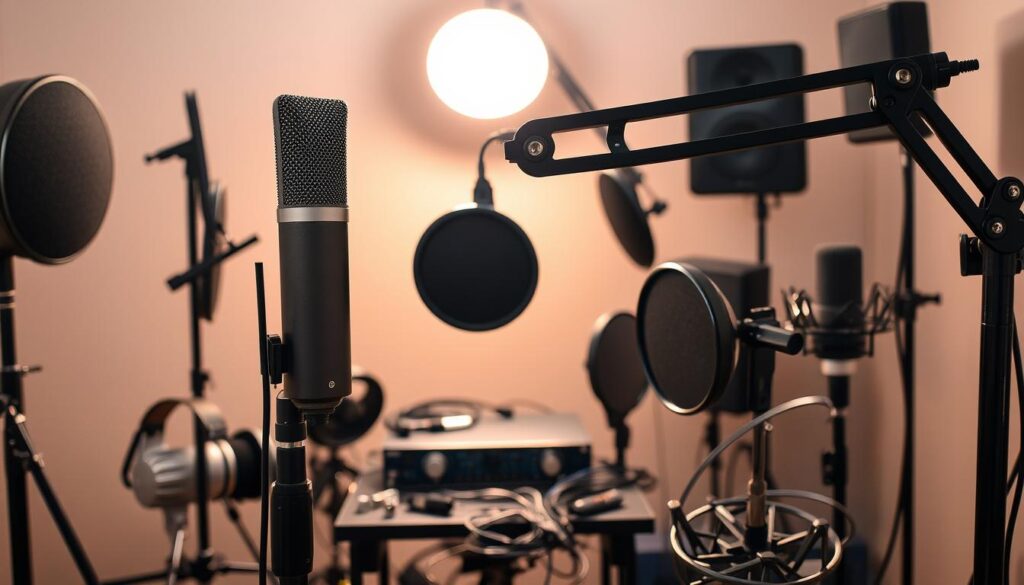
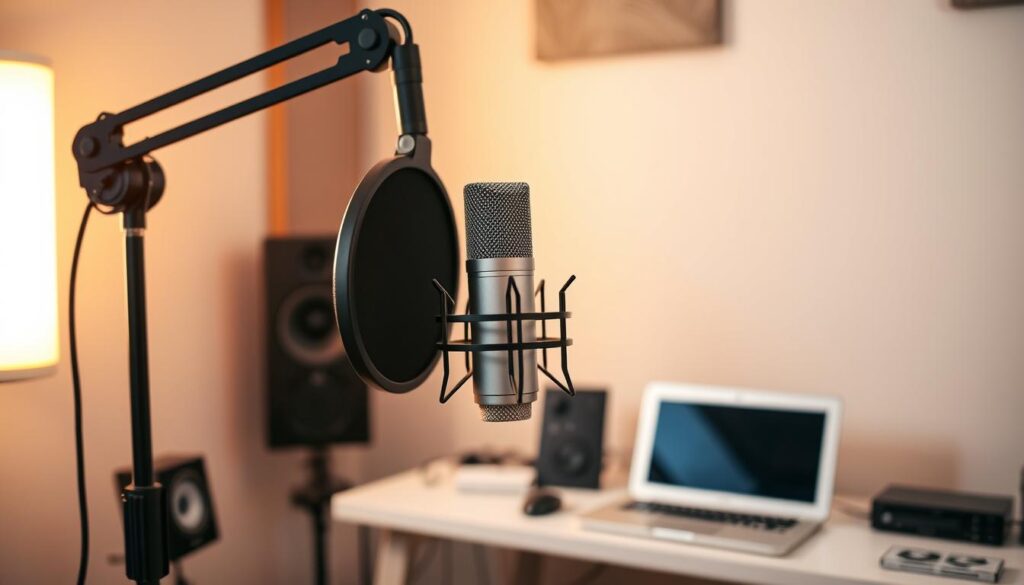
Pop filters are vital for clear audio. They soften harsh consonants and stop distortion, making your voice clear.
Experts say, “The right microphone stand can make a big difference in audio quality.” A solid stand reduces vibrations and keeps your mic stable, avoiding noise and distortion.
“A good microphone stand is not just about holding the microphone; it’s about providing a stable foundation for clear audio.”
Other important public speaking equipment includes microphone clips, adapters, and extension cables. These audio accessories add flexibility and convenience to your speaking experience.
Investing in the right microphone accessories can greatly improve your public speaking. It ensures your audience hears high-quality audio.
The Role of Microphones in Different Media
Microphones are key in many areas, from live performances to movies. They help make sure the sound is clear and sharp. This is true for speeches, music, and films.
In public speaking, microphones boost the speaker’s voice. This is important for events like conferences or rallies. The right one can change how the message is heard.
In performance audio, like concerts or plays, microphones catch the performance’s details. Depending on the setting, different microphones are used. For example, dynamic ones for loud sounds or condenser ones for detailed sounds.
In film and television production, microphones are vital too. They help record clear dialogue and sound effects. This adds to the movie or TV show’s feel. Techniques like lavalier mics for close shots or boom mics for wider sounds are used.
Versatility Across Media
Microphones are versatile in many media. They’re essential for live events, recordings, or films. The right one can greatly improve the audio quality.
Knowing how microphones work in different media helps us value the tech and skills behind great sound. It’s important for all sorts of audio needs.
Conclusion: The Importance of Choosing the Right Microphone
Good public speaking needs clear and sharp audio. This makes picking the right microphone key. Knowing the different types of microphones and their uses can greatly improve speaking experiences.
When choosing a microphone, think about the place, how you speak, and how you’ll use the audio. Using the public speaking tips shared, speakers can make sure their message is heard clearly and with confidence.
The importance of microphone choice is huge, as it affects the audio quality. Whether for a talk, recording, or live show, picking the right microphone is vital for sounding professional.
By considering these points and tips, people can make smart choices when picking a microphone. This can greatly improve their speaking experience and connect better with their audience.